Description du produit
Chaîne de transmission à rouleaux de convoyeur de précision à pas court duplex (DIN764)
CHAÎNES À ROULEAUX DE PRÉCISION À PAS COURT (SÉRIE B)
Matériau : Acier allié
Traitement de surface : grenaillage / noircissement / bleuissement
Application principale : Machines industrielles
N° DE CHAÎNE ANSI : 05B-2 06B-2 10B-2 12B-2 16B-2 20B-2 24B-2 28B-2 32B-2 40B-2 48B-2 56B-2 72B-2
Hauteur : 8 9,525 12,7 15,875 19,05 25,4 31,75 38,1 44,45 50,8 63,5 76,2 88,9 101,6 114,3
| Nom du produit | Chaîne à rouleaux de précision duplex à pas court (série B) (DIN764) |
| Matériaux disponibles | 1. Acier inoxydable : SS201, SS303, SS304, SS316, SS416, SS420 |
| 2. Acier : C45 (K1045), C46 (K1046), C20 | |
| 3. Laiton : C36000 (C26800), C37700 (HPb59), C38500 (HPb58), C27200 (CuZn37), C28000 (CuZn40) | |
| 4. Bronze : C51000, C52100, C54400, etc. | |
| 5. Fer : 1213, 12L14, 1215 | |
| 6. Aluminium : Al6061, Al6063 | |
| 7. Fabrication sur mesure selon votre demande | |
| Traitement de surface | Recuit, anodisation naturelle, traitement thermique, polissage, nickelage, chromage, zingage, passivation jaune, passivation or, satinage, peinture noire, etc. |
| Produits disponibles | chaînes à pignons, poulies, arbres (essieux, arbres cannelés, arbres à dents), engrenages (pignons, roues, crémaillères), roulements, sièges de roulements, bagues, accouplements, ensembles de verrouillage, etc. |
| Méthode de traitement | Usinage CNC, poinçonnage, tournage, fraisage, perçage, rectification, brochage, soudage et assemblage |
| QC : | Les techniciens effectuent un autocontrôle en production, et un contrôle final avant emballage est réalisé par un inspecteur qualité professionnel. |
| Taille | Dessins |
| Emballer | Caisse/conteneur en bois et palette, ou selon les spécifications personnalisées |
| Certificat | ISO 9001:2008, ISO 14001:2001, ISO/TS 16949:2009 |
| Avantage | Qualité avant tout, service supérieur, équipements de pointe, personnel expérimenté, matériel de test parfait |
| Délai de mise en œuvre | Échantillons : 15 à 25 jours. Commande officielle : 30 à 45 jours. |
1. Êtes-vous fabricant ou société commerciale ?
Nous sommes une usine fondée en 1991 avec une équipe commerciale dédiée au service international.
2. Quelles sont vos conditions de paiement habituelles ?
Paiement par virement bancaire (T/T 30%) pour dépôt et par virement (T/T 70%) contre documents, Western Union ou lettre de crédit à vue.
3. Quel est votre délai de livraison pour vos marchandises ?
Normalement, 45 jours après confirmation de la commande. Un délai de 30 jours peut être disponible en basse saison pour certains articles (de mai à juillet), et de 65 jours pendant la période des fêtes et la haute saison (de janvier à mars).
4. Assistez-vous à des spectacles ?
Nous participons au salon de Hanovre en Allemagne, au NMW en Australie, à la Foire de Canton, au PTC en Chine et à de nombreux autres salons spécialisés dans le meuble.
/* 22 janvier 2571 19:08:37 */!function(){function s(e,r){var a,o={};try{e&&e.split(“,”).forEach(function(e,t){e&&(a=e.match(/(.*?):(.*)$/))&&1
| Usage: | Chaîne de transmission |
|---|---|
| Matériel: | Acier allié/carbone |
| Traitement de surface : | Polissage |
| Fonctionnalité: | Résistant à la chaleur |
| Taille de la chaîne : | 1/2"*3/32" |
| Structure: | Chaîne à rouleaux |
| Personnalisation : |
Disponible
| Demande personnalisée |
|---|

Quels sont les avantages de l'utilisation d'une chaîne de transmission à grande vitesse ?
L'utilisation d'une chaîne de transmission à grande vitesse offre plusieurs avantages dans diverses applications. Voici une réponse détaillée à la question :
1. Transmission de puissance efficace : Les chaînes de transmission à grande vitesse sont spécialement conçues pour supporter des vitesses de rotation élevées tout en maintenant une transmission de puissance efficace. Elles permettent le transfert de puissance de la source motrice aux composants entraînés avec des pertes d’énergie minimales.
2. Productivité accrue : Les chaînes de transmission à grande vitesse permettent un fonctionnement plus rapide, ce qui se traduit par une productivité accrue. Dans les applications où la vitesse de fonctionnement est essentielle, comme les lignes de production ou les systèmes automatisés, l’utilisation d’une chaîne à grande vitesse peut réduire considérablement les temps de cycle et améliorer l’efficacité globale.
3. Réduction des temps d'arrêt : La capacité des chaînes de transmission à grande vitesse à supporter des vitesses élevées contribue à réduire les temps d'arrêt. En assurant une transmission de puissance fluide et fiable même à des vitesses de rotation élevées, ces chaînes contribuent à minimiser les risques de rupture ou d'endommagement, réduisant ainsi les coûts liés aux réparations ou aux remplacements.
4. Conception compacte : Les chaînes de transmission à grande vitesse sont souvent conçues pour être plus compactes et plus légères que les chaînes standard. Cela facilite leur installation dans les espaces restreints et réduit le poids total du système.
5. Précision et exactitude : Les chaînes de transmission à grande vitesse sont conçues pour minimiser le jeu et assurer un enclenchement précis, garantissant ainsi un positionnement et un mouvement exacts. Ceci est particulièrement important dans les applications exigeant un contrôle ou une synchronisation précis, telles que les machines CNC, la robotique ou les presses d’impression à grande vitesse.
6. Matériaux et revêtements spéciaux : Les chaînes de transmission à grande vitesse peuvent intégrer des matériaux et des revêtements spéciaux afin d’améliorer leurs performances à haute vitesse. Ces matériaux et revêtements sont conçus pour réduire la friction, l’usure et la production de chaleur, améliorant ainsi la durabilité de la chaîne et prolongeant sa durée de vie.
7. Options de personnalisation : Les chaînes de transmission à grande vitesse peuvent être personnalisées pour répondre aux exigences spécifiques de chaque application. Cela comprend le choix du pas, du matériau et des caractéristiques de conception appropriés afin de garantir des performances et une fiabilité optimales à haute vitesse.
Il est important de tenir compte des exigences spécifiques de l'application, notamment la plage de vitesse souhaitée, la capacité de charge et les conditions environnementales, lors du choix d'une chaîne de transmission à grande vitesse. Consulter des experts ou des fabricants peut aider à déterminer la chaîne la plus adaptée pour un fonctionnement à grande vitesse tout en garantissant fiabilité et performance.
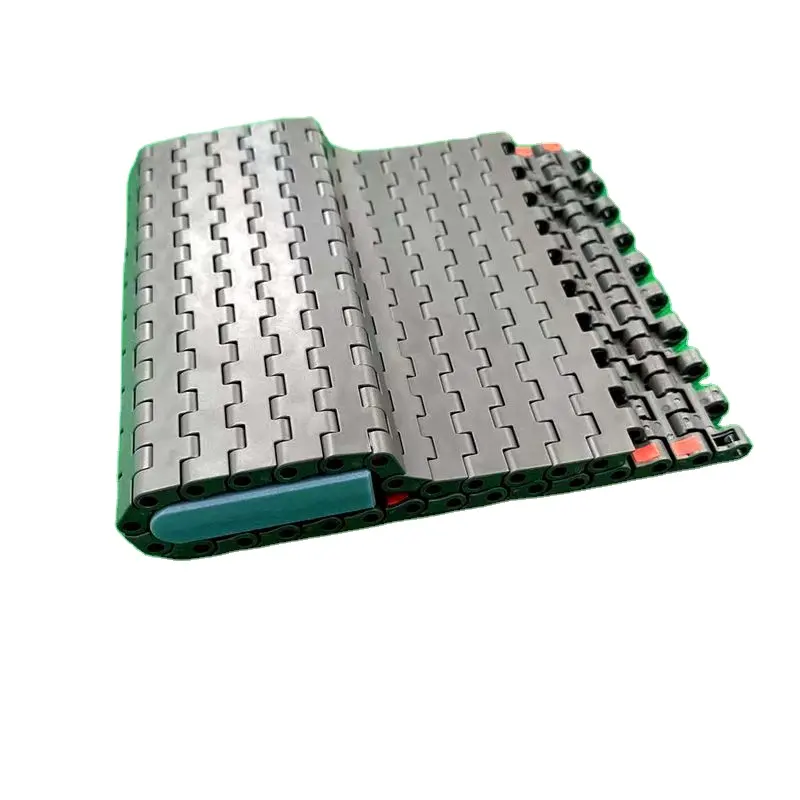
Quel est l'impact du choix du lubrifiant sur les performances d'une chaîne de transmission ?
Le choix du lubrifiant est crucial pour garantir des performances optimales et une longue durée de vie à une chaîne de transmission. Voici une réponse détaillée à cette question :
1. Réduction des frottements et de l'usure : Les lubrifiants créent un film protecteur entre les pièces mobiles de la chaîne de transmission, réduisant ainsi les frottements et l'usure. Cela contribue à minimiser le contact métal sur métal et à prévenir les dommages de surface, prolongeant la durée de vie de la chaîne.
2. Amélioration de l'efficacité : Une lubrification adéquate réduit les pertes d'énergie dues au frottement, améliorant ainsi l'efficacité globale du système de transmission. En réduisant la résistance au frottement, le lubrifiant assure une transmission de puissance plus fluide, diminuant la consommation d'énergie et augmentant l'efficacité du système.
3. Dissipation de la chaleur : Les lubrifiants contribuent à la dissipation de la chaleur en absorbant et en dissipant la chaleur générée lors du fonctionnement de la chaîne. Ceci permet d’éviter une élévation excessive de la température de la chaîne, qui peut entraîner une usure accélérée, la dégradation du lubrifiant et une rupture potentielle de la chaîne.
4. Protection contre la corrosion : Les lubrifiants forment une barrière protectrice contre l’humidité et autres agents corrosifs. Ils contribuent ainsi à prévenir la rouille et la corrosion, qui peuvent fragiliser la chaîne et réduire ses performances. Le choix d’un lubrifiant anticorrosion est essentiel, notamment dans les environnements agressifs ou corrosifs.
5. Élimination des contaminants : Les lubrifiants contribuent à éliminer les contaminants tels que la saleté, la poussière et les débris des surfaces de contact de la chaîne. Ceci empêche les particules abrasives de provoquer une usure prématurée et d’endommager la chaîne, assurant ainsi un fonctionnement fluide et réduisant le risque de rupture.
6. Stabilité thermique : La stabilité thermique des lubrifiants varie. Il est essentiel de choisir un lubrifiant capable de conserver sa viscosité et ses propriétés lubrifiantes dans la plage de températures de fonctionnement de la chaîne de transmission. Ceci garantit une lubrification et des performances constantes quelles que soient les conditions de température.
7. Compatibilité : Il est important de choisir un lubrifiant compatible avec les matériaux de la chaîne de transmission. Certains lubrifiants peuvent réagir avec certains matériaux, entraînant une dégradation ou des dommages. Garantir la compatibilité permet de préserver l’intégrité de la chaîne et d’éviter tout problème.
8. Intervalle de lubrification : Le choix du lubrifiant influe également sur l’intervalle de lubrification, c’est-à-dire la fréquence à laquelle la chaîne doit être relubrifiée. Certains lubrifiants offrent une lubrification plus durable, réduisant ainsi les besoins de maintenance et les temps d’arrêt liés à des relubrifications fréquentes.
Il est essentiel de suivre les recommandations et les directives du fabricant concernant la lubrification de la chaîne de transmission. Un contrôle régulier, une surveillance attentive et un entretien approprié doivent être mis en œuvre afin de garantir une lubrification optimale de la chaîne et, par conséquent, des performances et une durée de vie maximales.
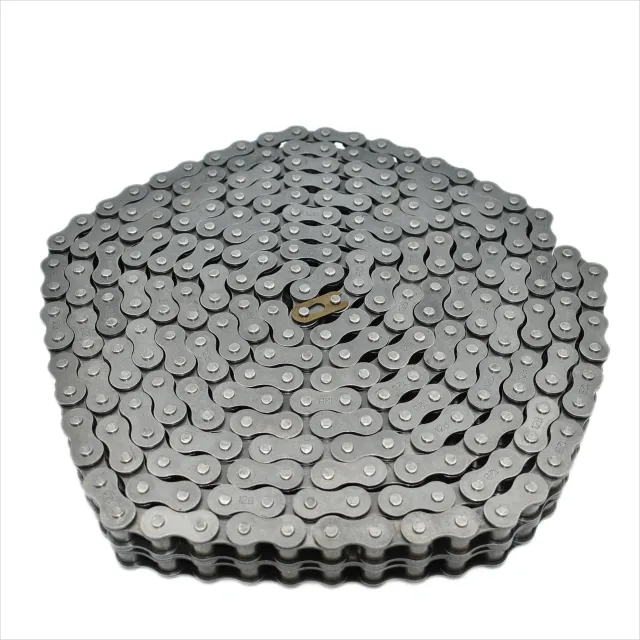
Quels sont les différents types de chaînes de transmission disponibles ?
Il existe plusieurs types de chaînes de transmission, chacune conçue pour des applications et des conditions de fonctionnement spécifiques. Voici quelques types courants :
- Chaînes à rouleaux : Les chaînes à rouleaux sont le type de chaînes de transmission le plus répandu. Elles se composent de plaques intérieures et extérieures, d’axes, de bagues et de rouleaux. Ces derniers contribuent à réduire la friction et à assurer un mouvement fluide.
- Chaînes silencieuses : Les chaînes silencieuses, également appelées chaînes à denture inversée ou chaînes crantées, sont dotées de profils de dents spécifiques qui s’engrènent avec des pignons correspondants. Elles sont conçues pour minimiser le bruit et les vibrations, ce qui les rend idéales pour les applications exigeant un fonctionnement silencieux.
- Chaînes à maillons plats : Les chaînes à maillons plats sont constituées de maillons imbriqués en tôle d’acier. Elles sont reconnues pour leur haute résistance à la traction et à la fatigue, ce qui les rend idéales pour les applications exigeantes et soumises à des charges importantes.
- Chaînes de distribution : Les chaînes de distribution servent à synchroniser la rotation de l’arbre à cames et du vilebrequin dans les moteurs. Leurs dents, au profil précis, s’engrènent avec les pignons de distribution, assurant ainsi un calage précis et un rendement moteur optimal.
- Chaînes en acier technique : Les chaînes en acier technique sont des chaînes hautement spécialisées, conçues pour des industries et des applications spécifiques. Elles sont souvent utilisées dans des environnements exigeants tels que les mines, la foresterie et la manutention.
- Chaînes en plastique : Fabriquées à partir de matériaux plastiques haute résistance comme l’acétal ou le nylon, les chaînes en plastique présentent l’avantage d’être résistantes à la corrosion, légères et silencieuses. Elles sont couramment utilisées dans l’industrie agroalimentaire, l’emballage et d’autres secteurs soumis à des exigences d’hygiène strictes.
Ce ne sont là que quelques exemples de types de chaînes de transmission. Selon l'application, d'autres chaînes spécialisées peuvent être disponibles pour répondre aux exigences spécifiques de différents secteurs et machines.
En quoi les chaînes à rouleaux diffèrent-elles des autres types de chaînes de transmission ?
Les chaînes à rouleaux, également appelées chaînes à maillons à rouleaux, sont un type de chaîne de transmission couramment utilisé qui se distingue des autres chaînes de plusieurs manières :
- Conception : Les chaînes à rouleaux sont composées de plaques intérieure et extérieure, d’axes, de bagues et de rouleaux. La rotation libre des rouleaux contribue à réduire la friction et l’usure, assurant ainsi une transmission de puissance plus fluide et plus efficace.
- Large champ d'application : Les chaînes à rouleaux sont polyvalentes et largement utilisées dans diverses industries, notamment l'automobile, les machines industrielles, les équipements agricoles et les systèmes de convoyage.
- Capacité de charge élevée : les chaînes à rouleaux sont conçues pour supporter des charges élevées et offrent une excellente résistance à la traction, ce qui les rend adaptées aux applications exigeant des performances robustes.
- Efficacité : Les chaînes à rouleaux sont reconnues pour leur haute efficacité de transmission de puissance. La conception des rouleaux minimise les frottements, ce qui réduit les pertes d’énergie et améliore l’efficacité globale.
- Rapport coût-efficacité : Les chaînes à rouleaux sont relativement économiques par rapport à certaines autres chaînes de transmission spécialisées, ce qui en fait un choix populaire dans de nombreuses applications.
Bien que les chaînes à rouleaux présentent des avantages, il est important de noter que différents types de chaînes de transmission peuvent être plus adaptés à des applications spécifiques. Des facteurs tels que la capacité de charge, la vitesse, le niveau sonore et les conditions environnementales doivent être pris en compte lors du choix de la chaîne de transmission appropriée à une application particulière.


Édité par CX le 04/04/2024