Productbeschrijving
ISO/ANSI/DIN-standaard precisie roestvrijstalen bevestigingsmaterialen met korte steek voor transmissie, motorfietsen en industriële rollenkettingen
Productbeschrijving
1. Materiaal: Roestvrij staal 304 & 316 / Gelegeerd koolstofstaal
2. Oppervlaktebehandeling: Straalbewerking / Verzinkt / Vernikkeld / Met Dacromet gecoat
3. Kettingnr.:
35SS-1, 40SS-1, 50SS-1, 60SS-1, 80SS-1, 100SS-1, 120SS-1, 140SS-1;
35SS-2, 40SS-2, 50SS-2, 60SS-2, 80SS-2, 100SS-2, 120SS-2, 140SS-2;
35SS-3, 40SS-3, 50SS-3, 60SS-3, 80SS-3, 100SS-3, 120SS-3, 140SS-3;
4. Toepassing: Roestvrijstalen kettingen worden in talloze industrieën gebruikt, zoals de machinebouw, de voedselverwerkende industrie, enzovoort. Ze zijn bovendien geschikt voor zowel hoge als lage temperaturen.
5. Kenmerk:
1. De ketting kan aan beide zijden van een meerassige transmissie worden gebruikt.
2. Eenvoudige installatie en vervanging.
3. Het kan een grotere reductieverhouding opleveren.
4. De rollenketting heeft een goede elasticiteit, hoge sterkte en elk scharnierpunt is voorzien van smeerolie, waardoor hij gemakkelijk op te bergen is. Daardoor heeft hij, vergeleken met een starre tandwieloverbrenging, een goede demping en trillingsabsorberende werking.
| Productnaam | Roestvrijstalen rollenketting uit China |
| Beschikbare materialen | 1. Roestvrij staal: SS304, SS316, enz. |
| 2. Gelegeerd staal: 45Mn, 42CrMo, 20CrMo, enz. | |
| 3. OEM volgens uw wensen | |
| Oppervlaktebehandeling | Straalbewerking, zwartmaken, oxygenatie, polijsten, verzinken, vernikkelen, anodiseren, enz. |
| Kenmerkend | Brandwerend, oliebestendig, hittebestendig |
| Ontwerpcriterium | ISO DIN ANSI & klanttekening |
| Maat | Tekening van de klant en ISO-norm |
| Pakket | Houten kist/container en pallet, of op maat gemaakt. |
| Certificaat | ISO 9001: 2008 |
| Voordeel | Eersteklas kwaliteit, uitstekende service, scherpe prijs, snelle levering. |
| Levertijd | 20 dagen voor samples. 45 dagen voor officiële bestellingen. |
Gedetailleerde foto's
Bekijk meer producten door hier te klikken…
Bedrijfsprofiel
| Gebruik: | Transmissieketting |
|---|---|
| Materiaal: | Roestvrij staal |
| Structuur: | Rollenketting |
| 80-1: | 1" |
| Maat: | 50ss-1 |
| Ander: | Corrosiebestendigheid |
| Voorbeelden: |
US$ 0/Meter
1 meter (minimale bestelling) | |
|---|
| Aanpassing: |
Beschikbaar
| Aanvraag op maat |
|---|
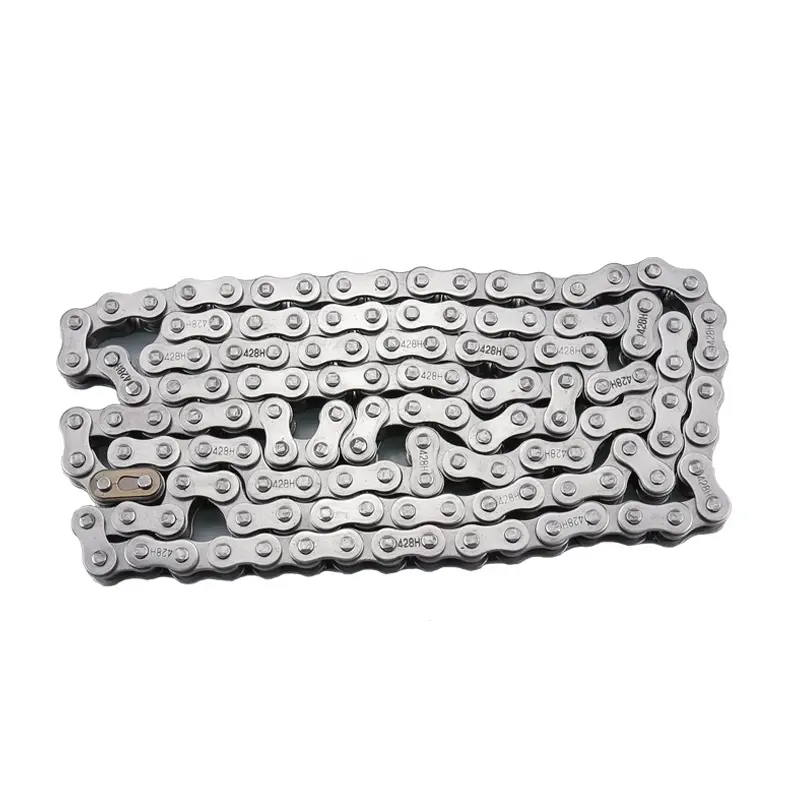
Wat zijn de voordelen van het gebruik van een onderhoudsvrij smeermiddel voor een transmissieketting?
Het gebruik van een onderhoudsvrij smeermiddel voor een transmissieketting biedt diverse voordelen. Hier volgt een gedetailleerd antwoord op de vraag:
1. Langere levensduur van de ketting: Onderhoudsvrije smeermiddelen zijn speciaal samengesteld om langdurige smering te bieden, waardoor wrijving en slijtage van de transmissieketting worden verminderd. Dit verlengt de levensduur van de ketting en minimaliseert de noodzaak tot frequent smeren of opnieuw aanbrengen.
2. Minder stilstand en lagere onderhoudskosten: Met een onderhoudsvrij smeermiddel is regelmatige smering of gepland onderhoud niet nodig. Dit vermindert de stilstandtijd voor smeer- en onderhoudswerkzaamheden aanzienlijk, wat resulteert in kostenbesparingen en een hogere productiviteit.
3. Verbeterde prestaties en efficiëntie: Het gebruik van een onderhoudsvrij smeermiddel zorgt voor een constante en optimale smering gedurende de gehele levensduur van de ketting. Dit leidt tot betere prestaties, een soepelere werking en minder vermogensverlies door wrijving. Het helpt ook om de efficiëntie van de ketting op lange termijn te behouden.
4. Milieuvriendelijk: Onderhoudsvrije smeermiddelen hebben vaak een lage milieubelasting. Ze zijn ontworpen om lekkage te minimaliseren, afval te verminderen en een betere weerstand te bieden tegen de ophoping van vuil en stof. Dit bevordert een schonere en veiligere werkomgeving.
5. Vereenvoudigde onderhoudsroutine: Door een onderhoudsvrij smeermiddel te gebruiken, is regelmatige smering en onderhoud niet meer nodig of wordt deze aanzienlijk verminderd. Dit vereenvoudigt de onderhoudsroutine, bespaart tijd en stelt operators in staat zich te concentreren op andere cruciale taken.
6. Constante smering in veeleisende omgevingen: Onderhoudsvrije smeermiddelen zijn ontworpen om bestand te zijn tegen zware bedrijfsomstandigheden, zoals hoge temperaturen, extreme drukken of blootstelling aan verontreinigingen. Ze bieden betrouwbare smering, zelfs in veeleisende omgevingen, waardoor optimale prestaties en een lange levensduur van de ketting worden gegarandeerd.
Bij het overwegen van het gebruik van een onderhoudsvrij smeermiddel is het belangrijk om de fabrikant of leverancier te raadplegen om de compatibiliteit met de transmissieketting en de specifieke toepassingsvereisten te garanderen. Door de aanbevolen richtlijnen voor het aanbrengen en opnieuw aanbrengen te volgen, en door regelmatige inspecties uit te voeren, kunt u de voordelen van het gebruik van een onderhoudsvrij smeermiddel op de transmissieketting optimaliseren.
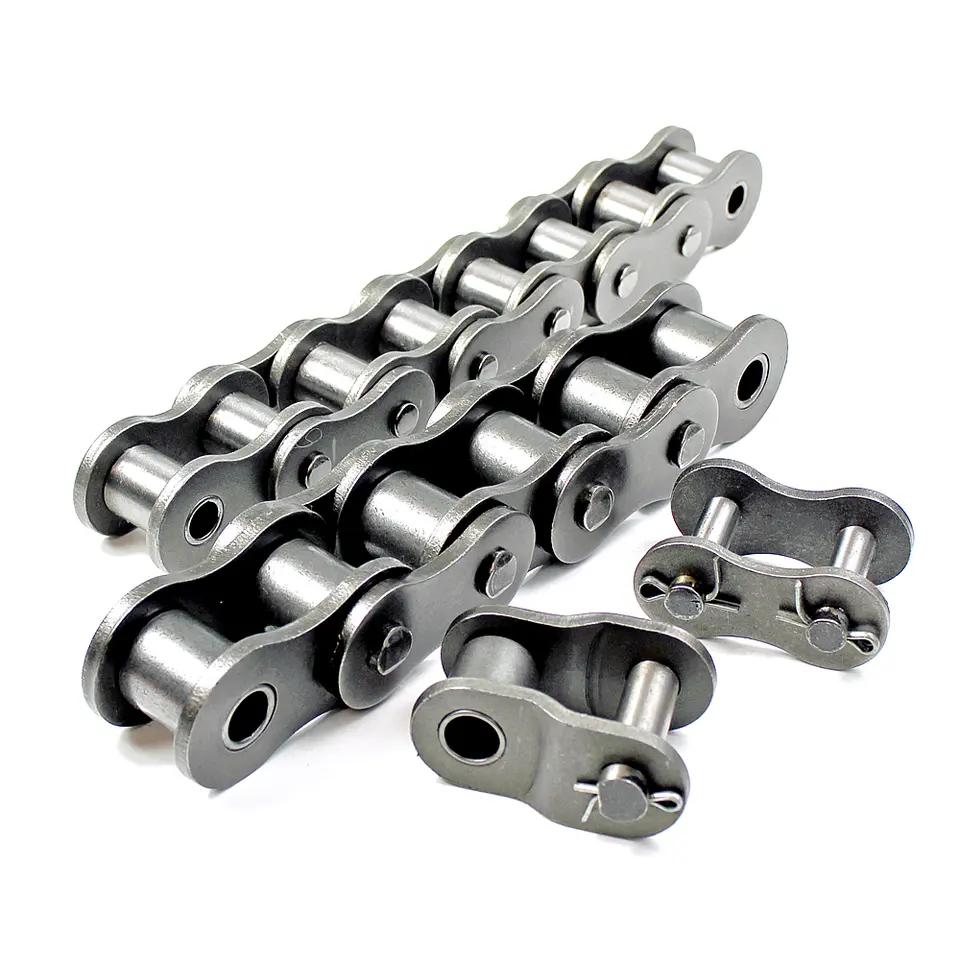
Kunnen transmissiekettingen worden gebruikt in transportsystemen?
Ja, transmissiekettingen kunnen in transportsystemen worden gebruikt. Hier volgt een gedetailleerd antwoord op de vraag:
Transportbandsystemen worden in diverse industrieën veelvuldig gebruikt voor efficiënte materiaalverwerking en -transport. Aandrijfkettingen zijn een van de belangrijkste componenten die de beweging van transportbanden of -rollen aandrijven en ondersteunen.
Transmissiekettingen bieden diverse voordelen in transportsystemen:
1. Krachtoverbrenging: Transmissiekettingen zijn ontworpen om effectief kracht over te brengen, waardoor ze de beweging van de transportband of rollen mogelijk maken. Ze kunnen hoge belastingen aan en zorgen voor een betrouwbare krachtoverbrenging, wat een soepele en constante werking van het transportsysteem garandeert.
2. Veelzijdigheid: Transmissiekettingen zijn verkrijgbaar in verschillende maten, types en configuraties, waardoor ze geschikt zijn voor een breed scala aan transportbandtoepassingen. Ze kunnen worden aangepast aan verschillende ontwerpen en eisen van transportbandsystemen, waaronder rechte transportbanden, gebogen transportbanden, hellende transportbanden en meer.
3. Duurzaamheid: Transmissiekettingen zijn ontworpen om de zware bedrijfsomstandigheden in transportsystemen te weerstaan. Ze zijn gemaakt van hoogwaardige materialen zoals staal, wat zorgt voor uitstekende sterkte en duurzaamheid. Dit garandeert dat de kettingen bestand zijn tegen zware belastingen, frequent starten en stoppen, en schurende omgevingen die vaak voorkomen in transportbandsystemen.
4. Flexibiliteit: Transmissiekettingen bieden flexibiliteit in de lay-out en configuratie van transportsystemen. Ze kunnen verschillende lengtes, breedtes en hoeken van transportbanden accommoderen, waardoor het systeem zich kan aanpassen aan ruimtebeperkingen en specifieke behoeften op het gebied van materiaalverwerking. Bovendien kunnen ze eenvoudig worden aangepast of uitgebreid naarmate de eisen aan het transportsysteem veranderen.
5. Weinig onderhoud: Transmissiekettingen vereisen regelmatig onderhoud om optimale prestaties en een lange levensduur te garanderen. In vergelijking met andere aandrijfsystemen, zoals riemen of tandwielen, hebben transmissiekettingen over het algemeen echter minder onderhoud nodig. Goede smering, het op spanning brengen van de ketting en periodieke inspecties zijn essentieel om slijtage te minimaliseren en een betrouwbare werking van het transportsysteem te waarborgen.
Over het algemeen zijn aandrijfkettingen een betrouwbare en efficiënte oplossing voor het aandrijven van transportsystemen. Ze bieden een robuuste krachtoverbrenging, veelzijdigheid in systeemontwerp, duurzaamheid in veeleisende omgevingen, flexibiliteit in de lay-out en relatief lage onderhoudsvereisten. Mits correct geselecteerd en onderhouden, kunnen aandrijfkettingen bijdragen aan de soepele en efficiënte werking van transportsystemen in diverse industrieën.
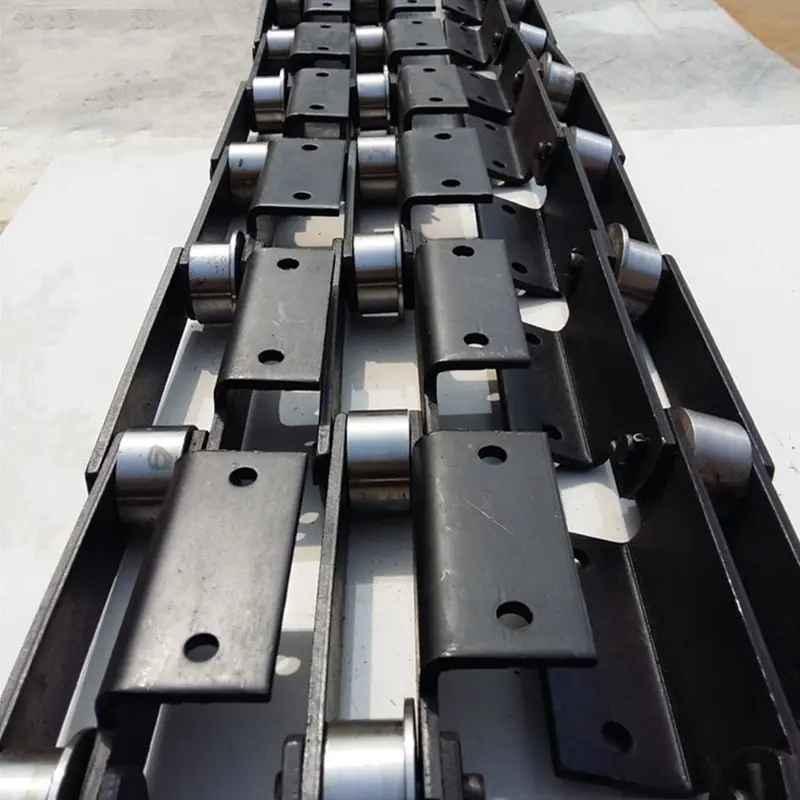
Zijn er specifieke smeervoorschriften voor transmissiekettingen?
Ja, transmissiekettingen vereisen doorgaans een goede smering om een soepele werking te garanderen, slijtage te verminderen en hun levensduur te verlengen. Hieronder vindt u enkele belangrijke punten met betrekking tot de smeervereisten voor transmissiekettingen:
- Schone en adequate smering: Het is belangrijk om de ketting voldoende te smeren om wrijving en slijtage tussen de kettingonderdelen te minimaliseren. Smering helpt warmteontwikkeling te verminderen en voorkomt metaal-op-metaalcontact, wat kan leiden tot voortijdige slijtage en breuk.
- De juiste smeermiddelkeuze: Het kiezen van het juiste smeermiddel is cruciaal voor optimale kettingprestaties. Factoren waarmee rekening moet worden gehouden bij de selectie van een smeermiddel zijn onder andere de toepassingstemperatuur, de belasting, de snelheid en omgevingsfactoren. Smeermiddelen moeten goede hechtende eigenschappen hebben, bestand zijn tegen oxidatie en voldoende filmsterkte bieden om de kettingoppervlakken te beschermen.
- Juiste smeerinterval: Regelmatig smeren met de juiste tussenpozen is noodzakelijk om de prestaties van de ketting te behouden en het risico op overmatige slijtage te verminderen. De smeerfrequentie hangt af van de bedrijfsomstandigheden en het specifieke smeermiddel dat wordt gebruikt. Fabrikanten geven doorgaans aanbevelingen voor smeerintervallen op basis van het type ketting en de toepassing.
- Effectieve smering: Een juiste toepassing van smeermiddel is essentieel voor een gelijkmatige dekking en penetratie in de kettingonderdelen. Het smeermiddel moet worden aangebracht op de binnenste schakelplaten, de roloppervlakken en de pen-busverbindingen. Overtollig smeermiddel moet worden verwijderd om ophoping en vervuiling te voorkomen.
- Omgevingsfactoren: In bepaalde omgevingen, zoals stoffige of vuile omstandigheden, kan het nodig zijn de ketting vaker te smeren om het binnendringen van verontreinigingen te voorkomen en een goede smeerfilm te behouden. Daarnaast kunnen bij toepassingen met hoge temperaturen of hoge snelheden speciale smeermiddelen voor hoge temperaturen of hoge snelheden nodig zijn.
- Regelmatige inspectie en onderhoud: Naast de juiste smering zijn regelmatige inspectie en onderhoud van de transmissieketting essentieel. Dit omvat het controleren op slijtage, degradatie van het smeermiddel en de juiste spanning. Beschadigde of versleten onderdelen moeten onmiddellijk worden vervangen om kettingbreuk te voorkomen.
Door de aanbevelingen van de fabrikant op te volgen en de specifieke smeervoorschriften voor de transmissieketting in acht te nemen, worden optimale prestaties gegarandeerd, slijtage verminderd en de levensduur van de ketting verlengd.


Bewerkt door CX 2023-10-21