产品描述
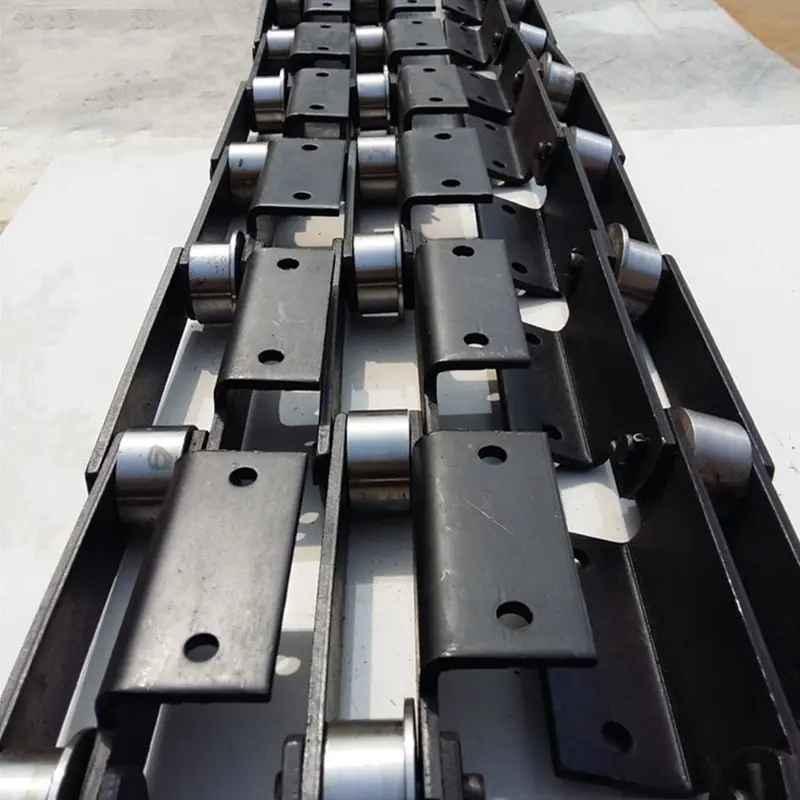
ISO/ANSI/DIN 标准短节距精密不锈钢五金传动摩托车工业滚子链
产品描述
1. 材质: 304 和 316 不锈钢 / 合金碳钢
2. 表面处理: 喷丸处理/镀锌/镀镍/镀达克罗
3. 链号:
35SS-1、40SS-1、50SS-1、60SS-1、80SS-1、100SS-1、120SS-1、140SS-1;
35SS-2、40SS-2、50SS-2、60SS-2、80SS-2、100SS-2、120SS-2、140SS-2;
35SS-3、40SS-3、50SS-3、60SS-3、80SS-3、100SS-3、120SS-3、140SS-3;
4. 应用: 不锈钢链条广泛应用于机械制造、食品机械等众多行业,并且适用于高低温环境。
5. 特点:
1. 链条可用于多轴传动的两侧。
2. 安装和更换简便。
3. 可以获得更大的压缩比。
4. 滚子链具有良好的弹性、高强度,且每个铰接部件都涂有润滑油,因此易于存放。与刚性接触齿相比,它具有良好的缓冲和减振能力。
| 产品名称 | 中国产不锈钢滚子链 |
| 可用材料 | 1. 不锈钢:SS304、SS316 等 |
| 2. 合金钢:45Mn、42CrMo、20CrMo 等 | |
| 3. 根据您的要求进行OEM生产 | |
| 表面处理 | 喷丸处理、发黑处理、氧化处理、抛光处理、镀锌处理、镀镍处理、阳极氧化处理等。 |
| 特征 | 防火、耐油、耐热 |
| 设计标准 | ISO DIN ANSI 和客户图纸 |
| 尺寸 | 客户图纸和 ISO 标准 |
| 包裹 | 木箱/集装箱和托盘,或按需定制 |
| 证书 | ISO9001:2008 |
| 优势 | 品质一流,服务周到,价格实惠,发货迅速 |
| 交货时间 | 样品需要20天,正式订单需要45天。 |
详细照片
查看更多产品,请点击这里…
公司简介
| 用法: | 传动链 |
|---|---|
| 材料: | 不锈钢 |
| 结构: | 滚子链 |
| 80-1: | 1" |
| Size: | 50ss-1 |
| Other: | Corrosion Resistance |
| 示例: |
US$ 0/米
1米(最小起订量) | |
|---|
| 定制化: |
可用的
| 定制请求 |
|---|
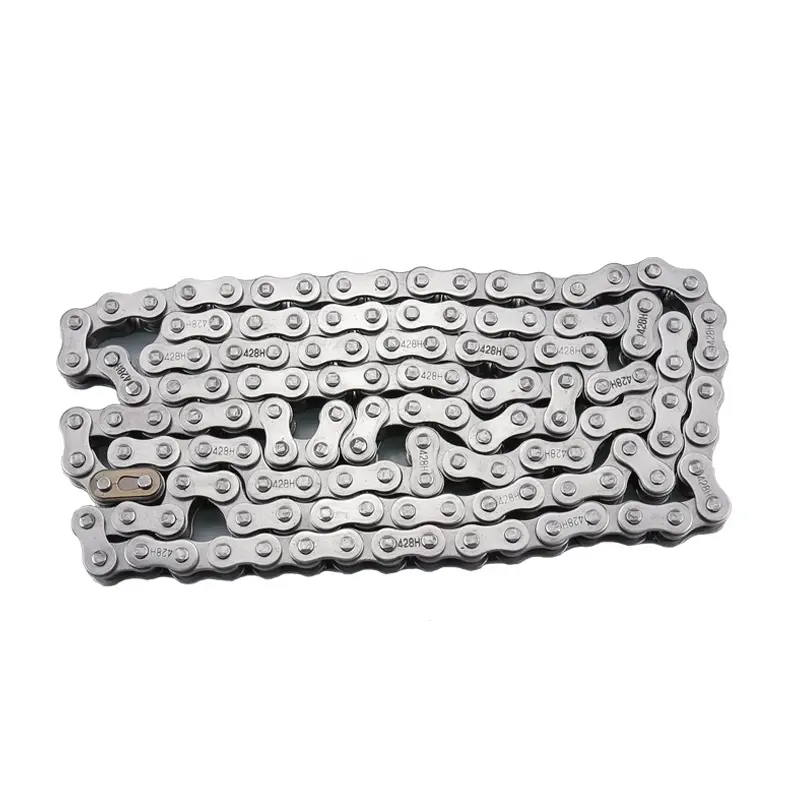
在传动链条上使用免维护润滑剂有什么好处?
在传动链条上使用免维护润滑剂有诸多优势。以下是对此问题的详细解答:
1. 延长链条寿命:免维护润滑剂采用特殊配方,可提供持久润滑,减少传动链条的摩擦和磨损。这延长了链条的使用寿命,并最大限度地减少了频繁润滑或重新涂抹润滑剂的需要。
2. 减少停机时间和维护成本:使用免维护润滑剂,无需定期润滑或设定维护周期。这显著减少了润滑和维护作业的停机时间,从而节省成本并提高生产效率。
3. 性能和效率提升:使用免维护润滑剂可确保链条在整个运行过程中获得持续且最佳的润滑。这有助于提升性能,使运行更平稳,并减少摩擦造成的动力损失。同时,也有助于长期保持链条的效率。
4. 环保:免维护润滑剂通常对环境影响较小。它们旨在最大限度地减少泄漏、减少浪费,并能更好地抵抗污垢和碎屑的积聚。这有助于营造更清洁、更安全的工作环境。
5. 简化维护流程:使用免维护润滑剂,可消除或显著减少定期润滑和维护程序的需求。这简化了维护流程,节省了时间,并使操作人员能够专注于其他关键任务。
6. 在严苛环境下保持稳定润滑:免维护润滑剂专为应对高温、极端压力或污染物等恶劣工况而设计。即使在严苛环境下,它们也能提供可靠的润滑,确保链条的正常性能和使用寿命。
考虑使用免维护润滑油时,务必咨询制造商或润滑油供应商,以确保其与传动链及其具体应用要求兼容。遵循推荐的涂抹和重新涂抹指南,并定期检查,将有助于最大限度地发挥免维护润滑油在传动链上的优势。
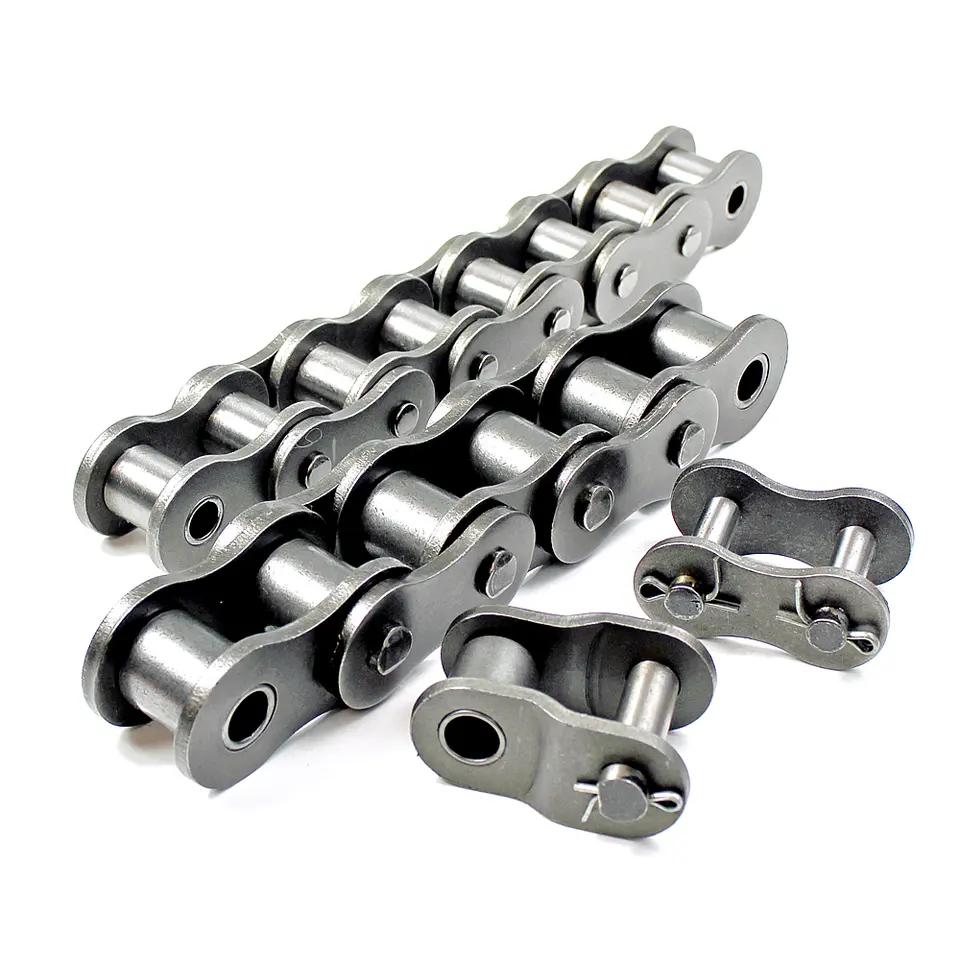
Can transmission chains be used in conveyor systems?
Yes, transmission chains can be used in conveyor systems. Here’s a detailed answer to the question:
Conveyor systems are widely used in various industries for efficient material handling and transportation. Transmission chains are one of the key components used to drive and support the movement of conveyor belts or rollers.
Transmission chains offer several advantages in conveyor systems:
1. Power Transmission: Transmission chains are designed to transmit power effectively, allowing them to drive the movement of the conveyor belt or rollers. They can handle high loads and provide reliable power transfer, ensuring smooth and consistent operation of the conveyor system.
2. Versatility: Transmission chains are available in various sizes, types, and configurations, making them suitable for a wide range of conveyor applications. They can be customized to fit different conveyor system designs and requirements, including straight conveyors, curved conveyors, inclined conveyors, and more.
3. Durability: Transmission chains are built to withstand rigorous operating conditions in conveyor systems. They are made from high-quality materials such as steel, which offers excellent strength and durability. This ensures that the chains can withstand heavy loads, frequent starts and stops, and abrasive environments commonly encountered in conveyor applications.
4. Flexibility: Transmission chains allow for flexibility in conveyor system layout and configuration. They can accommodate different conveyor lengths, widths, and angles, enabling the system to adapt to space constraints and specific material handling needs. Additionally, they can be easily modified or extended as the conveyor system requirements evolve.
5. Low Maintenance: Transmission chains require regular maintenance to ensure optimal performance and longevity. However, compared to other types of power transmission systems, such as belts or gears, transmission chains generally have lower maintenance requirements. Proper lubrication, tensioning, and periodic inspections are essential to minimize wear and ensure reliable operation of the conveyor system.
Overall, transmission chains are a reliable and efficient solution for powering conveyor systems. They provide robust power transmission, versatility in system design, durability in demanding environments, flexibility in layout, and relatively low maintenance requirements. When properly selected and maintained, transmission chains can contribute to the smooth and efficient operation of conveyor systems in various industries.

Are there specific lubrication requirements for transmission chains?
Yes, transmission chains typically require proper lubrication to ensure smooth operation, reduce wear, and prolong their service life. Here are some key points regarding lubrication requirements for transmission chains:
- Clean and Adequate Lubrication: It is important to keep the chain adequately lubricated to minimize friction and wear between the chain components. Lubrication helps reduce heat generation and prevents metal-to-metal contact, which can lead to premature wear and failure.
- Appropriate Lubricant Selection: Choosing the right lubricant is crucial for optimal chain performance. Factors to consider when selecting a lubricant include the application temperature, load conditions, speed, and environmental factors. Lubricants should have good adhesion properties, resist oxidation, and provide sufficient film strength to protect the chain surfaces.
- Proper Lubrication Interval: Regular lubrication at appropriate intervals is necessary to maintain the chain’s performance and reduce the risk of excessive wear. The lubrication frequency depends on the operating conditions and the specific lubricant used. Manufacturers usually provide recommendations for lubrication intervals based on the chain type and application.
- Effective Lubrication Application: Proper application of lubricant is essential to ensure uniform coverage and penetration into the chain components. The lubricant should be applied to the inner link plates, roller surfaces, and pin-bushing interfaces. Excess lubricant should be removed to prevent buildup and contamination.
- Environmental Considerations: In certain environments, such as dusty or dirty conditions, the chain may require more frequent lubrication to prevent the ingress of contaminants and maintain proper lubrication film. Additionally, in high-temperature or high-speed applications, special high-temperature or high-speed lubricants may be necessary.
- Regular Inspection and Maintenance: Along with proper lubrication, regular inspection and maintenance of the transmission chain are essential. This includes checking for signs of wear, lubricant degradation, and proper tension. Any damaged or worn components should be replaced promptly to prevent chain failure.
Following the manufacturer’s recommendations and adhering to the specific lubrication requirements for the transmission chain will help ensure optimal performance, reduce wear, and extend the chain’s lifespan.


editor by CX 2023-10-21