Descrição do produto
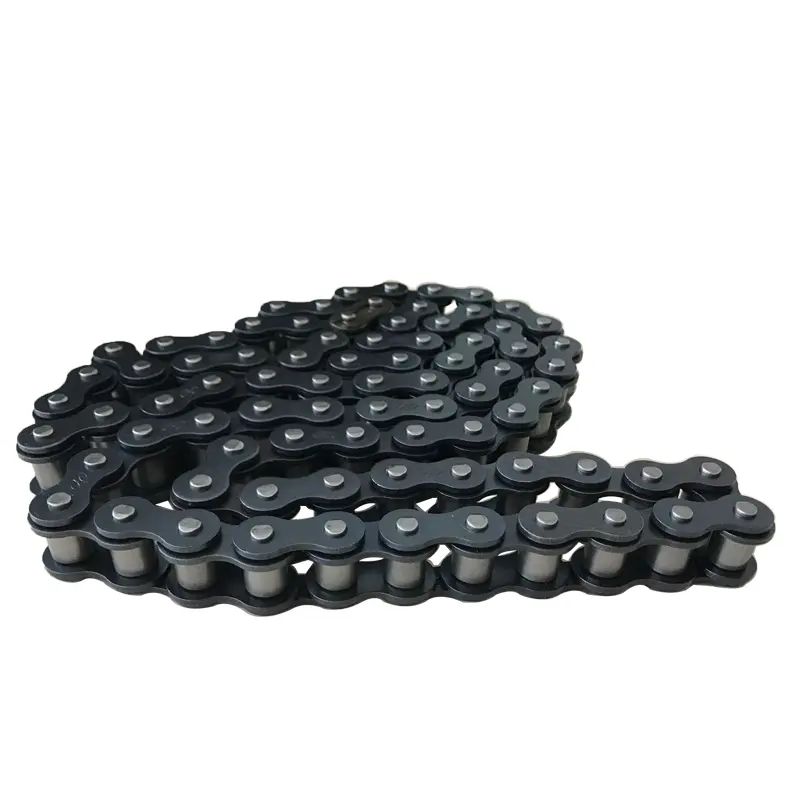
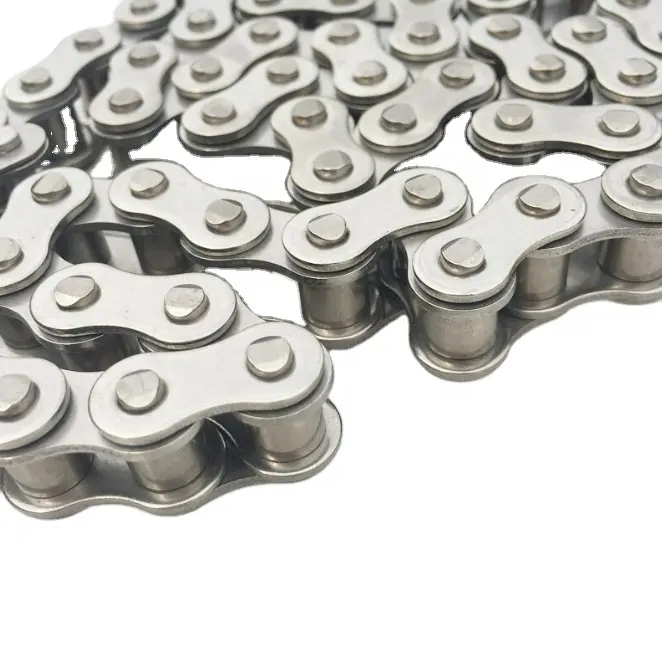
Corrente de rolos industrial de precisão com passo curto, em aço inoxidável, para transmissão, motocicletas e outros veículos, nos padrões ISO/ANSI/DIN.
Descrição do produto
1. Material: Aço inoxidável 304 e 316 / Aço carbono liga
2. Tratamento de superfície: Jateamento com esferas / Zincado / Niquelado / Revestido com Dacromet
3. Número da cadeia:
35SS-1, 40SS-1, 50SS-1, 60SS-1, 80SS-1, 100SS-1, 120SS-1, 140SS-1;
35SS-2, 40SS-2, 50SS-2, 60SS-2, 80SS-2, 100SS-2, 120SS-2, 140SS-2;
35SS-3, 40SS-3, 50SS-3, 60SS-3, 80SS-3, 100SS-3, 120SS-3, 140SS-3;
4. Aplicação: As correntes de aço inoxidável são utilizadas em diversos setores, como a fabricação de máquinas, máquinas para a indústria alimentícia, etc. São adequadas tanto para condições de alta quanto de baixa temperatura.
5. Característica:
1. A corrente pode ser usada em ambos os lados da transmissão de múltiplos eixos.
2. Fácil instalação e substituição.
3. Pode-se obter uma taxa de redução maior.
4. A corrente de rolos possui boa elasticidade, alta resistência e cada articulação é lubrificada com óleo, facilitando o armazenamento. Assim, em comparação com a corrente de dentes rígidos, apresenta boa capacidade de amortecimento e absorção de vibrações.
| Nome do produto | Corrente de rolos de aço inoxidável da China |
| Materiais disponíveis | 1. Aço inoxidável: SS304, SS316, etc. |
| 2. Aço-liga: 45Mn, 42CrMo, 20CrMo, etc. | |
| 3. Fabricação sob encomenda (OEM) de acordo com sua solicitação. | |
| Tratamento de superfície | Jateamento com esferas, escurecimento, oxigenação, polimento, zincagem, niquelagem, anodização, etc. |
| Característica | Resistente ao fogo, resistente a óleo, resistente ao calor. |
| Critério de projeto | ISO DIN ANSI e desenho do cliente |
| Tamanho | Desenho do cliente e norma ISO |
| Pacote | Caixa/contêiner de madeira e palete, ou fabricado sob encomenda. |
| Certificado | ISO9001: 2008 |
| Vantagem | Qualidade superior, melhor serviço, preço competitivo, entrega rápida. |
| Prazo de entrega | 20 dias para amostras. 45 dias para pedidos oficiais. |
Fotos detalhadas
Veja mais produtos, clique aqui…
perfil de companhia
| Uso: | Corrente de transmissão |
|---|---|
| Material: | Aço inoxidável |
| Estrutura: | Corrente de rolos |
| 80-1: | 1" |
| Tamanho: | 50ss-1 |
| Outro: | Resistência à corrosão |
| Exemplos: |
US$ 0/Metro
1 metro (pedido mínimo) | |
|---|
| Personalização: |
Disponível
| Solicitação personalizada |
|---|
Quais são os benefícios de usar uma cadeia de transmissão de baixo ruído?
Utilizar uma cadeia de transmissão de baixo ruído em aplicações industriais oferece diversas vantagens. Aqui está uma resposta detalhada para a pergunta:
1. Redução de Ruído: Um dos principais benefícios de usar uma esteira transportadora de baixo ruído é a redução dos níveis de ruído. Essas esteiras são projetadas com características e materiais especiais para minimizar vibrações, impactos e ruídos induzidos por atrito durante a operação. Isso é particularmente importante em ambientes onde a redução de ruído é crucial, como em áreas residenciais, escritórios ou indústrias sensíveis ao ruído.
2. Ambiente de trabalho aprimorado: Ao reduzir os níveis de ruído, as correntes de transmissão de baixo ruído contribuem para um ambiente de trabalho mais confortável e produtivo. O ruído excessivo pode levar à fadiga dos funcionários, diminuição da concentração e aumento dos níveis de estresse. O uso de correntes de baixo ruído ajuda a criar um espaço de trabalho mais silencioso, promovendo melhores condições de trabalho e bem-estar geral.
3. Conformidade com as normas de ruído: Em certos setores ou regiões, existem normas ou diretrizes específicas relativas aos níveis de ruído aceitáveis. A utilização de sistemas de transmissão de baixo ruído pode ajudar a garantir a conformidade com essas normas, evitando possíveis multas ou problemas legais relacionados com emissões de ruído excessivas.
4. Desempenho aprimorado do equipamento: As correntes de transmissão de baixo ruído são projetadas para proporcionar uma transmissão de potência suave e eficiente, minimizando a geração de ruído. A redução da vibração e do ruído de impacto não só melhora o conforto no local de trabalho, como também aprimora o desempenho geral do equipamento. Isso pode contribuir para maior precisão, exatidão e confiabilidade das máquinas, resultando em melhor qualidade do produto e maior eficiência operacional.
5. Maior vida útil do equipamento: Ruídos e vibrações excessivos podem acelerar o desgaste dos componentes das máquinas, levando a maiores custos de manutenção e falhas prematuras. Ao utilizar uma corrente de transmissão silenciosa, o impacto nas peças mecânicas do equipamento é reduzido, resultando em menor desgaste, menores custos de manutenção e maior vida útil do equipamento.
6. Satisfação do Cliente: Em setores onde o ruído pode afetar a experiência do usuário final, como o automotivo, o de eletrônicos de consumo ou o de engenharia de precisão, o uso de cadeias de transmissão silenciosas pode contribuir para uma maior satisfação do cliente. Produtos que operam silenciosamente são frequentemente percebidos como de maior qualidade e podem levar a uma imagem de marca positiva e à fidelização do cliente.
É importante observar que os benefícios das correntes de transmissão silenciosas podem variar dependendo da aplicação específica e das condições de operação. Fabricantes e projetistas de equipamentos devem considerar fatores como capacidade de carga, velocidade, lubrificação e requisitos ambientais ao selecionar e implementar correntes de transmissão silenciosas.
De que forma a velocidade de rotação influencia a escolha da corrente de transmissão?
A velocidade de rotação é um fator importante a ser considerado na seleção de uma corrente de transmissão para uma aplicação específica. Aqui está uma resposta detalhada para a pergunta:
1. Fadiga e Desgaste: A velocidade de rotação afeta diretamente as características de fadiga e desgaste de uma corrente de transmissão. Velocidades de rotação mais altas resultam em maior carga cíclica e desgaste nos componentes da corrente. Portanto, é crucial escolher uma corrente projetada para suportar a velocidade prevista e as tensões de fadiga associadas.
2. Lubrificação e Refrigeração: Rotações mais altas geram mais calor devido ao atrito entre a corrente e as rodas dentadas. Uma lubrificação adequada é essencial para minimizar o atrito, reduzir o acúmulo de calor e manter o desempenho e a vida útil da corrente. Além disso, algumas aplicações de alta velocidade podem exigir mecanismos de refrigeração adicionais para dissipar o calor de forma eficaz.
3. Forças Centrífugas: À medida que a velocidade de rotação aumenta, as forças centrífugas tornam-se mais significativas. Essas forças podem afetar a estabilidade, a tensão e o desempenho geral da corrente. Correntes projetadas para aplicações de alta velocidade são fabricadas para suportar o aumento das forças centrífugas e manter a tensão adequada durante a operação.
4. Equilíbrio Dinâmico: A rotação em alta velocidade pode introduzir desequilíbrios dinâmicos no sistema de transmissão, causando vibrações e diminuindo a eficiência do sistema. Deve-se dar especial atenção à seleção de uma corrente de transmissão com características adequadas de equilíbrio dinâmico para minimizar vibrações e garantir uma operação suave.
5. Materiais e Design: Correntes para aplicações de alta velocidade frequentemente exigem materiais e características de design específicos para suportar as forças rotacionais aumentadas e manter a confiabilidade. Ligas de alta resistência, tolerâncias de fabricação precisas e tratamentos de superfície avançados podem ser empregados para melhorar o desempenho e a durabilidade da corrente em altas velocidades.
Ao selecionar uma corrente de transmissão, é crucial considerar as recomendações e especificações do fabricante em relação às velocidades máximas permitidas. Fatores como os requisitos operacionais da aplicação, a velocidade de rotação prevista, a carga e as condições ambientais devem ser levados em conta para garantir que a corrente escolhida seja adequada para a aplicação específica de alta velocidade.
Correntes de transmissão podem ser usadas em aplicações de alta velocidade?
Sim, correntes de transmissão podem ser usadas em aplicações de alta velocidade, mas é preciso levar em conta alguns pontos. Aqui está uma explicação detalhada:
1. Projeto da Corrente: Aplicações de alta velocidade exigem correntes de transmissão projetadas especificamente para suportar as altas velocidades de rotação e cargas dinâmicas. Essas correntes geralmente apresentam características como tratamentos de superfície especializados, materiais de alta qualidade e fabricação de precisão para garantir uma operação suave em altas velocidades.
2. Lubrificação: A lubrificação adequada é crucial em aplicações de alta velocidade para minimizar o atrito, a geração de calor e o desgaste. Lubrificantes com excelentes características para altas velocidades, como baixa viscosidade e alta resistência da película lubrificante, são geralmente recomendados. Em alguns casos, sistemas de lubrificação especializados, como circulação de óleo ou lubrificação por aspersão, podem ser utilizados para garantir lubrificação suficiente em altas velocidades.
3. Balanceamento: A operação em alta velocidade pode induzir vibração e desequilíbrio nas correntes de transmissão, levando ao aumento do estresse e à possibilidade de falha. O balanceamento da corrente e dos componentes associados, como rodas dentadas e eixos, é importante para minimizar a vibração e garantir uma operação suave em altas velocidades.
4. Tensionamento: O tensionamento correto da corrente de transmissão é crucial em aplicações de alta velocidade. Manter a tensão adequada ajuda a evitar o deslizamento da corrente, vibrações excessivas e desgaste prematuro. Dispositivos de tensionamento, como tensionadores automáticos ou sistemas com mola, podem ser usados para garantir a tensão ideal durante toda a operação.
5. Manutenção: Inspeções, lubrificação e manutenção regulares são vitais em aplicações de alta velocidade para detectar quaisquer problemas potenciais e resolvê-los prontamente. Verificações periódicas de desgaste, alinhamento adequado e eficácia da lubrificação podem ajudar a prevenir falhas inesperadas e garantir o desempenho confiável das correntes de transmissão.
É importante consultar fabricantes ou especialistas do setor para selecionar a corrente de transmissão apropriada, projetada e classificada especificamente para aplicações de alta velocidade. Seguindo as diretrizes e práticas de manutenção recomendadas, as correntes de transmissão podem operar de forma confiável e segura em ambientes de alta velocidade, atendendo aos requisitos de desempenho dessas aplicações.


Editor por CX 2023-10-25