Start from the symptom, not the replacement part
The quickest way to make this decision reliable is to define the operating condition first and postpone the chain number until the interfaces are known. Rust color alone does not define severity. The reliability question is whether corrosion has changed the load-carrying cross-section, joint articulation, roller function, dimensional wear, or sprocket engagement.
A practical way to use the roller and transmission chain range is to narrow the product family after the machine has supplied evidence for surface rust and pitting corrosion. The selected option should then survive this check: inspect the exposed surfaces under good lighting before assigning severity. If it does not, return to the duty or geometry rather than adding an arbitrary safety margin.
Heavy deposits can hide pits and cracks while aggressive cleaning can damage coatings or seals. The practical release check is to inspect the exposed surfaces under good lighting before assigning severity.
- Surface Rust
- Capture this input from a drawing, measurement, calculation, or operating record before the decision advances.
- Pitting Corrosion
- Treat this as a controlled variable; note its value, unit, operating state, and source in the job record.
- Stiff Joint
- Verify this item against the physical drive and the current supplier data instead of estimating it from appearance.
- Section Loss
- Use this parameter to reject unsuitable options early, then retain the verified value for the final specification.
- Corrosion-Resistant Chain
- Check this point at the machine and document any uncertainty that still requires a supplier drawing or manual.
Clean enough to reveal the metal condition
Remove loose rust and deposits with a method compatible with the chain and process so the underlying plate, pin, roller, and joint surfaces can be inspected. Why it matters: heavy deposits can hide pits and cracks while aggressive cleaning can damage coatings or seals. Field nuance: cosmetic flash rust often wipes away differently from deep pitting or scale. Failure mode: judging a dirty chain by color alone can cause unnecessary replacement or dangerous reuse.
Inspection: clean representative sections, especially pin ends, plate edges, roller surfaces, and areas under trapped moisture. Release condition: inspect the exposed surfaces under good lighting before assigning severity. Record the operating state and the reference points used for this check.
Look for pitting and cross-section loss
Start by inspect link plates, pins, rollers, and bushings for localized cavities, flaking, thinning, or deep attack. The mechanism is pits act as stress concentrators and section loss reduces the material available to carry cyclic load. In practice, corrosion often concentrates at crevices and edges rather than uniformly over the whole plate. If the assumption is wrong, a chain can retain its shape while fatigue strength is compromised by deep localized attack.
Field check: compare both sides of plates and use magnification or dimensional checks where pitting is suspected. Accept the step when you can replace components when corrosion exceeds the chain manufacturer acceptance criteria or compromises safe inspection. Save the measured or observed condition so the result can be repeated later.
Check every suspect joint for free articulation
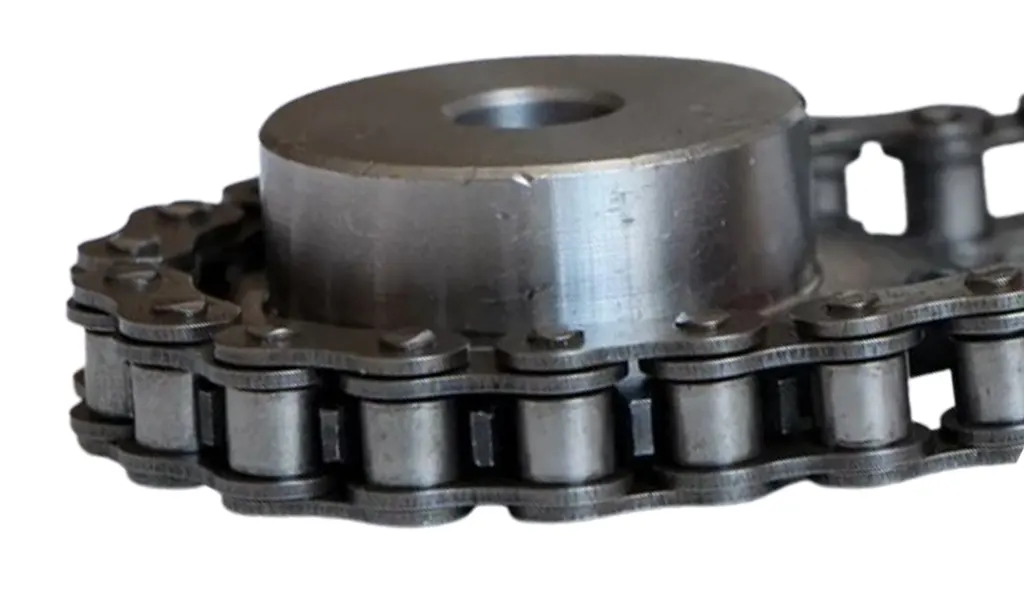
Use flex links by hand after isolation and compare resistance with clean neighboring joints. This controls the decision because rust between pins and bushings can lock the joint and prevent the chain from conforming to the sprocket. On the machine, a stiff link may show only modest external rust but severe internal corrosion or dried contamination. The practical risk is forcing a seized joint through sprockets can crack rollers or plates and increase tooth impact.
Confirm it by doing this: rotate the chain slowly and identify any joint that fails to articulate freely through its normal angle. The evidence is sufficient when you can replace stiff or rough joints unless the manufacturer provides an approved restoration procedure and inspection criterion. Note the tool, location, and operating condition with the result.
Measure elongation and roller condition
Work from measure multi-pitch wear and inspect rollers for flats, roughness, cracks, or restricted rotation. The engineering link is corrosion and lost lubrication often occur together, accelerating pin-bushing wear and changing effective pitch. One useful detail is that surface rust may be acceptable while hidden joint wear already exceeds replacement limits. Otherwise, treating corrosion as only a material issue can miss the wear mechanism.
Verify at the drive: compare elongation at several chain sections and rotate representative rollers by hand. Close this check only after you can base the decision on dimensional wear and component condition as well as appearance. Keep photographs or dimensions when they help preserve the interface condition.
Find the moisture or chemical source
Base the decision on trace rain, washdown, condensation, salt, cleaner, process vapor, and drainage paths that wet the chain. It matters because replacing rusty chain without changing exposure simply resets the corrosion clock. During service, trapped water inside guards and periodic chemical cleaning can be more severe than open outdoor exposure. A poor assumption can cause installing stainless chain without checking load and chemical compatibility may introduce a different problem.
Use this confirmation: inspect the machine after washdown or temperature change and identify where liquid collects or dries slowly. Proceed when you can improve drainage, shielding, material selection, and lubrication for the verified exposure. If readings vary around the chain or sprocket, retain the spread instead of hiding it in one average.
Choose corrosion-resistant replacement on both environment and load
The controlling action is to compare stainless, coated carbon-steel, and specialty low-lubrication chains using supplier corrosion and operating ratings. Its significance comes from the best corrosion resistance is not automatically the highest mechanical capacity or wear resistance. In the field, coatings can preserve a stronger base material while stainless can suit hygiene or chemical environments depending on grade. The failure consequence is selecting by rust resistance alone can reduce duty margin or create lubrication conflicts.
Check the hardware directly: provide the supplier with chemical, temperature, washdown, load, speed, and lubrication data. Approval requires that you can approve a replacement only when both corrosion suitability and mechanical rating are documented. Write down any uncertainty that still needs a drawing, manual, or supplier response.
Diagnostic confirmation table
| Decision point | Inspection or calculation | Acceptance evidence |
|---|---|---|
| Clean enough to reveal the metal condition | clean representative sections, especially pin ends, plate edges, roller surfaces, and areas under trapped moisture | inspect the exposed surfaces under good lighting before assigning severity |
| Look for pitting and cross-section loss | compare both sides of plates and use magnification or dimensional checks where pitting is suspected | replace components when corrosion exceeds the chain manufacturer acceptance criteria or compromises safe inspection |
| Check every suspect joint for free articulation | rotate the chain slowly and identify any joint that fails to articulate freely through its normal angle | replace stiff or rough joints unless the manufacturer provides an approved restoration procedure and inspection criterion |
| Measure elongation and roller condition | compare elongation at several chain sections and rotate representative rollers by hand | base the decision on dimensional wear and component condition as well as appearance |
| Find the moisture or chemical source | inspect the machine after washdown or temperature change and identify where liquid collects or dries slowly | improve drainage, shielding, material selection, and lubrication for the verified exposure |
| Choose corrosion-resistant replacement on both environment and load | provide the supplier with chemical, temperature, washdown, load, speed, and lubrication data | approve a replacement only when both corrosion suitability and mechanical rating are documented |
| For this article, do not close the job until the surface rust evidence and every critical mating interface are recorded together. | ||
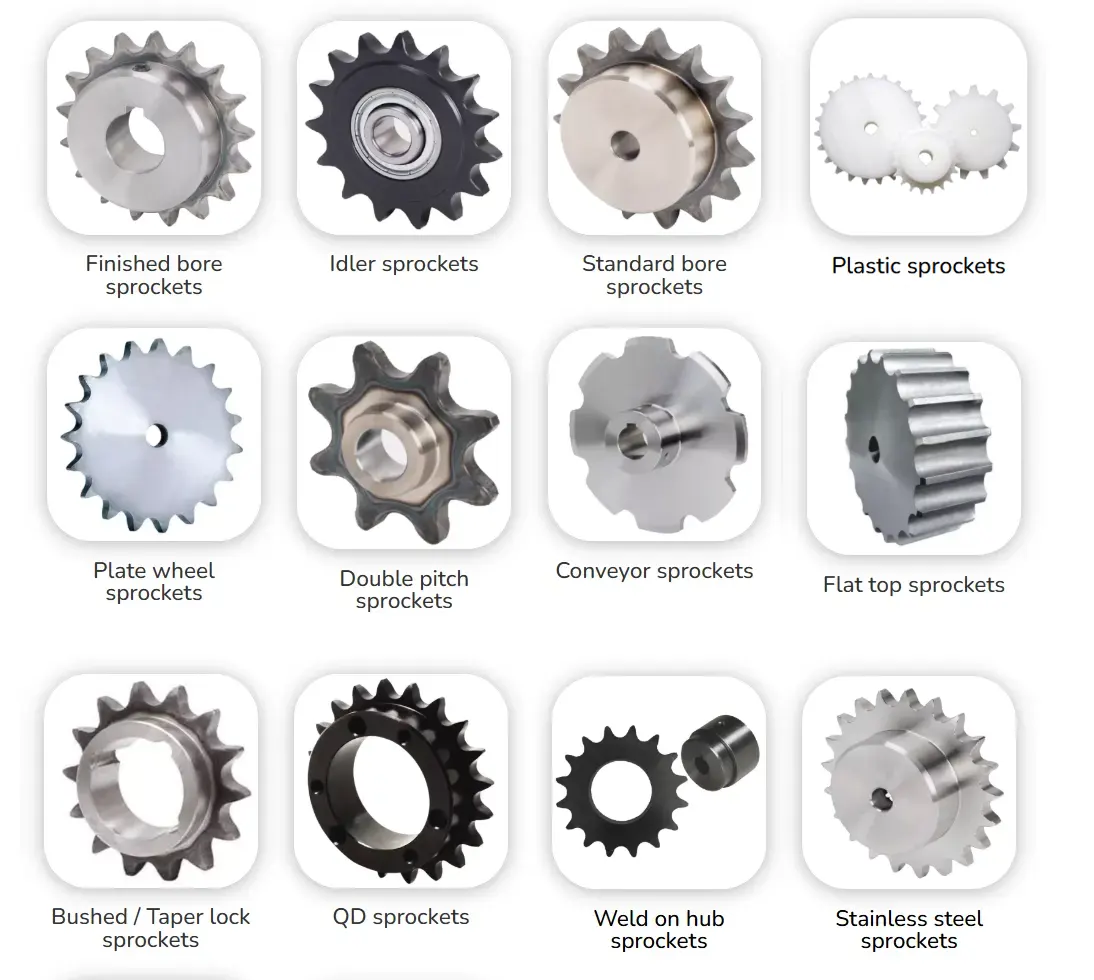
When the decision extends beyond the chain itself, review stainless and corrosion-resistant sprocket options is a useful adjacent-hardware reference for rusty industrial roller chain. It is not a substitute for checking tooth geometry, mounting, capacity, and the selected chain standard on the final drawing.
False fixes that hide the root cause
Release check: inspect the exposed surfaces under good lighting before assigning severity.
Release check: replace components when corrosion exceeds the chain manufacturer acceptance criteria or compromises safe inspection.
Release check: replace stiff or rough joints unless the manufacturer provides an approved restoration procedure and inspection criterion.
Release check: base the decision on dimensional wear and component condition as well as appearance.
Troubleshooting FAQs
Correct the confirmed mechanism and verify the repair
The output should be more useful than a part number. Record surface rust, pitting corrosion, the condition found during “Choose corrosion-resistant replacement on both environment and load,” and the evidence used to accept or reject the change. That makes the decision auditable after the next shutdown. Use the industrial drive-chain capabilities to compare other transmission-chain families only when the same duty data is carried forward.
Where the final answer still depends on missing machine data, send the application data to the chain engineering team. Include the duty, speed, geometry and inspection evidence that led to the current conclusion, with stiff joint called out separately. The goal is to obtain a drawing-level answer before hardware is ordered or an adjustment becomes the new baseline.
Send the operating condition, surface rust, pitting corrosion, layout evidence, and the unresolved interface so the next decision is based on machine data rather than assumption.