Prepare for a controlled installation
Treat this task as an engineering verification sequence. Each step should either produce a number, a physical observation, or a documented acceptance condition. Roller chain normally operates with controlled slack rather than high pretension. The target depends on geometry and duty, so the right method is to measure the free span and use the current chain manufacturer guidance for that configuration.
De beschikbare transmissieketenfamilies is most useful once the problem statement includes chain slack and free span. In this article the controlling verification is to mark the measurement points and span length so future checks use the same references. Keeping those facts together gives purchasing and maintenance the same technical basis for the next action.
- Chain Slack
- Controleer dit punt bij de machine en documenteer eventuele onduidelijkheden waarvoor nog een tekening of handleiding van de leverancier nodig is.
- Free Span
- Leg deze eis vast met voldoende context, zodat een tweede ingenieur dezelfde selectie of diagnose kan reproduceren.
- Slack Span
- Leg deze gegevens vast aan de hand van een tekening, meting, berekening of operationeel verslag voordat de beslissing wordt genomen.
- Vertical Drive
- Beschouw dit als een gecontroleerde variabele; noteer de waarde, eenheid, operationele status en bron ervan in het taakrecord.
- Chain Tension
- Controleer dit item aan de hand van de fysieke schijf en de actuele leveranciersgegevens in plaats van het op basis van het uiterlijk te beoordelen.
Identify the free span and slack side
First, determine which chain span is normally slack under the primary direction of power flow and measure the unsupported span between tangent points. That step is tied to slack measurement only makes sense when the correct span and operating direction are known. A practical observation is that reversing drives can alternate which span is tight and vertical layouts behave differently from ordinary horizontal drives. Missing it can lead to measuring the loaded span can make an over-tight drive appear acceptable.
For evidence, rotate or jog the drive safely to settle the chain, then identify the span that relaxes under normal torque direction. Finish when you can mark the measurement points and span length so future checks use the same references. Retain enough context to distinguish a new-chain dimension from a wear-affected measurement.
Use span deflection rather than bearing preload
Treat measure total up-and-down slack at a consistent point near midspan while the machine is stopped and isolated as the control point. The reason is roller chain does not require the same initial tension as a friction belt because sprocket teeth provide positive engagement. Real installations also show that excessive tightness can overload chain joints, shafts, and bearings and can accelerate lubricant loss. The likely consequence of error is setting the chain by feel until it is taut creates unnecessary load throughout the drive.
Make the check at the machine: move the slack span by hand within safe access and measure the vertical or normal deflection between extremes. The release criterion is to compare measured slack with the selected manufacturer recommendation for span, orientation, and duty. Record whether the drive was stopped, loaded, warm, cold, clean, or contaminated as relevant.
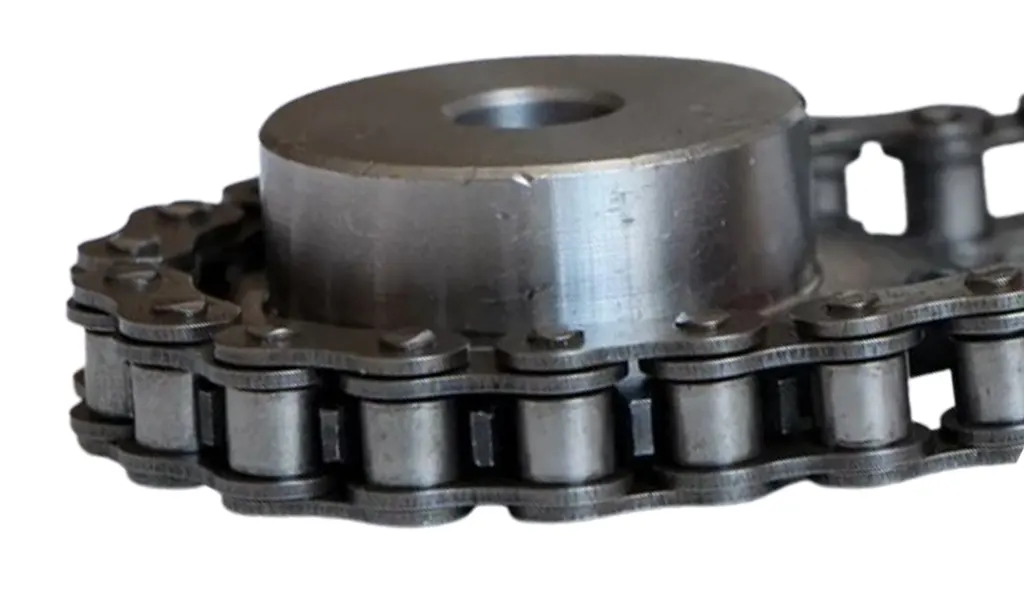
Reduce slack target for special layouts when specified
Do not choose the hardware until you check whether the drive is vertical, has a very long center distance, experiences heavy starting loads, or can reverse suddenly. This matters because some manufacturer manuals call for less free slack in these cases to control whipping and disengagement. Remember that the exact percentage is not universal and should not be copied between chain series or machine layouts. If ignored, using a general horizontal-drive value on a vertical or reversing drive can allow chain climb or impact.
Validate with a repeatable observation: classify the layout and operating transients, then consult the installation instructions for the selected chain. Move on after you can apply the special-case target and any required idler or tensioner rather than improvising pretension. Preserve the source of any numerical limit that belongs to a specific chain series.
Avoid too much slack as well as too little
A reliable result starts when you inspect for span contact, whipping, sprocket tooth climbing, chain winding, and guard impact during starts and stops. The underlying reason is excess free chain can develop large dynamic excursions even when average load is low. In service, long spans and fluctuating loads are particularly sensitive to vibration. An incorrect input may create a loose chain can strike structure or lose stable engagement while a tight chain damages bearings and joints.
Use the following field evidence: observe the drive during a controlled run from a safe location and note the slack-span envelope. Accept the result only if you can adjust center distance or tensioner so the chain remains controlled without becoming taut. If the check is visual, add a dimension or operating observation whenever practical.
Recheck after initial seating
Establish the condition by choosing to measure slack again after the new chain has completed its initial operating period and after major load changes. It affects the drive because new chain assemblies can seat and the first adjustment may not remain at the same position. A useful constraint is that this early change is not the same as long-term wear elongation but it affects span control. Getting it wrong can produce leaving the first setting unchanged can allow excess slack to develop quickly.
Confirm the condition this way: record initial slack and take-up position, then repeat the same measurement after commissioning. The step passes when you can reset within the manufacturer range and establish a condition-based inspection interval. Keep the evidence beside the chain designation and machine location in the maintenance record.
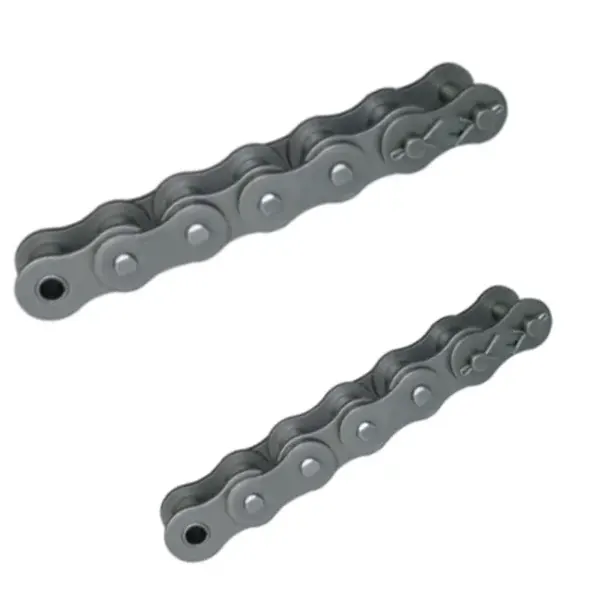
Trend slack together with elongation and sprocket wear
Begin with the physical requirement: do not use take-up position as the only indicator of chain wear because geometry, temperature, and setup changes also move the shaft. It is connected to slack is a system condition while wear elongation is measured over multiple chain pitches. At site level, a drive can have acceptable slack but worn joints or hooked sprockets. The avoidable outcome is tightening repeatedly without measuring wear can mask the approaching replacement condition.
Inspect as follows: periodically measure chain elongation, sprocket condition, and take-up position alongside slack. Release the step after you can replace or repair based on the relevant wear criteria rather than using adjustment as a substitute for inspection. Repeat the check after adjustment whenever the adjustment itself can change the measured condition.
Installation acceptance table
| Beslissingspunt | Inspectie of berekening | Acceptatiebewijs |
|---|---|---|
| Identify the free span and slack side | rotate or jog the drive safely to settle the chain, then identify the span that relaxes under normal torque direction | mark the measurement points and span length so future checks use the same references |
| Use span deflection rather than bearing preload | move the slack span by hand within safe access and measure the vertical or normal deflection between extremes | compare measured slack with the selected manufacturer recommendation for span, orientation, and duty |
| Reduce slack target for special layouts when specified | classify the layout and operating transients, then consult the installation instructions for the selected chain | apply the special-case target and any required idler or tensioner rather than improvising pretension |
| Avoid too much slack as well as too little | observe the drive during a controlled run from a safe location and note the slack-span envelope | adjust center distance or tensioner so the chain remains controlled without becoming taut |
| Recheck after initial seating | record initial slack and take-up position, then repeat the same measurement after commissioning | reset within the manufacturer range and establish a condition-based inspection interval |
| Trend slack together with elongation and sprocket wear | periodically measure chain elongation, sprocket condition, and take-up position alongside slack | replace or repair based on the relevant wear criteria rather than using adjustment as a substitute for inspection |
| For this article, do not close the job until the chain slack evidence and every critical mating interface are recorded together. | ||
Voor een breder overzicht van de hardware rondom dit probleem, zie review chain tensioner and idler options. Use that page only as context for roller-chain slack and tension; approve the real drive from measured interfaces, current ratings, and the machine duty described in this article.
Installation faults to eliminate
Release check: mark the measurement points and span length so future checks use the same references.
Release check: compare measured slack with the selected manufacturer recommendation for span, orientation, and duty.
Release check: apply the special-case target and any required idler or tensioner rather than improvising pretension.
Release check: adjust center distance or tensioner so the chain remains controlled without becoming taut.
Installation FAQs
Commission the drive from a known baseline
A finished installation decision should let another engineer reproduce it without relying on memory. Keep chain slack, free span, the final check for “Trend slack together with elongation and sprocket wear,” and the governing catalog or drawing revision together. If another chain architecture becomes relevant, the Technische oplossingen voor kettingaandrijvingen Het is een uitgangspunt, geen vervanging voor de opgenomen gegevens.
For an application-specific review, send the application data to the chain engineering team and identify what is known versus what remains uncertain. Include the values for chain slack and free span, plus the current condition of slack span. A supplier can then evaluate a bounded engineering question instead of trying to infer the machine from a chain designation alone.
Send the operating condition, chain slack, free span, layout evidence, and the unresolved interface so the next decision is based on machine data rather than assumption.