Vertaal procesverantwoordelijkheid naar ketenvereisten.
The quickest way to make this decision reliable is to define the operating condition first and postpone the chain number until the interfaces are known. Agricultural chain drives experience a combination that is harder than any single catalog factor: shock from crop and soil loads, abrasive dust, weather exposure, irregular lubrication, and repairs far from a clean workshop.
De beschikbare transmissieketenfamilies is most useful once the problem statement includes agricultural chain and abrasive dust. In this article the controlling verification is to apply the chain supplier duty method using a load case that represents those transients. Keeping those facts together gives purchasing and maintenance the same technical basis for the next action.
- Landbouwketen
- Leg deze gegevens vast aan de hand van een tekening, meting, berekening of operationeel verslag voordat de beslissing wordt genomen.
- Abrasive Dust
- Beschouw dit als een gecontroleerde variabele; noteer de waarde, eenheid, operationele status en bron ervan in het taakrecord.
- Schokbelasting
- Controleer dit item aan de hand van de fysieke schijf en de actuele leveranciersgegevens in plaats van het op basis van het uiterlijk te beoordelen.
- Outdoor Corrosion
- Gebruik deze parameter om ongeschikte opties vroegtijdig af te wijzen en behoud vervolgens de geverifieerde waarde voor de uiteindelijke specificatie.
- Field Maintenance
- Controleer dit punt bij de machine en documenteer eventuele onduidelijkheden waarvoor nog een tekening of handleiding van de leverancier nodig is.
Characterize the real field load
First, identify normal torque, crop or soil impacts, plugging, clutch events, reversals, PTO speed changes, and start-up under load. That step is tied to agricultural machines rarely experience perfectly uniform laboratory loading. A practical observation is that material slugs, feeder jams, and implement impacts can create short high-tension events. Missing it can lead to sizing only from engine or PTO power can understate the chain shock duty.
For evidence, review implement function, drive ratio, overload protection, and operator experience from worst field conditions. Finish when you can apply the chain supplier duty method using a load case that represents those transients. Retain enough context to distinguish a new-chain dimension from a wear-affected measurement.
Control abrasive contamination
Treat keep soil, chaff, fertilizer dust, and grit from entering lubricated pin-bushing joints and sprocket tooth pockets as the control point. The reason is hard particles embedded in lubricant accelerate joint and tooth wear. Real installations also show that an open drive may shed debris better but receives more contamination while a poor guard can trap packed material. The likely consequence of error is simply applying more sticky oil can turn dust into grinding paste.
Make the check at the machine: inspect guards, scraper paths, tooth-pocket buildup, and lubricant condition after actual field work. The release criterion is to use shielding and lubrication that protect joints without trapping abrasive contamination. Record whether the drive was stopped, loaded, warm, cold, clean, or contaminated as relevant.
Select corrosion protection for weather and chemicals
Do not choose the hardware until you consider rain, dew, storage condensation, fertilizer, manure, crop chemicals, and washdown when comparing standard, coated, or stainless chains. This matters because field corrosion exposure is intermittent and chemical residues can be more aggressive than clean water. Remember that high-strength coated steel may be preferable to stainless in some heavy-load duties, but coating and chemical compatibility must be verified. If ignored, choosing material only for rust appearance can compromise mechanical rating or wear performance.
Validate with a repeatable observation: document exposure chemicals and storage conditions and inspect existing corrosion locations. Move on after you can select a chain construction and sprocket material rated for both the environment and mechanical load. Preserve the source of any numerical limit that belongs to a specific chain series.
Design lubrication for realistic service access
A reliable result starts when you choose a lubrication method that operators can apply safely and consistently in the field. The underlying reason is a theoretically ideal system that requires frequent guard removal is unlikely to be maintained during a short harvest window. In service, automatic lubrication can improve consistency but must survive dirt, vibration, and temperature. An incorrect input may create maintenance complexity can become the dominant failure cause in seasonal equipment.
Use the following field evidence: trace access to the chain and pin-bushing application points with guards in their service position. Accept the result only if you can use a method and lubricant that can be executed reliably under actual field maintenance conditions. If the check is visual, add a dimension or operating observation whenever practical.
Inspect sprockets and alignment after impacts
Establish the condition by choosing to check tooth profile, hub security, shaft straightness, bearing play, and chain alignment after plugging or foreign-object events. It affects the drive because shock severe enough to load the chain can also move bearings, bend guards, loosen sprockets, or damage teeth. A useful constraint is that field repairs may restore motion without restoring precision alignment. Getting it wrong can produce installing a new chain on moved or hooked sprockets accelerates wear during the next run.
Confirm the condition this way: rotate the drive and inspect tooth contact, runout, and axial alignment after overloads and at seasonal service. The step passes when you can repair the full drive geometry before replacing the chain. Keep the evidence beside the chain designation and machine location in the maintenance record.
Plan seasonal storage and field repair
Begin with the physical requirement: define cleaning, corrosion protection, slack release if appropriate, inspection, spare connecting links, and replacement chain availability before long storage or remote operation. It is connected to many agricultural chains spend months idle in humid conditions and then return directly to severe duty. At site level, rusted joints or depleted lubricant can create stiff links at the first start of the season. The avoidable outcome is emergency repair with mismatched chain or connecting links can create a weak section.
Inspect as follows: clean and inspect the drive at season end, protect joints, and store identified compatible spares. Release the step after you can perform a preseason articulation, elongation, sprocket, and lubrication check before full field load. Repeat the check after adjustment whenever the adjustment itself can change the measured condition.
Tabel voor applicatieverificatie
| Beslissingspunt | Inspectie of berekening | Acceptatiebewijs |
|---|---|---|
| Characterize the real field load | review implement function, drive ratio, overload protection, and operator experience from worst field conditions | apply the chain supplier duty method using a load case that represents those transients |
| Control abrasive contamination | inspect guards, scraper paths, tooth-pocket buildup, and lubricant condition after actual field work | use shielding and lubrication that protect joints without trapping abrasive contamination |
| Select corrosion protection for weather and chemicals | document exposure chemicals and storage conditions and inspect existing corrosion locations | select a chain construction and sprocket material rated for both the environment and mechanical load |
| Design lubrication for realistic service access | trace access to the chain and pin-bushing application points with guards in their service position | use a method and lubricant that can be executed reliably under actual field maintenance conditions |
| Inspect sprockets and alignment after impacts | rotate the drive and inspect tooth contact, runout, and axial alignment after overloads and at seasonal service | repair the full drive geometry before replacing the chain |
| Plan seasonal storage and field repair | clean and inspect the drive at season end, protect joints, and store identified compatible spares | perform a preseason articulation, elongation, sprocket, and lubrication check before full field load |
| For this article, do not close the job until the agricultural chain evidence and every critical mating interface are recorded together. | ||
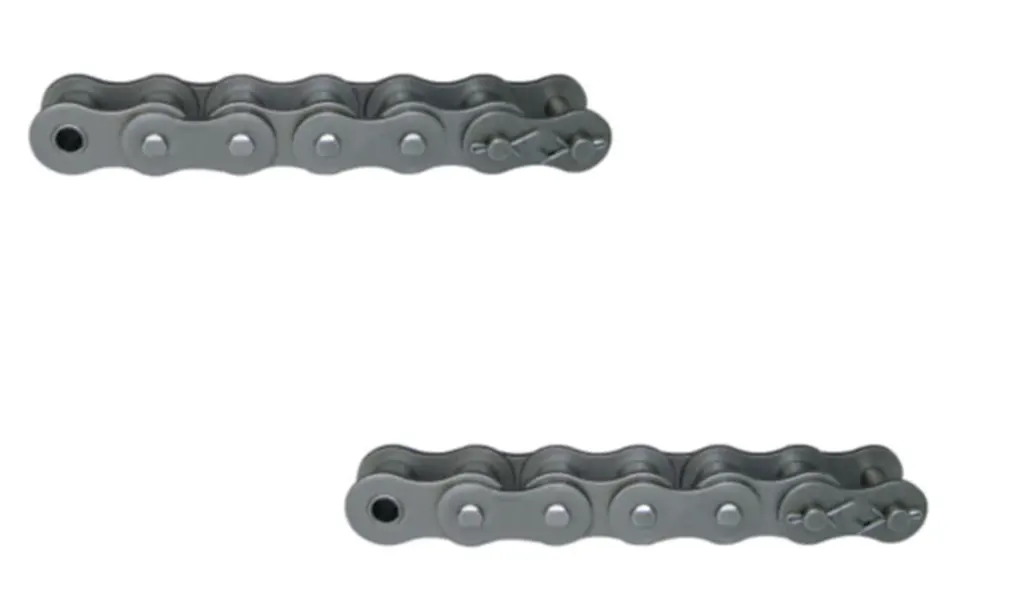
Voor een breder overzicht van de hardware rondom dit probleem, zie review agricultural sprocket and chain-drive options. Use that page only as context for agricultural machinery drive chain; approve the real drive from measured interfaces, current ratings, and the machine duty described in this article.
Toepassingsrisico's die aandacht bij het ontwerp verdienen
Release check: apply the chain supplier duty method using a load case that represents those transients.
Release check: use shielding and lubrication that protect joints without trapping abrasive contamination.
Release check: select a chain construction and sprocket material rated for both the environment and mechanical load.
Release check: use a method and lubricant that can be executed reliably under actual field maintenance conditions.
Veelgestelde vragen over de aanvraag
Publiceer de applicatiespecificatie met de operationele limieten.
A finished application decision should let another engineer reproduce it without relying on memory. Keep agricultural chain, abrasive dust, the final check for “Plan seasonal storage and field repair,” and the governing catalog or drawing revision together. If another chain architecture becomes relevant, the Technische oplossingen voor kettingaandrijvingen Het is een uitgangspunt, geen vervanging voor de opgenomen gegevens.
For an application-specific review, send the application data to the chain engineering team and identify what is known versus what remains uncertain. Include the values for agricultural chain and abrasive dust, plus the current condition of shock loading. A supplier can then evaluate a bounded engineering question instead of trying to infer the machine from a chain designation alone.
Send the operating condition, agricultural chain, abrasive dust, layout evidence, and the unresolved interface so the next decision is based on machine data rather than assumption.