Product Description
Detailed Photos
Product Description
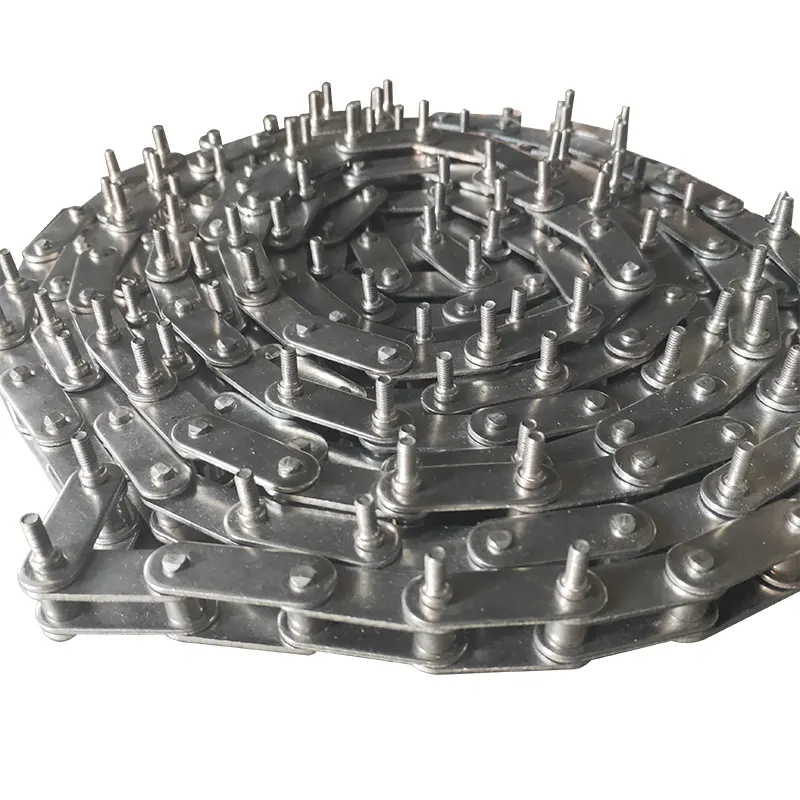
The shape is simple, UH-7075-S is the basic style of the five-ton cross suspension chain, suitable for general overhead conveyor lines.
The traditional old five-ton chain (UH-5075) is a more widely used and more used suspension chain. Because this chain has a small pitch, it can run smaller curved rails, can hang more objects, and has many chain styles and cranes. With complete accessories and easy installation, it has always been the choice of suspension conveyors.
The 5-ton cross-shaped chain UH-7075-S is based on the design and transformation of the traditional 5-ton suspension chain UH-5075-S. It is not only a new appearance change, but also an important improvement in mechanical performance.
| Spare parts item | Features | Photo |
| Up-Down track | for rising or falling areas. standard diameter is 1.2 meters,180º angle. it can be cut based on any necessary angles of any install conditions.the angle should not be more than 45º angle. the distance between 2 adjiacent hangers should be considered. | |
| Check track | There is a hatch which can open the track, through the hatch, worker can dismantle or install, check or maintain the conveying chains. Driving device for each conveying route is usually located between driver and take-up device for easy checking and maintenace. | |
| Take-up device
(Tensioner) |
Keep the chains in the state of original tension and compensate for the tensile deformation caused by tensile force or telescopic deformaton caused by varied temperature while working. Make sure certain tensile force between driver and take-up device. Install it behind driver about distance 3~6 meters. Better have no up-down track behind take-up device. |
|
| Straight track | for where conveyor chain go straight. it can be cut according to the specific install condition. standard length is 3 meters. | |
| Caterpiller driver device | Two types-Standard type and heavy duty type. The driving device adjust the momentum that the motor ouput, after speed reduction unit increase its power which is to be passed to the driver caterpiller, the pusher dogs on which transport the chain so that chain can move forward. |
|
| Hanger | Several types hangers: Cross type hanger; Y type hanger; I type hanger; Sprocket wheel hanger; U-type hanger; Bearing hanger; Customized. |
|
| Automatic oil sprayer | Specially designed for various automatic conveying chain;
More convenient to check oil-feeding diyusyion nsdrf CZPT oil volume in the transparent oil pipes. |
FAQ
Q1: Are you trading company or manufacturer ?
A: We are factory.
Q2: How long is your delivery time and shipment?
1.Sample Lead-times: generally 30 workdays.
2.Production Lead-times: 60 workdays after getting your deposit.
Q3. What is your terms of payment?
A: T/T 30% as deposit, and 70% before delivery.
We’ll show you the photos of the products and packages before you pay the balance.
Q4: What is your advantages?
1. Manufacturer,the most competitive price and good quality.
2. Perfect technical engineers give you the best support.
3. OEM is available.
4. Rich stock and quick delivery.
Q5. If you can’t find the product on our website,what do you next?
Please send us inquiry with product pictures and drawings by email or other ways and we’ll check
|
Shipping Cost:
Estimated freight per unit. |
To be negotiated |
|---|
| Material: | Alloy |
|---|---|
| Structure: | Combined Chain |
| Surface Treatment: | Polishing |
| Customization: |
Available
| Customized Request |
|---|
Can transmission chains be used in heavy-duty or high-load applications?
Transmission chains are commonly used in heavy-duty or high-load applications due to their robust construction and ability to handle substantial power transmission requirements. Here’s a detailed explanation:
1. Strength and Durability: Transmission chains are designed to withstand high loads and heavy-duty applications. They are constructed using high-quality materials such as alloy steel, ensuring exceptional strength, toughness, and resistance to fatigue. These chains are engineered to handle the demanding forces and loads encountered in heavy machinery, industrial equipment, and automotive applications.
2. Load Capacity: Transmission chains are available in various sizes and configurations to accommodate different load capacities. Manufacturers provide load ratings and specifications for their chains, allowing users to select the appropriate chain based on the anticipated loads. The load capacity of a transmission chain depends on factors such as chain size, material, design, and heat treatment. It is essential to choose a chain that can handle the specific load requirements of the application.
3. Power Transmission Efficiency: Transmission chains offer high power transmission efficiency, making them suitable for heavy-duty applications. The precision engineering of the chain links and sprockets ensures minimal energy loss during power transfer, maximizing the efficiency of the system. This efficiency is crucial in applications where large amounts of power need to be transmitted reliably and consistently.
4. Adaptability to High Loads: Transmission chains can adapt to various load conditions, including shock loads and dynamic forces. Their design allows them to accommodate sudden changes in loads without compromising performance or integrity. Additionally, heavy-duty transmission chains often incorporate features such as hardened pins, solid rollers, and specialized coatings to enhance their load-bearing capacity and resistance to wear.
5. Wide Range of Applications: Transmission chains find extensive use in industries such as construction, mining, agriculture, material handling, and power transmission. They are employed in heavy machinery, conveyor systems, lifting equipment, industrial drives, and many other applications that involve significant loads. Their versatility and ability to handle high loads make them a reliable choice for demanding environments.
When selecting a transmission chain for heavy-duty or high-load applications, it is essential to consider the specific requirements, including anticipated loads, operating conditions, and environmental factors. Consulting with chain manufacturers or industry experts can provide valuable guidance in choosing the most suitable chain to ensure safe and efficient power transmission in heavy-duty applications.

How does the wear resistance of a transmission chain affect its longevity?
Wear resistance is a critical factor that affects the longevity of a transmission chain. Here’s a detailed answer to the question:
1. Extended Lifespan: A transmission chain with high wear resistance is designed to withstand the effects of friction and abrasion, leading to an extended lifespan. It can resist wear caused by contact with sprockets, other chains, or external contaminants, resulting in reduced chain elongation and degradation over time.
2. Reduced Maintenance Requirements: Chains with excellent wear resistance require less frequent maintenance and replacement. They can operate reliably and efficiently for longer periods without significant degradation, reducing downtime and maintenance costs.
3. Improved Performance: A transmission chain with good wear resistance maintains its performance characteristics over time. It can effectively transmit power, maintain accurate speed ratios, and operate smoothly without excessive noise or vibration. This results in improved system performance and overall efficiency.
4. Resistance to Environmental Factors: Chains operating in harsh environments or exposed to contaminants, moisture, or chemicals are more susceptible to wear. A transmission chain with high wear resistance can withstand these environmental factors, ensuring reliable operation and minimizing the negative impact of wear-related issues.
5. Cost Savings: Using a transmission chain with excellent wear resistance can lead to cost savings in the long run. The reduced need for frequent chain replacements, repairs, and maintenance can result in lower operating costs and increased productivity.
It’s important to consider the specific application requirements and operating conditions when selecting a transmission chain. Factors such as load capacity, speed, operating environment, and compatibility with other system components should be evaluated to choose a chain with optimal wear resistance for maximizing longevity and performance.
What are the common causes of failure in transmission chains?
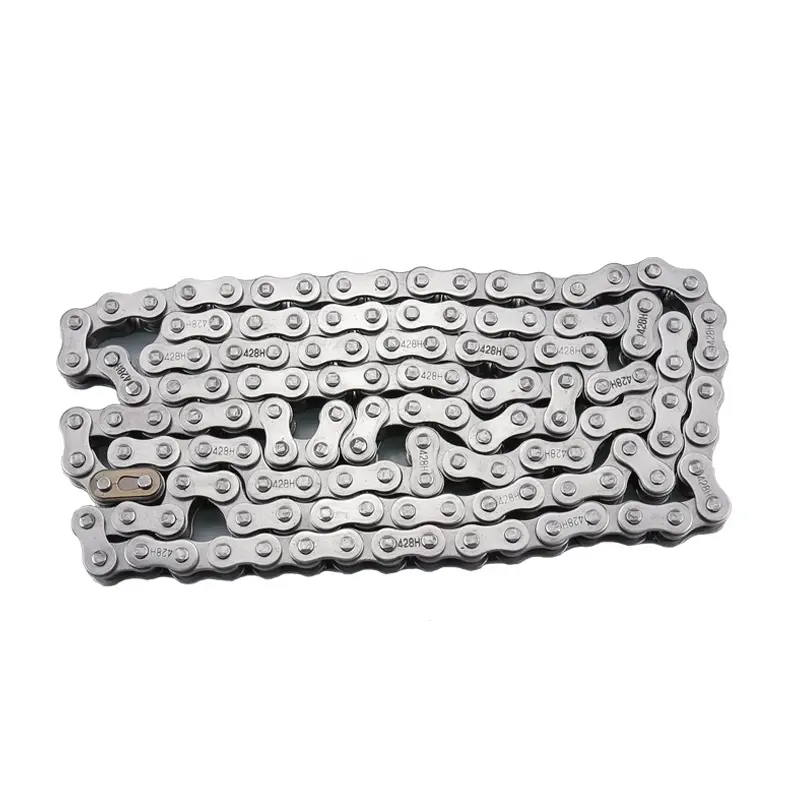
Transmission chains are subject to various factors that can contribute to their failure over time. Here’s a detailed explanation:
1. Insufficient Lubrication: Inadequate or improper lubrication is one of the leading causes of chain failure. Insufficient lubrication can lead to increased friction, heat generation, and accelerated wear between the chain’s components, such as pins, bushings, and rollers.
2. Contamination: Contaminants like dirt, dust, debris, and moisture can enter the chain system, affecting its performance and causing accelerated wear. Contamination can hinder proper lubrication, increase friction, and cause corrosion, leading to chain failure.
3. Overloading: Applying excessive loads beyond the chain’s rated capacity can lead to overloading, which causes stress and deformation of the chain’s components. Overloading can result in chain elongation, accelerated wear, and ultimately, chain failure.
4. Misalignment: Improper alignment of the chain and sprockets can cause uneven distribution of forces, leading to localized wear and increased stress on certain areas of the chain. Misalignment can result from incorrect installation or wear and tear of sprockets, leading to premature chain failure.
5. Fatigue: Repeated cyclic loading and stress can cause fatigue in the chain, leading to cracks, fractures, and ultimately, chain failure. Fatigue failure is more likely to occur when the chain is subjected to high-speed or high-frequency applications.
6. Corrosion: Exposure to corrosive environments, such as high humidity, chemicals, or extreme temperatures, can cause corrosion on the chain’s components. Corrosion weakens the chain’s structural integrity, leading to premature failure.
7. Poor Maintenance: Inadequate maintenance practices, such as infrequent inspections, lack of lubrication, and neglecting to address potential issues, can contribute to chain failure. Regular maintenance, including lubrication, cleaning, and proper tensioning, is essential for the longevity and reliable performance of transmission chains.
It is important to address these factors to prevent chain failure. Proper lubrication, regular inspections, cleaning, and alignment checks are essential maintenance practices. Selecting the right chain for the application, following manufacturer guidelines, and adhering to industry standards can also help mitigate the risk of failure and ensure the optimal performance and longevity of transmission chains.


editor by CX 2023-07-20