Description du produit
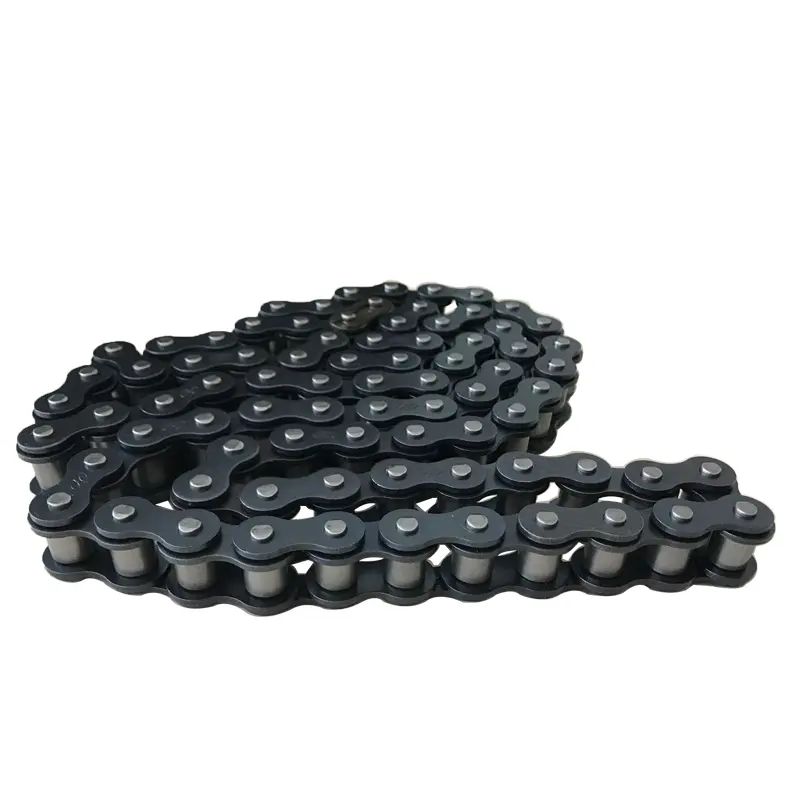
Chaîne à rouleaux Simplex en acier inoxydable 304 (08B-1, 24B-1)
La chaîne la plus couramment utilisée est la chaîne à rouleaux, également appelée chaîne de transmission. Il s'agit du système de transmission par chaîne le plus simple, principalement utilisé pour la transmission de puissance. Elle est disponible avec un pas de 3 mm à 4 pouces, en acier doux ou en acier inoxydable.
| DIN/ISO Numéro de chaîne |
Pas | Rouleau Diamètre |
Largeur entre Plaques intérieures |
Diamètre de la broche |
Longueur de la broche |
Profondeur de la plaque intérieure |
Plaque épaisse ness |
Ultime traction Force |
Moyenne traction Force |
Poids par mètre |
|
| Mm | mm | mm | mm | mm | mm | mm | mm | kN/LB | kN | kg/m | |
| 04B-1 | 6.000 | 4.00 | 2.80 | 1.85 | 6.80 | 7.80 | 5.00 | 0.60 | 3.0/682 | 3.2 | 0.11 |
| 05B-1 | 8.000 | 5.00 | 3.00 | 2.31 | 8.20 | 8.90 | 7.10 | 0.80 | 5.0/1136 | 5.9 | 0.20 |
| *06B-1 | 9.525 | 6.35 | 5.72 | 3.28 | 13.15 | 14.10 | 8.20 | 1.30 | 9.0/2045 | 10.4 | 0.41 |
| 08B-1 | 12.700 | 8.51 | 7.75 | 4.45 | 16.70 | 18.20 | 11.80 | 1.60 | 18.0/4091 | 19.40 | 0.69 |
| 10B-1 | 15.875 | 10.16 | 9.65 | 5.09 | 19.50 | 20.90 | 14.70 | 1.70 | 22.4/5091 | 27.50 | 0.93 |
| 12B-1 | 19.050 | 12.07 | 11.68 | 5.72 | 22.50 | 24.2 | 16.00 | 1.85 | 29.0/6591 | 32.20 | 1.15 |
| 16B-1 | 25.400 | 15.88 | 17.02 | 8.28 | 36.10 | 37.4 | 21.00 | 4.15/3.1 | 60.0/13636 | 72.80 | 2.71 |
| 20B-1 | 31.750 | 19.05 | 19.56 | 10.19 | 41.30 | 45.0 | 26.40 | 4.5/3.5 | 95.0/21591 | 106.7 | 3.70 |
| 24B-1 | 38.100 | 25.40 | 25.40 | 14.63 | 53.40 | 57.80 | 33.20 | 6.0/4.8 | 160.0/36364 | 178.0 | 7.10 |
| 28B-1 | 44.450 | 27.94 | 30.99 | 15.90 | 65.10 | 69.50 | 36.70 | 7.5/6.0 | 200.0/45455 | 222.0 | 8.50 |
| 32B-1 | 50.800 | 29.21 | 30.99 | 17.81 | 66.00 | 71.0 | 42.00 | 7.0/6.0 | 250.0/56818 | 277.5 | 10.25 |
| 40B-1 | 63.50 | 39.37 | 38.10 | 22.89 | 82.20 | 89.2 | 52.96 | 8.5/8.0 | 355.0/80682 | 394.0 | 16.35 |
| 48B-1 | 76.20 | 48.26 | 45.72 | 29.24 | 99.10 | 107.0 | 63.80 | 12.0/10.0 | 560.0/127272 | 621.6 | 25.00 |
| 56B-1 | 88.90 | 53.98 | 53.34 | 34.32 | 114.60 | 123.0 | 77.80 | 13.5/12.0 | 850.0/193180 | 940.0 | 35.78 |
| *Chaîne de douilles : d1 dans le tableau indique le diamètre extérieur de la douille. |
|||||||||||
Nous possédons des équipements sophistiqués et des technologies de pointe, tels que :
1. Concepteur CAO
2. Machine à couper le fil
3. Chaîne fonctionnant dans la machine
4. Four à convoyeur
5. Dérive de la balle
6. Pièces grenaillées
7. Conception de la taille de la plaque de liaison
Détails de l'entreprise :
GOODLUCK TRANSMISSION est l'un des exportateurs professionnels spécialisés dans l'exportation. PIÈCES DE TRANSMISSION DE PUISSANCE : Chaînes à rouleaux, chaînes de convoyeur, chaînes en acier inoxydable, chaînes agricoles, chaînes détachables en acier, chaînes spéciales, pignons, pignons en acier inoxydable, accouplements HRC, poulies, bagues, etc. Tous ces produits sont fournis régulièrement à l’international depuis plus de 15 ans.
N'hésitez pas à nous contacter pour plus de détails.
/* 22 janvier 2571 19:08:37 */!function(){function s(e,r){var a,o={};try{e&&e.split(“,”).forEach(function(e,t){e&&(a=e.match(/(.*?):(.*)$/))&&1
| Usage: | Chaîne de transmission |
|---|---|
| Matériel: | Acier inoxydable |
| Traitement de surface : | Polissage |
| Exemples : |
US$ 100/Pièce
1 pièce (commande minimale) | Commander un échantillon Veuillez contacter les vendeurs.
|
|---|
| Personnalisation : |
Disponible
| Demande personnalisée |
|---|
.shipping-cost-tm .tm-status-off{background: none;padding:0;color: #1470cc}
|
Frais d'expédition :
Frais de transport estimés par unité. |
concernant les frais de livraison et le délai de livraison estimé. |
|---|
| Mode de paiement: |
|
|---|---|
|
Paiement initial Paiement intégral |
| Devise: | US$ |
|---|
| Retours et remboursements : | Vous pouvez demander un remboursement jusqu'à 30 jours après la réception des produits. |
|---|
Quels sont les avantages d'utiliser une chaîne de transmission à faible bruit ?
L'utilisation d'une chaîne de transmission à faible bruit dans les applications industrielles offre plusieurs avantages. Voici une réponse détaillée à la question :
1. Réduction du bruit : L’un des principaux avantages de l’utilisation d’une chaîne de transmission silencieuse est la réduction du niveau sonore. Ces chaînes sont conçues avec des caractéristiques et des matériaux spécifiques afin de minimiser les vibrations, les chocs et les bruits de frottement pendant leur fonctionnement. Ceci est particulièrement important dans les environnements où la réduction du bruit est essentielle, comme les zones résidentielles, les bureaux ou les industries sensibles au bruit.
2. Amélioration du cadre de travail : En réduisant le bruit, les chaînes de transmission silencieuses contribuent à un environnement de travail plus confortable et productif. Un bruit excessif peut entraîner de la fatigue, une baisse de concentration et une augmentation du stress chez les employés. L’utilisation de chaînes silencieuses permet de créer un espace de travail plus calme, favorisant ainsi de meilleures conditions de travail et un bien-être général accru.
3. Respect des réglementations en matière de bruit : Dans certains secteurs ou régions, des réglementations ou des directives spécifiques encadrent les niveaux de bruit admissibles. L’utilisation de chaînes de transmission à faible bruit contribue à garantir le respect de ces réglementations et à éviter d’éventuelles amendes ou poursuites judiciaires liées à des émissions sonores excessives.
4. Amélioration des performances des équipements : Les chaînes de transmission silencieuses sont conçues pour assurer une transmission de puissance fluide et efficace tout en minimisant le bruit. La réduction des vibrations et des bruits d’impact améliore non seulement le confort au travail, mais aussi les performances globales des équipements. Elle contribue à une meilleure précision, une plus grande exactitude et une fiabilité accrue des machines, ce qui se traduit par une meilleure qualité des produits et une efficacité opérationnelle accrue.
5. Durée de vie prolongée des équipements : Les bruits et vibrations excessifs peuvent accélérer l’usure des composants des machines, entraînant une augmentation des coûts de maintenance et des pannes prématurées. L’utilisation d’une chaîne de transmission silencieuse réduit l’impact sur les pièces mécaniques de l’équipement, ce qui diminue l’usure, réduit les coûts de maintenance et prolonge sa durée de vie.
6. Satisfaction client : Dans les secteurs où le bruit peut nuire à l’expérience utilisateur, comme l’automobile, l’électronique grand public ou la mécanique de précision, l’utilisation de chaînes de transmission silencieuses contribue à une meilleure satisfaction client. Les produits silencieux sont souvent perçus comme étant de meilleure qualité et favorisent une image de marque positive ainsi que la fidélisation de la clientèle.
Il est important de noter que les avantages des chaînes de transmission silencieuses peuvent varier selon l'application et les conditions d'utilisation. Les fabricants et les concepteurs d'équipements doivent prendre en compte des facteurs tels que la capacité de charge, la vitesse, la lubrification et les exigences environnementales lors du choix et de la mise en œuvre de chaînes de transmission silencieuses.
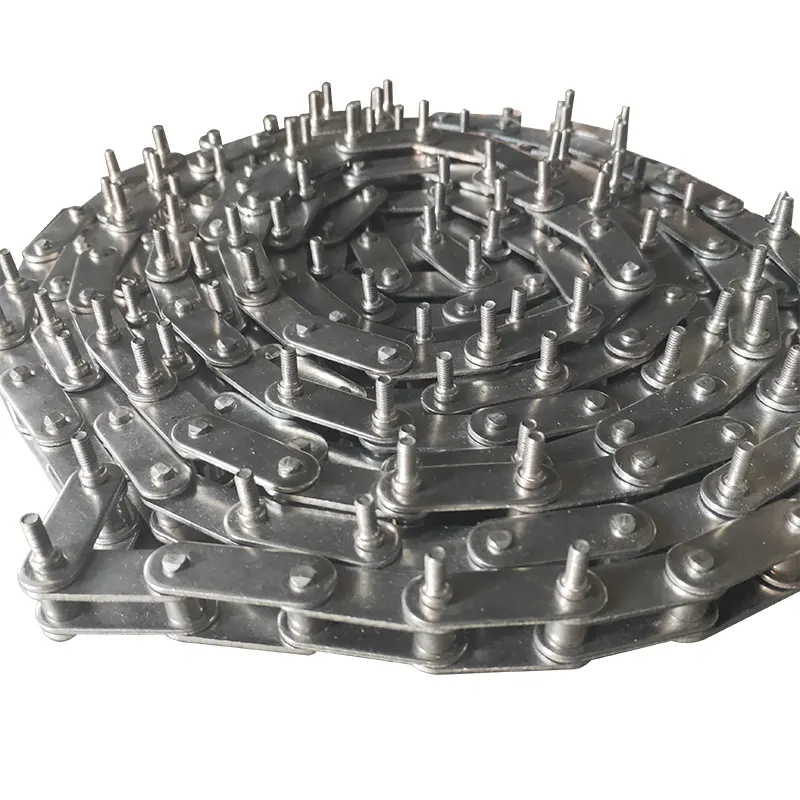
Quel est l'impact du choix du matériau sur les performances d'une chaîne de transmission ?
Le choix du matériau d'une chaîne de transmission joue un rôle crucial dans ses performances et sa durabilité. Voici une réponse détaillée à cette question :
1. Résistance et capacité de charge : Les matériaux présentent des niveaux de résistance et de capacité de charge variables. Les matériaux à haute résistance, comme l’acier allié ou l’acier inoxydable, offrent une résistance supérieure et peuvent supporter des charges importantes. Le choix d’un matériau présentant une résistance adéquate garantit que la chaîne de transmission puisse supporter la charge requise sans usure prématurée ni rupture.
2. Résistance à l'usure : Le matériau utilisé pour la fabrication d'une chaîne de transmission influe sur sa résistance à l'usure. Certains matériaux, comme l'acier trempé ou certains alliages, présentent d'excellentes propriétés de résistance à l'usure, permettant à la chaîne de supporter les conditions abrasives et d'allonger sa durée de vie. Choisir un matériau offrant une bonne résistance à l'usure réduit la fréquence des remplacements et de l'entretien de la chaîne.
3. Résistance à la corrosion : Dans les environnements où la corrosion est un problème, comme en extérieur ou en milieu industriel corrosif, il est essentiel de choisir un matériau à haute résistance à la corrosion. Les chaînes en acier inoxydable ou à revêtement spécial offrent une excellente résistance à la rouille et à la corrosion, garantissant des performances fiables et une longue durée de vie, même dans des conditions difficiles.
4. Résistance à la fatigue : La résistance à la fatigue du matériau est cruciale dans les applications où la chaîne de transmission est soumise à des charges cycliques répétées. Une rupture par fatigue peut survenir lorsqu'une chaîne est soumise à des cycles de contrainte continus, entraînant des fissures et, à terme, une rupture. Les matériaux à haute résistance à la fatigue, tels que certains alliages ou aciers traités thermiquement, sont idéaux pour les applications exigeant une excellente résistance à la fatigue.
5. Résistance à la température : La température de fonctionnement d’une application peut influencer le choix du matériau d’une chaîne de transmission. Certains matériaux, comme les aciers traités thermiquement ou les alliages spéciaux, résistent aux hautes températures sans altérer leurs propriétés mécaniques. À l’inverse, certains plastiques ou polymères conviennent aux applications à basse température. Choisir un matériau capable de résister à la plage de températures prévue garantit des performances optimales et prévient la rupture prématurée de la chaîne.
6. Considérations relatives aux coûts : Le choix du matériau dépend également du coût. Certains matériaux haute performance, comme l’acier inoxydable ou les alliages spéciaux, peuvent présenter un coût initial plus élevé que les chaînes standard en acier au carbone. Cependant, les performances accrues, la longévité et les besoins d’entretien réduits qu’ils offrent peuvent engendrer des économies à long terme.
Il est essentiel d'évaluer soigneusement les exigences spécifiques de l'application, notamment la capacité de charge, les conditions environnementales et les paramètres de fonctionnement, lors du choix du matériau d'une chaîne de transmission. Consulter des experts du secteur ou des fabricants peut aider à déterminer le matériau le plus adapté pour optimiser les performances et la durée de vie de la chaîne.

Quels sont les secteurs ou applications courants qui utilisent des chaînes de transmission ?
Les chaînes de transmission sont largement utilisées dans divers secteurs industriels et applications nécessitant un transfert efficace de puissance et de mouvement. Voici quelques exemples courants d'industries et d'applications qui font appel aux chaînes de transmission :
- Automobile : Les chaînes de transmission sont utilisées dans les moteurs et les transmissions automobiles pour transférer la puissance du moteur aux roues.
- Agriculture : Les chaînes de transmission sont utilisées dans les machines agricoles telles que les tracteurs, les moissonneuses-batteuses et les récolteuses pour la transmission de puissance dans diverses applications comme les systèmes de convoyage et les équipements agricoles.
- Fabrication industrielle : Les chaînes de transmission se retrouvent dans une vaste gamme de machines industrielles, notamment les convoyeurs, les systèmes de manutention, les équipements d’emballage, les presses d’imprimerie et les machines-outils.
- Exploitation minière et construction : Les chaînes de transmission sont utilisées dans les engins lourds, tels que les excavatrices, les bulldozers et les équipements miniers, pour transmettre la puissance nécessaire aux opérations de creusement, de levage et autres.
- Industrie agroalimentaire : Les chaînes de transmission sont utilisées dans les équipements de transformation alimentaire, les usines d’embouteillage et les systèmes de convoyage pour déplacer les produits le long des lignes de production.
- Textile : Les chaînes de transmission sont utilisées dans les machines de fabrication textile, telles que les métiers à tisser et les machines à filer, pour la transmission de puissance lors des processus de tissage et de filage.
- Énergie et services publics : Les chaînes de transmission sont utilisées dans les centrales électriques, les éoliennes et autres systèmes d’énergie renouvelable pour transporter l’électricité de la source au réseau électrique.
- Manutention : Les chaînes de transmission sont couramment utilisées dans les équipements de manutention, notamment les chariots élévateurs, les palettiseurs et les systèmes de stockage automatisés, pour transporter et manipuler les marchandises dans les entrepôts et les centres de distribution.
- Utilité marine : Les chaînes de transmission trouvent des applications dans les navires, notamment dans les systèmes de propulsion, les équipements de manutention d’ancres et les treuils de manutention de cargaisons.
Ce ne sont là que quelques exemples ; les chaînes de transmission sont également utilisées dans de nombreux autres secteurs et applications où une transmission de puissance fiable est essentielle. La conception et les caractéristiques spécifiques des chaînes de transmission peuvent varier en fonction des exigences de chaque secteur et application.


Édité par CX le 03/04/2024