Description du produit
À propos de l'usine
Avec plus de 18 ans d'histoire, nous sommes un fabricant professionnel de produits forgés à chaud tels que des chaînes forgées (X348 X458 X658 X678 X698 F100 F160), des chaînes de racleur (10160, 14218, 14226, 142N), des chariots de convoyeur (X348, X458, X678, XT160) et des chaînes d'entraînement (X348, X458, X678), ainsi que des moules standard de chaînes.
De plus, nous pouvons également produire, selon votre dessin ou échantillon, des chaînes à maillons spéciales, des poussoirs, des goupilles et des plaques, en fonction des exigences spécifiques des clients.
Description du produit
1) Matériau : Acier allié, 40Cr, 42CrMo et ainsi de suite.
2) Types : Types standard, X348, X458, X678, etc. (Ou selon votre plan)
3) Processus : Moulage → Forgeage → Polissage et grenaillage → Usinage de précision → Traitement thermique → Grenaillage → Inspection et essais → Emballage
Présentation du produit
Données techniques
| Modèle | Dimension | Poids (kg) | Matériel | Dureté | Charge de travail (kN) | Charge limite (kN) | ||||||
| P | T | C | S | F | R | D | ||||||
| 10160B | 101.6 | 24 | 36 | 13 | 14 | 6 | 14 | 0.32 | 20CrMnTi | Surface HRC56-64° Profondeur 0,6-1,2 mm |
18 | 100 |
| 10160 | 101.6 | 30 | 36 | 13 | 14.5 | 9 | 14 | 0.36 | 20CrMnTi | Dureté de surface HRC 56-64° Profondeur 0,6-1,2 mm | 21.6 | 120 |
| 14218 | 142 | 42 | 50 | 19 | 20.5 | 11 | 25 | 1.15 | 20CrMnTi | Dureté de surface HRC 56-64° Profondeur 0,6-1,2 mm | 48.6 | 270 |
| 14226 | 142 | 62 | 50 | 28 | 30 | 15 | 25 | 1.75 | 20CrMnTi | Dureté de surface HRC 56-64° Profondeur 0,6-1,2 mm | 61.2 | 340 |
| 2571 | 200 | 66 | 60 | 30 | 32 | 18 | 30 | 2.8 | 20CrMnTi | Dureté de surface HRC 56-64° Profondeur 0,6-1,2 mm | 72 | 400 |
| 26014 | 260 | 70 | 75 | 31 | 33 | 20 | 34 | 5.2 | 20CrMnTi | Dureté de surface HRC 56-64° Profondeur 0,6-1,2 mm | 135 | 750 |
| 142N | 142 | 43 | 50 | 19 | 22 | 12.5 | 25 | 1.2 | 40Cr | Trempe HRC36-44° | 75.6 | 420 |
| 150D | 142 | 42 | 50 | 19 | 20.5 | 11 | 25 | 1.15 | 40Cr | Trempe HRC36-44° | 75.6 | 420 |
| MG20 | 200 | 70 | 50 | 27 | 29 | 17 | 35 | 3.78 | 40Cr | Trempe HRC36-44° | 144 | 800 |
| MG20B | 200 | 70 | 50 | 27 | 29 | 17 | 30 | 3.82 | 40Cr | Trempe HRC36-44° | 140.4 | 780 |
| MG20C | 200 | 70 | 50 | 27 | 29 | 17 | 28 | 3.85 | 40Cr | Trempe HRC36-44° | 122.4 | 680 |
| MS32 | 200 | 42 | 50 | 20 | 22 | 12 | 25 | 1.4 | 40Cr | Trempe HRC36-44° | 75.6 | 420 |
| MS55 | 200 | 80 | 70 | 35 | 38 | 25 | 28 | 4.36 | 40Cr | Trempe HRC36-44° | 138.6 | 770 |
| 3006 | 200 | 65 | 70 | 30 | 33 | 24 | 32 | 3.6 | 40Cr | Trempe HRC36-44° | 160.2 | 890 |
| MS63 | 250 | 70 | 80 | 30 | 33 | 20 | 32 | 4.93 | 40Cr | Trempe HRC36-44° | 147.6 | 820 |
| S16 | 100 | 30 | 27 | 15 | 16 | 8 | 14 | 0.3 | 40Cr | Trempe HRC36-44° | 16 | 88 |
| S20 | 125 | 34 | 33 | 17 | 18 | 8 | 17 | 0.37 | 40Cr | Trempe HRC36-44° | 19.4 | 108 |
| S25 | 160 | 48 | 39 | 23 | 25 | 13 | 20 | 1.28 | 40Cr | Trempe HRC36-44° | 55.8 | 310 |
| S30 | 142 | 46 | 49 | 22 | 23.5 | 14 | 25 | 1.3 | 40Cr | Trempe HRC36-44° | 91.8 | 510 |
| Z16 | 100 | 40 | 35 | 18 | 20 | 12 | 17 | 0.4 | 40Cr | Trempe HRC36-44° | 32.4 | 180 |
| Z20 | 125 | 50 | 46 | 24 | 26 | 15 | 20 | 0.67 | 40Cr | Trempe HRC36-44° | 59.4 | 330 |
| Z20D | 125 | 52 | 60 | 24 | 26 | 16 | 26 | 1.15 | 40Cr | Trempe HRC36-44° | 82.8 | 460 |
| Z25 | 160 | 58 | 55 | 28 | 30 | 18 | 25 | 2.25 | 40Cr | Trempe HRC36-44° | 82.8 | 460 |
| Z25D | 160 | 66 | 64 | 29 | 31 | 22 | 28 | 2.6 | 40Cr | Trempe HRC36-44° | 120.6 | 670 |
| Z30 | 142 | 64 | 50 | 29 | 30.5 | 18 | 25 | 1.8 | 40Cr | Trempe HRC36-44° | 111.6 | 620 |
Produits et équipements de test
Application des produits
Emballage et livraison
Pourquoi nous choisir ?
1. Forts de plus de 15 ans d'expérience dans le secteur de la chaîne, nous bénéficions d'une solide expertise du marché. Nous améliorons constamment nos techniques de production. Tous nos produits offrent une durée de vie prolongée et ont fait leurs preuves sur le marché.
2. Nous pouvons concevoir les chaînes appropriées avec des matériaux de haute qualité, une bonne résistance à l'abrasion, une bonne résistance à la corrosion, une grande solidité, etc., selon votre demande ou l'application de la chaîne.
3. Nous sommes le fabricant de chaînes ; vous pouvez acheter directement nos produits à bas prix et de haute qualité.
4. Nous disposons d'une équipe de professionnels du commerce international, forte d'une vaste expérience et toujours prête à résoudre les problèmes de nos clients. Vous n'avez donc aucun souci à vous faire.
5. Nous collaborons depuis longtemps avec un transitaire qui nous propose les tarifs de fret les plus avantageux. Cela vous permettra de réaliser des économies. De plus, pour les conteneurs complets (FCL), nous optimiserons l'emballage en fonction de la capacité maximale afin de réduire les coûts d'expédition pour nous deux.
/* 22 janvier 2571 19:08:37 */!function(){function s(e,r){var a,o={};try{e&&e.split(“,”).forEach(function(e,t){e&&(a=e.match(/(.*?):(.*)$/))&&1
| Standard ou non standard : | Standard |
|---|---|
| Application: | Machines textiles, machines pour l'habillement, convoyeurs, machines d'emballage, voitures électriques, motos, machines agroalimentaires, équipements miniers, machines agricoles, revêtement, pulvérisation, exploitation minière, abattage, assemblage |
| Traitement de surface : | Polissage |
| Exemples : |
US$ 5/Pièce
1 pièce (commande minimale) | Commander un échantillon |
|---|
| Personnalisation : |
Disponible
| Demande personnalisée |
|---|
.shipping-cost-tm .tm-status-off{background: none;padding:0;color: #1470cc}
|
Frais d'expédition :
Frais de transport estimés par unité. |
concernant les frais de livraison et le délai de livraison estimé. |
|---|
| Mode de paiement: |
|
|---|---|
|
Paiement initial Paiement intégral |
| Devise: | US$ |
|---|
| Retours et remboursements : | Vous pouvez demander un remboursement jusqu'à 30 jours après la réception des produits. |
|---|
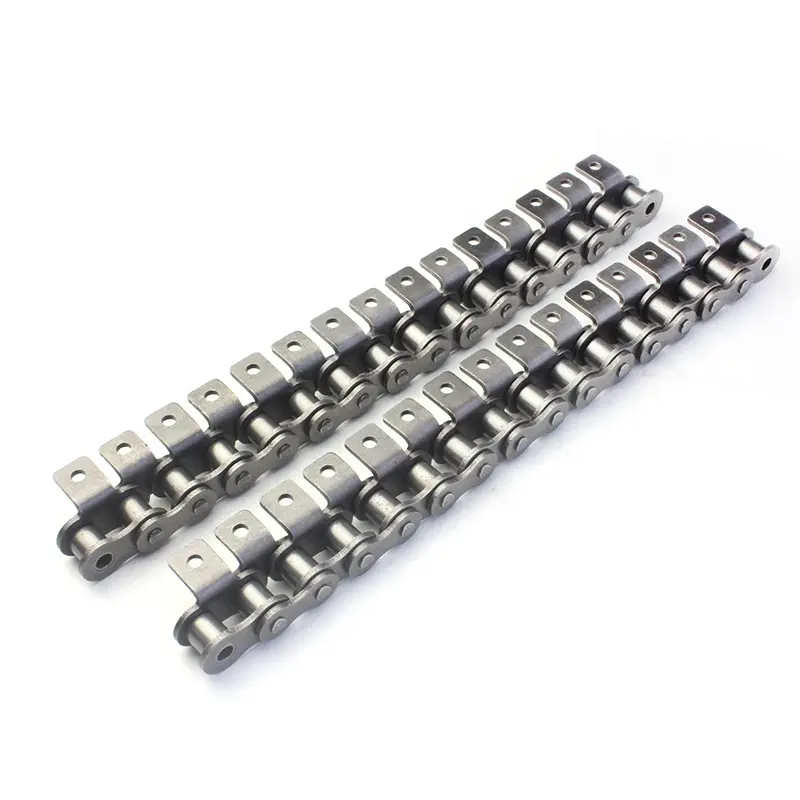
Comment l'allongement d'une chaîne de transmission affecte-t-il sa durée de vie ?
Les chaînes de transmission subissent un allongement progressif au fil du temps en raison de l'usure et de la fatigue. Cet allongement correspond à l'augmentation de la longueur de la chaîne due à l'étirement de ses composants. Voici une explication détaillée de l'influence de l'allongement sur la durée de vie d'une chaîne de transmission :
1. Augmentation du jeu : Lorsqu'une chaîne de transmission s'allonge, le jeu entre ses maillons augmente. Ce jeu accru réduit la tension de la chaîne et peut nuire à ses performances. Un jeu excessif peut entraîner des sauts de chaîne, un désalignement et une diminution de l'efficacité de la transmission de puissance. Ceci peut provoquer des vibrations, du bruit et une usure prématurée de la chaîne et des pignons.
2. Usure accélérée : L’allongement exerce une contrainte supplémentaire sur les axes, les bagues et les rouleaux de la chaîne. L’augmentation de la tension et du mouvement entre les composants de la chaîne entraîne une usure et une fatigue accélérées. Ce phénomène peut devenir un cercle vicieux, car les composants usés contribuent à l’allongement et à la réduction des performances.
3. Diminution de la capacité de charge : L’allongement réduit le pas effectif de la chaîne de transmission, ce qui diminue sa capacité de charge. Cette réduction peut limiter l’aptitude de la chaîne à supporter des charges importantes ou à transmettre efficacement la puissance. Il peut en résulter une défaillance prématurée ou des dommages à la chaîne et aux machines associées.
4. Besoins accrus en maintenance : Les chaînes de transmission allongées nécessitent une maintenance et un réglage plus fréquents afin de maintenir une tension et des performances optimales. Un contrôle et un réglage réguliers de la tension de la chaîne sont indispensables pour minimiser l’usure, prévenir un allongement excessif et garantir une transmission de puissance optimale. Négliger de corriger rapidement un allongement peut entraîner des dommages plus importants à la chaîne et à d’autres composants, engendrant des réparations coûteuses et des immobilisations.
5. Durée de vie réduite : L’allongement d’une chaîne de transmission influe directement sur sa durée de vie. À mesure que la chaîne s’allonge, ses performances, son rendement et sa capacité de charge se dégradent progressivement. Le taux d’allongement dépend de divers facteurs tels que la qualité de la chaîne, les conditions d’utilisation, la lubrification et les pratiques d’entretien. Si l’allongement n’est pas pris en compte, la chaîne risque de ne plus remplir efficacement sa fonction, ce qui peut entraîner sa rupture et nécessiter son remplacement.
Pour atténuer les effets néfastes de l'allongement et prolonger la durée de vie d'une chaîne de transmission, un entretien régulier, comprenant une lubrification adéquate et un réglage de la tension, est essentiel. Des inspections périodiques doivent être effectuées afin de détecter les signes d'usure, d'allongement et de fatigue, de repérer rapidement les problèmes potentiels et de prendre les mesures correctives appropriées. De plus, le choix de chaînes de haute qualité et le respect des recommandations du fabricant concernant l'installation, l'utilisation et l'entretien contribuent à minimiser l'allongement et à maximiser la durée de vie de la chaîne.

Comment la résistance à l'usure d'une chaîne de transmission influence-t-elle sa longévité ?
La résistance à l'usure est un facteur essentiel qui influe sur la durée de vie d'une chaîne de transmission. Voici une réponse détaillée à cette question :
1. Durée de vie prolongée : Une chaîne de transmission à haute résistance à l’usure est conçue pour résister aux effets du frottement et de l’abrasion, ce qui lui confère une durée de vie prolongée. Elle résiste à l’usure causée par le contact avec les pignons, d’autres chaînes ou des contaminants externes, ce qui réduit l’allongement et la dégradation de la chaîne au fil du temps.
2. Maintenance réduite : Les chaînes à excellente résistance à l’usure nécessitent moins d’entretien et de remplacement. Elles fonctionnent de manière fiable et efficace pendant de plus longues périodes sans dégradation significative, réduisant ainsi les temps d’arrêt et les coûts de maintenance.
3. Performances améliorées : Une chaîne de transmission résistante à l’usure conserve ses performances dans le temps. Elle transmet efficacement la puissance, maintient des rapports de vitesse précis et fonctionne en douceur, sans bruit ni vibrations excessifs. Il en résulte des performances et un rendement global améliorés.
4. Résistance aux facteurs environnementaux : Les chaînes utilisées dans des environnements difficiles ou exposées à des contaminants, à l’humidité ou à des produits chimiques sont plus sujettes à l’usure. Une chaîne de transmission à haute résistance à l’usure peut supporter ces facteurs environnementaux, garantissant un fonctionnement fiable et minimisant l’impact négatif des problèmes liés à l’usure.
5. Économies : L'utilisation d'une chaîne de transmission à haute résistance à l'usure permet de réaliser des économies à long terme. La réduction des besoins en matière de remplacement, de réparation et d'entretien de la chaîne se traduit par une baisse des coûts d'exploitation et une productivité accrue.
Il est essentiel de prendre en compte les exigences spécifiques de l'application et les conditions de fonctionnement lors du choix d'une chaîne de transmission. Des facteurs tels que la capacité de charge, la vitesse, l'environnement d'exploitation et la compatibilité avec les autres composants du système doivent être évalués afin de choisir une chaîne offrant une résistance à l'usure optimale, pour une durée de vie et des performances maximales.
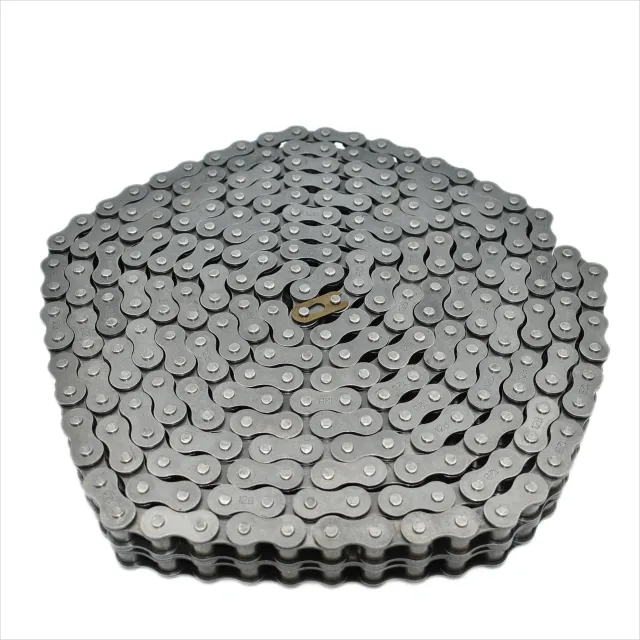
Quels sont les différents types de chaînes de transmission disponibles ?
Il existe plusieurs types de chaînes de transmission, chacune conçue pour des applications et des conditions de fonctionnement spécifiques. Voici quelques types courants :
- Chaînes à rouleaux : Les chaînes à rouleaux sont le type de chaînes de transmission le plus répandu. Elles se composent de plaques intérieures et extérieures, d’axes, de bagues et de rouleaux. Ces derniers contribuent à réduire la friction et à assurer un mouvement fluide.
- Chaînes silencieuses : Les chaînes silencieuses, également appelées chaînes à denture inversée ou chaînes crantées, sont dotées de profils de dents spécifiques qui s’engrènent avec des pignons correspondants. Elles sont conçues pour minimiser le bruit et les vibrations, ce qui les rend idéales pour les applications exigeant un fonctionnement silencieux.
- Chaînes à maillons plats : Les chaînes à maillons plats sont constituées de maillons imbriqués en tôle d’acier. Elles sont reconnues pour leur haute résistance à la traction et à la fatigue, ce qui les rend idéales pour les applications exigeantes et soumises à des charges importantes.
- Chaînes de distribution : Les chaînes de distribution servent à synchroniser la rotation de l’arbre à cames et du vilebrequin dans les moteurs. Leurs dents, au profil précis, s’engrènent avec les pignons de distribution, assurant ainsi un calage précis et un rendement moteur optimal.
- Chaînes en acier technique : Les chaînes en acier technique sont des chaînes hautement spécialisées, conçues pour des industries et des applications spécifiques. Elles sont souvent utilisées dans des environnements exigeants tels que les mines, la foresterie et la manutention.
- Chaînes en plastique : Fabriquées à partir de matériaux plastiques haute résistance comme l’acétal ou le nylon, les chaînes en plastique présentent l’avantage d’être résistantes à la corrosion, légères et silencieuses. Elles sont couramment utilisées dans l’industrie agroalimentaire, l’emballage et d’autres secteurs soumis à des exigences d’hygiène strictes.
Ce ne sont là que quelques exemples de types de chaînes de transmission. Selon l'application, d'autres chaînes spécialisées peuvent être disponibles pour répondre aux exigences spécifiques de différents secteurs et machines.
En quoi les chaînes à rouleaux diffèrent-elles des autres types de chaînes de transmission ?
Les chaînes à rouleaux, également appelées chaînes à maillons à rouleaux, sont un type de chaîne de transmission couramment utilisé qui se distingue des autres chaînes de plusieurs manières :
- Conception : Les chaînes à rouleaux sont composées de plaques intérieure et extérieure, d’axes, de bagues et de rouleaux. La rotation libre des rouleaux contribue à réduire la friction et l’usure, assurant ainsi une transmission de puissance plus fluide et plus efficace.
- Large champ d'application : Les chaînes à rouleaux sont polyvalentes et largement utilisées dans diverses industries, notamment l'automobile, les machines industrielles, les équipements agricoles et les systèmes de convoyage.
- Capacité de charge élevée : les chaînes à rouleaux sont conçues pour supporter des charges élevées et offrent une excellente résistance à la traction, ce qui les rend adaptées aux applications exigeant des performances robustes.
- Efficacité : Les chaînes à rouleaux sont reconnues pour leur haute efficacité de transmission de puissance. La conception des rouleaux minimise les frottements, ce qui réduit les pertes d’énergie et améliore l’efficacité globale.
- Rapport coût-efficacité : Les chaînes à rouleaux sont relativement économiques par rapport à certaines autres chaînes de transmission spécialisées, ce qui en fait un choix populaire dans de nombreuses applications.
Bien que les chaînes à rouleaux présentent des avantages, il est important de noter que différents types de chaînes de transmission peuvent être plus adaptés à des applications spécifiques. Des facteurs tels que la capacité de charge, la vitesse, le niveau sonore et les conditions environnementales doivent être pris en compte lors du choix de la chaîne de transmission appropriée à une application particulière.


Édité par CX le 10 avril 2024