Descrição do produto
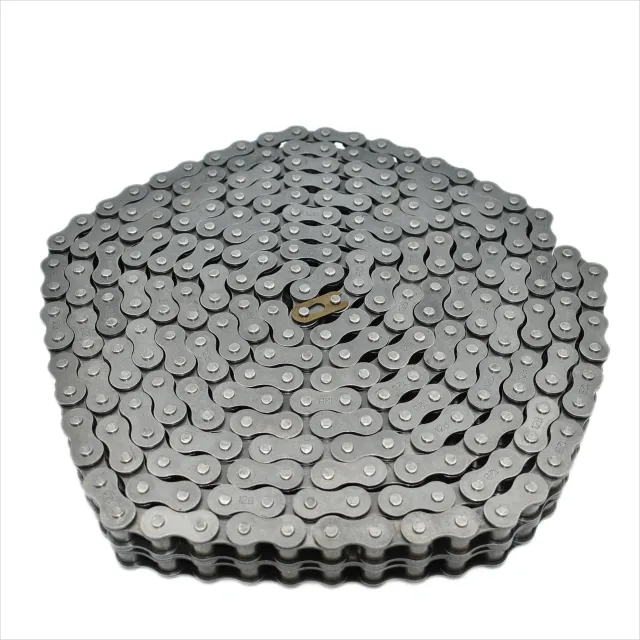
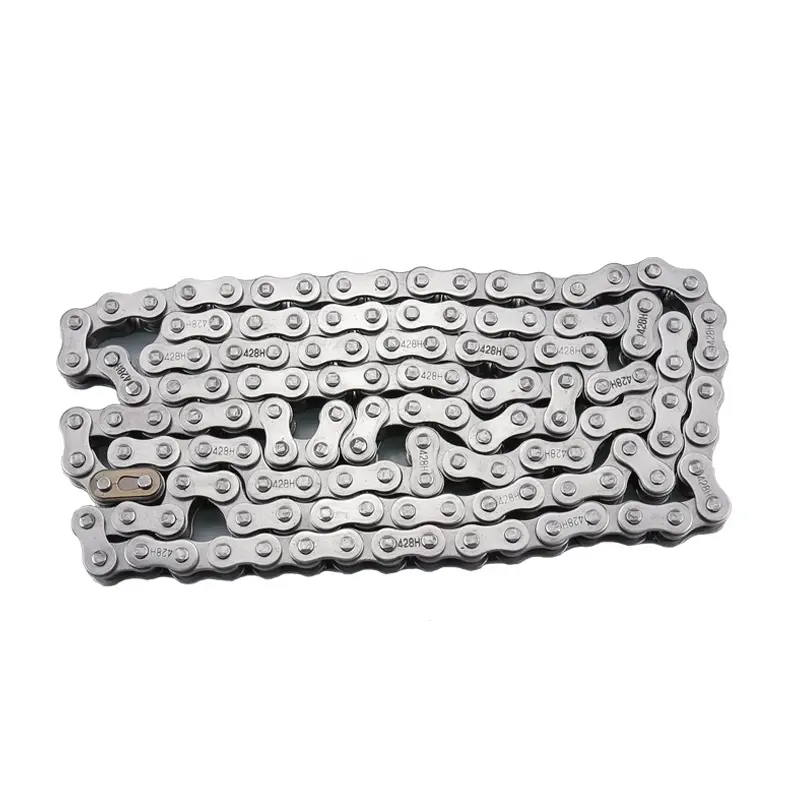
ISO/ANSI/DIN Standard Short Pitch Precision Stainless Steel Hardware Transmission Motorcycle Industrial Roller Chain
Descrição do produto
1. Material: Stainless Steel 304 & 316 / Alloy Carbon Steel
2. Surface Treatment: Jateamento com esferas / Zincado / Niquelado / Revestido com Dacromet
3. Chain No:
35SS-1, 40SS-1, 50SS-1, 60SS-1, 80SS-1, 100SS-1, 120SS-1, 140SS-1;
35SS-2, 40SS-2, 50SS-2, 60SS-2, 80SS-2, 100SS-2, 120SS-2, 140SS-2;
35SS-3, 40SS-3, 50SS-3, 60SS-3, 80SS-3, 100SS-3, 120SS-3, 140SS-3;
4. Application: Stainless Steel Chains are used in so many industries, such as machine manufacturing, food machine, etc. Also are suitable for high and low temperature conditions.
5. Characteristic:
1. The chain can be used on the both sides of multi-axle transmission.
2. Easy installation and replacement.
3. It can obtain larger reduction ratio.
4. The roller chain has good elasticity, high strength and each hinge part has lubricating oil, so it can be stored easliy. Thus, compared with the rigid contact tooth, it has good cushioning and vibration absorbing ability.
| Product name | Stainless Steel Roller Chain From China |
| Materiais disponíveis | 1. Stainless Steel: SS304, SS316, etc |
| 2. Alloy Steel: 45Mn, 42CrMo, 20CrMo, etc | |
| 3. Fabricação sob encomenda (OEM) de acordo com sua solicitação. | |
| Tratamento de superfície | Shot peening, Blackening, Oxygenation, Polishing, Zinc-plated, Nickel-plated, Anodized, etc. |
| Characteristic | Fire Resistant, Oil Resistant, Heat Resistant |
| Critério de projeto | ISO DIN ANSI e desenho do cliente |
| Tamanho | Desenho do cliente e norma ISO |
| Pacote | Wooden Case / Container and pallet, or made-to-order |
| Certificado | ISO9001: 2008 |
| Vantagem | First quality, Best service, Competitive price, Fast delivery |
| Prazo de entrega | 20 days for samples. 45 days for official order. |
Fotos detalhadas
View more products,please click here…
perfil de companhia
/* 22 de janeiro de 2571 19:08:37 */!function(){function s(e,r){var a,o={};try{e&&e.split(“”,).forEach(function(e,t){e&&(a=e.match(/(.*?):(.*)$/))&&1
| Uso: | Corrente de transmissão |
|---|---|
| Material: | Aço inoxidável |
| Estrutura: | Corrente de rolos |
| 40-1: | 1/2" |
| 50-1: | 5/8" |
| 60-1: | 3/4" |
| Exemplos: |
US$ 0/Metro
1 metro (pedido mínimo) | |
|---|
| Personalização: |
Disponível
| Solicitação personalizada |
|---|
What are the benefits of using an anti-corrosion coating on a transmission chain?
Using an anti-corrosion coating on a transmission chain offers several benefits. Here’s a detailed explanation:
1. Enhanced Durability: Corrosion is a common enemy of metal components, and transmission chains are no exception. Applying an anti-corrosion coating forms a protective barrier that shields the chain from corrosive elements, such as moisture, chemicals, and environmental factors. This helps to prevent rust and corrosion, increasing the chain’s lifespan and overall durability.
2. Improved Performance: Corrosion can negatively impact the performance of a transmission chain. It can cause surface irregularities, increase friction, and lead to premature wear and tear. By using an anti-corrosion coating, the chain’s surfaces remain smooth and intact, reducing friction and maintaining optimal performance. This results in smoother operation, reduced energy loss, and improved efficiency.
3. Cost Savings: Corrosion can lead to chain failure and the need for frequent replacements, which can be costly. By applying an anti-corrosion coating, the chain’s resistance to corrosion is significantly improved, reducing the likelihood of premature failure. This translates to cost savings by extending the chain’s lifespan and minimizing maintenance and replacement expenses.
4. Increased Reliability: A transmission chain that is protected against corrosion is more reliable in demanding operating environments. It can withstand exposure to harsh conditions, such as high humidity, extreme temperatures, or chemical exposure, without compromising its performance. This increased reliability ensures that the chain can continue to function effectively, minimizing downtime and improving productivity.
5. Maintenance Simplification: An anti-corrosion coating reduces the maintenance requirements for a transmission chain. With a corrosion-resistant surface, the chain is less prone to debris buildup, sticking, or binding. This simplifies the cleaning and lubrication processes, saving time and effort in maintenance tasks.
6. Versatility: The application of an anti-corrosion coating allows transmission chains to be used in a wide range of environments and industries. Whether it’s outdoor equipment, marine applications, or corrosive chemical environments, the coating provides protection against corrosion, expanding the chain’s versatility and usability.
It’s important to choose the right type of anti-corrosion coating based on the specific operating conditions and requirements of the transmission chain. Consulting with experts or manufacturers can provide further guidance on selecting the most suitable coating for optimal protection and performance.
How does the alignment of sprockets affect the lifespan of a transmission chain?
The alignment of sprockets plays a crucial role in the lifespan and performance of a transmission chain. Here’s a detailed answer to the question:
1. Proper Load Distribution: When the sprockets are aligned correctly, the transmission chain is able to evenly distribute the load along its length. This ensures that the chain experiences uniform stress and minimizes the concentration of forces on specific chain links. Improper alignment can result in uneven load distribution, leading to accelerated wear and fatigue of the chain.
2. Reduced Friction and Wear: Proper alignment helps maintain the correct engagement between the chain and the sprockets. When the chain engages smoothly with the sprockets, friction and wear are minimized. On the other hand, misaligned sprockets can cause the chain to rub against the teeth or sides of the sprockets, leading to increased friction, wear, and potential chain failure.
3. Chain Tension: Sprocket alignment also affects the tension of the transmission chain. Proper alignment ensures that the chain remains properly tensioned throughout its operation. Excessive tension due to misalignment can lead to increased stress on the chain, resulting in accelerated wear, fatigue, and potential chain breakage. Insufficient tension can cause the chain to skip or disengage from the sprockets.
4. Smooth and Efficient Operation: When the sprockets are aligned correctly, the transmission chain experiences smooth and efficient operation. This allows for smooth power transfer, reduced vibration, and noise levels, and improved overall system performance. Misaligned sprockets can cause the chain to bind, jump, or produce excessive noise, leading to decreased efficiency and potential damage to the chain and sprockets.
5. Extended Chain Life: Proper sprocket alignment helps to extend the lifespan of the transmission chain. By ensuring that the chain operates within its design parameters and experiences minimal stress and wear, the risk of premature failure is reduced. This leads to longer chain life, reduced maintenance requirements, and lower overall operating costs.
It’s important to regularly inspect and maintain the alignment of sprockets in a transmission chain system. Proper installation, periodic alignment checks, and adjustment when necessary are essential for maximizing the lifespan and performance of the transmission chain.
What are the different types of transmission chains available?
There are several types of transmission chains available, each designed to suit specific applications and operating conditions. Here are some common types:
- Roller Chains: Roller chains are the most widely used type of transmission chains. They consist of inner and outer plates, pins, bushings, and rollers. The rollers help reduce friction and facilitate smooth motion.
- Silent Chains: Silent chains, also known as inverted-tooth chains or toothed chains, feature special tooth profiles that engage with corresponding sprockets. They are designed to minimize noise and vibration, making them suitable for applications requiring quiet operation.
- Leaf Chains: Leaf chains are constructed with interlocking links made of flat steel plates. They are known for their high tensile strength and resistance to fatigue, making them suitable for heavy-duty and high-load applications.
- Timing Chains: Timing chains are used in engines to synchronize the rotation of the camshaft and crankshaft. They have precise tooth profiles that engage with timing sprockets, ensuring accurate timing and efficient engine performance.
- Engineered Steel Chains: Engineered steel chains are highly specialized chains designed for specific industries and applications. They are often used in demanding environments such as mining, forestry, and material handling.
- Plastic Chains: Plastic chains are made of high-strength plastic materials, such as acetal or nylon. They offer benefits like corrosion resistance, lightweight design, and low noise operation. They are commonly used in food processing, packaging, and other industries with strict hygiene requirements.
These are just a few examples of transmission chain types. Depending on the specific application, there may be other specialized chains available to meet the unique requirements of different industries and machinery.
Quais as diferenças entre correntes de rolos e outros tipos de correntes de transmissão?
As correntes de rolos, também conhecidas como correntes de elos de rolos, são um tipo comum de corrente de transmissão que se distingue de outras correntes de diversas maneiras:
- Design: As correntes de rolos são compostas por placas internas e externas, pinos, buchas e rolos. Os rolos, que giram livremente, ajudam a reduzir o atrito e o desgaste, resultando em uma transmissão de potência mais suave e eficiente.
- Ampla aplicação: As correntes de rolos são versáteis e amplamente utilizadas em diversos setores, incluindo o automotivo, máquinas industriais, equipamentos agrícolas e sistemas de transporte.
- Alta capacidade de carga: As correntes de rolos são projetadas para suportar cargas elevadas e oferecem excelente resistência à tração, tornando-as adequadas para aplicações que exigem alto desempenho.
- Eficiência: As correntes de rolos são conhecidas pela sua alta eficiência na transmissão de potência. O design dos rolos minimiza o atrito, resultando em menor perda de energia e maior eficiência geral.
- Relação custo-benefício: As correntes de rolos têm uma relação custo-benefício relativamente boa em comparação com outras correntes de transmissão especializadas, o que as torna uma escolha popular em muitas aplicações.
Embora as correntes de rolos tenham suas vantagens, é importante observar que diferentes tipos de correntes de transmissão podem ser mais adequados para aplicações específicas. Fatores como capacidade de carga, velocidade, nível de ruído e condições ambientais devem ser considerados ao selecionar a corrente de transmissão apropriada para uma determinada aplicação.


editor by CX 2024-04-09