Productbeschrijving
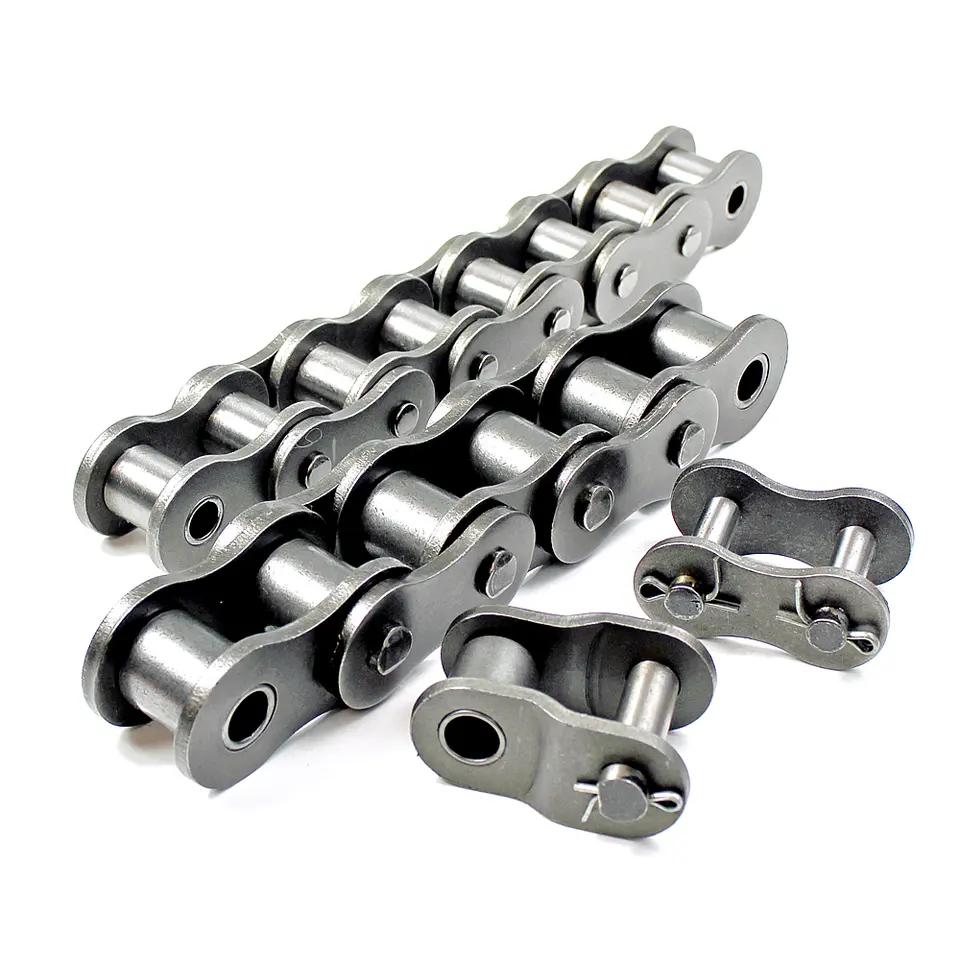
Duplex precisie transportketting met korte steek (DIN764)
PRECISIE ROLLENKETTINGEN MET KORTE STEK (B-SERIE)
Materiaal: Gelegeerd staal
Oppervlaktebehandeling: Shotpeening / Zwartmaken / Blauwmaken
Hoofdtoepassing: Industriële machines
ANSI-KETTINGSNUMMER: 05B-2 06B-2 10B-2 12B-2 16B-2 20B-2 24B-2 28B-2 32B-2 40B-2 48B-2 56B-2 72B-2
Pitch:8 9.525 12.7 15.875 19.05 25.4 31.75 38.1 44.45 50.8 63.5 76.2 88.9 101.6 114.3
| Productnaam | Duplex precisie rollenketting met korte steek (B-serie) Ketting (DIN764) |
| Beschikbare materialen | 1. Roestvrij staal: SS201, SS303, SS304, SS316, SS416, SS420 |
| 2. Staal: C45 (K1045), C46 (K1046), C20 | |
| 3. Messing: C36000 (C26800), C37700 (HPb59), C38500 (HPb58), C27200 (CuZn37), C28000 (CuZn40) | |
| 4. Brons: C51000, C52100, C54400, enz. | |
| 5. IJzer: 1213, 12L14, 1215 | |
| 6. Aluminium: Al6061, Al6063 | |
| 7. OEM volgens uw verzoek | |
| Oppervlaktebehandeling | Gloeien, natuurlijke anodisatie, warmtebehandeling, polijsten, vernikkelen, verchromen, verzinken, gele passivering, gouden passivering, satijn, zwarte oppervlakteverf, enz. |
| Beschikbare producten | Tandwielen, kettingen, katrollen, assen (assen, spiebanen, tandwielassen), tandwielen (rondsel, tandheugels), lagers, lagerzittingen, bussen, koppelingen, vergrendelingsmechanismen, enz. |
| Verwerkingsmethode | CNC-bewerking, ponsen, draaien, frezen, boren, slijpen, brootsen, lassen en assemblage |
| QC: | Technici voeren zelfcontroles uit tijdens de productie; een professionele kwaliteitsinspecteur voert vóór de verpakking een eindcontrole uit. |
| Maat | Tekeningen |
| Pakket | Houten kist/container en pallet, of volgens klantspecifieke specificaties. |
| Certificaat | ISO 9001:2008, ISO 14001:2001, ISO/TS 16949:2009 |
| Voordeel | Kwaliteit staat voorop, superieure service, geavanceerde apparatuur, ervaren medewerkers, perfecte testapparatuur. |
| Levertijd | Monsters: 15-25 dagen. Officiële bestelling: 30-45 dagen. |
1. Bent u een fabrikant of een handelsonderneming?
Wij zijn een fabriek, opgericht in 1991, met een handelsteam voor internationale service.
2. Welke betalingsvoorwaarden hanteert u gewoonlijk?
T/T 30% aanbetaling en 70% tegen document, Western Union, L/C op zicht
3. Wat is uw levertijd voor uw goederen?
Normaal gesproken is de levertijd 45 dagen na bevestiging van de bestelling. In het laagseizoen (mei tot en met juli) kan de levertijd voor sommige artikelen 30 dagen bedragen, en tijdens de jaarwisseling en het hoogseizoen (januari tot en met maart) 65 dagen.
4. Bezoek je wel eens een voorstelling?
We bezoeken de Hannover Messe in Duitsland, NMW in Australië, de Canton Fair, PTC in China en vele andere gespecialiseerde meubelbeurzen.
| Gebruik: | Transmissieketting |
|---|---|
| Materiaal: | Gelegeerd/koolstofstaal |
| Oppervlaktebehandeling: | Polijsten |
| Functie: | Hittebestendig |
| Kettingmaat: | 1/2"*3/32" |
| Structuur: | Rollenketting |
| Aanpassing: |
Beschikbaar
| Aanvraag op maat |
|---|
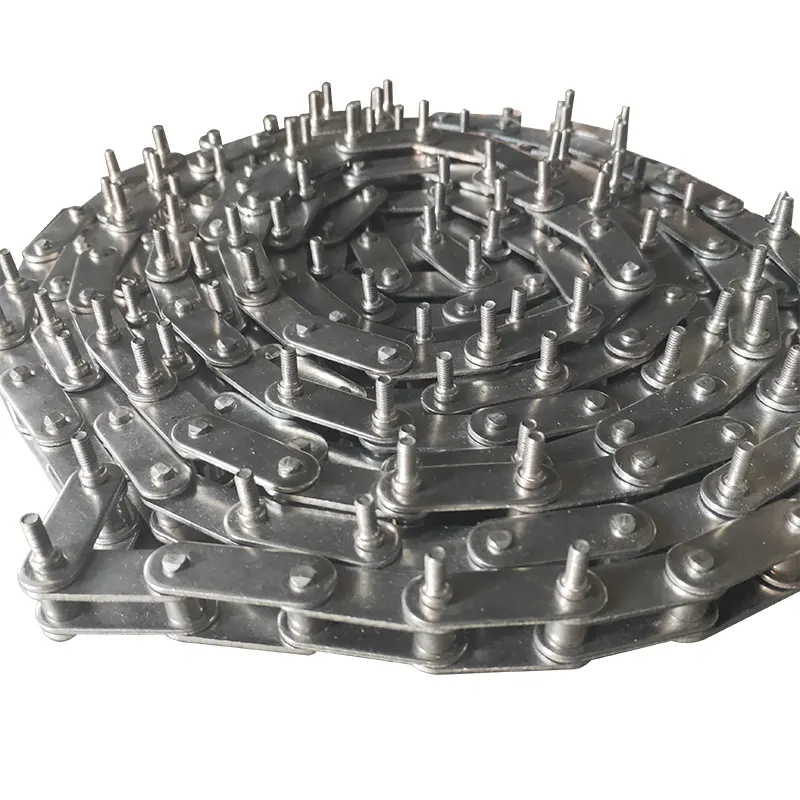
Kunnen transmissiekettingen worden gebruikt in zware toepassingen of bij toepassingen met een hoge belasting?
Transmissiekettingen worden veelvuldig gebruikt in zware toepassingen of bij hoge belastingen vanwege hun robuuste constructie en het vermogen om aanzienlijke krachtoverbrenging aan te kunnen. Hier volgt een gedetailleerde uitleg:
1. Sterkte en duurzaamheid: Transmissiekettingen zijn ontworpen om hoge belastingen en zware toepassingen te weerstaan. Ze worden vervaardigd met hoogwaardige materialen zoals gelegeerd staal, wat zorgt voor uitzonderlijke sterkte, taaiheid en weerstand tegen vermoeidheid. Deze kettingen zijn ontwikkeld om de veeleisende krachten en belastingen aan te kunnen die voorkomen in zware machines, industriële apparatuur en automobieltoepassingen.
2. Draagvermogen: Transmissiekettingen zijn verkrijgbaar in verschillende maten en configuraties om aan uiteenlopende draagvermogens te voldoen. Fabrikanten geven specificaties en draagvermogens voor hun kettingen op, zodat gebruikers de juiste ketting kunnen kiezen op basis van de verwachte belastingen. Het draagvermogen van een transmissieketting hangt af van factoren zoals de kettingmaat, het materiaal, het ontwerp en de warmtebehandeling. Het is essentieel om een ketting te kiezen die de specifieke belastingseisen van de toepassing aankan.
3. Rendement van de krachtoverbrenging: Kettingaandrijvingen bieden een hoog rendement van de krachtoverbrenging, waardoor ze geschikt zijn voor zware toepassingen. De precisie van de schakels en tandwielen zorgt voor minimaal energieverlies tijdens de krachtoverdracht, waardoor het rendement van het systeem wordt gemaximaliseerd. Dit rendement is cruciaal in toepassingen waar grote hoeveelheden vermogen betrouwbaar en constant moeten worden overgebracht.
4. Aanpasbaarheid aan hoge belastingen: Transmissiekettingen kunnen zich aanpassen aan diverse belastingomstandigheden, waaronder schokbelastingen en dynamische krachten. Dankzij hun ontwerp kunnen ze plotselinge veranderingen in de belasting opvangen zonder dat dit ten koste gaat van de prestaties of de integriteit. Bovendien zijn zware transmissiekettingen vaak voorzien van eigenschappen zoals geharde pinnen, massieve rollen en speciale coatings om hun draagvermogen en slijtvastheid te verbeteren.
5. Breed scala aan toepassingen: Transmissiekettingen worden veelvuldig gebruikt in sectoren zoals de bouw, mijnbouw, landbouw, materiaalverwerking en krachtoverbrenging. Ze worden toegepast in zware machines, transportsystemen, hijsinstallaties, industriële aandrijvingen en vele andere toepassingen waarbij aanzienlijke belastingen een rol spelen. Hun veelzijdigheid en het vermogen om hoge belastingen te verwerken, maken ze een betrouwbare keuze voor veeleisende omgevingen.
Bij de keuze van een transmissieketting voor zware toepassingen is het essentieel om rekening te houden met de specifieke eisen, waaronder de verwachte belasting, de bedrijfsomstandigheden en omgevingsfactoren. Overleg met kettingfabrikanten of experts uit de branche kan waardevolle begeleiding bieden bij het kiezen van de meest geschikte ketting om een veilige en efficiënte krachtoverbrenging in zware toepassingen te garanderen.
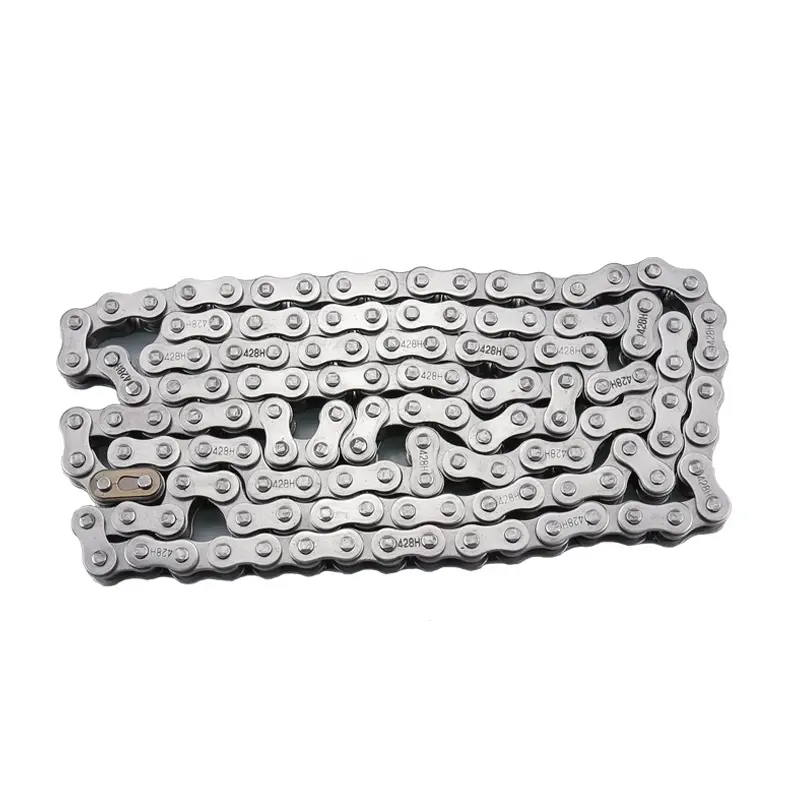
Welke invloed heeft de uitlijning van de tandwielen op de levensduur van een transmissieketting?
De uitlijning van de tandwielen speelt een cruciale rol in de levensduur en prestaties van een transmissieketting. Hier volgt een gedetailleerd antwoord op de vraag:
1. Juiste lastverdeling: Wanneer de tandwielen correct zijn uitgelijnd, kan de transmissieketting de belasting gelijkmatig over de lengte verdelen. Dit zorgt ervoor dat de ketting gelijkmatig wordt belast en minimaliseert de concentratie van krachten op specifieke schakels. Een onjuiste uitlijning kan leiden tot een ongelijke lastverdeling, met als gevolg versnelde slijtage en vermoeidheid van de ketting.
2. Minder wrijving en slijtage: Een goede uitlijning zorgt voor een correcte aangrijping tussen de ketting en de tandwielen. Wanneer de ketting soepel in de tandwielen grijpt, worden wrijving en slijtage geminimaliseerd. Daarentegen kunnen verkeerd uitgelijnde tandwielen ervoor zorgen dat de ketting tegen de tanden of zijkanten van de tandwielen schuurt, wat leidt tot verhoogde wrijving, slijtage en mogelijk kettingbreuk.
3. Kettingspanning: De uitlijning van de tandwielen beïnvloedt ook de spanning van de transmissieketting. Een juiste uitlijning zorgt ervoor dat de ketting tijdens het gebruik de juiste spanning behoudt. Overmatige spanning als gevolg van een verkeerde uitlijning kan leiden tot verhoogde belasting van de ketting, met als gevolg versnelde slijtage, vermoeidheid en mogelijk kettingbreuk. Onvoldoende spanning kan ervoor zorgen dat de ketting overslaat of loskomt van de tandwielen.
4. Soepele en efficiënte werking: Wanneer de tandwielen correct zijn uitgelijnd, werkt de transmissieketting soepel en efficiënt. Dit zorgt voor een soepele krachtoverdracht, minder trillingen en geluid, en betere algehele systeemprestaties. Verkeerd uitgelijnde tandwielen kunnen ervoor zorgen dat de ketting vastloopt, overslaat of overmatig lawaai maakt, wat leidt tot een lagere efficiëntie en mogelijke schade aan de ketting en tandwielen.
5. Langere levensduur van de ketting: Een correcte uitlijning van de tandwielen draagt bij aan een langere levensduur van de transmissieketting. Door ervoor te zorgen dat de ketting binnen de ontwerpparameters functioneert en minimale spanning en slijtage ondervindt, wordt het risico op vroegtijdige slijtage verminderd. Dit leidt tot een langere levensduur van de ketting, minder onderhoud en lagere bedrijfskosten.
Het is belangrijk om de uitlijning van de tandwielen in een transmissieketting regelmatig te controleren en te onderhouden. Correcte installatie, periodieke controle van de uitlijning en afstelling waar nodig zijn essentieel voor een maximale levensduur en optimale prestaties van de transmissieketting.
Hoe beïnvloedt het draagvermogen van een transmissieketting de prestaties ervan?
Het draagvermogen van een transmissieketting speelt een cruciale rol bij het bepalen van de prestaties en betrouwbaarheid ervan in diverse toepassingen. Hier volgt een gedetailleerde uitleg:
De draagkracht verwijst naar de maximale kracht of het maximale gewicht dat een transmissieketting kan weerstaan zonder voortijdige slijtage, vervorming of breuk. Deze wordt doorgaans door de fabrikant gespecificeerd en is afhankelijk van verschillende factoren, waaronder het ontwerp, het materiaal, de constructie en de bedrijfsomstandigheden van de ketting.
Wanneer de belasting op een transmissieketting de capaciteit overschrijdt, kunnen er verschillende prestatieproblemen ontstaan:
- Verhoogde slijtage: Overmatige belasting kan leiden tot versnelde slijtage van de onderdelen van de ketting, zoals de pinnen, bussen en rollen. Dit kan leiden tot verlenging, verhoogde wrijving en mogelijk kettingbreuk.
- Verminderde efficiëntie: Overbelasting van de ketting kan leiden tot hogere wrijvingsverliezen, waardoor de efficiëntie van de krachtoverbrenging afneemt. Dit kan energieverspilling en een verminderde algehele systeemprestatie tot gevolg hebben.
- Mogelijk kettingbreuk: Als de belasting de capaciteit van de ketting aanzienlijk overschrijdt, kan de ketting breken, wat leidt tot stilstand van de machine en potentiële veiligheidsrisico's.
- Verhoogde belasting van andere componenten: Een overbelaste transmissieketting legt extra druk op andere aangesloten componenten, zoals tandwielen, lagers en assen. Dit kan leiden tot voortijdige slijtage en defecten aan deze componenten.
Het kiezen van een transmissieketting met een geschikte draagcapaciteit is cruciaal voor optimale prestaties en een lange levensduur. Factoren zoals de verwachte belasting, variaties in de belasting tijdens gebruik en veiligheidsaspecten zijn belangrijk om een ketting te selecteren die de beoogde toepassing veilig en betrouwbaar aankan.
Fabrikanten leveren draagvermogenstabellen en richtlijnen op basis van uitgebreide tests en technische analyses. Het is raadzaam deze bronnen te raadplegen en nauw samen te werken met de fabrikant of een gekwalificeerde ingenieur om de meest geschikte transmissieketting voor uw specifieke belastingseisen te bepalen.


Bewerkt door CX 2023-08-08