Description du produit
Notre tableau des tailles de chaînes à rouleaux présente toutes les tailles de chaînes à pas simple et double standard ANSI pour faciliter le choix de la taille de votre chaîne !
Les rouleaux pleins améliorent la rotation sur la bague tout en réduisant les charges d'impact sur la dent du pignon pendant le fonctionnement.
Tous les composants sont traités thermiquement afin d'obtenir une résistance maximale et une meilleure résistance à l'usure.
Préchargée lors du processus de fabrication afin de minimiser l'allongement initial.
La lubrification par immersion à chaud assure une lubrification 100% de tous les composants de la chaîne afin de prolonger la durée de vie et de réduire les coûts d'entretien.
| ISO NON. |
ANSI NON. |
PAS | BUISSON LARGEUR |
ROULEAU DIA |
ÉPINGLE | PLAQUE | MIN. FORCE |
MOYENNE FORCE |
POIDS | |||
| d | L1 | L2 | H | t/T | ||||||||
| mm | mm | mm | mm | mm | mm | mm | mm | kgf | kgf | kgm | ||
| *04C-1 | *25-1 | 6.350 | 3.18 | 3.30 | 2.31 | 3.90 | 4.80 | 6.00 | 0.80 | 3.50 | 4.60 | 0.14 |
| *06C-1 | *36-1 | 9.525 | 4.77 | 5.08 | 3.58 | 6.00 | 7.20 | 9.00 | 1.30 | 7.90 | 10.60 | 0.35 |
| 08A-1 | 40-1 | 12.700 | 7.85 | 7.77 | 3.96 | 8.30 | 9.60 | 12.00 | 1.50 | 14.10 | 18.00 | 0.66 |
| 571A-1 | 50-1 | 15.875 | 9.40 | 10.16 | 5.08 | 10.25 | 11.85 | 15.09 | 2.03 | 22.20 | 31.00 | 1.05 |
| 012A-1 | 60-1 | 19.050 | 12.57 | 11.91 | 5.94 | 12.65 | 14.35 | 18.00 | 2.42 | 31.80 | 42.00 | 1.56 |
| 016A-1 | 80-1 | 25.400 | 15.75 | 15.88 | 7.92 | 16.20 | 17.90 | 24.00 | 3.25 | 56.70 | 70.20 | 2.67 |
| 571A-1 | 100-1 | 31.750 | 18.90 | 19.05 | 9.52 | 19.80 | 23.30 | 30.00 | 4.00 | 88.50 | 115.00 | 4.04 |
| 571A-1 | 120-1 | 38.100 | 25.22 | 22.23 | 11.10 | 25.00 | 28.30 | 35.70 | 4.80 | 127.00 | 170.00 | 5.94 |
| 571A-1 | 140-1 | 44.450 | 25.22 | 25.40 | 12.70 | 26.90 | 30.90 | 41.00 | 5.00 | 172.00 | 213.00 | 7.50 |
| 032A-1 | 160-1 | 50.800 | 31.55 | 28.58 | 14.27 | 32.05 | 35.75 | 47.80 | 6.40 | 226.80 | 290.00 | 10.20 |
| 036A-1 | 180-1 | 57.150 | 35.48 | 35.71 | 17.46 | 36.05 | 40.75 | 53.60 | 7.20 | 280.20 | 340.00 | 13.95 |
| 040A-1 | 200-1 | 63.500 | 37.85 | 39.68 | 19.84 | 39.55 | 43.85 | 60.00 | 8.00 | 353.00 | 480.00 | 16.86 |
| 048A-1 | 240-1 | 76.200 | 47.35 | 47.63 | 23.81 | 47.60 | 52.40 | 72.39 | 9.50 | 510.00 | 620.00 | 24.25 |
| ISO NON. |
ANSI NON. |
PAS | BUISSON LARGEUR |
ROULEAU DIA |
ÉPINGLE | PLAQUE | TRANS PAS |
MIN. FORCE |
MOYENNE FORCE |
POIDS | |||
| d | L1 | L2 | H | t/T | |||||||||
| mm | mm | mm | mm | mm | mm | mm | mm | mm | kgf | kgf | kg/m | ||
| *04C-2 | *25-2 | 6.350 | 3.18 | 3.30 | 2.31 | 7.10 | 7.90 | 5.90 | 0.75 | 6.40 | 7.00 | 8.60 | 0.28 |
| *06C-2 | *36-2 | 9.525 | 4.77 | 5.08 | 3.58 | 11.10 | 12.30 | 9.00 | 1.27 | 10.13 | 15.80 | 20.00 | 0.69 |
| 08A-2 | 40-2 | 12.700 | 7.85 | 7.77 | 3.96 | 15.50 | 16.70 | 12.00 | 1.52 | 14.38 | 27.60 | 34.50 | 1.30 |
| 571A-2 | 50-2 | 15.875 | 9.40 | 10.16 | 5.08 | 19.30 | 20.70 | 15.00 | 2.00 | 18.11 | 43.60 | 59.50 | 2.08 |
| 012A-2 | 60-2 | 19.050 | 12.57 | 11.91 | 5.94 | 24.05 | 25.95 | 18.00 | 2.40 | 22.78 | 62.30 | 80.60 | 3.09 |
| 016A-2 | 80-2 | 25.400 | 15.75 | 15.88 | 7.92 | 30.75 | 33.15 | 23.50 | 3.20 | 29.29 | 111.20 | 134.80 | 5.29 |
| 571A-2 | 100-2 | 31.750 | 18.90 | 19.05 | 9.52 | 37.70 | 41.10 | 30.00 | 4.00 | 35.76 | 173.50 | 224.30 | 8.01 |
| 571A-2 | 120-2 | 38.100 | 25.22 | 22.23 | 11.10 | 47.75 | 51.05 | 35.80 | 4.90 | 45.44 | 249.10 | 326.40 | 11.84 |
| 571A-2 | 140-2 | 44.450 | 25.22 | 25.40 | 12.70 | 51.35 | 55.35 | 41.50 | 5.60 | 48.87 | 338.10 | 409.00 | 14.89 |
| 032A-2 | 160-2 | 50.800 | 31.55 | 28.58 | 14.27 | 61.35 | 65.05 | 48.00 | 6.40 | 58.55 | 444.80 | 556.80 | 20.26 |
| 036A-2 | 180-2 | 57.150 | 35.48 | 35.71 | 17.46 | 69.25 | 73.65 | 54.00 | 7.20 | 65.84 | 560.50 | 652.80 | 27.62 |
| 040A-2 | 200-2 | 63.500 | 37.85 | 39.68 | 19.84 | 75.35 | 79.65 | 59.60 | 8.00 | 71.55 | 693.90 | 921.60 | 33.64 |
| 048A-2 | 220-2 | 76.200 | 47.35 | 47.63 | 23.81 | 96.30 | 96.30 | 72.10 | 72.39 | 87.83 | 1000.80 | 1190.40 | 48.31 |
| Usage: | Chaîne de transmission, chaîne de convoyeur, chaîne à rouleaux |
|---|---|
| Matériel: | Acier allié/carbone |
| Traitement de surface : | Polissage |
| Fonctionnalité: | Résistant à la chaleur |
| Taille de la chaîne : | Taille standard, robuste |
| Structure: | Chaîne à rouleaux |
| Exemples : |
US$ 10/Mètre
1 mètre (commande minimale) | |
|---|
| Personnalisation : |
Disponible
| Demande personnalisée |
|---|
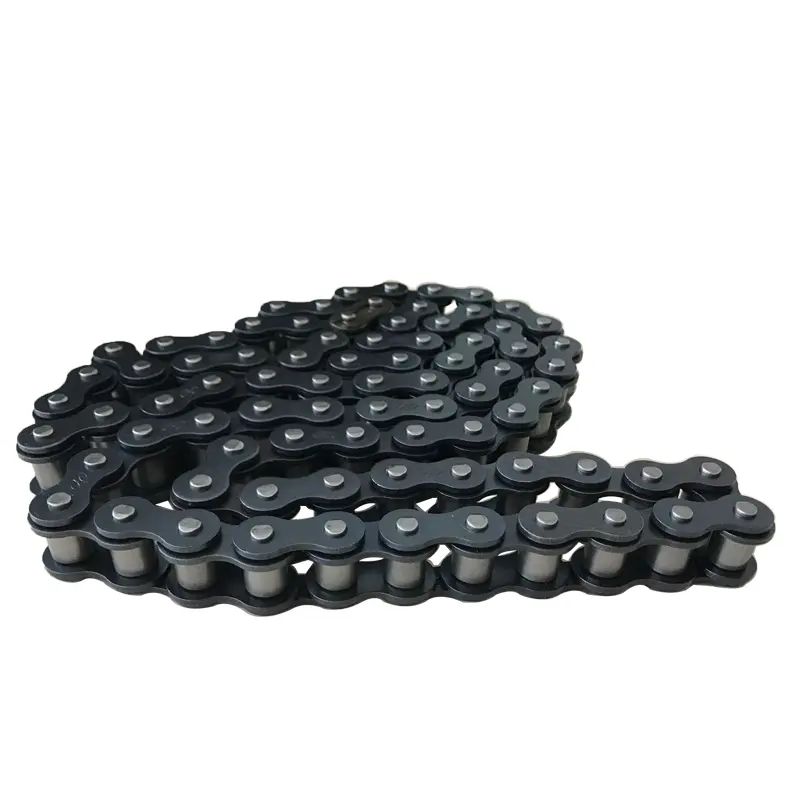
Quels sont les avantages d'utiliser une chaîne de transmission à faible bruit ?
L'utilisation d'une chaîne de transmission à faible bruit dans les applications industrielles offre plusieurs avantages. Voici une réponse détaillée à la question :
1. Réduction du bruit : L’un des principaux avantages de l’utilisation d’une chaîne de transmission silencieuse est la réduction du niveau sonore. Ces chaînes sont conçues avec des caractéristiques et des matériaux spécifiques afin de minimiser les vibrations, les chocs et les bruits de frottement pendant leur fonctionnement. Ceci est particulièrement important dans les environnements où la réduction du bruit est essentielle, comme les zones résidentielles, les bureaux ou les industries sensibles au bruit.
2. Amélioration du cadre de travail : En réduisant le bruit, les chaînes de transmission silencieuses contribuent à un environnement de travail plus confortable et productif. Un bruit excessif peut entraîner de la fatigue, une baisse de concentration et une augmentation du stress chez les employés. L’utilisation de chaînes silencieuses permet de créer un espace de travail plus calme, favorisant ainsi de meilleures conditions de travail et un bien-être général accru.
3. Respect des réglementations en matière de bruit : Dans certains secteurs ou régions, des réglementations ou des directives spécifiques encadrent les niveaux de bruit admissibles. L’utilisation de chaînes de transmission à faible bruit contribue à garantir le respect de ces réglementations et à éviter d’éventuelles amendes ou poursuites judiciaires liées à des émissions sonores excessives.
4. Amélioration des performances des équipements : Les chaînes de transmission silencieuses sont conçues pour assurer une transmission de puissance fluide et efficace tout en minimisant le bruit. La réduction des vibrations et des bruits d’impact améliore non seulement le confort au travail, mais aussi les performances globales des équipements. Elle contribue à une meilleure précision, une plus grande exactitude et une fiabilité accrue des machines, ce qui se traduit par une meilleure qualité des produits et une efficacité opérationnelle accrue.
5. Durée de vie prolongée des équipements : Les bruits et vibrations excessifs peuvent accélérer l’usure des composants des machines, entraînant une augmentation des coûts de maintenance et des pannes prématurées. L’utilisation d’une chaîne de transmission silencieuse réduit l’impact sur les pièces mécaniques de l’équipement, ce qui diminue l’usure, réduit les coûts de maintenance et prolonge sa durée de vie.
6. Satisfaction client : Dans les secteurs où le bruit peut nuire à l’expérience utilisateur, comme l’automobile, l’électronique grand public ou la mécanique de précision, l’utilisation de chaînes de transmission silencieuses contribue à une meilleure satisfaction client. Les produits silencieux sont souvent perçus comme étant de meilleure qualité et favorisent une image de marque positive ainsi que la fidélisation de la clientèle.
Il est important de noter que les avantages des chaînes de transmission silencieuses peuvent varier selon l'application et les conditions d'utilisation. Les fabricants et les concepteurs d'équipements doivent prendre en compte des facteurs tels que la capacité de charge, la vitesse, la lubrification et les exigences environnementales lors du choix et de la mise en œuvre de chaînes de transmission silencieuses.
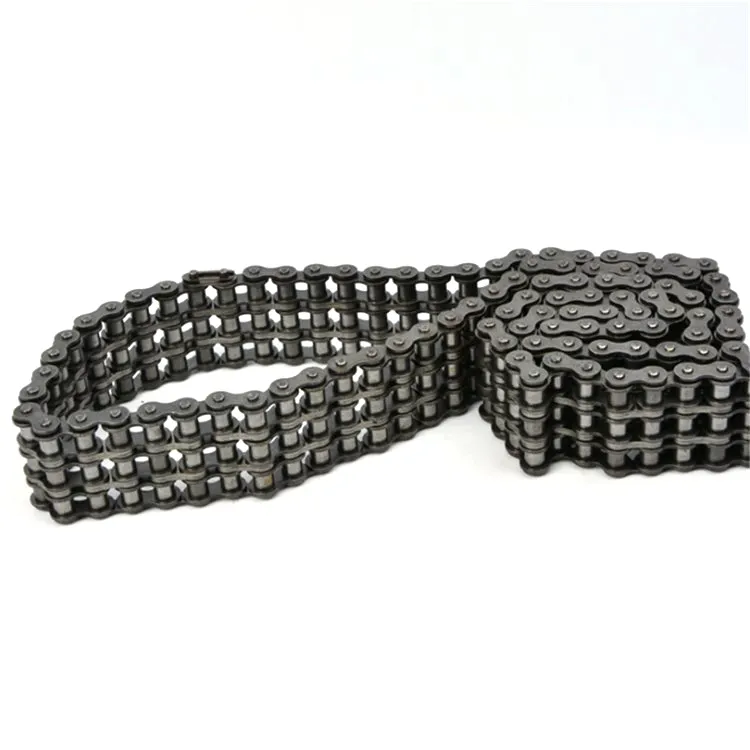
Quels sont les avantages de l'utilisation d'une chaîne de transmission ignifugée ?
Les chaînes de transmission ignifugées offrent des avantages spécifiques dans certaines applications où la sécurité incendie est primordiale. Voici une réponse détaillée à la question :
1. Protection contre l'incendie : Le principal avantage de l'utilisation d'une chaîne de transmission ignifugée est une protection accrue contre l'incendie. Ces chaînes sont conçues avec des matériaux et des revêtements présentant une haute résistance à l'inflammation et à la propagation des flammes. En cas d'incendie, elles contribuent à minimiser le risque que la chaîne ne contribue à la propagation des flammes.
2. Sécurité : Les chaînes de transmission ignifugées contribuent à la sécurité globale dans les environnements présentant des risques d’incendie. En réduisant l’inflammabilité de la chaîne, elles contribuent à prévenir tout risque d’inflammation ou de propagation d’incendie, protégeant ainsi le personnel et les biens.
3. Conformité aux normes de sécurité incendie : Dans les secteurs ou applications où les normes de sécurité incendie sont strictes, l’utilisation de chaînes de transmission ignifugées garantit la conformité à ces exigences. Elle contribue au respect des normes et réglementations nécessaires en matière de prévention et de protection contre l’incendie.
4. Gain de temps pour l'évacuation : En cas d'incendie, lors d'une évacuation rapide, les chaînes de transmission ignifugées offrent un précieux gain de temps pour une évacuation en toute sécurité. En résistant à l'inflammation et à la propagation des flammes, elles contribuent à préserver l'intégrité de la structure et à ralentir la propagation du feu.
5. Protection des biens : Les chaînes de transmission ignifugées contribuent à protéger les équipements, machines et biens de valeur contre les dommages causés par le feu. En réduisant le risque d’incendie de la chaîne, elles minimisent les risques de panne et les pertes ou dommages qui en découlent.
Il est important de noter que les chaînes de transmission ignifugées peuvent présenter des contraintes de conception et des limitations spécifiques. Elles sont généralement utilisées dans des applications où la sécurité incendie est primordiale, notamment dans les systèmes de transport, l'aérospatiale, l'exploitation minière et d'autres industries à haut risque d'incendie. Le choix d'une chaîne ignifugée adaptée nécessite de prendre en compte les exigences spécifiques de l'application et de garantir la conformité aux normes et réglementations de sécurité incendie en vigueur.
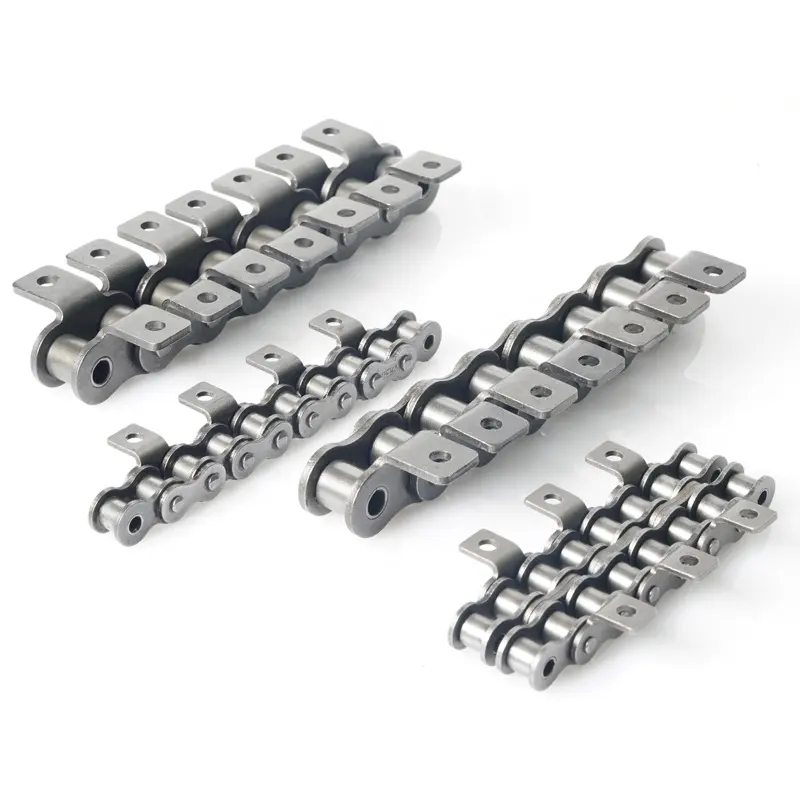
Quelles sont les principales différences entre les chaînes de transmission standard et les chaînes de transmission renforcées ?
Les chaînes de transmission standard et renforcées sont conçues pour répondre à des exigences de charge et de performance différentes. Voici les principales différences entre ces deux types :
- Capacité de charge : Les chaînes de transmission renforcées sont conçues pour supporter des charges plus élevées et offrent une résistance supérieure aux chaînes standard. Elles sont destinées aux applications plus exigeantes et plus lourdes.
- Construction : Les chaînes de transmission renforcées sont généralement construites avec des plaques plus épaisses, des axes plus grands et des composants plus robustes afin d'améliorer leur durabilité et leur capacité de charge.
- Dimension : Les chaînes de transmission renforcées sont souvent de plus grande taille que les chaînes standard afin de répondre aux exigences de charge accrues.
- Poids : De par leur construction robuste, les chaînes de transmission renforcées ont tendance à être plus lourdes que les chaînes standard.
- Durabilité : Les chaînes renforcées sont conçues pour offrir une meilleure résistance à l'usure, à la fatigue et une durabilité globale accrue, afin de résister aux conditions d'utilisation difficiles et à une utilisation prolongée.
- Applications : Les chaînes de transmission standard conviennent aux applications légères soumises à des charges modérées, telles que les machines légères, les convoyeurs et les petits équipements. Les chaînes de transmission renforcées, quant à elles, sont conçues pour les machines lourdes, les équipements industriels, les applications minières et autres environnements exigeants.
Il est important de prendre en compte les exigences spécifiques de votre application, notamment la capacité de charge, les conditions de fonctionnement et la durée de vie prévue, afin de déterminer si une chaîne de transmission standard ou renforcée est le bon choix.


Édité par CX le 27 octobre 2023