Produktbeschreibung
|
Produkt |
Standard Doppelteilungs-Rollenkette |
||
|
Material |
40Mn steel,304 stainless steel, 316 stainless steel and 201 stainless steel. |
||
|
Typen |
Standard chains and special chains, such as A or B series chains, roller chains, driving chains, conveyor chains, hoisting chains, agricultural chains, sprockets, gears, wheels and so on. |
||
|
Serie |
A series(12.7-50.8mm pitches),B series (9.525-50.8mm pitches)and the heavy series. |
||
|
Präzisionsrollenkette mit kurzer Teilung |
Simplex Roller Chains&Bushing Chains: 04C-1,06C-1,085-1,08A-1,10A-1,12A-1,16A-1,20A-1,24A-1,28A-1,32A-1,36A-1,40A-1,48A-1 04C-2,06C-2,085-2,08A-2,10A-2,12A-2,16A-2,20A-2,24A-2,28A-2,32A-2,36A-2,40A-2,48A-2 04C-3,06C-2,085-3,08A-3,10A-3,12A-3,16A-3,20A-3,24A-3,28A-3,32A-3,36A-3,40A-3,48A-3 |
||
|
Kettengliedtyp |
Standardlinks (ohne Anhang) und nicht standardmäßige Links (mit Anhang).
A1: One-side,one hole cranked attachments. |
||
|
Our Products Advantage |
1. Every step from production order to the packing process has a strict quality inspection. |
||
1.Fast delivery: Standard products can be delivered in as fast as 20 days
2.Good service: timely reply, prompt quotation, responsible for the product
3.High cost performance: can maintain price stability for a certain period of time, bringing greater profits to customers
4.Good quality: production and testing have corresponding supervision to ensure product quality and get high praise from customers
5.OEM service: products can be customized according to drawings and requirements
Wir übernehmen die Verantwortung für die bestellten Produkte. Wir sind von der Qualität unserer Produkte absolut überzeugt. Sollten Sie nach Erhalt der Ware dennoch Probleme feststellen, kontaktieren Sie uns bitte umgehend. Wir werden uns umgehend mit Ihnen in Verbindung setzen und gemeinsam eine Lösung finden.
|
Versandkosten:
Geschätzte Frachtkosten pro Einheit. |
Wird verhandelt|
|
|---|
| Standard oder Nichtstandard: | Standard |
|---|---|
| Anwendung: | Textile Machinery, Garment Machinery, Conveyer Equipment, Packaging Machinery, Electric Cars, Motorcycle, Food Machinery, Mining Equipment, Agricultural Machinery, Car |
| Oberflächenbehandlung: | Oil Blooming |
| Proben: |
US$ 35/kg
1 kg (Mindestbestellmenge) | Muster bestellen |
|---|
| Anpassung: |
Verfügbar
| Kundenspezifische Anfrage |
|---|
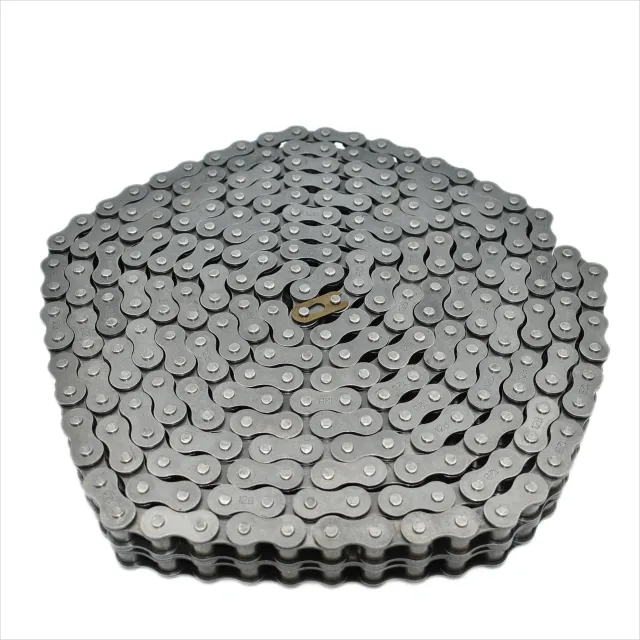
How does the choice of chain coating impact the performance of a transmission chain?
The choice of chain coating can significantly influence the performance and durability of a transmission chain. Here’s a detailed answer to the question:
1. Corrosion Resistance: Chain coatings, such as zinc plating or polymer coatings, provide a protective layer that prevents the transmission chain from corroding when exposed to moisture, chemicals, or harsh environments. Corrosion can weaken the chain, leading to premature failure and reduced performance. A proper chain coating can extend the chain’s lifespan and maintain its functionality.
2. Wear Resistance: Some chain coatings, such as those with specialized polymers or ceramic particles, offer enhanced wear resistance. These coatings reduce the friction and abrasion between the chain and the sprockets, minimizing wear on the chain’s pins, bushings, and rollers. By reducing wear, the chain’s performance and longevity are improved, resulting in less frequent replacements and lower maintenance costs.
3. Reduced Friction and Energy Loss: Certain chain coatings are designed to reduce friction between the chain and the sprockets, resulting in smoother operation and improved energy efficiency. The reduced friction leads to lower energy loss during power transmission, which is especially beneficial in applications where energy savings are a priority.
4. Noise Reduction: Some chain coatings incorporate noise-dampening properties, which can help reduce the noise generated during chain operation. This is particularly advantageous in applications where noise reduction is essential, such as in residential or office settings, or in machinery that requires quiet operation.
5. Compatibility with Lubricants: The choice of chain coating should be compatible with the lubricants used in the application. Certain coatings have self-lubricating properties, allowing for reduced reliance on external lubrication. In contrast, other coatings may require specific lubricants to ensure optimal performance and longevity of the chain.
6. Environmental Considerations: Depending on the application, there may be specific environmental regulations or requirements to consider. Chain coatings that are environmentally friendly, such as those free of harmful substances or compliant with specific industry standards, can help meet these requirements and ensure sustainable operation.
It’s important to select the appropriate chain coating based on the specific application’s demands, including environmental conditions, load capacity, operating speed, and lubrication requirements. Consulting with experts or manufacturers can help determine the most suitable chain coating for optimal performance, durability, and longevity of the transmission chain.
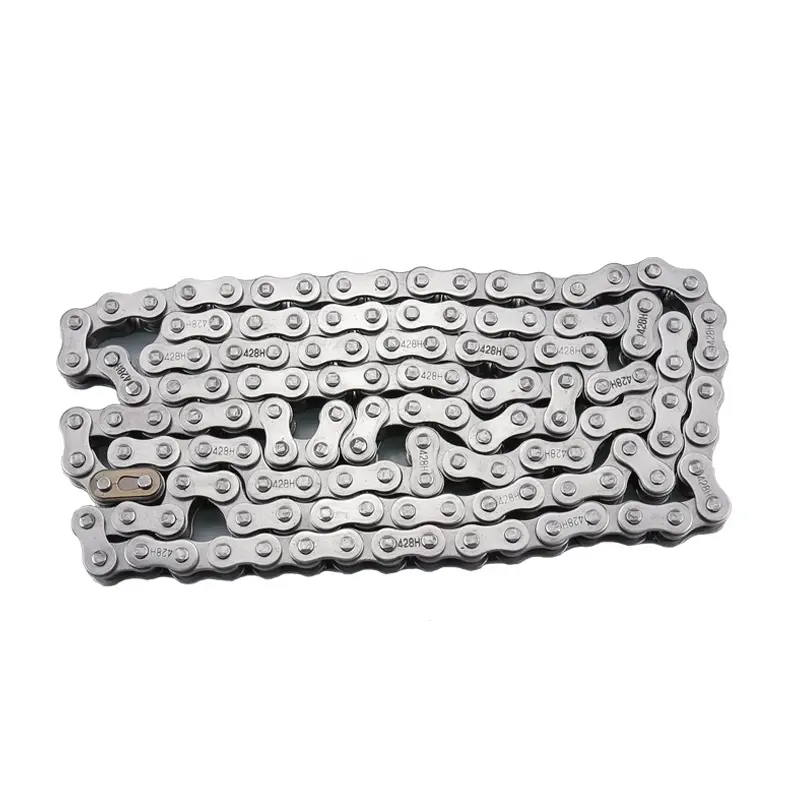
How does the alignment of sprockets affect the lifespan of a transmission chain?
The alignment of sprockets plays a crucial role in the lifespan and performance of a transmission chain. Here’s a detailed answer to the question:
1. Proper Load Distribution: When the sprockets are aligned correctly, the transmission chain is able to evenly distribute the load along its length. This ensures that the chain experiences uniform stress and minimizes the concentration of forces on specific chain links. Improper alignment can result in uneven load distribution, leading to accelerated wear and fatigue of the chain.
2. Reduced Friction and Wear: Proper alignment helps maintain the correct engagement between the chain and the sprockets. When the chain engages smoothly with the sprockets, friction and wear are minimized. On the other hand, misaligned sprockets can cause the chain to rub against the teeth or sides of the sprockets, leading to increased friction, wear, and potential chain failure.
3. Chain Tension: Sprocket alignment also affects the tension of the transmission chain. Proper alignment ensures that the chain remains properly tensioned throughout its operation. Excessive tension due to misalignment can lead to increased stress on the chain, resulting in accelerated wear, fatigue, and potential chain breakage. Insufficient tension can cause the chain to skip or disengage from the sprockets.
4. Smooth and Efficient Operation: When the sprockets are aligned correctly, the transmission chain experiences smooth and efficient operation. This allows for smooth power transfer, reduced vibration, and noise levels, and improved overall system performance. Misaligned sprockets can cause the chain to bind, jump, or produce excessive noise, leading to decreased efficiency and potential damage to the chain and sprockets.
5. Extended Chain Life: Proper sprocket alignment helps to extend the lifespan of the transmission chain. By ensuring that the chain operates within its design parameters and experiences minimal stress and wear, the risk of premature failure is reduced. This leads to longer chain life, reduced maintenance requirements, and lower overall operating costs.
It’s important to regularly inspect and maintain the alignment of sprockets in a transmission chain system. Proper installation, periodic alignment checks, and adjustment when necessary are essential for maximizing the lifespan and performance of the transmission chain.
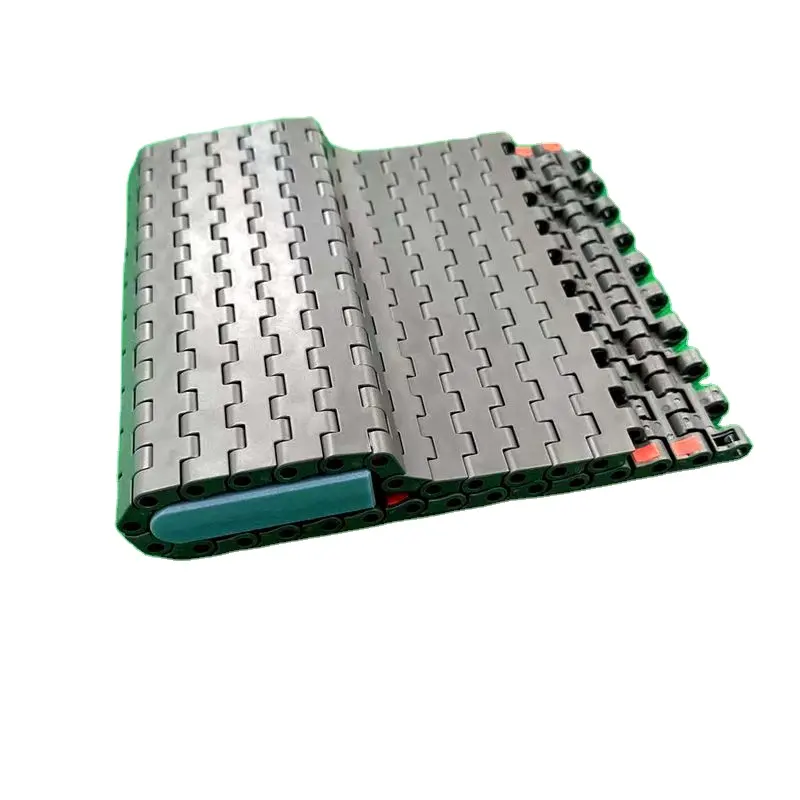
Wie beeinflusst die Wahl der Kettenräder die Leistung einer Antriebskette?
Die Wahl der Kettenräder hat einen erheblichen Einfluss auf die Leistung und Lebensdauer einer Antriebskette. Hier eine detaillierte Erklärung:
1. Zahnprofil: Das Zahnprofil der Kettenräder muss auf die Konstruktion der Antriebskette abgestimmt sein. Gängige Zahnprofile sind Standard-, modifizierte und Sonderprofile. Eine optimale Abstimmung gewährleistet einen reibungslosen Eingriff, geringe Geräuschentwicklung und eine effiziente Kraftübertragung.
2. Teilkreisdurchmesser: Der Teilkreisdurchmesser der Kettenräder bestimmt das Übersetzungsverhältnis der Kette und die Drehzahl des angetriebenen Bauteils. Er sollte entsprechend den gewünschten Drehzahl- und Drehmomentanforderungen des Systems ausgewählt werden.
3. Zähnezahl: Die Zähnezahl der Kettenräder beeinflusst den Eingriff der Kette und die Lastverteilung. Kettenräder mit einer höheren Zähnezahl verteilen die Last auf mehr Kontaktpunkte, wodurch der Verschleiß reduziert und die Tragfähigkeit der Kette erhöht wird.
4. Materialauswahl: Das Material der Kettenräder sollte mit der Kette und den Betriebsbedingungen kompatibel sein. Gängige Materialien sind Stahl, Edelstahl und Kunststoffe. Bei der Auswahl des Kettenradmaterials sind Faktoren wie Festigkeit, Verschleißfestigkeit und Korrosionsbeständigkeit zu berücksichtigen.
5. Kettenradhärte: Die Härte der Kettenräder ist wichtig, um den Belastungen der Kette standzuhalten und Verschleiß zu widerstehen. Eine angemessene Härte gewährleistet, dass die Kettenräder ihr Zahnprofil beibehalten und über einen längeren Zeitraum effektiv mit der Kette greifen.
6. Kettenradausrichtung: Die korrekte Ausrichtung der Kettenräder ist entscheidend, um Verschleiß, Geräusche und vorzeitigen Ausfall zu minimieren. Eine Fehlausrichtung kann zu ungleichmäßiger Lastverteilung, erhöhter Kettenbelastung und beschleunigtem Verschleiß führen. Stellen Sie sicher, dass die Kettenräder sowohl axial als auch radial ausgerichtet sind, um eine optimale Leistung zu gewährleisten.
7. Schmierung: Kettenräder sollten ausreichend geschmiert werden, um Reibung, Verschleiß und Wärmeentwicklung zu reduzieren. Eine ordnungsgemäße Schmierung gewährleistet einen reibungslosen Lauf und minimiert das Risiko eines Kettenrisses. Verwenden Sie am besten Schmierstoffe, die speziell für Kettenräder und Ketten entwickelt wurden.
8. Wartung: Die regelmäßige Inspektion und Wartung der Kettenräder ist unerlässlich, um Verschleiß, Fehlausrichtung oder Beschädigungen frühzeitig zu erkennen. Verschleißte oder beschädigte Kettenräder müssen umgehend ausgetauscht werden, um Kettenrutschen, übermäßigen Verschleiß und mögliche Systemausfälle zu vermeiden.
Die Auswahl der passenden Kettenräder, die mit der Antriebskette und den Betriebsbedingungen kompatibel sind, ist entscheidend für einen zuverlässigen und effizienten Betrieb. Beachten Sie die Richtlinien und Empfehlungen des Herstellers zur Auswahl der richtigen Kettenräder entsprechend den spezifischen Anwendungsanforderungen.


editor by CX 2023-07-26