وصف المنتج
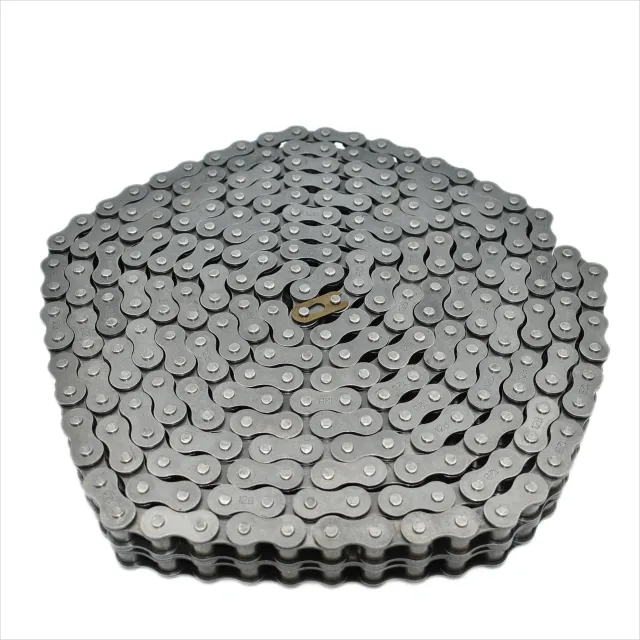
Simplex stainless 304 Roller Chain (08B-1, 24B-1)
The most commonly used chain is roller chain or as it is also known transmission chain. These are the simplest chain drives, Used mainly for transmitting power. Can be supplied from 3mm pitch up to 4″ pitch in either mild steel or stainless steel.
We own the sophisticated equipment and the advanced technology, such as:
1. CAD Designer
2. Wire Cutting Machine
3. Chain Running In Machine
4. Conveyor Furance
5. Ball Drift
6. Shot Peened Parts
7. Design Of Link Plate Waist
Pack Detail:
Company Detail:
TAI is 1 of a professional exporter with exporting POWER TRANSMISSION PARTS: Roller chains,conveyor chain,stainless steel chains, agricultural chains, steel detachable chains, special chains, sprockets, s. S. Sprockets, HRC couplings, pulleys, bushes etc. All these products have been supplied regularly to World Wide for over 15 years.
Welcome contact for more detail.
Ava Gao(Sales)
Tran-Auto Industries Co.,Limited
716 Gold River Center,NO.88 Shishan Rd.,
New District,HangZhou,P.R.China.P.C.:215011
Tel: -512-6583
tran-auto
| DIN/ISO Chain No. |
Pitch | Roller Diameter |
Width Between Inner Plates |
Pin Diameter |
Pin Length |
Inner Plate depth |
Plate thick ness |
Ultimate Tensile Strength |
Average Tensile Strength |
Weight Per Meter |
|
| Mm | mm | mm | mm | mm | mm | mm | mm | kN/LB | kN | Kg/m | |
| 04B-1 | 6.000 | 4.00 | 2.80 | 1.85 | 6.80 | 7.80 | 5.00 | 0.60 | 3.0/682 | 3.2 | 0.11 |
| 05B-1 | 8.000 | 5.00 | 3.00 | 2.31 | 8.20 | 8.90 | 7.10 | 0.80 | 5.0/1136 | 5.9 | 0.20 |
| *06B-1 | 9.525 | 6.35 | 5.72 | 3.28 | 13.15 | 14.10 | 8.20 | 1.30 | 9.0/2045 | 10.4 | 0.41 |
| 08B-1 | 12.700 | 8.51 | 7.75 | 4.45 | 16.70 | 18.20 | 11.80 | 1.60 | 18.0/4091 | 19.40 | 0.69 |
| 10B-1 | 15.875 | 10.16 | 9.65 | 5.09 | 19.50 | 20.90 | 14.70 | 1.70 | 22.4/5091 | 27.50 | 0.93 |
| 12B-1 | 19.050 | 12.07 | 11.68 | 5.72 | 22.50 | 24.2 | 16.00 | 1.85 | 29.0/6591 | 32.20 | 1.15 |
| 16B-1 | 25.400 | 15.88 | 17.02 | 8.28 | 36.10 | 37.4 | 21.00 | 4.15/3.1 | 60.0/13636 | 72.80 | 2.71 |
| 20B-1 | 31.750 | 19.05 | 19.56 | 10.19 | 41.30 | 45.0 | 26.40 | 4.5/3.5 | 95.0/21591 | 106.7 | 3.70 |
| 24B-1 | 38.100 | 25.40 | 25.40 | 14.63 | 53.40 | 57.80 | 33.20 | 6.0/4.8 | 160.0/36364 | 178.0 | 7.10 |
| 28B-1 | 44.450 | 27.94 | 30.99 | 15.90 | 65.10 | 69.50 | 36.70 | 7.5/6.0 | 200.0/45455 | 222.0 | 8.50 |
| 32B-1 | 50.800 | 29.21 | 30.99 | 17.81 | 66.00 | 71.0 | 42.00 | 7.0/6.0 | 250.0/56818 | 277.5 | 10.25 |
| 40B-1 | 63.50 | 39.37 | 38.10 | 22.89 | 82.20 | 89.2 | 52.96 | 8.5/8.0 | 355.0/80682 | 394.0 | 16.35 |
| 48B-1 | 76.20 | 48.26 | 45.72 | 29.24 | 99.10 | 107.0 | 63.80 | 12.0/10.0 | 560.0/127272 | 621.6 | 25.00 |
| 56B-1 | 88.90 | 53.98 | 53.34 | 34.32 | 114.60 | 123.0 | 77.80 | 13.5/12.0 | 850.0/193180 | 940.0 | 35.78 |
| *Bushing chain: d1 in the table indicate the external diameter of bushing |
|||||||||||
| الاستخدام: | سلسلة النقل |
|---|---|
| مادة: | الفولاذ المقاوم للصدأ |
| معالجة السطح: | تلميع |
| ميزة: | مقاوم للحرارة |
| حجم السلسلة: | 1/2 بوصة × 3/32 بوصة |
| بناء: | سلسلة بكرات |
| التخصيص: |
متاح
| طلب مخصص |
|---|

Can transmission chains be used in high-temperature environments?
Yes, transmission chains can be used in high-temperature environments, but there are certain considerations to keep in mind. Here’s a detailed explanation:
1. Material Selection: When operating in high-temperature environments, it’s crucial to select transmission chains made from heat-resistant materials. Common materials used for high-temperature applications include heat-treated alloy steels, stainless steels, and specialized heat-resistant alloys. These materials offer improved resistance to thermal expansion, oxidation, and deformation at elevated temperatures.
2. Lubrication: Proper lubrication is essential for the performance and longevity of transmission chains in high-temperature environments. High-temperature lubricants with superior thermal stability should be used to ensure adequate lubrication and minimize frictional heat generation. These lubricants are specifically formulated to withstand the elevated temperatures and provide effective lubrication, reducing wear and extending chain life.
3. Chain Design: The design of transmission chains for high-temperature environments may incorporate features to enhance heat resistance. These features can include heat-resistant coatings, specialized heat-treatment processes, and improved heat dissipation characteristics. Additionally, the chain’s load capacity, fatigue resistance, and dimensional stability should be carefully considered to ensure reliable operation under thermal stress.
4. Temperature Limits: It’s important to be aware of the temperature limits specified by the manufacturer for a particular transmission chain. Different chains have different temperature ranges within which they can safely operate. Exceeding the recommended temperature limits can lead to chain failure, reduced strength, accelerated wear, and potential damage to surrounding components.
5. Regular Inspection and Maintenance: Regular inspection and maintenance are crucial for monitoring the condition of transmission chains in high-temperature environments. Periodic inspections can help detect signs of wear, elongation, or damage caused by thermal stress. Prompt replacement of worn or damaged chains, as well as proper lubrication and tension adjustment, will help ensure continued reliable operation.
It’s important to consult with chain manufacturers or industry experts to select the appropriate transmission chain and ensure its compatibility with the specific high-temperature application. Following manufacturer guidelines, proper installation, and regular maintenance practices will contribute to the safe and efficient use of transmission chains in high-temperature environments.
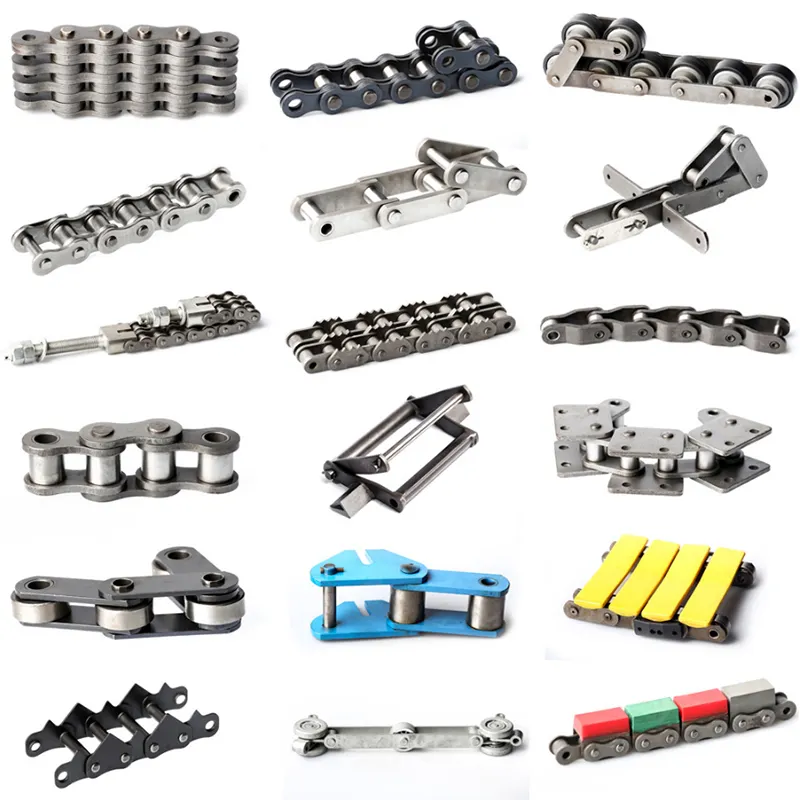
What are the advantages of using a self-cleaning transmission chain?
Using a self-cleaning transmission chain offers several benefits, which are outlined in detail below:
1. Improved Performance: Self-cleaning transmission chains are designed to effectively remove debris, dirt, and contaminants that can accumulate on the chain during operation. By keeping the chain clean, it helps maintain optimal performance and prevents the build-up of debris that can affect the chain’s movement, engagement with sprockets, and overall efficiency.
2. Reduced Maintenance: With a self-cleaning transmission chain, the need for frequent manual cleaning and maintenance is significantly reduced. The chain’s design includes features such as special-shaped plates, curved sidebars, or additional components that actively prevent debris from sticking to the chain or entering its critical areas. This reduces the time and effort required for cleaning and maintenance tasks, resulting in cost savings and improved productivity.
3. Extended Chain Life: The self-cleaning mechanism of these chains helps to prolong their lifespan. By effectively removing debris and preventing the build-up of contaminants, the chain experiences less wear and tear. This leads to reduced chain elongation, minimized internal friction, and decreased risk of premature failure. As a result, the chain’s overall durability and longevity are improved.
4. Enhanced Reliability: Self-cleaning transmission chains contribute to enhanced reliability and consistent performance. The absence of debris build-up ensures smooth engagement with sprockets, preventing chain slippage, jamming, or sudden disruptions in power transmission. The reliable operation of the chain translates to improved uptime, reduced downtime, and increased overall system efficiency.
5. Suitable for Challenging Environments: Industries and applications that operate in environments with high levels of dust, dirt, or other particulate matter benefit greatly from self-cleaning transmission chains. They are commonly used in industries such as agriculture, construction, mining, and material handling, where exposure to challenging environments is prevalent. The self-cleaning feature helps to maintain chain performance and reliability even in these harsh conditions.
It’s important to note that while self-cleaning transmission chains offer significant advantages, regular inspection and maintenance are still necessary to ensure their optimal performance. Monitoring the chain’s condition, applying appropriate lubrication, and addressing any signs of wear or damage are essential for maximizing the benefits of self-cleaning transmission chains and ensuring their long-term reliability.
ما هي أنواع سلاسل نقل الحركة المختلفة المتاحة؟
تتوفر أنواع عديدة من سلاسل نقل الحركة، كل منها مصمم ليناسب تطبيقات وظروف تشغيل محددة. فيما يلي بعض الأنواع الشائعة:
- سلاسل البكرات: تُعد سلاسل البكرات أكثر أنواع سلاسل النقل استخدامًا. وهي تتكون من صفائح داخلية وخارجية، ودبابيس، وجلب، وبكرات. تساعد البكرات على تقليل الاحتكاك وتسهيل الحركة السلسة.
- السلاسل الصامتة: تتميز السلاسل الصامتة، والمعروفة أيضاً بالسلاسل ذات الأسنان المقلوبة أو السلاسل المسننة، بأشكال أسنان خاصة تتعشق مع تروس مسننة متوافقة. وهي مصممة لتقليل الضوضاء والاهتزاز إلى أدنى حد، مما يجعلها مناسبة للتطبيقات التي تتطلب تشغيلاً هادئاً.
- سلاسل الأوراق: تُصنع سلاسل الأوراق من حلقات متشابكة مصنوعة من صفائح فولاذية مسطحة. وتُعرف بقوة شدها العالية ومقاومتها للإجهاد، مما يجعلها مناسبة للتطبيقات الشاقة ذات الأحمال العالية.
- سلاسل التوقيت: تُستخدم سلاسل التوقيت في المحركات لمزامنة دوران عمود الكامات وعمود المرفق. تتميز هذه السلاسل بأسنان دقيقة تتشابك مع تروس التوقيت، مما يضمن توقيتًا دقيقًا وأداءً فعالاً للمحرك.
- سلاسل فولاذية هندسية: هي سلاسل متخصصة للغاية مصممة لصناعات وتطبيقات محددة. وغالبًا ما تُستخدم في بيئات قاسية مثل التعدين والغابات ومناولة المواد.
- السلاسل البلاستيكية: تُصنع السلاسل البلاستيكية من مواد بلاستيكية عالية المتانة، مثل الأسيتال أو النايلون. وتتميز بمقاومتها للتآكل، وخفة وزنها، وانخفاض مستوى الضوضاء أثناء التشغيل. وتُستخدم على نطاق واسع في صناعات تجهيز الأغذية والتعبئة والتغليف، وغيرها من الصناعات التي تتطلب معايير نظافة صارمة.
هذه مجرد أمثلة قليلة لأنواع سلاسل النقل. وبحسب التطبيق المحدد، قد تتوفر سلاسل متخصصة أخرى لتلبية المتطلبات الفريدة لمختلف الصناعات والآلات.
كيف تختلف سلاسل البكرات عن أنواع سلاسل النقل الأخرى؟
تُعد سلاسل البكرات، والمعروفة أيضًا باسم سلاسل وصلات البكرات، نوعًا شائع الاستخدام من سلاسل نقل الحركة، وتتميز عن السلاسل الأخرى بعدة طرق:
- التصميم: تتكون سلاسل البكرات من صفائح داخلية وخارجية، ودبابيس، وجلب، وبكرات. تساعد البكرات، التي تدور بحرية، على تقليل الاحتكاك والتآكل، مما ينتج عنه نقل طاقة أكثر سلاسة وكفاءة.
- تطبيقات واسعة: تتميز سلاسل البكرات بتعدد استخداماتها وتستخدم على نطاق واسع في مختلف الصناعات، بما في ذلك صناعة السيارات والآلات الصناعية والمعدات الزراعية وأنظمة النقل.
- قدرة تحمل عالية للأحمال: تم تصميم سلاسل البكرات لتحمل الأحمال العالية وتوفر قوة شد ممتازة، مما يجعلها مناسبة للتطبيقات التي تتطلب أداءً عاليًا.
- الكفاءة: تُعرف السلاسل الأسطوانية بكفاءتها العالية في نقل الطاقة. يقلل تصميم الأسطوانات من الاحتكاك، مما يؤدي إلى تقليل فقد الطاقة وتحسين الكفاءة الإجمالية.
- الفعالية من حيث التكلفة: تعتبر سلاسل البكرات فعالة من حيث التكلفة نسبياً مقارنة ببعض سلاسل النقل المتخصصة الأخرى، مما يجعلها خياراً شائعاً في العديد من التطبيقات.
رغم مزايا سلاسل البكرات، من المهم ملاحظة أن أنواعًا مختلفة من سلاسل النقل قد تكون أكثر ملاءمة لتطبيقات محددة. يجب مراعاة عوامل مثل سعة الحمولة، والسرعة، ومستوى الضوضاء، والظروف البيئية عند اختيار سلسلة النقل المناسبة لتطبيق معين.


editor by CX 2023-08-16