Productbeschrijving
Gedetailleerde foto's
Productbeschrijving
| Artikelnaam | Standaard transmissie rollenkettingen | Model | Serie A, Serie B |
| Rij | Simplex Duplex Triplrex |
Sollicitatie | Machineonderdelen |
| Huidbehandeling | neutraal/zandgestraald/shotpeening | Certificering | ISO, ANSI, DIN, BS |
| Verpakking | Verpakt in dozen en houten kisten, of verpakt op rollen en vervolgens op pallets. | Haven | Elke zeehaven of luchthaven in China |
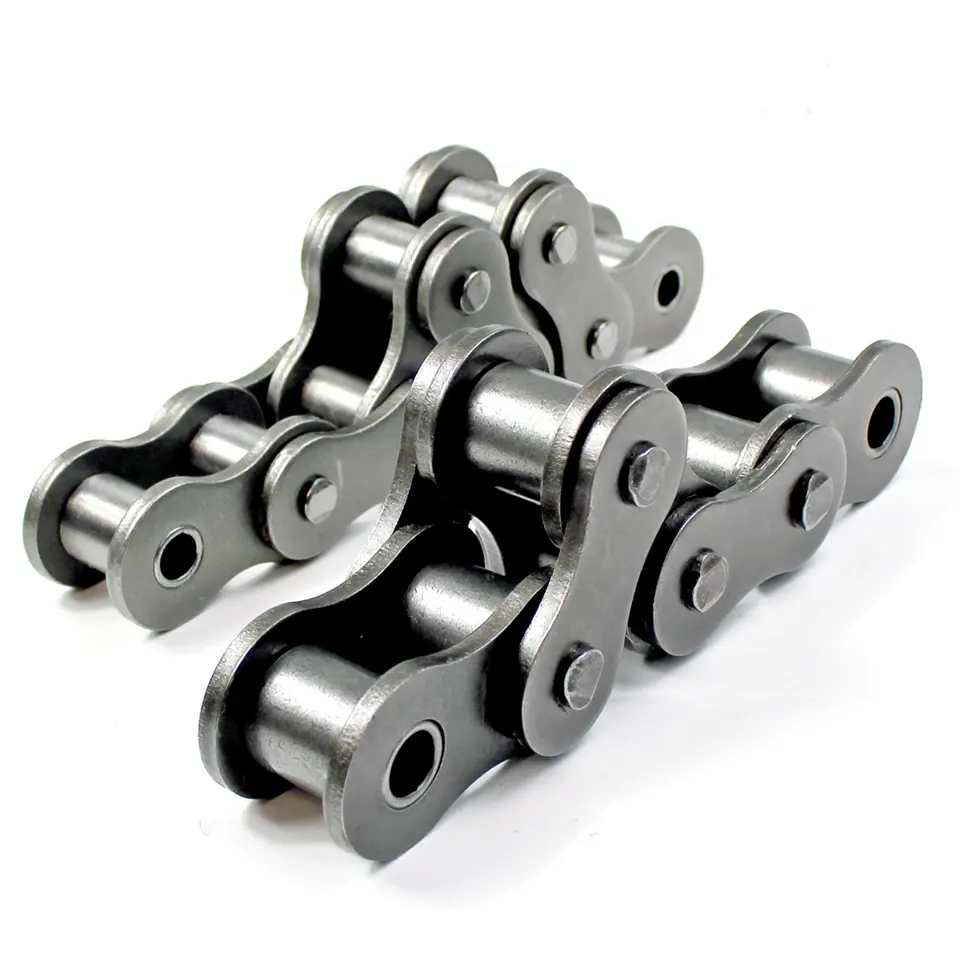
Standaard rollenkettingen zijn een type industriële ketting dat veelvuldig wordt gebruikt in krachtoverbrenging.
toepassingen. Ze bestaan uit een reeks cilindrische rollen die met elkaar verbonden zijn door zijplaten.
De rollen draaien binnen de schakels en brengen zo de kracht van het ene tandwiel op het andere over.
Standaard rollenkettingen zijn verkrijgbaar in verschillende maten en configuraties, geschikt voor diverse industriële toepassingen.
toepassingen. Ze zijn gemaakt van hoogwaardige materialen, zoals koolstofstaal of roestvrij staal.
die bestand zijn tegen slijtage, corrosie en vermoeidheid.
Deze kettingen zijn ontworpen om een soepele en efficiënte krachtoverbrenging te bieden met minimaal energieverbruik.
verlies. Ze hebben een hoog draagvermogen, waardoor ze geschikt zijn voor gebruik in zware machines.
zoals transportbanden, liften en industriële apparatuur.
Standaard rollenkettingen zijn bovendien eenvoudig te installeren en te onderhouden, met simpele smeervereisten.
garanderen langdurige prestaties. Over het algemeen bieden ze een betrouwbare en kosteneffectieve oplossing voor stroomvoorziening.
transmissie in een breed scala aan industriële toepassingen.
Overige producten
Bedrijfsprofiel
Verpakking en verzending
Klantenservice
| Standaard of niet-standaard: | Standaard |
|---|---|
| Sollicitatie: | Textielmachines, kledingmachines, transportbanden, verpakkingsmachines, elektrische auto's, motorfietsen, voedselverwerkingsmachines, mijnbouwapparatuur, landbouwmachines |
| Oppervlaktebehandeling: | Neutraal/Zandgestraald/Kogelstralen |
| Materiaal: | Koolstofstaal |
| Type: | Korte steek ketting |
| Main Materials: | It Is 40mn. 40cr, 45mn Alloy Steel or SUS304 for P |
| Voorbeelden: |
US$ 1,28/meter
1 meter (minimale bestelling) | |
|---|
| Aanpassing: |
Beschikbaar
| Aanvraag op maat |
|---|
Welke invloed heeft het gewicht van een transmissieketting op de installatie en werking ervan?
Het gewicht van een transmissieketting speelt een belangrijke rol bij de installatie en werking ervan. Hier volgt een gedetailleerd antwoord op de vraag:
1. Installatieproces: Het gewicht van een transmissieketting kan van invloed zijn op het gemak en de complexiteit van het installatieproces. Zwaardere kettingen vereisen mogelijk extra mankracht of apparatuur om ze nauwkeurig te tillen en te positioneren. Installateurs moeten rekening houden met het gewicht van de ketting tijdens het hanteren en ervoor zorgen dat de juiste veiligheidsmaatregelen zijn getroffen om letsel of ongelukken te voorkomen.
2. Systeemontwerp: Het gewicht van de ketting is een cruciale factor in het algehele ontwerp van het transmissiesysteem. Het beïnvloedt de keuze van andere componenten zoals tandwielen, lagers en assen. Het systeem moet zodanig ontworpen zijn dat het het gewicht van de ketting kan dragen en de krachtoverbrenging effectief kan uitvoeren zonder overmatige belasting of slijtage.
3. Rendement van de krachtoverbrenging: Het gewicht van de ketting beïnvloedt de totale massa van het systeem. Een te hoog gewicht kan de inertie verhogen en leiden tot een hogere energiebehoefte voor acceleratie en deceleratie. Dit kan het rendement van de krachtoverbrenging beïnvloeden en resulteren in een hoger energieverbruik. Het is belangrijk om een balans te vinden tussen het gewicht van de ketting en de prestaties van het systeem om de energie-efficiëntie te optimaliseren.
4. Draagvermogen: Het gewicht van de ketting is direct gerelateerd aan het draagvermogen. Zwaardere kettingen zijn doorgaans ontworpen om hogere belastingen aan te kunnen en meer vermogen over te brengen. Het is essentieel om een ketting te kiezen met een passend gewicht en draagvermogen dat aansluit bij de eisen van de toepassing om een veilige en betrouwbare werking te garanderen.
5. Slijtage en vermoeidheid: Het gewicht van de ketting kan na verloop van tijd bijdragen aan slijtage en vermoeidheid. Overmatig gewicht of overbelasting kan het slijtageproces versnellen, wat kan leiden tot voortijdige breuk van de ketting. Goed onderhoud, smering en regelmatige inspectie zijn noodzakelijk om de effecten van slijtage te beperken en de levensduur van de ketting te garanderen.
6. Geluid en trillingen: Het gewicht van de ketting kan het geluids- en trillingsniveau tijdens gebruik beïnvloeden. Zwaardere kettingen kunnen meer geluid en trillingen veroorzaken, vooral bij hogere snelheden. Een juiste spanning, uitlijning en smering helpen deze effecten te minimaliseren en een soepele en stille werking te garanderen.
Bij het bepalen van het gewicht van een aandrijfketting is het essentieel om factoren zoals installatievereisten, systeemontwerp, efficiëntie van de krachtoverbrenging, draagvermogen, slijtage en vermoeiing, en geluids- en trillingsniveaus tegen elkaar af te wegen. Het kiezen van het juiste kettinggewicht voor de specifieke toepassing garandeert optimale prestaties, een lange levensduur en algehele systeem betrouwbaarheid.
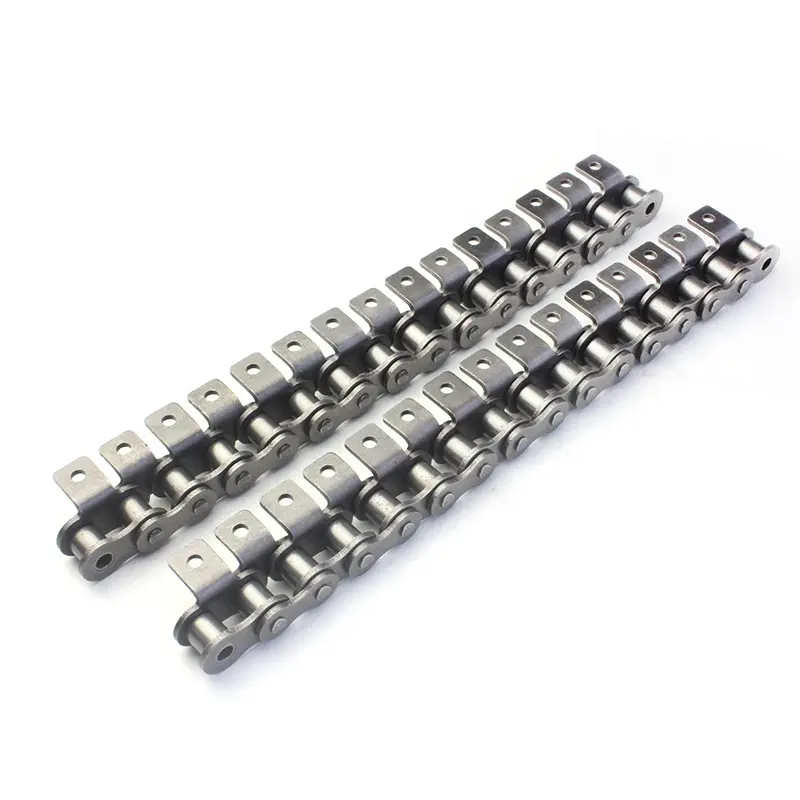
Wat zijn de voordelen van het gebruik van een corrosiebestendige coating op een transmissieketting?
Een corrosiebestendige coating biedt diverse voordelen wanneer deze op een transmissieketting wordt aangebracht. Hier volgt een gedetailleerd antwoord op de vraag:
1. Verbeterde duurzaamheid: Corrosie kan de levensduur en prestaties van een transmissieketting aanzienlijk beïnvloeden. Door een corrosiebestendige coating aan te brengen, wordt de ketting beschermd tegen de schadelijke effecten van vocht, chemicaliën en omgevingsfactoren, waardoor de duurzaamheid en levensduur ervan toenemen.
2. Roestpreventie: Roestvorming op een transmissieketting kan leiden tot wrijving, slijtage en verminderde functionaliteit. Een corrosiebestendige coating fungeert als een barrière en voorkomt dat de ketting direct in contact komt met vocht of corrosieve stoffen. Hierdoor wordt roestvorming tegengegaan en blijft de ketting soepel functioneren.
3. Verbeterde prestaties: Corrosie kan de soepele beweging van de ketting beïnvloeden, waardoor deze stijf, vastlopend of geblokkeerd raakt. Met een corrosiebestendige coating ondervindt de ketting minder wrijving en weerstand, wat leidt tot betere prestaties, efficiëntere krachtoverbrenging en een lager energieverbruik.
4. Minder onderhoud: Een transmissieketting met een corrosiebestendige coating vereist minder frequent onderhoud en reiniging dan een ongecoate ketting. De coating fungeert als een beschermende laag, waardoor de ophoping van vuil, stof en verontreinigingen wordt geminimaliseerd en de noodzaak voor frequente reiniging en onderhoud afneemt.
5. Kostenbesparing: Het gebruik van een corrosiebestendige coating op een transmissieketting kan op de lange termijn tot kostenbesparingen leiden. Door de levensduur van de ketting te verlengen en de onderhoudsbehoefte te verminderen, worden de noodzaak tot kettingvervanging en de daarmee samenhangende stilstand en kosten geminimaliseerd.
6. Veelzijdigheid: Corrosiebestendige coatings zijn verkrijgbaar in verschillende samenstellingen, geschikt voor uiteenlopende omgevingen en toepassingen. Of de transmissieketting nu buiten, in een vochtige omgeving, blootgesteld aan chemicaliën of andere corrosieve omgevingen wordt gebruikt, er zijn coatings die specifiek zijn ontworpen om optimale bescherming te bieden.
7. Milieuoverwegingen: Het gebruik van een corrosiebestendige coating op een transmissieketting draagt bij aan duurzaamheid. Door de levensduur van de ketting te verlengen, worden er minder grondstoffen verbruikt voor de productie van vervangende onderdelen, waardoor afval wordt verminderd en een milieuvriendelijkere aanpak wordt bevorderd.
Het is belangrijk om te weten dat de keuze voor de juiste corrosiebestendige coating afhangt van de specifieke bedrijfsomstandigheden, zoals temperatuur, blootstelling aan chemicaliën en het type corrosieve stoffen. Overleg met coatingfabrikanten of experts kan helpen bij het bepalen van de meest geschikte coatingoplossing voor een transmissieketting, afgestemd op de toepassingseisen.
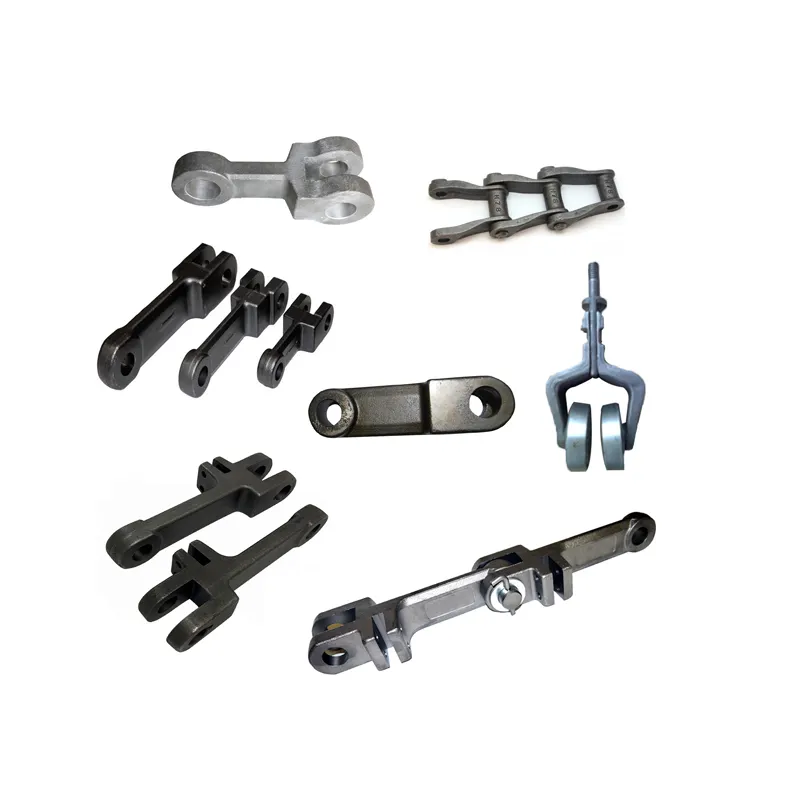
Wat zijn de onderhoudsvereisten voor transmissiekettingen?
Onderhoud speelt een cruciale rol bij het garanderen van optimale prestaties en een lange levensduur van transmissiekettingen. Hier volgt een gedetailleerde uitleg:
1. Regelmatige inspectie: Voer regelmatig visuele inspecties uit om te controleren op slijtage, beschadigingen of verkeerde uitlijning. Inspecteer de ketting op tekenen van uitrekking, corrosie, gebroken of beschadigde schakels en overmatige slijtage van de tandwielen.
2. Smering: Goede smering is essentieel om wrijving te minimaliseren, slijtage te verminderen en de levensduur van de ketting te verlengen. Volg de aanbevelingen van de fabrikant met betrekking tot het type en de frequentie van smering. Breng het smeermiddel gelijkmatig aan over de gehele lengte van de ketting en zorg ervoor dat het tussen de onderdelen doordringt.
3. Spannen: Het handhaven van de juiste kettingspanning is belangrijk voor een soepele werking en om slippen van de ketting te voorkomen. Volg de richtlijnen van de fabrikant voor de aanbevolen spanmethode en het juiste spanningsniveau. Controleer de spanning regelmatig en pas deze indien nodig aan.
4. Reiniging: Regelmatige reiniging helpt bij het verwijderen van vuil, stof en verontreinigingen die slijtage kunnen versnellen en kettingbreuk kunnen veroorzaken. Gebruik een geschikt reinigingsmiddel of oplosmiddel om de ketting schoon te maken en zorg ervoor dat deze volledig droog is voordat u smeermiddel aanbrengt.
5. Uitlijning: Een correcte uitlijning tussen de ketting en de tandwielen is cruciaal voor een soepele werking en om voortijdige slijtage te voorkomen. Controleer de uitlijning regelmatig en voer indien nodig aanpassingen uit om ervoor te zorgen dat de ketting recht en soepel over de tandwielen loopt.
6. Vervanging van versleten onderdelen: Na verloop van tijd kunnen transmissiekettingen slijten en uitrekken. Het is belangrijk om versleten onderdelen zoals schakels, pinnen en tandwielen te vervangen om de goede werking van de ketting te garanderen.
7. Milieuoverwegingen: Houd rekening met de bedrijfsomgeving van de transmissieketting en neem passende maatregelen om deze te beschermen tegen corrosieve stoffen, extreme temperaturen of overmatige luchtvochtigheid. Breng corrosiebestendige coatings aan of gebruik indien nodig roestvrijstalen kettingen.
8. Registratie: Houd een register bij van onderhoudsactiviteiten, waaronder smeerschema's, spanningsaanpassingen, inspecties en vervangingen van onderdelen. Dit register helpt bij het bijhouden van de onderhoudshistorie en het identificeren van eventuele patronen of problemen die zich kunnen voordoen.
Het is belangrijk om de richtlijnen en aanbevelingen van de fabrikant te raadplegen voor specifieke onderhoudsvereisten op basis van het type en model van de transmissieketting. Het naleven van de juiste onderhoudsprocedures draagt bij aan de betrouwbaarheid, prestaties en levensduur van de transmissieketting in diverse toepassingen.


Bewerkt door CX 23-08-2023