Define the economic boundary before comparing options
A chain-drive decision becomes much easier when the machine is reduced to measurable inputs instead of being described only as light, medium, or heavy duty. The lowest-cost chain is not necessarily the least expensive drive. A defensible TCO comparison uses site-specific costs and a defined operating horizon, then tests how chain life, sprocket condition, lubrication, and downtime affect the result.
Reviewing the chain product selection range can save time, but only when the search is constrained by verified total cost of ownership and downtime cost. The engineering gate for this topic is to use the same operating horizon and production duty for every option; anything that fails that gate remains a hypothesis, not a released specification.
- Total Cost Of Ownership
- Treat this as a controlled variable; note its value, unit, operating state, and source in the job record.
- Downtime Cost
- Verify this item against the physical drive and the current supplier data instead of estimating it from appearance.
- Lubrication Cost
- Use this parameter to reject unsuitable options early, then retain the verified value for the final specification.
- Sprocket Replacement
- Check this point at the machine and document any uncertainty that still requires a supplier drawing or manual.
- Maintenance Labor
- Record this requirement with enough context that a second engineer can reproduce the same selection or diagnosis.
Define the decision horizon and alternatives: costs occur at different times and a short horizon can favor cheap parts while a longer horizon exposes maintenance and downtime.
Model lubrication and routine maintenance: standard chain can be economical when lubrication is easy and consistent, while difficult access may make maintenance-optimized designs valuable.
Define the decision horizon and alternatives
Work from state whether the comparison covers one shutdown, one year, several replacement cycles, or the expected machine life and define the exact chain options being compared. The engineering link is costs occur at different times and a short horizon can favor cheap parts while a longer horizon exposes maintenance and downtime. One useful detail is that the alternatives must include compatible sprockets and lubrication methods, not only chain strands. Otherwise, changing the horizon until one option wins makes the analysis misleading.
Verify at the drive: list each candidate chain, required sprockets, lubricant system, installation changes, and assumed replacement criterion. Close this check only after you can use the same operating horizon and production duty for every option. Keep photographs or dimensions when they help preserve the interface condition.
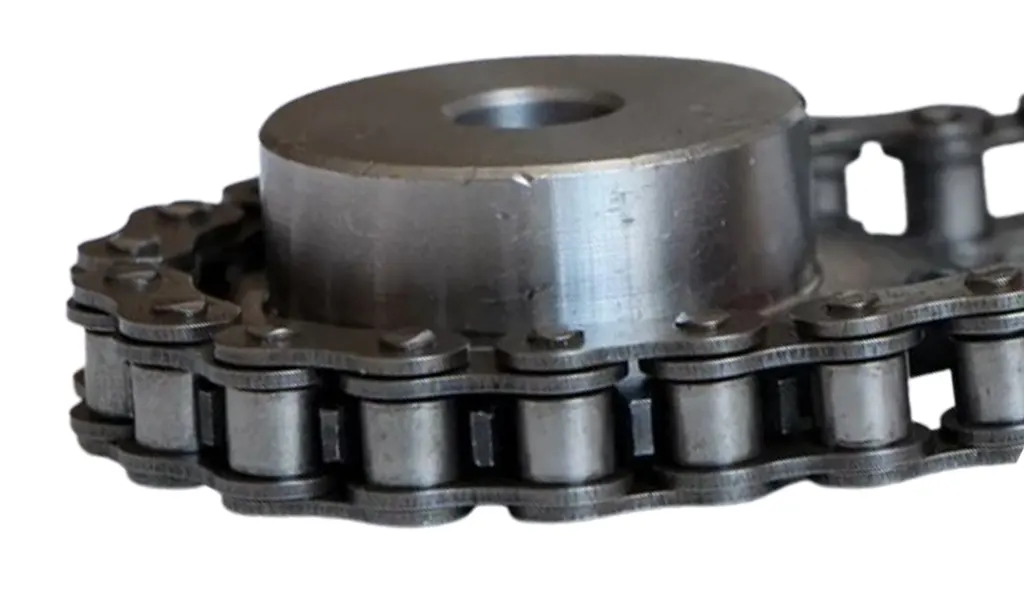
Separate acquisition from installation cost
Base the decision on include chain, sprockets, connecting links, freight, taxes if relevant, machining, guards, tools, and labor to fit and align the drive. It matters because purchase price is only the cost to own parts, not to place the machine back into a reliable operating state. During service, multi-strand or specialty chain may need wider sprockets or different handling tools. A poor assumption can cause comparing chain box prices alone understates conversion and shutdown work.
Use this confirmation: use actual supplier quotes and site labor rates and record what each quote includes. Proceed when you can create a one-time installed-cost subtotal for each alternative. If readings vary around the chain or sprocket, retain the spread instead of hiding it in one average.
Model lubrication and routine maintenance
The controlling action is to include lubricant consumption, automatic system service, cleaning, inspection labor, tension adjustment, elongation measurement, and housekeeping impact. Its significance comes from standard chain can be economical when lubrication is easy and consistent, while difficult access may make maintenance-optimized designs valuable. In the field, lubricant cost itself may be small compared with labor and contamination cleanup. The failure consequence is ignoring labor can make a high-maintenance chain appear artificially cheap.
Check the hardware directly: measure actual maintenance minutes, lubricant usage, and frequency from work orders or a representative observation period. Approval requires that you can convert tasks to annual or cycle-based cost using site-specific values. Write down any uncertainty that still needs a drawing, manual, or supplier response.
Calculate downtime consequence separately
First, estimate production loss, crew waiting time, restart scrap, sanitation or permitting delays, and emergency premium costs for planned and unplanned chain work. That step is tied to one unexpected failure can dominate years of component-price differences on a bottleneck machine. A practical observation is that planned replacement during an existing shutdown has a very different cost from a mid-shift breakdown. Missing it can lead to using one generic hourly downtime number can overstate or understate the real event.
For evidence, work with operations to define lost contribution or practical downtime cost for the specific machine and event type. Finish when you can model planned and unplanned downtime as separate cost scenarios. Retain enough context to distinguish a new-chain dimension from a wear-affected measurement.
Include sprocket and collateral wear
Treat track whether the chain option changes sprocket replacement frequency, shaft or bearing damage risk, guard cleaning, or neighboring component wear as the control point. The reason is elongated or poorly lubricated chain can accelerate sprocket wear and worn sprockets can shorten new-chain life. Real installations also show that reusing sprockets may save one shutdown but increase the next chain wear rate. The likely consequence of error is excluding sprockets makes chain-life comparisons incomplete.
Make the check at the machine: review historical tooth wear, chain replacement pairing, alignment issues, and bearing incidents. The release criterion is to assign replacement or risk cost to the components that realistically change with each chain strategy. Record whether the drive was stopped, loaded, warm, cold, clean, or contaminated as relevant.
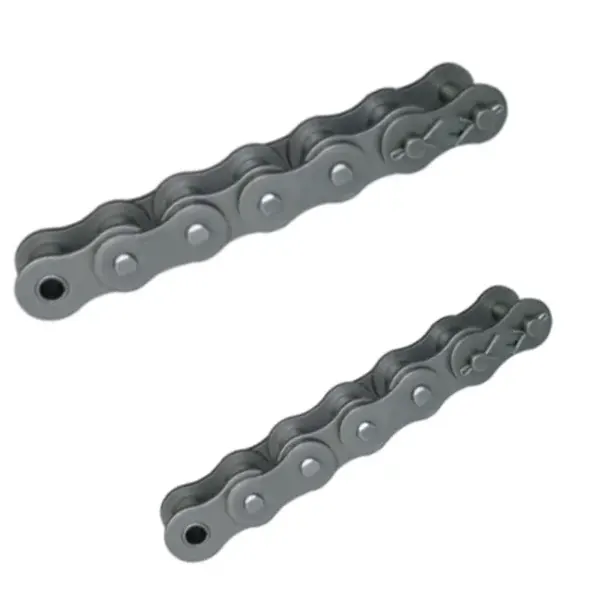
Use condition data to update the model
Do not choose the hardware until you replace assumed chain life with measured elongation trend, inspection results, lubricant condition, and actual work-order history as data accumulates. This matters because TCO becomes more reliable when based on site wear rate rather than brochure life claims. Remember that process changes can alter load, contamination, and maintenance effort over time. If ignored, locking the model to an old service-life assumption can reverse the real economic ranking.
Validate with a repeatable observation: update wear rate, replacement interval, labor, and downtime inputs after each maintenance cycle. Move on after you can choose the option that provides the lowest credible cost while meeting reliability and safety requirements. Preserve the source of any numerical limit that belongs to a specific chain series.
TCO evidence table
| Decision point | Inspection or calculation | Acceptance evidence |
|---|---|---|
| Define the decision horizon and alternatives | list each candidate chain, required sprockets, lubricant system, installation changes, and assumed replacement criterion | use the same operating horizon and production duty for every option |
| Separate acquisition from installation cost | use actual supplier quotes and site labor rates and record what each quote includes | create a one-time installed-cost subtotal for each alternative |
| Model lubrication and routine maintenance | measure actual maintenance minutes, lubricant usage, and frequency from work orders or a representative observation period | convert tasks to annual or cycle-based cost using site-specific values |
| Calculate downtime consequence separately | work with operations to define lost contribution or practical downtime cost for the specific machine and event type | model planned and unplanned downtime as separate cost scenarios |
| Include sprocket and collateral wear | review historical tooth wear, chain replacement pairing, alignment issues, and bearing incidents | assign replacement or risk cost to the components that realistically change with each chain strategy |
| Use condition data to update the model | update wear rate, replacement interval, labor, and downtime inputs after each maintenance cycle | choose the option that provides the lowest credible cost while meeting reliability and safety requirements |
| For this article, do not close the job until the total cost of ownership evidence and every critical mating interface are recorded together. | ||
Component selection is strongest when the chain is not reviewed in isolation. review chain-driven conveyor systems where downtime cost can dominate offers related industrial roller-chain total cost of ownership context; keep the final engineering check tied to the exact standard family, manufacturer table, and measured installation.
Cost assumptions that distort the decision
Release check: use the same operating horizon and production duty for every option.
Release check: create a one-time installed-cost subtotal for each alternative.
Release check: convert tasks to annual or cycle-based cost using site-specific values.
Release check: model planned and unplanned downtime as separate cost scenarios.
TCO FAQs
Choose on measured lifecycle cost and reliability
The strongest handoff for this cost topic is a short evidence package: verified total cost of ownership, verified downtime cost, the result of “Use condition data to update the model,” and the exact source of any chain-series-specific limit. Broader alternatives on the power transmission chain solutions should be compared against that same package rather than against generic catalog descriptions.
For industrial roller-chain total cost of ownership, if lubrication cost has not been verified, send the application data to the chain engineering team with the evidence collected in the preceding checks. State the operating condition, measured dimensions, current sprocket condition, and intended maintenance or design action so the remaining check can be closed before the machine returns to service.
Send the operating condition, total cost of ownership, downtime cost, layout evidence, and the unresolved interface so the next decision is based on machine data rather than assumption.