Collect the data a supplier actually needs
For an industrial drive, the useful question is not whether a chain looks strong enough; it is whether the selected chain, sprockets, lubrication, and layout work together under the real duty. A useful quote request is a miniature engineering data package. It should let the supplier distinguish an exact replacement from a redesign and identify any information that cannot be trusted because the old chain is worn.
Reviewing the chain product selection range can save time, but only when the search is constrained by verified replacement roller chain and pitch measurement. The engineering gate for this topic is to treat markings as evidence that must agree with measurement and the supplier drawing; anything that fails that gate remains a hypothesis, not a released specification.
- Replacement Roller Chain
- Use this parameter to reject unsuitable options early, then retain the verified value for the final specification.
- Pitch Measurement
- Check this point at the machine and document any uncertainty that still requires a supplier drawing or manual.
- Link Count
- Record this requirement with enough context that a second engineer can reproduce the same selection or diagnosis.
- Sprocket Tooth Count
- Capture this input from a drawing, measurement, calculation, or operating record before the decision advances.
- Operating Data
- Treat this as a controlled variable; note its value, unit, operating state, and source in the job record.
Record the existing chain identity and condition: existing identification can shorten the search but must be checked against dimensions because parts may have been substituted previously.
Count links and document the connecting method: correct chain size is not enough if the supplied length or joining hardware cannot reproduce the installed strand.
Record the existing chain identity and condition
Work from capture every readable stamp, plate marking, box label, spare-part number, and machine bill-of-material reference. The engineering link is existing identification can shorten the search but must be checked against dimensions because parts may have been substituted previously. One useful detail is that photograph both sides of the chain and the connecting link before removal. Otherwise, a part number alone can perpetuate an earlier mismatch or obsolete substitution.
Verify at the drive: take close photographs with a scale and note whether the chain is original, repaired, or modified. Close this check only after you can treat markings as evidence that must agree with measurement and the supplier drawing. Keep photographs or dimensions when they help preserve the interface condition.
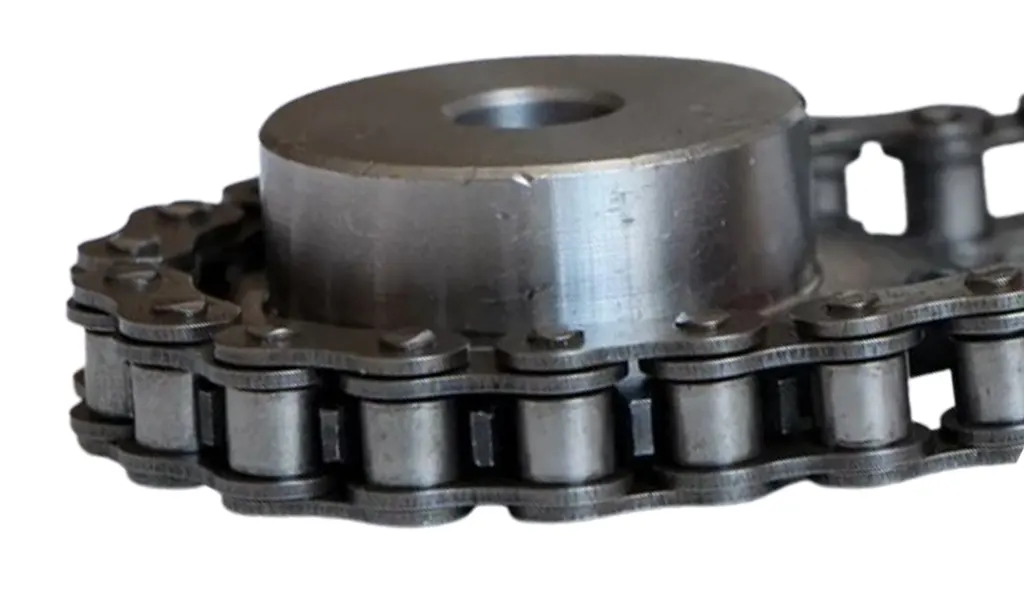
Measure the controlling chain dimensions
Base the decision on measure multiple-pitch length, roller diameter, inner width, strand count, transverse pitch, and overall pin width as applicable. It matters because these dimensions determine interchangeability with the existing sprockets and guides. During service, wear elongation changes pitch span while roller and plate damage can bias local measurements. A poor assumption can cause a quote based only on nominal pitch can return the wrong family or width.
Use this confirmation: measure several locations and record the tool, units, number of pitches, and chain tension during measurement. Proceed when you can compare the values with a standard or supplier drawing before naming the chain series. If readings vary around the chain or sprocket, retain the spread instead of hiding it in one average.
Count links and document the connecting method
The controlling action is to record total pitches, whether the chain is endless or joined, connecting-link style, offset links, and any special pins. Its significance comes from correct chain size is not enough if the supplied length or joining hardware cannot reproduce the installed strand. In the field, odd-pitch requirements and offset links can affect capacity and assembly strategy. The failure consequence is an incorrect link count can consume all take-up travel or force an undesirable field modification.
Check the hardware directly: mark one link and count systematically, then cross-check length from pitch times link count. Approval requires that you can specify the required supplied length and connection hardware explicitly. Write down any uncertainty that still needs a drawing, manual, or supplier response.
Measure sprockets and shaft layout
First, record tooth counts, sprocket rows, outside envelope, bore or bushing type, hub arrangement, shaft diameters, and center distance. That step is tied to the replacement may expose worn sprockets or reveal that the current chain was not matched correctly. A practical observation is that center distance and tooth count also help validate chain length and speed ratio. Missing it can lead to installing new chain on badly worn or mismatched sprockets can shorten the new chain life.
For evidence, photograph tooth profiles and measure alignment, tooth count, shaft spacing, and accessible hub dimensions. Finish when you can state whether sprockets will be reused or replaced and provide drawings when available. Retain enough context to distinguish a new-chain dimension from a wear-affected measurement.
Provide operating duty, not only dimensions
Treat include transmitted power or chain pull, shaft RPM, starts, reversals, shock, duty cycle, environment, and lubrication method as the control point. The reason is a dimensional replacement can be physically correct yet unsuitable for the actual load that caused failure. Real installations also show that process changes may have increased throughput since the machine was originally built. The likely consequence of error is reordering the old chain can repeat a capacity or service problem.
Make the check at the machine: collect motor and reducer nameplate data and describe the driven machine plus recent operating changes. The release criterion is to ask the supplier to confirm the proposed chain against the current duty if performance is in question. Record whether the drive was stopped, loaded, warm, cold, clean, or contaminated as relevant.
Describe the reason for replacement
Do not choose the hardware until you report elongation, broken plates, cracked rollers, stiff joints, corrosion, noise, tooth wear, or scheduled life replacement. This matters because failure evidence helps separate normal wear from a system problem that should be corrected before fitting new chain. Remember that photos of wear patterns can reveal misalignment, lubrication starvation, or contamination. If ignored, a quote that ignores the failure mechanism may supply a perfect replacement for an imperfect drive.
Validate with a repeatable observation: record where damage occurs around the loop and whether it is uniform or localized. Move on after you can include the failure observations with the quote request and ask whether sprocket or layout changes are recommended. Preserve the source of any numerical limit that belongs to a specific chain series.
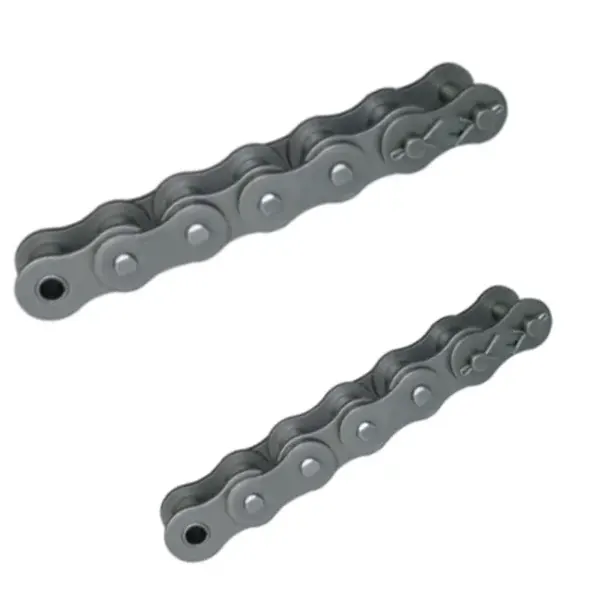
Replacement information table
| Decision point | Inspection or calculation | Acceptance evidence |
|---|---|---|
| Record the existing chain identity and condition | take close photographs with a scale and note whether the chain is original, repaired, or modified | treat markings as evidence that must agree with measurement and the supplier drawing |
| Measure the controlling chain dimensions | measure several locations and record the tool, units, number of pitches, and chain tension during measurement | compare the values with a standard or supplier drawing before naming the chain series |
| Count links and document the connecting method | mark one link and count systematically, then cross-check length from pitch times link count | specify the required supplied length and connection hardware explicitly |
| Measure sprockets and shaft layout | photograph tooth profiles and measure alignment, tooth count, shaft spacing, and accessible hub dimensions | state whether sprockets will be reused or replaced and provide drawings when available |
| Provide operating duty, not only dimensions | collect motor and reducer nameplate data and describe the driven machine plus recent operating changes | ask the supplier to confirm the proposed chain against the current duty if performance is in question |
| Describe the reason for replacement | record where damage occurs around the loop and whether it is uniform or localized | include the failure observations with the quote request and ask whether sprocket or layout changes are recommended |
| For this article, do not close the job until the replacement roller chain evidence and every critical mating interface are recorded together. | ||
Component selection is strongest when the chain is not reviewed in isolation. compare roller-chain size and replacement context offers related replacement roller chain quotation data context; keep the final engineering check tied to the exact standard family, manufacturer table, and measured installation.
Buying mistakes that create interchangeability problems
Release check: treat markings as evidence that must agree with measurement and the supplier drawing.
Release check: compare the values with a standard or supplier drawing before naming the chain series.
Release check: specify the required supplied length and connection hardware explicitly.
Release check: state whether sprockets will be reused or replaced and provide drawings when available.
Replacement buying FAQs
Send a complete replacement specification
The strongest handoff for this buying guide topic is a short evidence package: verified replacement roller chain, verified pitch measurement, the result of “Describe the reason for replacement,” and the exact source of any chain-series-specific limit. Broader alternatives on the power transmission chain solutions should be compared against that same package rather than against generic catalog descriptions.
For replacement roller chain quotation data, if link count has not been verified, send the application data to the chain engineering team with the evidence collected in the preceding checks. State the operating condition, measured dimensions, current sprocket condition, and intended maintenance or design action so the remaining check can be closed before the machine returns to service.
Send the operating condition, replacement roller chain, pitch measurement, layout evidence, and the unresolved interface so the next decision is based on machine data rather than assumption.