Define the decision criteria before comparing
The practical route is to move from machine duty to geometry, then to dynamic effects and service conditions, and only then approve a purchase or maintenance action. Both roller chain and timing belts provide positive speed ratio without the slip associated with friction belts, but they manage load, maintenance, environment, and alignment differently. The better system depends on the machine constraints, not a universal efficiency claim.
A practical way to use the roller and transmission chain range is to narrow the product family after the machine has supplied evidence for chain drive and timing belt. The selected option should then survive this check: select only components whose supplier ratings cover the full duty. If it does not, return to the duty or geometry rather than adding an arbitrary safety margin.
- Chain Drive
- Consignez cette exigence avec suffisamment de contexte pour qu'un deuxième ingénieur puisse reproduire la même sélection ou le même diagnostic.
- Timing Belt
- Recueillez ces informations à partir d'un dessin, d'une mesure, d'un calcul ou d'un compte rendu d'exploitation avant de prendre une décision.
- Synchronous Drive
- Considérez ceci comme une variable contrôlée ; notez sa valeur, son unité, son état de fonctionnement et sa source dans l’enregistrement du travail.
- Lubrication
- Verify this item against the physical drive and the current supplier data instead of estimating it from appearance.
- Charge de choc
- Utilisez ce paramètre pour rejeter rapidement les options inadaptées, puis conservez la valeur vérifiée pour la spécification finale.
Chain and synchronous belts can both transmit substantial power but their overload and failure behavior differs by design. The practical release check is to select only components whose supplier ratings cover the full duty.

Start from load and shock behavior
Work from define steady torque, overloads, jams, starts, reversing, and inertia before comparing drive types. The engineering link is chain and synchronous belts can both transmit substantial power but their overload and failure behavior differs by design. One useful detail is that shock-sensitive processes may value one drive architecture while dirty heavy industrial service may value another. Otherwise, choosing from catalog power alone can miss transient events that dominate reliability.
Verify at the drive: build the same design-load case for both chain and belt candidates and include peak or emergency conditions where relevant. Close this check only after you can select only components whose supplier ratings cover the full duty. Keep photographs or dimensions when they help preserve the interface condition.
Compare speed, noise, and motion quality
Base the decision on evaluate shaft speed, required smoothness, allowable noise, and acceptable polygonal or tooth-meshing effects. It matters because roller chain has chordal action and metal engagement while timing belts can run with lower noise and no chain-joint articulation. During service, belt tooth engagement and pulley geometry still create dynamic effects and tension requirements. A poor assumption can cause assuming one drive is silent or perfectly smooth can hide resonance and alignment problems.
Use this confirmation: compare manufacturer speed limits, tooth counts, pitch selection, and expected vibration at the same ratio. Proceed when you can choose the architecture that meets the process motion and acoustic requirement in the real enclosure. If readings vary around the chain or sprocket, retain the spread instead of hiding it in one average.
Compare lubrication and cleanliness
The controlling action is to decide whether external lubricant is acceptable near product, floors, packaging, or washdown areas. Its significance comes from roller-chain life depends strongly on joint lubrication unless a specialty chain is selected, while synchronous belts normally avoid lubrication. In the field, oil can help cool and protect chain but can also attract contamination or be prohibited by hygiene requirements. The failure consequence is a no-lube preference can eliminate standard chain but does not automatically make every belt material chemically compatible.
Check the hardware directly: map process contamination, cleaning chemicals, temperature, and product-contact restrictions. Approval requires that you can choose materials and maintenance methods verified for the environment rather than from generic cleanliness labels. Write down any uncertainty that still needs a drawing, manual, or supplier response.
Compare tensioning and bearing load
First, review chain slack and take-up versus belt installation tension and re-tension requirements for the selected belt design. That step is tied to chain is a positive toothed engagement that usually runs with controlled slack, while belts depend on specified installation tension to maintain tooth engagement. A practical observation is that excess tension in either system can increase bearing loads, though the setup methods differ. Missing it can lead to using belt-tension practice on chain or chain-slack practice on a belt creates immediate reliability problems.
For evidence, calculate or follow supplier tensioning procedures and review bearing reactions and shaft deflection for both candidates. Finish when you can confirm the machine structure and maintenance tools support the required setup method. Retain enough context to distinguish a new-chain dimension from a wear-affected measurement.
Check environmental resistance and guarding
Treat compare oil, water, dust, abrasive particles, temperature, ozone, chemicals, and physical debris against chain materials and belt compounds as the control point. The reason is metal chain and polymer belt systems fail by different environmental mechanisms. Real installations also show that chain may tolerate some hot or harsh conditions with proper lubrication and materials while belts can be damaged by incompatible chemicals or temperature. The likely consequence of error is declaring one system universally better in harsh environments ignores material-specific limits.
Make the check at the machine: collect process and cleaning data and compare it with the selected chain or belt supplier environmental ratings. The release criterion is to choose the system with documented compatibility and a guard strategy that keeps damaging debris out. Record whether the drive was stopped, loaded, warm, cold, clean, or contaminated as relevant.
Compare lifecycle cost and service strategy
Do not choose the hardware until you include chains or belts, sprockets or pulleys, lubrication system, tensioning labor, inspection, downtime, stockholding, and replacement method. This matters because belt drives may remove lubrication while chain drives can offer rugged standardized components and convenient length adjustment. Remember that plant skill, spare availability, and changeover time can dominate total cost. If ignored, purchase-price comparison alone does not capture maintenance or lost production.
Validate with a repeatable observation: build a cost model over a defined operating horizon using site-specific labor and downtime values. Move on after you can choose the drive that meets performance requirements at the lower credible ownership burden. Preserve the source of any numerical limit that belongs to a specific chain series.
Side-by-side engineering checks
| Point de décision | Inspection ou calcul | Preuves d'acceptation |
|---|---|---|
| Start from load and shock behavior | build the same design-load case for both chain and belt candidates and include peak or emergency conditions where relevant | select only components whose supplier ratings cover the full duty |
| Compare speed, noise, and motion quality | compare manufacturer speed limits, tooth counts, pitch selection, and expected vibration at the same ratio | choose the architecture that meets the process motion and acoustic requirement in the real enclosure |
| Compare lubrication and cleanliness | map process contamination, cleaning chemicals, temperature, and product-contact restrictions | choose materials and maintenance methods verified for the environment rather than from generic cleanliness labels |
| Compare tensioning and bearing load | calculate or follow supplier tensioning procedures and review bearing reactions and shaft deflection for both candidates | confirm the machine structure and maintenance tools support the required setup method |
| Check environmental resistance and guarding | collect process and cleaning data and compare it with the selected chain or belt supplier environmental ratings | choose the system with documented compatibility and a guard strategy that keeps damaging debris out |
| Compare lifecycle cost and service strategy | build a cost model over a defined operating horizon using site-specific labor and downtime values | choose the drive that meets performance requirements at the lower credible ownership burden |
| For this article, do not close the job until the chain drive evidence and every critical mating interface are recorded together. | ||
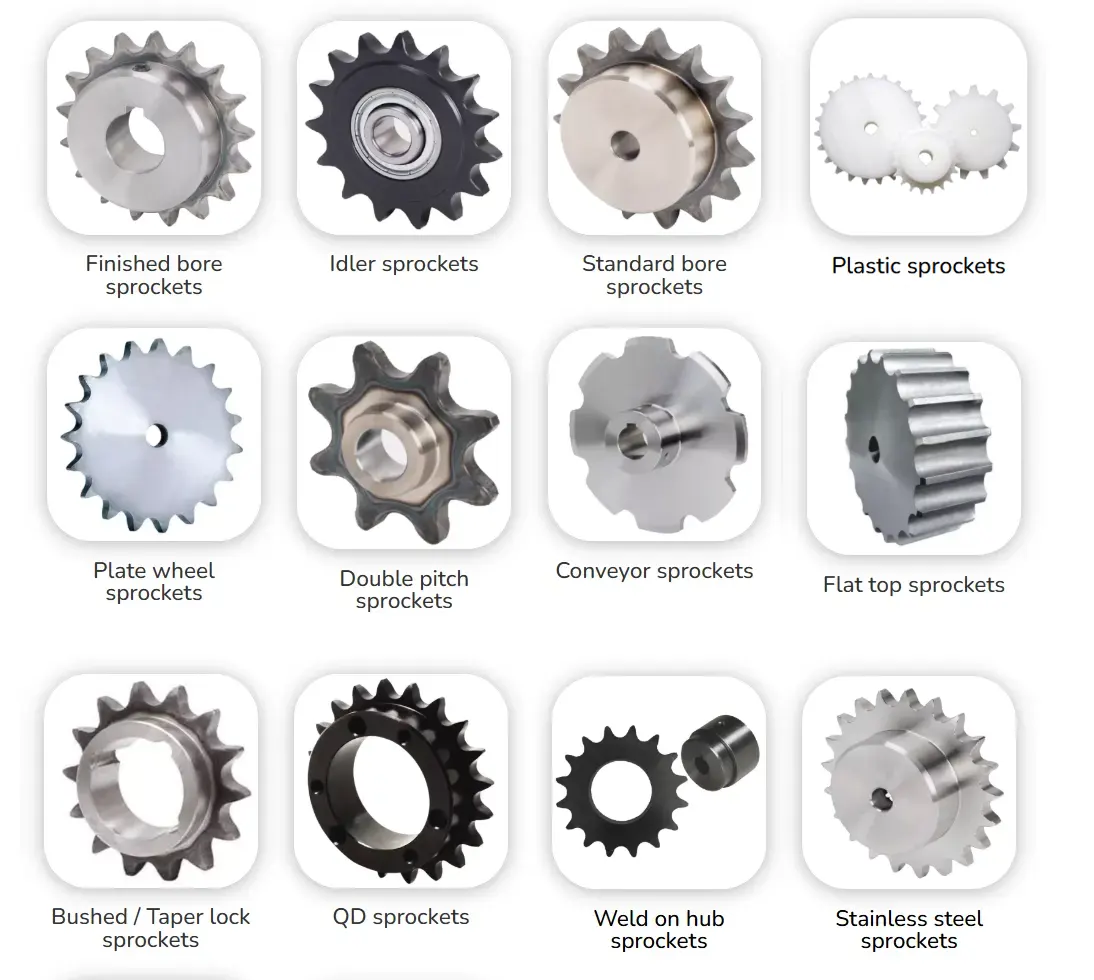
When the decision extends beyond the chain itself, review chain sprockets when comparing transmission architectures is a useful adjacent-hardware reference for chain drive versus timing belt. It is not a substitute for checking tooth geometry, mounting, capacity, and the selected chain standard on the final drawing.
Tradeoffs that should stop a substitution
Release check: select only components whose supplier ratings cover the full duty.
Release check: choose the architecture that meets the process motion and acoustic requirement in the real enclosure.
Release check: choose materials and maintenance methods verified for the environment rather than from generic cleanliness labels.
Release check: confirm the machine structure and maintenance tools support the required setup method.
Comparison FAQs
Choose the architecture that fits the duty
The output should be more useful than a part number. Record chain drive, timing belt, the condition found during “Compare lifecycle cost and service strategy,” and the evidence used to accept or reject the change. That makes the decision auditable after the next shutdown. Use the industrial drive-chain capabilities to compare other transmission-chain families only when the same duty data is carried forward.
Where the final answer still depends on missing machine data, send the application data to the chain engineering team. Include the duty, speed, geometry and inspection evidence that led to the current conclusion, with synchronous drive called out separately. The goal is to obtain a drawing-level answer before hardware is ordered or an adjustment becomes the new baseline.
Send the operating condition, chain drive, timing belt, layout evidence, and the unresolved interface so the next decision is based on machine data rather than assumption.