Build the inspection around failure mechanisms
For an industrial drive, the useful question is not whether a chain looks strong enough; it is whether the selected chain, sprockets, lubrication, and layout work together under the real duty. A strong maintenance program separates quick operating checks from periodic measurements and major-service inspections. Frequency should be set by speed, load, contamination, temperature, duty cycle, and failure consequence rather than copied from an unrelated machine.
Reviewing the chain product selection range can save time, but only when the search is constrained by verified preventive maintenance and chain elongation. The engineering gate for this topic is to escalate new noise, tracking, or contact for safe maintenance inspection rather than normalizing it; anything that fails that gate remains a hypothesis, not a released specification.
- Preventive Maintenance
- Use this parameter to reject unsuitable options early, then retain the verified value for the final specification.
- Chain Elongation
- Check this point at the machine and document any uncertainty that still requires a supplier drawing or manual.
- Lubrication Condition
- Record this requirement with enough context that a second engineer can reproduce the same selection or diagnosis.
- Sprocket Inspection
- Capture this input from a drawing, measurement, calculation, or operating record before the decision advances.
- Maintenance Record
- Treat this as a controlled variable; note its value, unit, operating state, and source in the job record.
Use short operating checks to catch change early: many chain problems become audible or visible before dimensional wear reaches a replacement limit.
Measure slack, take-up, and alignment periodically: adjustment and alignment interact; moving a shaft to correct slack can introduce angular error if both sides are not moved evenly.
Use short operating checks to catch change early
A reliable result starts when you observe abnormal noise, vibration, guard contact, visible lubrication, chain tracking, debris, leaks, and sudden slack change during routine operator rounds. The underlying reason is many chain problems become audible or visible before dimensional wear reaches a replacement limit. In service, operators see the machine under real load and can notice changes maintenance misses during shutdown. An incorrect input may create ignoring early symptoms allows damage to spread before the next scheduled overhaul.
Use the following field evidence: define a short list that can be observed without opening guards or entering hazardous areas and record exceptions. Accept the result only if you can escalate new noise, tracking, or contact for safe maintenance inspection rather than normalizing it. If the check is visual, add a dimension or operating observation whenever practical.
Inspect lubrication as a joint condition
Establish the condition by choosing to check lubricant delivery, penetration, cleanliness, viscosity behavior, and evidence on pin-bushing joints. It affects the drive because adequate oil level or spray volume does not prove the articulating surfaces are protected. A useful constraint is that blocked nozzles, contamination, heat, or washdown can change lubrication effectiveness between services. Getting it wrong can produce a wet chain can still elongate rapidly if internal joints are dry.
Confirm the condition this way: inspect representative joints during shutdown and record oil film, fretting debris, stiff links, and contamination. The step passes when you can adjust lubricant, quantity, application point, or cleaning when internal evidence deteriorates. Keep the evidence beside the chain designation and machine location in the maintenance record.
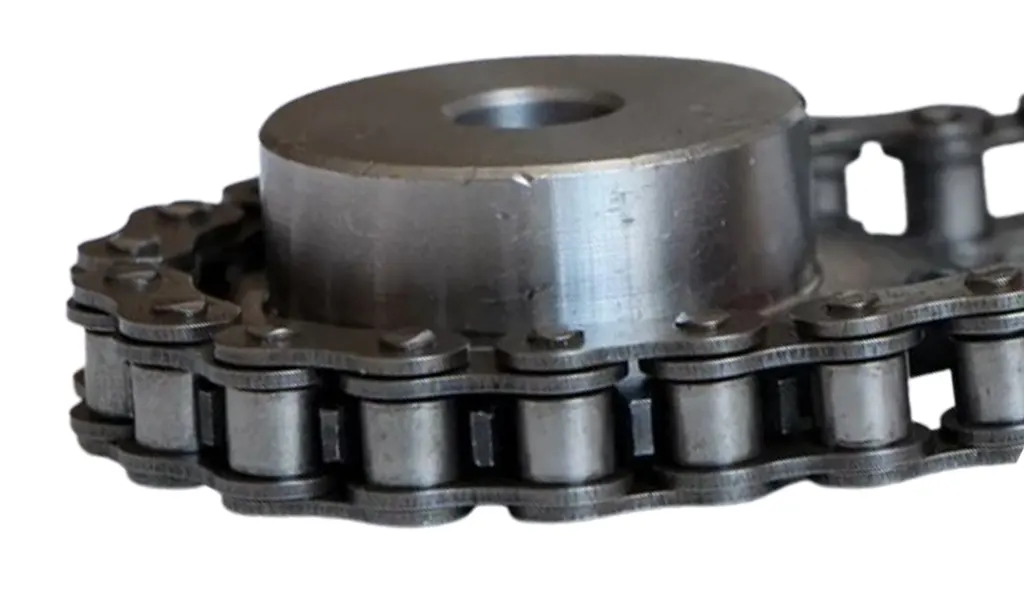
Measure slack, take-up, and alignment periodically
Begin with the physical requirement: record span deflection, take-up position, shaft parallelism, sprocket axial alignment, and any runout concerns. It is connected to adjustment and alignment interact; moving a shaft to correct slack can introduce angular error if both sides are not moved evenly. At site level, gradual wear of bases and bearings can shift the chain plane over time. The avoidable outcome is repeatedly tightening the chain without alignment checks can accelerate side wear.
Inspect as follows: use consistent measurement points and record left-right take-up positions plus sprocket alignment. Release the step after you can correct the geometry before it produces one-sided wear or tooth damage. Repeat the check after adjustment whenever the adjustment itself can change the measured condition.
Trend chain elongation using one method
Measure the same number of pitches with the same reference method and compare percent elongation over time. Why it matters: wear trend shows whether maintenance conditions are stable and supports planned replacement. Field nuance: different technicians and pitch counts can make raw millimeter readings difficult to compare. Failure mode: waiting for engagement problems gives little planning time and can damage sprockets.
Inspection: standardize the measurement procedure, chain position, tension state, and recording units. Release condition: investigate acceleration in wear rate and replace before the applicable manufacturer limit is exceeded. Record the operating state and the reference points used for this check.
Inspect sprockets and connecting components
Start by check tooth profiles, wear symmetry, debris, runout, hub security, connecting link condition, retainers, and any attachments. The mechanism is chain and sprocket wear influence each other and connection hardware is a critical load path. In practice, a loose hub or damaged tooth can create cyclic problems that a chain-only inspection misses. If the assumption is wrong, replacing chain while leaving worn sprockets shortens the new component life.
Field check: rotate the drive through multiple positions during shutdown and inspect both sprockets plus marked joining links. Accept the step when you can replace or repair components using their condition criteria rather than waiting for complete failure. Save the measured or observed condition so the result can be repeated later.
Review duty changes at major service
Use ask whether production rate, product mass, motor control, starts, reversals, environment, or lubrication access has changed since the drive was selected. This controls the decision because a mechanically healthy drive can become under-rated when the process evolves. On the machine, increased throughput or a new cleaning chemical may not appear in the original maintenance checklist. The practical risk is keeping the old chain size and interval after a duty change can create unexpected failures.
Confirm it by doing this: compare current operating data with the original design or last verified selection record. The evidence is sufficient when you can re-rate the chain drive and update maintenance tasks whenever load, speed, environment, or failure consequence materially changes. Note the tool, location, and operating condition with the result.
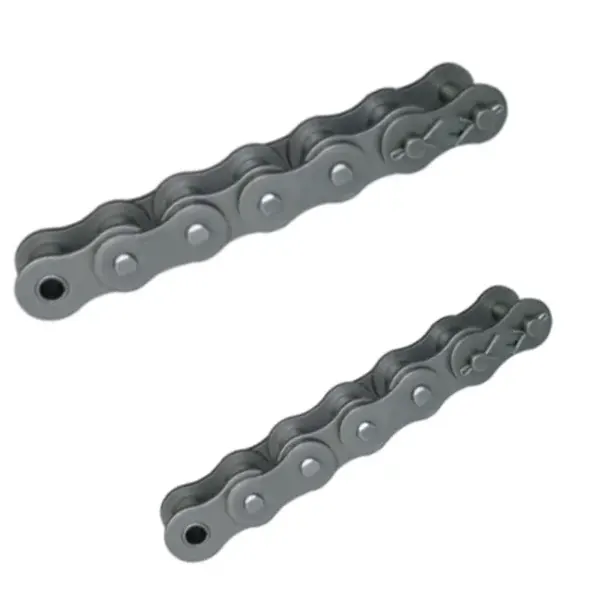
Maintenance decision table
| Decision point | Inspection or calculation | Acceptance evidence |
|---|---|---|
| Use short operating checks to catch change early | define a short list that can be observed without opening guards or entering hazardous areas and record exceptions | escalate new noise, tracking, or contact for safe maintenance inspection rather than normalizing it |
| Inspect lubrication as a joint condition | inspect representative joints during shutdown and record oil film, fretting debris, stiff links, and contamination | adjust lubricant, quantity, application point, or cleaning when internal evidence deteriorates |
| Measure slack, take-up, and alignment periodically | use consistent measurement points and record left-right take-up positions plus sprocket alignment | correct the geometry before it produces one-sided wear or tooth damage |
| Trend chain elongation using one method | standardize the measurement procedure, chain position, tension state, and recording units | investigate acceleration in wear rate and replace before the applicable manufacturer limit is exceeded |
| Inspect sprockets and connecting components | rotate the drive through multiple positions during shutdown and inspect both sprockets plus marked joining links | replace or repair components using their condition criteria rather than waiting for complete failure |
| Review duty changes at major service | compare current operating data with the original design or last verified selection record | re-rate the chain drive and update maintenance tasks whenever load, speed, environment, or failure consequence materially changes |
| For this article, do not close the job until the preventive maintenance evidence and every critical mating interface are recorded together. | ||
Component selection is strongest when the chain is not reviewed in isolation. review chain-drive tensioning hardware used in maintenance offers related industrial chain-drive preventive maintenance context; keep the final engineering check tied to the exact standard family, manufacturer table, and measured installation.
Maintenance shortcuts that accelerate wear
Release check: escalate new noise, tracking, or contact for safe maintenance inspection rather than normalizing it.
Release check: adjust lubricant, quantity, application point, or cleaning when internal evidence deteriorates.
Release check: correct the geometry before it produces one-sided wear or tooth damage.
Release check: investigate acceleration in wear rate and replace before the applicable manufacturer limit is exceeded.
Maintenance FAQs
Record condition so the next inspection has a baseline
The strongest handoff for this maintenance topic is a short evidence package: verified preventive maintenance, verified chain elongation, the result of “Review duty changes at major service,” and the exact source of any chain-series-specific limit. Broader alternatives on the power transmission chain solutions should be compared against that same package rather than against generic catalog descriptions.
For industrial chain-drive preventive maintenance, if lubrication condition has not been verified, send the application data to the chain engineering team with the evidence collected in the preceding checks. State the operating condition, measured dimensions, current sprocket condition, and intended maintenance or design action so the remaining check can be closed before the machine returns to service.
Send the operating condition, preventive maintenance, chain elongation, layout evidence, and the unresolved interface so the next decision is based on machine data rather than assumption.