Produktbeschreibung
Die Rollen von CHINAMFG verbessern die Rotation der Buchse und reduzieren gleichzeitig die Stoßbelastung des Kettenradzahns während des Betriebs.
Alle Bauteile werden wärmebehandelt, um maximale Festigkeit zu erreichen.
Vorspannung während des Herstellungsprozesses, um die anfängliche Dehnung zu minimieren.
Die Heißtauchschmierung gewährleistet die Schmierung aller Kettenkomponenten gemäß 100%, um die Lebensdauer zu verlängern und die Wartungskosten zu senken.
| ISO NEIN. |
ANSI NEIN. |
TONHÖHE | BUSCH BREITE |
ROLLE DIA |
STIFT | PLATTE | TRANS TONHÖHE |
MIN. STÄRKE |
DURCHSCHNITT STÄRKE |
GEWICHT | |||
| D | L1 | L2 | H | t/T | |||||||||
| mm | mm | mm | mm | mm | mm | mm | mm | mm | kgf | kgf | kg/m | ||
| *04C-2 | *25-2 | 6.350 | 3.18 | 3.30 | 2.31 | 7.10 | 7.90 | 5.90 | 0.75 | 6.40 | 7.00 | 8.60 | 0.28 |
| *06C-2 | *36-2 | 9.525 | 4.77 | 5.08 | 3.58 | 11.10 | 12.30 | 9.00 | 1.27 | 10.13 | 15.80 | 20.00 | 0.69 |
| 08A-2 | 40-2 | 12.700 | 7.85 | 7.77 | 3.96 | 15.50 | 16.70 | 12.00 | 1.52 | 14.38 | 27.60 | 34.50 | 1.30 |
| 571A-2 | 50-2 | 15.875 | 9.40 | 10.16 | 5.08 | 19.30 | 20.70 | 15.00 | 2.00 | 18.11 | 43.60 | 59.50 | 2.08 |
| 012A-2 | 60-2 | 19.050 | 12.57 | 11.91 | 5.94 | 24.05 | 25.95 | 18.00 | 2.40 | 22.78 | 62.30 | 80.60 | 3.09 |
| 016A-2 | 80-2 | 25.400 | 15.75 | 15.88 | 7.92 | 30.75 | 33.15 | 23.50 | 3.20 | 29.29 | 111.20 | 134.80 | 5.29 |
| 571A-2 | 100-2 | 31.750 | 18.90 | 19.05 | 9.52 | 37.70 | 41.10 | 30.00 | 4.00 | 35.76 | 173.50 | 224.30 | 8.01 |
| 571A-2 | 120-2 | 38.100 | 25.22 | 22.23 | 11.10 | 47.75 | 51.05 | 35.80 | 4.90 | 45.44 | 249.10 | 326.40 | 11.84 |
| 571A-2 | 140-2 | 44.450 | 25.22 | 25.40 | 12.70 | 51.35 | 55.35 | 41.50 | 5.60 | 48.87 | 338.10 | 409.00 | 14.89 |
| 032A-2 | 160-2 | 50.800 | 31.55 | 28.58 | 14.27 | 61.35 | 65.05 | 48.00 | 6.40 | 58.55 | 444.80 | 556.80 | 20.26 |
| 036A-2 | 180-2 | 57.150 | 35.48 | 35.71 | 17.46 | 69.25 | 73.65 | 54.00 | 7.20 | 65.84 | 560.50 | 652.80 | 27.62 |
| 040A-2 | 200-2 | 63.500 | 37.85 | 39.68 | 19.84 | 75.35 | 79.65 | 59.60 | 8.00 | 71.55 | 693.90 | 921.60 | 33.64 |
| Verwendung: | Antriebskette, Förderkette, Rollenkette |
|---|---|
| Material: | Legierter/Kohlenstoffstahl |
| Oberflächenbehandlung: | Polieren |
| Besonderheit: | Hitzebeständig |
| Kettengröße: | 1/4"~3" |
| Struktur: | Rollenkette |
| Proben: |
US$ 10/Meter
1 Meter (Mindestbestellmenge) | |
|---|
| Anpassung: |
Verfügbar
| Kundenspezifische Anfrage |
|---|
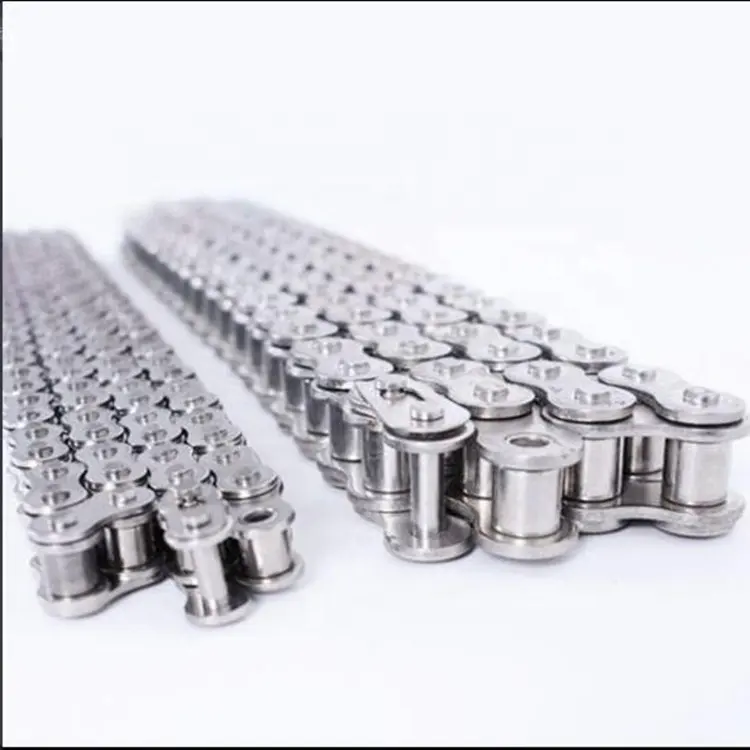
Welche Vorteile bietet die Verwendung einer wartungsfreien Antriebskette?
Die Verwendung einer wartungsfreien Antriebskette bietet zahlreiche Vorteile hinsichtlich Komfort, Kosteneinsparung und Gesamtleistung. Hier eine detaillierte Erklärung:
1. Reduzierter Wartungsaufwand: Wartungsfreie Antriebsketten sind so konstruiert, dass sie ohne regelmäßige Schmierung oder zusätzliche Wartungsarbeiten auskommen. Dadurch entfällt der üblicherweise mit Schmier- und Inspektionsintervallen verbundene Zeit- und Arbeitsaufwand, was den gesamten Wartungsaufwand und die damit verbundenen Kosten reduziert.
2. Erhöhte Betriebseffizienz: Wartungsfreie Ketten verfügen häufig über spezielle selbstschmierende Materialien oder Beschichtungen, die über einen längeren Zeitraum hervorragende Schmiereigenschaften gewährleisten. Dies trägt zur Reduzierung von Reibung, Verschleiß und Leistungsverlusten bei und führt somit zu einer verbesserten Betriebseffizienz. Die reduzierte Reibung trägt außerdem zu einem geringeren Energieverbrauch und einer höheren Kraftübertragungseffizienz bei.
3. Längere Kettenlebensdauer: Wartungsfreie Antriebsketten sind im Vergleich zu herkömmlichen geschmierten Ketten auf eine längere Lebensdauer ausgelegt. Der Einsatz selbstschmierender Materialien oder Beschichtungen minimiert Verschleiß, Korrosion und Längung und gewährleistet so, dass die Kette über einen längeren Zeitraum in optimalem Zustand bleibt. Dies führt zu weniger Ausfallzeiten, selteneren Kettenwechseln und geringeren Austauschkosten.
4. Sauber und umweltfreundlich: Wartungsfreie Ketten benötigen keine externe Schmierung, d. h. es ist kein Öl- oder Fettauftrag erforderlich. Dies führt zu einem saubereren und umweltfreundlicheren Arbeitsumfeld, da kein Risiko von Ölverschmutzung oder -leckage besteht. Darüber hinaus erzeugen wartungsfreie Ketten aufgrund der reduzierten Reibung oft weniger Lärm und tragen so zu einer ruhigeren Arbeitsumgebung bei.
5. Vielseitige Anwendungsmöglichkeiten: Wartungsfreie Antriebsketten sind in verschiedenen Ausführungen und Größen erhältlich und eignen sich daher für ein breites Anwendungsspektrum. Sie können in Branchen wie Verpackung, Lebensmittelverarbeitung, Automobilindustrie, Fördertechnik und vielen anderen eingesetzt werden, in denen Zuverlässigkeit, Sauberkeit und geringer Wartungsaufwand unerlässlich sind.
Es ist wichtig zu beachten, dass wartungsfreie Antriebsketten zwar zahlreiche Vorteile bieten, aber nicht für alle Anwendungen geeignet sind. Faktoren wie Tragfähigkeit, Betriebsbedingungen und Umgebungsbedingungen sollten bei der Auswahl des passenden Kettentyps berücksichtigt werden. Die Beratung durch Kettenhersteller oder Branchenexperten gewährleistet die Auswahl einer wartungsfreien Antriebskette, die den spezifischen Anwendungsanforderungen optimal entspricht.
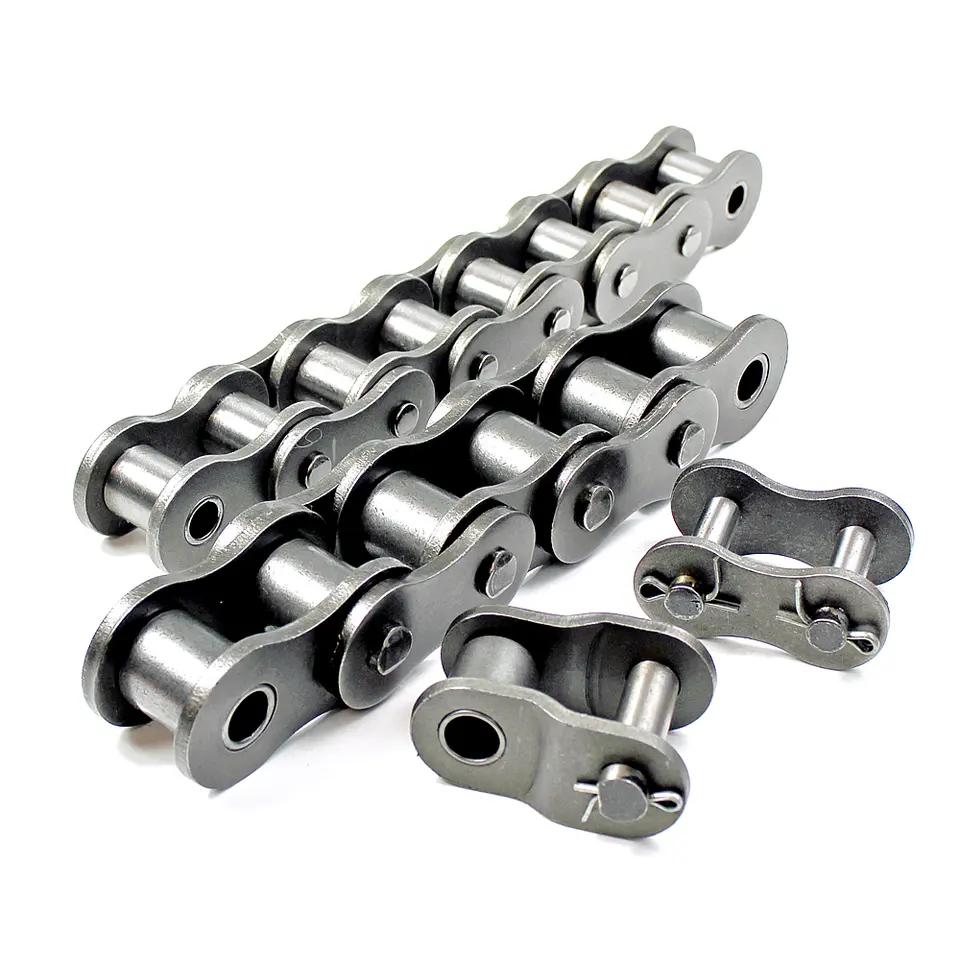
Können Antriebsketten in Fördersystemen eingesetzt werden?
Ja, Antriebsketten können in Fördersystemen eingesetzt werden. Hier ist eine ausführliche Antwort auf die Frage:
Fördersysteme werden in verschiedenen Branchen zur effizienten Materialhandhabung und zum Transport eingesetzt. Antriebsketten gehören zu den wichtigsten Komponenten, die die Bewegung von Förderbändern oder -rollen antreiben und unterstützen.
Antriebsketten bieten in Fördersystemen mehrere Vorteile:
1. Kraftübertragung: Antriebsketten sind so konstruiert, dass sie Kraft effizient übertragen und so die Bewegung des Förderbandes oder der Rollen antreiben. Sie sind für hohe Belastungen ausgelegt und gewährleisten eine zuverlässige Kraftübertragung, wodurch ein reibungsloser und gleichmäßiger Betrieb des Fördersystems sichergestellt wird.
2. Vielseitigkeit: Antriebsketten sind in verschiedenen Größen, Ausführungen und Konfigurationen erhältlich und eignen sich daher für ein breites Spektrum an Förderanwendungen. Sie lassen sich individuell an unterschiedliche Fördersystemkonstruktionen und -anforderungen anpassen, darunter gerade, gebogene und geneigte Förderanlagen.
3. Langlebigkeit: Antriebsketten sind für den harten Einsatz in Förderanlagen ausgelegt. Sie bestehen aus hochwertigen Materialien wie Stahl, was ihnen hervorragende Festigkeit und Langlebigkeit verleiht. Dadurch sind die Ketten auch bei hohen Belastungen, häufigem Anfahren und Anhalten sowie abrasiven Umgebungen, wie sie in Förderanlagen üblich sind, bestens geeignet.
4. Flexibilität: Antriebsketten ermöglichen Flexibilität bei der Gestaltung und Konfiguration von Förderanlagen. Sie können unterschiedliche Förderbandlängen, -breiten und -winkel aufnehmen, sodass sich das System an räumliche Gegebenheiten und spezifische Materialtransportanforderungen anpassen lässt. Darüber hinaus können sie bei sich ändernden Anforderungen an die Förderanlage problemlos modifiziert oder erweitert werden.
5. Geringer Wartungsaufwand: Antriebsketten erfordern regelmäßige Wartung, um optimale Leistung und Langlebigkeit zu gewährleisten. Im Vergleich zu anderen Kraftübertragungssystemen wie Riemen oder Zahnrädern weisen Antriebsketten jedoch in der Regel einen geringeren Wartungsaufwand auf. Ordnungsgemäße Schmierung, korrekte Spannung und regelmäßige Inspektionen sind unerlässlich, um den Verschleiß zu minimieren und einen zuverlässigen Betrieb des Fördersystems sicherzustellen.
Antriebsketten sind insgesamt eine zuverlässige und effiziente Lösung für den Antrieb von Förderanlagen. Sie bieten eine robuste Kraftübertragung, vielseitige Systemauslegungsmöglichkeiten, Langlebigkeit auch unter anspruchsvollen Bedingungen, flexible Layoutgestaltung und einen vergleichsweise geringen Wartungsaufwand. Bei sachgemäßer Auswahl und Wartung tragen Antriebsketten maßgeblich zum reibungslosen und effizienten Betrieb von Förderanlagen in verschiedenen Branchen bei.

In welchen Branchen oder Anwendungsbereichen werden üblicherweise Antriebsketten eingesetzt?
Antriebsketten finden in verschiedenen Branchen und Anwendungen breite Verwendung, überall dort, wo eine effiziente Kraft- und Bewegungsübertragung erforderlich ist. Hier einige gängige Branchen und Anwendungen, die auf Antriebsketten angewiesen sind:
- Automobilindustrie: Antriebsketten werden in Automobilmotoren und Antriebssträngen verwendet, um die Kraft vom Motor auf die Räder zu übertragen.
- Landwirtschaft: Antriebsketten werden in landwirtschaftlichen Maschinen wie Traktoren, Mähdreschern und Erntemaschinen zur Kraftübertragung in verschiedenen Anwendungen wie Förderanlagen und landwirtschaftlichen Geräten eingesetzt.
- Industrielle Fertigung: Antriebsketten finden sich in einer Vielzahl von Industriemaschinen, darunter Förderbänder, Materialhandhabungssysteme, Verpackungsmaschinen, Druckmaschinen und Werkzeugmaschinen.
- Bergbau und Bauwesen: Antriebsketten werden in schweren Maschinen wie Baggern, Bulldozern und Bergbaugeräten eingesetzt, um die Kraft für Grab-, Hebe- und andere Arbeitsvorgänge zu übertragen.
- Lebensmittel und Getränke: Antriebsketten werden in Lebensmittelverarbeitungsanlagen, Abfüllanlagen und Fördersystemen eingesetzt, um Produkte entlang der Produktionslinien zu transportieren.
- Textil: Antriebsketten werden in Textilmaschinen wie Webstühlen und Spinnmaschinen zur Kraftübertragung während der Web- und Spinnprozesse eingesetzt.
- Energie und Versorgung: Übertragungsketten werden in Kraftwerken, Windkraftanlagen und anderen Systemen für erneuerbare Energien eingesetzt, um Strom von der Quelle zum Stromnetz zu übertragen.
- Material Handling: Antriebsketten werden häufig in Materialtransportgeräten wie Gabelstaplern, Palettierern und automatisierten Lagersystemen eingesetzt, um Waren in Lagerhäusern und Vertriebszentren zu transportieren und zu handhaben.
- Marine: Antriebsketten finden Anwendung in Seeschiffen, beispielsweise in Schiffsantriebssystemen, Ankerziehgeräten und Winden für den Ladungsumschlag.
Dies sind nur einige Beispiele; Antriebsketten werden auch in verschiedenen anderen Branchen und Anwendungen eingesetzt, in denen eine zuverlässige Kraftübertragung unerlässlich ist. Die spezifische Konstruktion und die Eigenschaften der Antriebsketten können je nach den Anforderungen der jeweiligen Branche und Anwendung variieren.


Bearbeitet von CX am 24.10.2023