Product Description
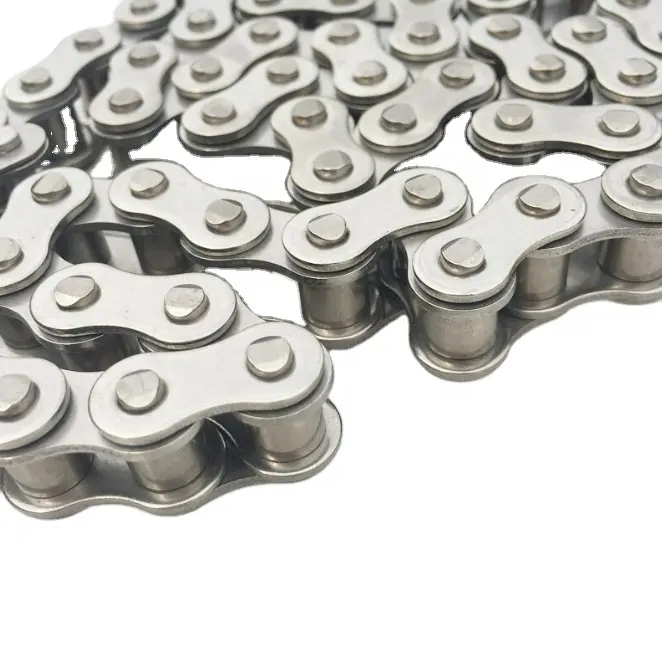
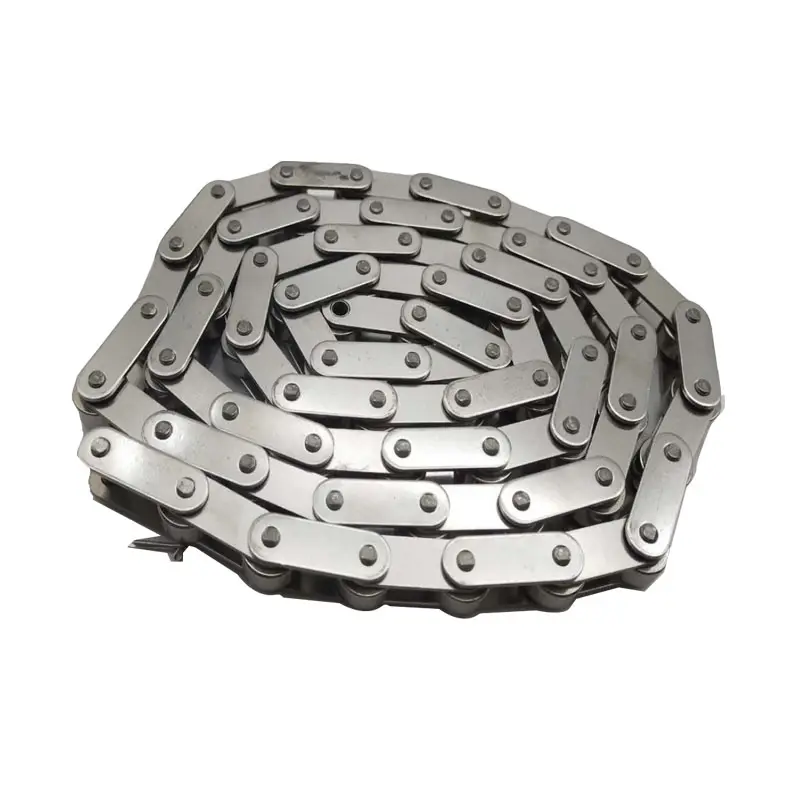
ISO/ANSI/DIN Standard Short Pitch Precision Stainless Steel Hardware Transmission Motorcycle Industrial Roller Chain
Product Description
1. Material: Stainless Steel 304 & 316 / Alloy Carbon Steel
2. Surface Treatment: Shot peening / Zinc-plated / Nickel-plated / Dacromet-plated
3. Chain No:
35SS-1, 40SS-1, 50SS-1, 60SS-1, 80SS-1, 100SS-1, 120SS-1, 140SS-1;
35SS-2, 40SS-2, 50SS-2, 60SS-2, 80SS-2, 100SS-2, 120SS-2, 140SS-2;
35SS-3, 40SS-3, 50SS-3, 60SS-3, 80SS-3, 100SS-3, 120SS-3, 140SS-3;
4. Application: Stainless Steel Chains are used in so many industries, such as machine manufacturing, food machine, etc. Also are suitable for high and low temperature conditions.
5. Characteristic:
1. The chain can be used on the both sides of multi-axle transmission.
2. Easy installation and replacement.
3. It can obtain larger reduction ratio.
4. The roller chain has good elasticity, high strength and each hinge part has lubricating oil, so it can be stored easliy. Thus, compared with the rigid contact tooth, it has good cushioning and vibration absorbing ability.
| Product name | Stainless Steel Roller Chain From China |
| Materials Available | 1. Stainless Steel: SS304, SS316, etc |
| 2. Alloy Steel: 45Mn, 42CrMo, 20CrMo, etc | |
| 3. OEM according to your request | |
| Surface Treatment | Shot peening, Blackening, Oxygenation, Polishing, Zinc-plated, Nickel-plated, Anodized, etc. |
| Characteristic | Fire Resistant, Oil Resistant, Heat Resistant |
| Design criterion | ISO DIN ANSI & Customer’s Drawing |
| Size | Customer’s Drawing & ISO standard |
| Package | Wooden Case / Container and pallet, or made-to-order |
| Certificate | ISO9001: 2008 |
| Advantage | First quality, Best service, Competitive price, Fast delivery |
| Delivery Time | 20 days for samples. 45 days for official order. |
Detailed Photos
View more products,please click here…
Company Profile
| Usage: | Transmission Chain |
|---|---|
| Material: | Stainless steel |
| Structure: | Roller Chain |
| 80-1: | 1" |
| Size: | 50ss-1 |
| Other: | Corrosion Resistance |
| Samples: |
US$ 0/Meter
1 Meter(Min.Order) | |
|---|
| Customization: |
Available
| Customized Request |
|---|
How does the choice of chain tensioner affect the performance of a transmission chain?
The choice of chain tensioner plays a critical role in ensuring the optimal performance of a transmission chain. Here’s a detailed answer to the question:
1. Proper Chain Engagement: The chain tensioner helps maintain the correct tension in the transmission chain, ensuring proper engagement between the chain and the sprockets. This is essential for effective power transmission and smooth operation.
2. Chain Slack Control: A properly selected chain tensioner helps control chain slack, which is the amount of looseness in the chain. Excessive chain slack can lead to chain jumping, misalignment, and increased wear, while insufficient slack can cause excessive tension, leading to accelerated chain and sprocket wear.
3. Noise and Vibration Reduction: The use of an appropriate chain tensioner helps minimize noise and vibration in the transmission system. It helps dampen the impact forces and vibrations caused by the chain’s motion, resulting in quieter operation and improved overall system performance.
4. Extended Chain Life: By maintaining the proper tension, the chain tensioner helps prevent premature wear and elongation of the transmission chain. This contributes to the chain’s longevity, reducing the frequency of chain replacements and lowering maintenance costs.
5. Compensation for Wear and Stretch: As a transmission chain wears over time, it may experience elongation or stretch. The chain tensioner compensates for this elongation by adjusting the tension, ensuring the chain remains properly tensioned and engaged with the sprockets. This helps maintain consistent performance and prevents skipping or disengagement.
6. Adaptability to Variable Conditions: Some chain tensioners offer the ability to adjust the tension dynamically, accommodating variations in operating conditions such as temperature fluctuations or load changes. This flexibility ensures optimal chain performance and compensates for the effects of thermal expansion or contraction.
It’s crucial to select a chain tensioner that is compatible with the specific transmission chain and application requirements. Consider factors such as chain size, tension adjustment range, environmental conditions, and load variations when choosing a chain tensioner. Regular inspection and maintenance of the tensioner are also essential to ensure its proper functioning and prolong the life of the transmission chain.
What are the benefits of using a lightweight transmission chain?
Using a lightweight transmission chain offers several advantages. Here’s a detailed answer to the question:
1. Improved Efficiency: A lightweight transmission chain reduces the overall weight of the system, resulting in improved energy efficiency. With less mass to move, the power required to drive the chain is reduced, leading to lower energy consumption.
2. Increased Power-to-Weight Ratio: The lightweight nature of the chain allows for a higher power-to-weight ratio. This means that a smaller, lighter chain can transmit the same amount of power as a heavier chain, making it suitable for applications where weight reduction is crucial, such as in portable or handheld equipment.
3. Reduced Inertia: The lower weight of the transmission chain reduces the inertia of the system. This enables faster acceleration and deceleration, resulting in improved response times and better overall performance in dynamic applications.
4. Easier Handling and Installation: Lightweight transmission chains are easier to handle and install compared to heavier chains. They require less effort and manpower during installation or maintenance activities, making them more convenient and time-saving.
5. Lower Wear and Tear: The reduced weight of the chain contributes to lower wear and tear on other components of the system, such as sprockets, bearings, and shafts. This can extend the lifespan of these components and reduce the frequency of maintenance and replacement.
6. Cost Savings: Using a lightweight transmission chain can result in cost savings in several ways. The reduced energy consumption leads to lower operating costs, and the lighter weight may allow for the use of smaller and less expensive supporting components.
It’s important to note that the choice of a lightweight transmission chain should be based on the specific application requirements. Factors such as load capacity, speed, operating environment, and compatibility with other system components should be considered to ensure that the lightweight chain meets the performance and durability needs of the application.
Are there specific lubrication requirements for transmission chains?
Yes, transmission chains typically require proper lubrication to ensure smooth operation, reduce wear, and prolong their service life. Here are some key points regarding lubrication requirements for transmission chains:
- Clean and Adequate Lubrication: It is important to keep the chain adequately lubricated to minimize friction and wear between the chain components. Lubrication helps reduce heat generation and prevents metal-to-metal contact, which can lead to premature wear and failure.
- Appropriate Lubricant Selection: Choosing the right lubricant is crucial for optimal chain performance. Factors to consider when selecting a lubricant include the application temperature, load conditions, speed, and environmental factors. Lubricants should have good adhesion properties, resist oxidation, and provide sufficient film strength to protect the chain surfaces.
- Proper Lubrication Interval: Regular lubrication at appropriate intervals is necessary to maintain the chain’s performance and reduce the risk of excessive wear. The lubrication frequency depends on the operating conditions and the specific lubricant used. Manufacturers usually provide recommendations for lubrication intervals based on the chain type and application.
- Effective Lubrication Application: Proper application of lubricant is essential to ensure uniform coverage and penetration into the chain components. The lubricant should be applied to the inner link plates, roller surfaces, and pin-bushing interfaces. Excess lubricant should be removed to prevent buildup and contamination.
- Environmental Considerations: In certain environments, such as dusty or dirty conditions, the chain may require more frequent lubrication to prevent the ingress of contaminants and maintain proper lubrication film. Additionally, in high-temperature or high-speed applications, special high-temperature or high-speed lubricants may be necessary.
- Regular Inspection and Maintenance: Along with proper lubrication, regular inspection and maintenance of the transmission chain are essential. This includes checking for signs of wear, lubricant degradation, and proper tension. Any damaged or worn components should be replaced promptly to prevent chain failure.
Following the manufacturer’s recommendations and adhering to the specific lubrication requirements for the transmission chain will help ensure optimal performance, reduce wear, and extend the chain’s lifespan.


editor by CX 2023-08-03