Descrição do produto
|
Produto |
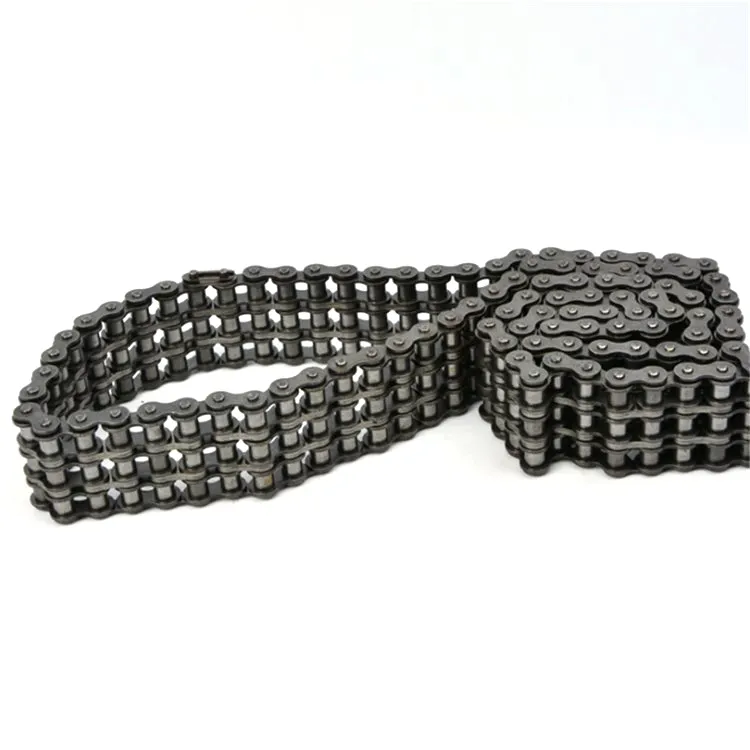
Corrente de rolos de passo duplo padrão |
||
|
Material |
Aço 40Mn, aço inoxidável 304, aço inoxidável 316 e aço inoxidável 201. |
||
|
Tipos |
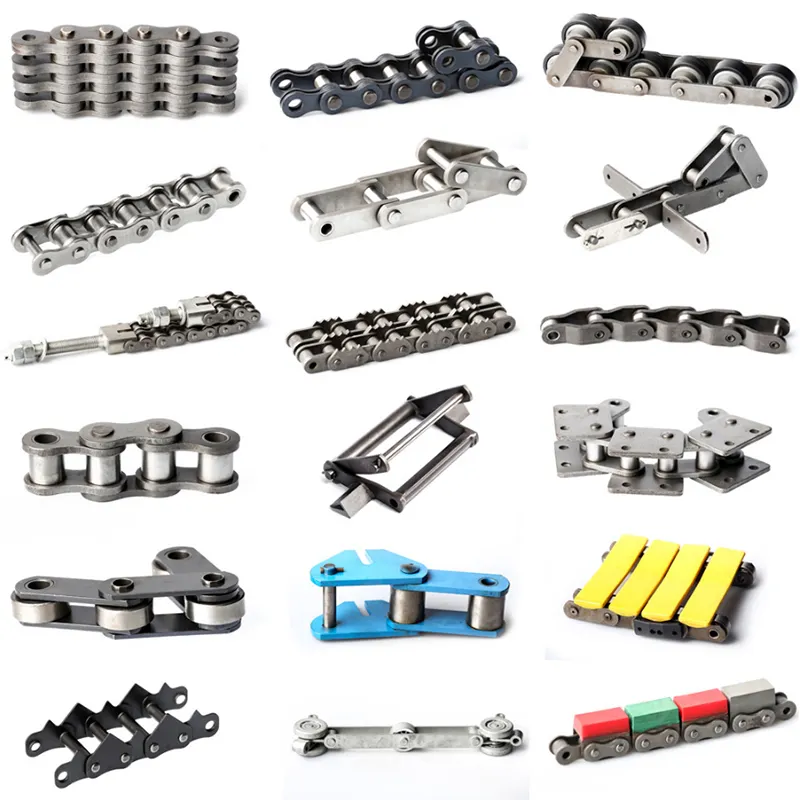
Correntes padrão e correntes especiais, como correntes das séries A ou B, correntes de rolos, correntes de transmissão, correntes transportadoras, correntes de elevação, correntes agrícolas, rodas dentadas, engrenagens, rodas e assim por diante. |
||
|
Série |
Série A (passos de 12,7 a 50,8 mm), série B (passos de 9,525 a 50,8 mm) e série pesada. |
||
|
Corrente de rolos de precisão de passo curto |
Correntes de rolos e correntes com buchas Simplex: 04C-1,06C-1,085-1,08A-1,10A-1,12A-1,16A-1,20A-1,24A-1,28A-1,32A-1,36A-1,40A-1,48A-1 04C-2,06C-2,085-2,08A-2,10A-2,12A-2,16A-2,20A-2,24A-2,28A-2,32A-2,36A-2,40A-2,48A-2 04C-3,06C-2,085-3,08A-3,10A-3,12A-3,16A-3,20A-3,24A-3,28A-3,32A-3,36A-3,40A-3,48A-3 |
||
|
tipo elo de corrente |
Links padrão (sem anexo) e links não padrão (com anexo).
A1: Encaixes articulados de um lado e um furo. |
||
|
Vantagens dos nossos produtos |
1. Cada etapa, desde o pedido de produção até o processo de embalagem, passa por uma rigorosa inspeção de qualidade. |
||
1. Entrega rápida: Produtos padrão podem ser entregues em até 20 dias.
2. Bom atendimento: resposta rápida, orçamento ágil, responsabilidade pelo produto.
3. Excelente relação custo-benefício: consegue manter a estabilidade de preços por um determinado período, proporcionando maiores lucros aos clientes.
4. Boa qualidade: a produção e os testes contam com supervisão adequada para garantir a qualidade do produto e obter muitos elogios dos clientes.
5. Serviço OEM: os produtos podem ser personalizados de acordo com desenhos e requisitos.
Somos responsáveis pelos produtos encomendados. Temos muita confiança nos produtos que fabricamos. É claro que, se você tiver algum problema após receber a mercadoria, pode entrar em contato conosco diretamente. Analisaremos a situação e negociaremos a tempo para resolver suas dificuldades.
/* 22 de janeiro de 2571 19:08:37 */!function(){function s(e,r){var a,o={};try{e&&e.split(“”,).forEach(function(e,t){e&&(a=e.match(/(.*?):(.*)$/))&&1
| Material: | Liga |
|---|---|
| Estrutura: | Corrente de rolos |
| Tratamento de superfície: | Polimento |
| Exemplos: |
US$ 35/kg
1 kg (Pedido mínimo) | Solicitar amostra |
|---|
| Personalização: |
Disponível
| Solicitação personalizada |
|---|
.shipping-cost-tm .tm-status-off{background: none;padding:0;color: #1470cc}
| Custo do frete:
Frete estimado por unidade. |
sobre o custo do frete e o prazo estimado de entrega. |
|---|
| Método de pagamento: |
|
|---|---|
|
Pagamento inicial Pagamento integral |
| Moeda: | US$ |
|---|
| Devoluções e reembolsos: | Você pode solicitar um reembolso em até 30 dias após o recebimento dos produtos. |
|---|
Correntes de transmissão podem ser usadas na construção civil ou em equipamentos pesados?
Sim, as correntes de transmissão são comumente usadas na construção civil e em equipamentos pesados devido à sua durabilidade e capacidade de suportar cargas elevadas. Aqui está uma resposta detalhada para a pergunta:
Equipamentos de construção e máquinas pesadas, como escavadeiras, tratores, guindastes e carregadeiras, frequentemente dependem de correntes de transmissão para transmitir potência e movimento entre os diferentes componentes. Essas correntes são projetadas para suportar as condições exigentes e as cargas pesadas encontradas em aplicações de construção e terraplenagem.
As principais vantagens da utilização de correntes de transmissão na construção civil e em equipamentos pesados incluem:
1. Capacidade de Carga: As correntes de transmissão são projetadas para suportar cargas pesadas e fornecer transmissão de potência confiável em equipamentos que exigem força substancial. Elas são projetadas para suportar as tensões e deformações extremas associadas ao levantamento, tração e empurramento de materiais pesados.
2. Durabilidade: Equipamentos de construção e pesados operam em ambientes desafiadores com detritos, poeira, vibrações e condições climáticas adversas. As correntes de transmissão são fabricadas para serem robustas e resistentes ao desgaste, à corrosão e à fadiga, garantindo operação confiável e longa vida útil nesses ambientes exigentes.
3. Versatilidade: As correntes de transmissão estão disponíveis em diversos tamanhos, configurações e materiais, permitindo sua adaptação às necessidades específicas de cada equipamento. Essa versatilidade possibilita aos fabricantes selecionar a corrente mais adequada para diferentes aplicações, garantindo desempenho e eficiência ideais.
4. Transmissão de Potência: Equipamentos de construção e de grande porte frequentemente exigem alto torque e transmissão de potência precisa. As correntes de transmissão são excelentes para transmitir a potência do motor para diversas partes móveis, como rodas, esteiras e mecanismos de elevação, permitindo que o equipamento execute suas funções com eficácia.
5. Manutenção fácil: As correntes de transmissão geralmente têm um design simples, o que facilita bastante a sua manutenção. Inspeções regulares, lubrificação e ajuste de tensão são essenciais para garantir o funcionamento adequado e prolongar a vida útil da corrente. Práticas adequadas de manutenção podem ajudar a minimizar o tempo de inatividade e reduzir os custos gerais de manutenção do equipamento.
É importante ressaltar que, embora as correntes de transmissão sejam amplamente utilizadas na construção civil e em equipamentos pesados, a aplicação específica e as condições de operação devem ser levadas em consideração ao selecionar o tipo, o tamanho e o material adequados da corrente. Consultar as diretrizes e recomendações do fabricante do equipamento é fundamental para garantir o desempenho e a segurança ideais.
Quais são as vantagens de usar uma corrente de transmissão retardante de chamas?
Correntes de transmissão retardantes de chamas oferecem benefícios específicos em determinadas aplicações onde a segurança contra incêndio é uma preocupação. Aqui está uma resposta detalhada para a pergunta:
1. Proteção contra incêndio: A principal vantagem de usar uma corrente de transmissão retardante de chamas é a maior proteção contra incêndio. Essas correntes são projetadas com materiais e revestimentos que possuem alta resistência à ignição e à propagação de chamas. Em caso de incêndio, elas ajudam a minimizar o risco de a corrente contribuir para a propagação das chamas.
2. Segurança: Correntes de transmissão com tratamento retardante de chamas contribuem para a segurança geral em ambientes com risco de incêndio. Ao reduzir a inflamabilidade da corrente, elas ajudam a evitar que ela se inflame ou propague um incêndio, protegendo pessoas e bens.
3. Conformidade com as normas de segurança contra incêndio: Em indústrias ou aplicações onde as normas de segurança contra incêndio são rigorosas, o uso de correntes de transmissão antichamas garante a conformidade com esses requisitos. Isso ajuda a atender aos padrões e regulamentos necessários para a prevenção e proteção contra incêndios.
4. Tempo de fuga prolongado: Em situações em que o pessoal possa precisar evacuar rapidamente durante um incêndio, as correntes de transmissão antichamas podem proporcionar um tempo adicional valioso para uma evacuação segura. Ao resistir à ignição e à propagação das chamas, elas ajudam a manter a integridade estrutural e a retardar a propagação do fogo.
5. Proteção de Propriedades: Correntes de transmissão antichamas ajudam a proteger equipamentos, máquinas e ativos valiosos contra danos causados por incêndio. Ao reduzir o risco de incêndio na corrente, elas minimizam o potencial de falha do equipamento e consequentes perdas ou danos.
É importante observar que as correntes de transmissão antichamas podem ter considerações e limitações de projeto específicas. Elas são normalmente utilizadas em aplicações onde a segurança contra incêndio é crítica, como em sistemas de transporte, aeroespacial, mineração e outras indústrias com alto risco de incêndio. A seleção da corrente antichamas adequada requer a consideração dos requisitos específicos da aplicação e a garantia de conformidade com as normas e regulamentações de segurança contra incêndio pertinentes.
Existem normas ou certificações da indústria para correntes de transmissão?
Sim, existem normas e certificações da indústria que regem a fabricação, a qualidade e o desempenho das correntes de transmissão. Aqui está uma explicação detalhada:
1. Normas ANSI/ASME: O Instituto Nacional Americano de Padrões (ANSI) e a Sociedade Americana de Engenheiros Mecânicos (ASME) desenvolveram normas para correntes de transmissão, como a ANSI/ASME B29.1 para correntes de rolos e a ANSI/ASME B29.3 para correntes de pinos. Essas normas definem as dimensões, os materiais, as tolerâncias e os requisitos de desempenho para vários tipos de correntes de transmissão.
2. Normas ISO: A Organização Internacional de Normalização (ISO) também estabeleceu normas para correntes de transmissão, incluindo a ISO 606 para correntes de rolos de precisão de passo curto e a ISO 1275 para correntes transportadoras de passo curto. Essas normas garantem consistência e compatibilidade globais em termos de dimensões e desempenho das correntes.
3. Normas DIN: Na Alemanha, o Deutsches Institut für Normung (DIN) desenvolveu normas para correntes de transmissão, como a DIN 8187 para correntes de rolos e a DIN 8181 para correntes de buchas. Essas normas são amplamente utilizadas na Europa e definem as especificações e os requisitos para o projeto e o desempenho das correntes.
4. Certificações: Além das normas, existem certificações que validam a qualidade e o desempenho das correntes de transmissão. Uma certificação notável é a ISO 9001:2015, que demonstra que o fabricante implementou um sistema de gestão da qualidade e atende aos critérios especificados para a qualidade consistente do produto.
É importante ressaltar que a adesão a essas normas e certificações é voluntária, mas altamente recomendada. Optar por correntes de transmissão que atendam a normas e certificações reconhecidas garante que elas foram fabricadas e testadas para atender a critérios específicos de desempenho, confiabilidade e durabilidade.
Ao selecionar correntes de transmissão, é aconselhável procurar produtos de fabricantes conceituados que priorizem a qualidade e a conformidade com as normas da indústria. Isso ajuda a garantir que as correntes escolhidas atendam aos requisitos necessários para sua aplicação e ofereçam desempenho confiável ao longo do tempo.


Editor por CX 2024-04-23