Product Description
|
Product |
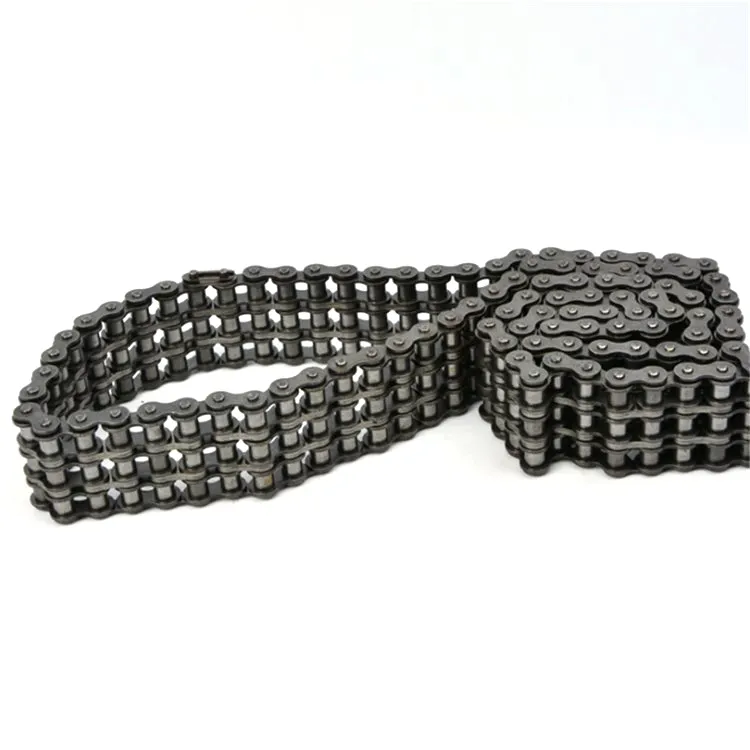
Standard Double Pitch Roller chain |
||
|
Material |
40Mn steel,304 stainless steel, 316 stainless steel and 201 stainless steel. |
||
|
Types |
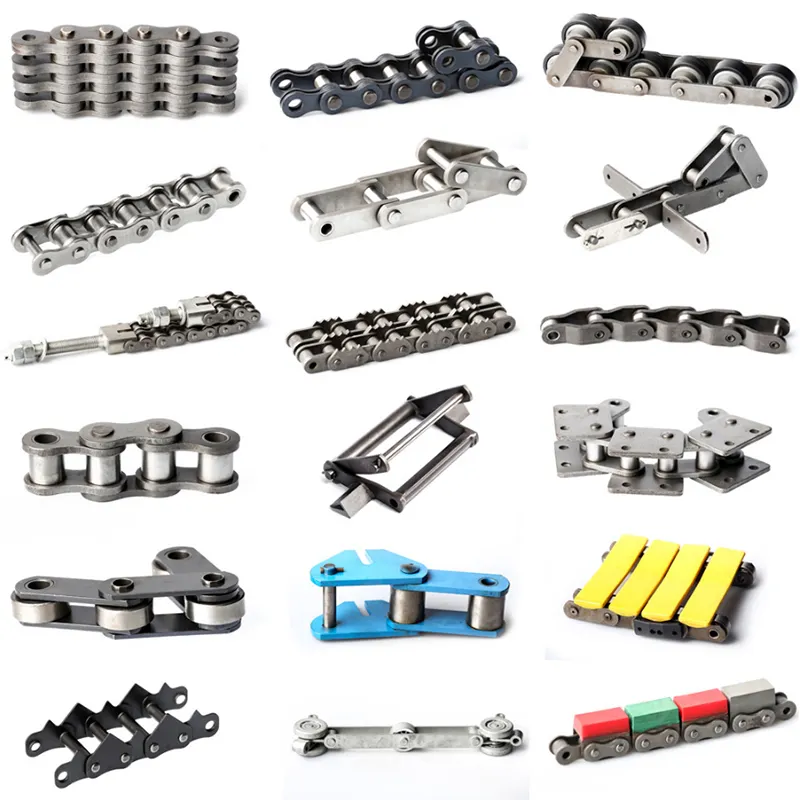
Standard chains and special chains, such as A or B series chains, roller chains, driving chains, conveyor chains, hoisting chains, agricultural chains, sprockets, gears, wheels and so on. |
||
|
Series |
A series(12.7-50.8mm pitches),B series (9.525-50.8mm pitches)and the heavy series. |
||
|
Short pitch precision roller chain |
Simplex Roller Chains&Bushing Chains: 04C-1,06C-1,085-1,08A-1,10A-1,12A-1,16A-1,20A-1,24A-1,28A-1,32A-1,36A-1,40A-1,48A-1 04C-2,06C-2,085-2,08A-2,10A-2,12A-2,16A-2,20A-2,24A-2,28A-2,32A-2,36A-2,40A-2,48A-2 04C-3,06C-2,085-3,08A-3,10A-3,12A-3,16A-3,20A-3,24A-3,28A-3,32A-3,36A-3,40A-3,48A-3 |
||
|
Chain link type |
Standard links (without attachment) and non-standard links (with attachment).
A1: One-side,one hole cranked attachments. |
||
|
Our Products Advantage |
1. Every step from production order to the packing process has a strict quality inspection. |
||
1.Fast delivery: Standard products can be delivered in as fast as 20 days
2.Good service: timely reply, prompt quotation, responsible for the product
3.High cost performance: can maintain price stability for a certain period of time, bringing greater profits to customers
4.Good quality: production and testing have corresponding supervision to ensure product quality and get high praise from customers
5.OEM service: products can be customized according to drawings and requirements
We are responsible for the ordered products. We are very confident in the products we produce. Of course, if you have any problems after receiving the goods, you can contact us directly. We will confirm and negotiate in time to solve your difficulties.
/* January 22, 2571 19:08:37 */!function(){function s(e,r){var a,o={};try{e&&e.split(“,”).forEach(function(e,t){e&&(a=e.match(/(.*?):(.*)$/))&&1
| Material: | Alloy |
|---|---|
| Structure: | Roller Chain |
| Surface Treatment: | Polishing |
| Samples: |
US$ 35/kg
1 kg(Min.Order) | Order Sample |
|---|
| Customization: |
Available
| Customized Request |
|---|
.shipping-cost-tm .tm-status-off{background: none;padding:0;color: #1470cc}
| Shipping Cost:
Estimated freight per unit. |
about shipping cost and estimated delivery time. |
|---|
| Payment Method: |
|
|---|---|
|
Initial Payment Full Payment |
| Currency: | US$ |
|---|
| Return&refunds: | You can apply for a refund up to 30 days after receipt of the products. |
|---|
Can transmission chains be used in construction or heavy equipment?
Yes, transmission chains are commonly used in construction and heavy equipment due to their durability and ability to handle high loads. Here’s a detailed answer to the question:
Construction and heavy equipment, such as excavators, bulldozers, cranes, and loaders, often rely on transmission chains to transmit power and motion between different components. These chains are designed to withstand the demanding conditions and heavy loads encountered in construction and earthmoving applications.
The primary advantages of using transmission chains in construction and heavy equipment include:
1. Load Capacity: Transmission chains are engineered to handle heavy loads and provide reliable power transmission in equipment that requires substantial force. They are designed to withstand the extreme stresses and strains associated with lifting, pulling, and pushing heavy materials.
2. Durability: Construction and heavy equipment operate in challenging environments with debris, dust, vibrations, and harsh weather conditions. Transmission chains are built to be robust and resistant to wear, corrosion, and fatigue, ensuring reliable operation and long service life in these demanding settings.
3. Versatility: Transmission chains are available in various sizes, configurations, and materials, allowing them to be tailored to specific equipment requirements. This versatility enables manufacturers to select the most suitable chain for different applications, ensuring optimal performance and efficiency.
4. Power Transmission: Construction and heavy equipment often require high torque and precise power transmission. Transmission chains excel in transmitting power from the engine or motor to various moving parts, such as wheels, tracks, and lifting mechanisms, allowing the equipment to perform its intended functions effectively.
5. Easy Maintenance: Transmission chains typically have a straightforward design, making them relatively easy to maintain. Regular inspection, lubrication, and tension adjustment are essential to ensure proper functioning and extend the chain’s lifespan. Proper maintenance practices can help minimize downtime and reduce overall equipment maintenance costs.
It’s important to note that while transmission chains are widely used in construction and heavy equipment, the specific application and operating conditions should be taken into consideration when selecting the appropriate chain type, size, and material. Consulting the equipment manufacturer’s guidelines and recommendations is crucial to ensure optimal performance and safety.
What are the advantages of using a flame-retardant transmission chain?
Flame-retardant transmission chains offer specific benefits in certain applications where fire safety is a concern. Here’s a detailed answer to the question:
1. Fire Protection: The primary advantage of using a flame-retardant transmission chain is enhanced fire protection. These chains are designed with materials and coatings that have high resistance to ignition and flame spread. In the event of a fire, they help to minimize the risk of the chain contributing to the spread of flames.
2. Safety: Flame-retardant transmission chains contribute to overall safety in environments where fire hazards are present. By reducing the flammability of the chain, they help prevent the chain from igniting or sustaining a fire, protecting personnel and property.
3. Compliance with Fire Regulations: In industries or applications where fire safety regulations are stringent, using flame-retardant transmission chains ensures compliance with these requirements. It helps to meet the necessary standards and regulations for fire prevention and protection.
4. Extended Escape Time: In situations where personnel may need to evacuate quickly during a fire, flame-retardant transmission chains can provide valuable additional time for safe evacuation. By resisting ignition and flame propagation, they help maintain structural integrity and delay the spread of fire.
5. Property Protection: Flame-retardant transmission chains help protect valuable equipment, machinery, and assets from fire damage. By reducing the risk of the chain catching fire, they minimize the potential for equipment failure and subsequent loss or damage.
It’s important to note that flame-retardant transmission chains may have specific design considerations and limitations. They are typically used in applications where fire safety is critical, such as in transportation systems, aerospace, mining, and other industries where the risk of fire is high. Selecting the appropriate flame-retardant chain requires considering the specific requirements of the application and ensuring compliance with relevant fire safety standards and regulations.
Are there any industry standards or certifications for transmission chains?
Yes, there are industry standards and certifications that govern the manufacturing, quality, and performance of transmission chains. Here’s a detailed explanation:
1. ANSI/ASME Standards: The American National Standards Institute (ANSI) and the American Society of Mechanical Engineers (ASME) have developed standards for transmission chains, such as ANSI/ASME B29.1 for roller chains and ANSI/ASME B29.3 for pintle chains. These standards define the dimensions, materials, tolerances, and performance requirements for various types of transmission chains.
2. ISO Standards: The International Organization for Standardization (ISO) has also established standards for transmission chains, including ISO 606 for short-pitch precision roller chains and ISO 1275 for short-pitch conveyor chains. These standards ensure global consistency and compatibility in terms of chain dimensions and performance.
3. DIN Standards: In Germany, the Deutsches Institut für Normung (DIN) has developed standards for transmission chains, such as DIN 8187 for roller chains and DIN 8181 for bush chains. These standards are widely used in Europe and define the specifications and requirements for chain design and performance.
4. Certifications: In addition to standards, there are certifications that validate the quality and performance of transmission chains. One notable certification is the ISO 9001:2015, which demonstrates that the manufacturer has implemented a quality management system and meets the specified criteria for consistent product quality.
It is important to note that adherence to these standards and certifications is voluntary but highly recommended. Choosing transmission chains that comply with recognized standards and certifications ensures that they have been manufactured and tested to meet specific criteria for performance, reliability, and durability.
When selecting transmission chains, it is advisable to look for products from reputable manufacturers who prioritize quality and compliance with industry standards. This helps to ensure that the chains you choose will meet the necessary requirements for your application and deliver reliable performance over time.


editor by CX 2024-04-23