Productbeschrijving
Productbeschrijving
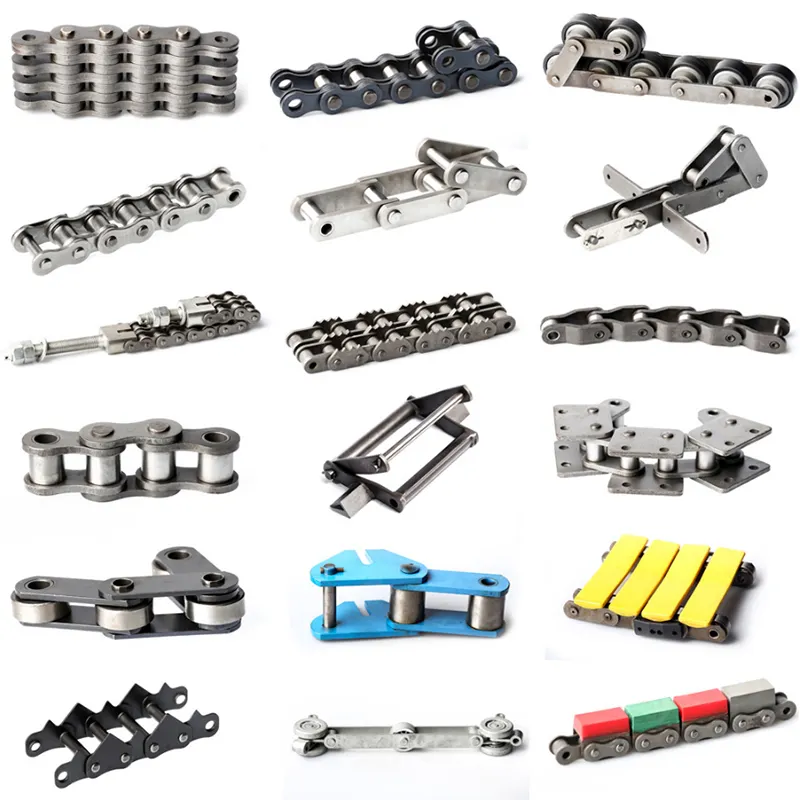
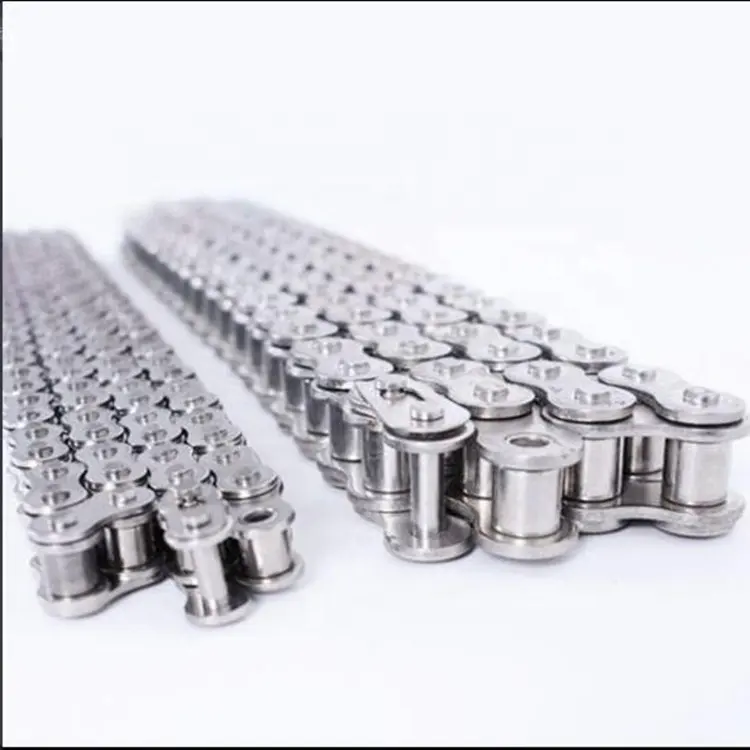
Steek P=100, 125, 150, 152,4, 160, 200 mm met aangehechte plaattransportketting volgens tekening
Er zijn verschillende soorten rollen beschikbaar: kleine rol (S-type), grote rol (P-type), rol met bolle rand (F-type).
De roldiameters zijn 36, 42, 50, 60, 70, 85, 100, 120 mm, enzovoort.
Er zijn verschillende soorten kettingplaten verkrijgbaar: enkelzijdige horizontale CZPT-plaat, enkelzijdige gebogen plaat met oren en dubbele gaten type A2, dubbelzijdige gebogen plaat type K2. De dikte van de kettingplaat is 4, 5, 6, 7, 8, 10, 12 mm. De breedte van de kettingplaat is 25, 30, 35, 40, 50, 60, 70 mm, enz.
De diameters van de pinnen zijn 10, 12, 15, 18, 21, 25 mm, enzovoort.
De M-serie metrische transportkettingen is verkrijgbaar in de volgende modellen: M56, M80, M112, M160, M224, M315.
M315, de afmetingen zijn conform de norm GB8350-87.
En kan gecombineerd worden met tandwielen.
Productkenmerk
| Productnaam | Transportbandkettingen |
| Beschikbare materialen | koolstofstaal, gelegeerd staal, roestvrij staal |
| OEM-aanpassing volgens uw wensen. | |
| Oppervlaktebehandeling | Straalbewerking, verzinken, vernikkelen, anodiseren, enz. |
| Prestatie | Hittebestendig, slijtvast |
| Referentiestandaarden | ISO, DIN, ANSL |
| Tekeningen op maat | JA |
| Certificaten | ISO9001:2008 SGS-merk TV |
| Levertijd | 20 dagen voor samples. 45 dagen voor officiële bestellingen. |
| Verpakking | Plastic zak + kartonnen doos + houten |
Productparameters
Onze voordelen
Bedrijfsvoordelen:
Beschikt over een eigen import- en exportvergunning. Het tv-merk is succesvol geregistreerd in vele landen. Het verkoopnetwerk strekt zich uit over heel China en de producten worden geëxporteerd naar 65 landen op 5 continenten.
Lidmaatschap:
1. Lid van de Chinese branchevereniging voor algemene machineonderdelen.
2. Lid van de Chinese Vereniging voor Kettingaandrijving.
3. Lid van de Chinese Vereniging voor Kettingstandaardisatie.
4. Het bedrijf is lid van de Chinese Vereniging van Fabrikanten van Landbouwmachines.
Met onze uitstekend opgeleide medewerkers, geavanceerde en efficiënte apparatuur, een compleet verkoopnetwerk en strenge kwaliteitsborgingssystemen kunt u erop vertrouwen dat onze hoogwaardige, gekwalificeerde keten aan alle klantspecificaties en de strengste kwaliteitsnormen kan voldoen.
Neem gerust contact met ons op voor meer informatie over hoe TransVision-producten aan de eisen van uw branche kunnen voldoen tegen zeer concurrerende prijzen.
Kwaliteit staat voorop, de klant is het belangrijkst.
Productcategorieën
WAAROM VOOR ONS KIEZEN?
Uitgebreid productportfolio Wij produceren en leveren een breed scala aan aandrijfsystemen.
producten zoals aandrijfkettingen, bladkettingen, transportkettingen, landbouwkettingen, tandwielen en
koppelingen. Deze alles-in-één winkelervaring zal uw zoekkosten aanzienlijk verlagen, terwijl
Wij garanderen dat u met één klik vindt wat u zoekt.
Value Choice Products. Onze producten bieden de beste combinatie van kwaliteit en prijs, en u krijgt waar voor uw geld.
wat je binnen je budget wilt hebben
Ervaren verkoopmedewerkers en ingenieurs. We hebben 15 ervaren verkoopmedewerkers en 5 ingenieurs in dienst.
Ons team staat altijd voor u klaar wanneer u hulp nodig heeft. Ze zijn goed opgeleid en hebben ervaring in de branche.
We zijn direct op de hoogte en reageren altijd binnen 24 uur op uw vragen.
100% Klantbehoudpercentage Onze vaste klanten uit het buitenland komen niet alleen terug voor onze
Producten van topkwaliteit, maar vooral vanwege de uitstekende service die we door de jaren heen hebben geleverd.
Veelgestelde vragen
Vraag 1: Wat is uw gemiddelde levertijd?
A: Dat varieert. Onze normale levertijd bedraagt 1-2 maanden. We bieden ook expresverzendingen aan voor spoedbestellingen. Neem voor meer informatie contact op met onze verkoopmedewerker.
Vraag 2: Is uw prijs beter dan die van uw concurrenten bij dezelfde kwaliteit?
A: Absoluut JA. Wij bieden de meest concurrerende prijs in de aandrijftechniek. Mocht er een prijsverschil zijn, dan passen we onze prijs graag aan.
Vraag 3: Kunt u kettingen maken volgens mijn CAD-tekeningen?
A: Ja. Naast de reguliere standaardkettingen produceren we ook niet-standaard en op maat gemaakte producten om aan specifieke technische eisen te voldoen. Sterker nog, een aanzienlijk deel van onze productiecapaciteit is bestemd voor de productie van niet-standaard producten.
Vraag 4: Kunnen we de goederen vóór verzending inspecteren?
A: Ja. U, uw vertegenwoordiger of een aangewezen derde partij heeft toegang tot onze faciliteit en mag de inspectie uitvoeren.
Vraag 5: Welke betaalmethoden zijn acceptabel voor uw fabriek?
A: We zijn flexibel. We accepteren bankoverschrijvingen, kredietbrieven of andere online betaalmethoden, zolang die voor u geschikt zijn.
Vraag 6: Wat als ik nog andere vragen heb?
A: Bij twijfel kunt u altijd contact opnemen met onze verkoopmedewerker – zij helpen u graag verder.
|
Verzendkosten:
Geschatte vrachtkosten per eenheid. |
Nader te bepalen |
|---|
| Materiaal: | Legering |
|---|---|
| Structuur: | Holle ketting |
| Oppervlaktebehandeling: | Galvaniseren |
| Aanpassing: |
Beschikbaar
| Aanvraag op maat |
|---|
Welke invloed heeft de lengte van een transmissieketting op de prestaties ervan?
De lengte van een transmissieketting speelt een belangrijke rol in de algehele prestaties en functionaliteit ervan. Hier volgt een gedetailleerde uitleg:
1. Juiste pasvorm en werking: De lengte van een transmissieketting moet zorgvuldig worden gekozen om ervoor te zorgen dat deze correct past en functioneert binnen het betreffende systeem. Als de ketting te kort is, kan deze de tandwielen of poelies mogelijk niet goed bereiken, wat leidt tot een ineffectieve krachtoverbrenging en mogelijke slip van de ketting. Aan de andere kant, als de ketting te lang is, kan deze doorhangen, overmatige spanning veroorzaken of interfereren met andere onderdelen, met als gevolg een inefficiënte werking of voortijdige slijtage.
2. Spanning- en spelingregeling: De lengte van een transmissieketting beïnvloedt de spanning- en spelingregeling binnen het systeem. Een correct gespannen ketting zorgt voor optimale krachtoverbrenging, vermindert speling en minimaliseert het risico op ontsporing. De kettinglengte moet worden aangepast om de juiste spanning gedurende de gehele bedrijfscyclus te handhaven, rekening houdend met factoren zoals belastingvariaties, temperatuurschommelingen en systeemdynamiek.
3. Flexibiliteit en buigingseisen: De lengte van een transmissieketting beïnvloedt de flexibiliteit en buigingseigenschappen. Langere kettingen zijn doorgaans flexibeler, waardoor ze complexere trajecten kunnen volgen of grotere afstanden tussen tandwielen of poelies kunnen overbruggen. Een te lange ketting kan echter leiden tot overmatige buiging, met als gevolg verhoogde wrijving, slijtage en mogelijk vroegtijdige defecten.
4. Wisselwerking tussen tandwielen: De lengte van de transmissieketting beïnvloedt de wisselwerking met de tandwielen of poelies. Het aantal schakels bepaalt de aangrijping tussen de ketting en de tanden van de tandwielen. De juiste lengte zorgt voor een soepele aangrijping, minimale slijtage van de tanden en een efficiënte krachtoverdracht. Een onjuiste kettinglengte kan leiden tot verkeerde uitlijning, meer lawaai en versnelde slijtage van de tandwielen of de ketting.
5. Systeemefficiëntie en -prestaties: De lengte van een transmissieketting heeft een directe invloed op de algehele efficiëntie en prestaties van het systeem. Een ketting met de juiste afmetingen zorgt voor optimale krachtoverbrenging, minimale energieverliezen en een betrouwbare werking. Door de juiste kettinglengte te kiezen, kunnen systeemontwerpers de efficiëntie maximaliseren, slijtage minimaliseren en de levensduur van zowel de ketting als de bijbehorende componenten optimaliseren.
Bij het kiezen van de juiste lengte voor een transmissieketting is het cruciaal om rekening te houden met de specifieke eisen van de toepassing, zoals de afstand tussen de tandwielen of poelies, de gewenste spanning en de verwachte belasting. Overleg met kettingfabrikanten of experts uit de branche kan waardevolle begeleiding bieden bij het bepalen van de juiste kettinglengte voor optimale prestaties en een lange levensduur.
Welke invloed heeft de keuze van het smeermiddel op de prestaties van een transmissieketting?
De keuze van het smeermiddel speelt een cruciale rol bij het garanderen van optimale prestaties en een lange levensduur van een transmissieketting. Hier volgt een gedetailleerd antwoord op de vraag:
1. Verminderde wrijving en slijtage: Smeermiddelen vormen een beschermende film tussen de bewegende delen van de transmissieketting, waardoor wrijving en slijtage worden verminderd. Dit minimaliseert metaal-op-metaalcontact en voorkomt oppervlakteschade, wat de levensduur van de ketting verlengt.
2. Verbeterde efficiëntie: Goede smering vermindert energieverliezen door wrijving, waardoor de algehele efficiëntie van het transmissiesysteem verbetert. Door de wrijvingsweerstand te verminderen, zorgt het smeermiddel voor een soepelere krachtoverbrenging, waardoor het energieverbruik daalt en de systeemefficiëntie toeneemt.
3. Warmteafvoer: Smeermiddelen helpen bij de warmteafvoer door de warmte die tijdens de werking van de ketting ontstaat te absorberen en af te voeren. Dit helpt overmatige temperatuurstijging van de ketting te voorkomen, wat kan leiden tot versnelde slijtage, afbraak van het smeermiddel en mogelijk kettingbreuk.
4. Corrosiebescherming: Smeermiddelen vormen een beschermende barrière tegen vocht, condens en andere corrosieve elementen. Dit helpt roest en corrosie te voorkomen, wat de ketting kan verzwakken en de prestaties kan verminderen. Het kiezen van een smeermiddel met anticorrosieve eigenschappen is essentieel, vooral in ruwe of corrosieve omgevingen.
5. Verwijdering van verontreinigingen: Smeermiddelen kunnen helpen bij het verwijderen van verontreinigingen zoals vuil, stof en ander afval van de contactoppervlakken van de ketting. Dit voorkomt dat schurende deeltjes voortijdige slijtage en schade aan de ketting veroorzaken, waardoor een soepele werking wordt gegarandeerd en het risico op kettingbreuk wordt verminderd.
6. Temperatuurstabiliteit: Verschillende smeermiddelen hebben uiteenlopende temperatuurstabiliteitseigenschappen. Het is cruciaal om een smeermiddel te kiezen dat zijn viscositeit en smerende eigenschappen behoudt binnen het bedrijfstemperatuurbereik van de transmissieketting. Dit garandeert consistente smering en prestaties onder diverse temperatuursomstandigheden.
7. Compatibiliteit: Het is belangrijk een smeermiddel te kiezen dat compatibel is met de materialen die in de transmissieketting worden gebruikt. Sommige smeermiddelen kunnen reageren met bepaalde kettingmaterialen, wat kan leiden tot slijtage of beschadiging. Door compatibiliteit te garanderen, blijft de ketting intact en worden nadelige effecten voorkomen.
8. Smeerinterval: De keuze van het smeermiddel kan ook van invloed zijn op het smeerinterval, oftewel de frequentie waarmee de ketting opnieuw gesmeerd moet worden. Sommige smeermiddelen bieden langdurigere smerende eigenschappen, waardoor de onderhoudsvereisten en de stilstandtijd als gevolg van frequente smering worden verminderd.
Het is cruciaal om de aanbevelingen en richtlijnen van de fabrikant met betrekking tot de smering van de specifieke transmissieketting op te volgen. Regelmatige inspectie, controle en correct onderhoud zijn noodzakelijk om ervoor te zorgen dat de ketting voldoende gesmeerd blijft voor optimale prestaties en een lange levensduur.
Welke invloed heeft de steekgrootte van een transmissieketting op de prestaties?
De steekgrootte van een transmissieketting speelt een cruciale rol bij het bepalen van de prestaties en de geschiktheid voor specifieke toepassingen. De steekgrootte verwijst naar de afstand tussen aangrenzende schakels van de ketting, meestal gemeten van het midden van de ene pen tot het midden van de volgende pen.
De steekgrootte van een transmissieketting beïnvloedt de prestaties ervan op de volgende manieren:
- Draagvermogen: Kettingen met een grotere steekmaat hebben over het algemeen een hoger draagvermogen. Een grotere steekmaat maakt grotere componenten mogelijk, zoals pinnen en rollen, die hogere krachten kunnen weerstaan en meer vermogen kunnen overbrengen.
- Snelheidscapaciteit: De steekgrootte heeft ook invloed op de snelheidscapaciteit van de ketting. Kettingen met een kleinere steekgrootte zijn doorgaans ontworpen voor hogere snelheden, omdat ze een soepelere aangrijping op de tandwielen bieden en een lagere inertie hebben.
- Slijtage- en vermoeidheidsweerstand: Kleinere steekmaten verdelen de belasting over meer contactpunten, waardoor de spanning op individuele componenten afneemt. Dit kan de slijtvastheid verbeteren en de levensduur van de ketting verlengen.
- Compactheid en ruimtebeperkingen: Bij toepassingen waar de ruimte beperkt is, hebben kettingen met een kleinere steek de voorkeur, omdat deze een compacter ontwerp mogelijk maken.
Het is belangrijk om te weten dat de keuze van de juiste steekgrootte afhangt van de specifieke toepassingseisen, waaronder de verwachte belasting, snelheid en beschikbare ruimte. Er zijn verschillende steekgroottes beschikbaar voor een breed scala aan toepassingen, van lichte tot zware machines.


Bewerkt door CX 2023-07-31