Productbeschrijving
Precisie rollenkettingen met korte steek
A. Onze diensten:
1. Al uw vragen over kettingen worden binnen 24 uur beantwoord.
2. Goed opgeleide en ervaren verkoopmedewerkers beantwoorden al uw vragen in vloeiend Engels.
3. Wij bieden OEM-services aan; onze professionele ontwerper zet uw persoonlijke idee om in werkelijkheid.
4. Bescherming van uw verkoopgebied, ontwerpideeën en al uw persoonlijke gegevens.
5. Levering van uw bestellingen per luchtpost of schip.
6. Dankzij jarenlange ervaring in productie en promotie op de wereldmarkt, garanderen wij u winst en groot succes!
B. Productbeschrijving:
| Stijl: | Enkelvoudige rollenkettingen, dubbele rollenkettingen, drievoudige rollenkettingen, meervoudige rollenkettingen |
| Kettingnr.: (ANSI/ISO) | 03C, 04C, 06C, 08A, 10A, 12A-~ 48A |
| Kettingnr.: (ANSI) | 15, 25,35,41,40,50 ~ 240 |
| Toonhoogte: | 4,7625 mm ~ 76,200 mm |
C. Bedrijfspresentatie & Productproces
D. Verpakking en certificaat
| Verpakkingsdetails: | Ketting + plastic zak + neutrale doos + houten kist + grote kartonnen doos + stalen pallets |
| Leveringsdetails: | vijf weken |
E. Veelgestelde vragen:
1. Bent u een fabrikant of een handelsonderneming?
Wij zijn een fabriek, opgericht in 1991, met een handelsteam voor internationale service.
2. Welke betalingsvoorwaarden hanteert u gewoonlijk?
T/T 30% aanbetaling en 70% tegen document, Western Union, L/C op zicht
3. Wat is uw levertijd voor uw goederen?
Normaal gesproken is de levertijd 45 dagen na bevestiging van de bestelling. In het laagseizoen (mei tot en met juli) kan de levertijd voor sommige artikelen 30 dagen bedragen, en tijdens de jaarwisseling en het hoogseizoen (januari tot en met maart) 65 dagen.
4. Bezoek je wel eens een voorstelling?
We bezoeken de Hannover Messe in Duitsland, NMW in Australië, de Canton Fair, PTC in China en vele andere gespecialiseerde meubelbeurzen.
5. Beschikken jullie over een instant chatfunctie?
/* 22 januari 2571 19:08:37 */!function(){function s(e,r){var a,o={};try{e&&e.split(“,”).forEach(function(e,t){e&&(a=e.match(/(.*?):(.*)$/))&&1
| Gebruik: | Transportketting |
|---|---|
| Materiaal: | Gelegeerd/koolstofstaal |
| Oppervlaktebehandeling: | Galvaniseren |
| Functie: | Hittebestendig |
| Kettingmaat: | 1/2"*11/128" |
| Structuur: | Rollenketting |
| Aanpassing: |
Beschikbaar
| Aanvraag op maat |
|---|
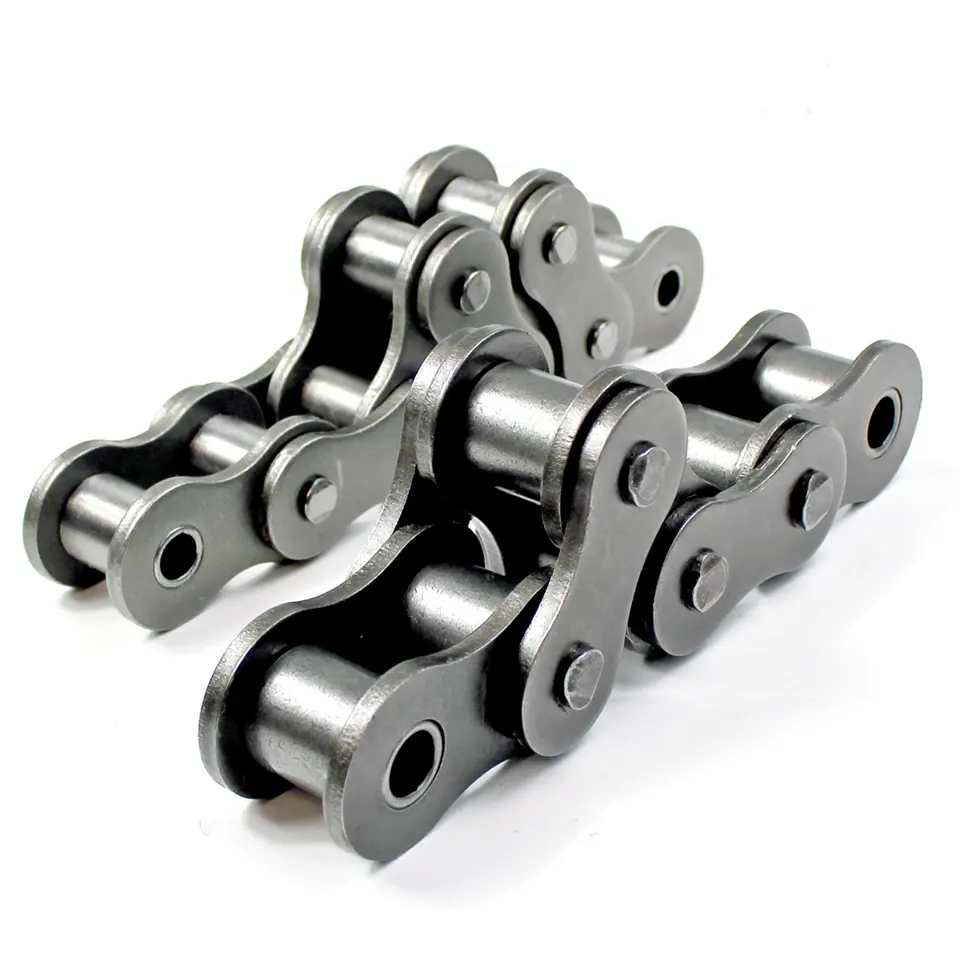
Welke invloed heeft het gewicht van een transmissieketting op de installatie en werking ervan?
Het gewicht van een transmissieketting speelt een belangrijke rol bij de installatie en werking ervan. Hier volgt een gedetailleerd antwoord op de vraag:
1. Installatieproces: Het gewicht van een transmissieketting kan van invloed zijn op het gemak en de complexiteit van het installatieproces. Zwaardere kettingen vereisen mogelijk extra mankracht of apparatuur om ze nauwkeurig te tillen en te positioneren. Installateurs moeten rekening houden met het gewicht van de ketting tijdens het hanteren en ervoor zorgen dat de juiste veiligheidsmaatregelen zijn getroffen om letsel of ongelukken te voorkomen.
2. Systeemontwerp: Het gewicht van de ketting is een cruciale factor in het algehele ontwerp van het transmissiesysteem. Het beïnvloedt de keuze van andere componenten zoals tandwielen, lagers en assen. Het systeem moet zodanig ontworpen zijn dat het het gewicht van de ketting kan dragen en de krachtoverbrenging effectief kan uitvoeren zonder overmatige belasting of slijtage.
3. Rendement van de krachtoverbrenging: Het gewicht van de ketting beïnvloedt de totale massa van het systeem. Een te hoog gewicht kan de inertie verhogen en leiden tot een hogere energiebehoefte voor acceleratie en deceleratie. Dit kan het rendement van de krachtoverbrenging beïnvloeden en resulteren in een hoger energieverbruik. Het is belangrijk om een balans te vinden tussen het gewicht van de ketting en de prestaties van het systeem om de energie-efficiëntie te optimaliseren.
4. Draagvermogen: Het gewicht van de ketting is direct gerelateerd aan het draagvermogen. Zwaardere kettingen zijn doorgaans ontworpen om hogere belastingen aan te kunnen en meer vermogen over te brengen. Het is essentieel om een ketting te kiezen met een passend gewicht en draagvermogen dat aansluit bij de eisen van de toepassing om een veilige en betrouwbare werking te garanderen.
5. Slijtage en vermoeidheid: Het gewicht van de ketting kan na verloop van tijd bijdragen aan slijtage en vermoeidheid. Overmatig gewicht of overbelasting kan het slijtageproces versnellen, wat kan leiden tot voortijdige breuk van de ketting. Goed onderhoud, smering en regelmatige inspectie zijn noodzakelijk om de effecten van slijtage te beperken en de levensduur van de ketting te garanderen.
6. Geluid en trillingen: Het gewicht van de ketting kan het geluids- en trillingsniveau tijdens gebruik beïnvloeden. Zwaardere kettingen kunnen meer geluid en trillingen veroorzaken, vooral bij hogere snelheden. Een juiste spanning, uitlijning en smering helpen deze effecten te minimaliseren en een soepele en stille werking te garanderen.
Bij het bepalen van het gewicht van een aandrijfketting is het essentieel om factoren zoals installatievereisten, systeemontwerp, efficiëntie van de krachtoverbrenging, draagvermogen, slijtage en vermoeiing, en geluids- en trillingsniveaus tegen elkaar af te wegen. Het kiezen van het juiste kettinggewicht voor de specifieke toepassing garandeert optimale prestaties, een lange levensduur en algehele systeem betrouwbaarheid.
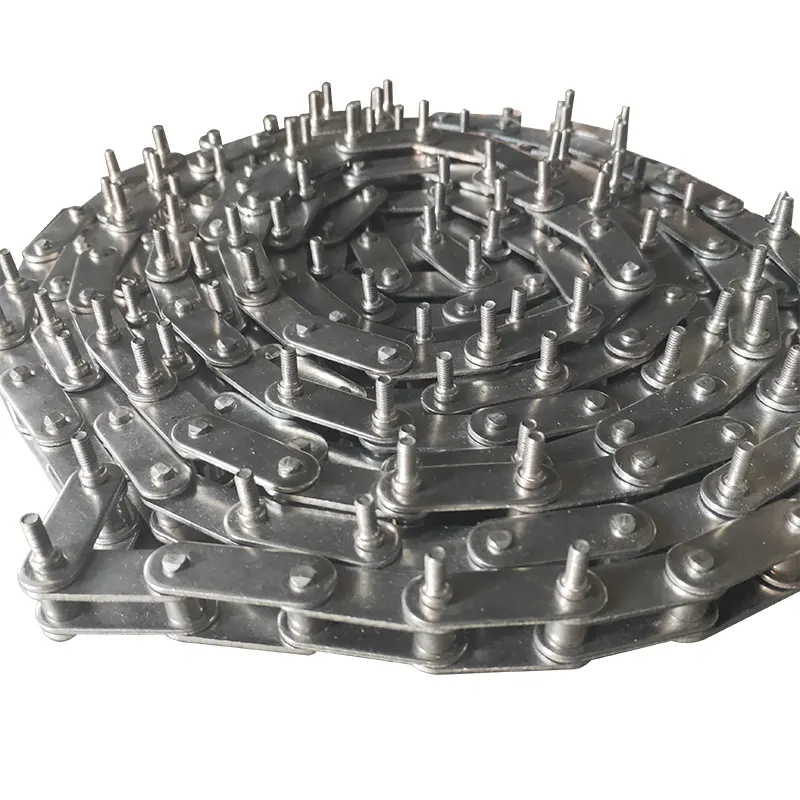
Welke invloed heeft de materiaalkeuze op de prestaties van een transmissieketting?
De materiaalkeuze voor een transmissieketting speelt een cruciale rol in de algehele prestaties en duurzaamheid ervan. Hier volgt een gedetailleerd antwoord op de vraag:
1. Sterkte en draagvermogen: Verschillende materialen hebben uiteenlopende sterkte- en draagvermogens. Hoogwaardige materialen zoals gelegeerd staal of roestvrij staal bieden superieure sterkte en kunnen zware belastingen weerstaan. De keuze voor een materiaal met voldoende sterkte zorgt ervoor dat de transmissieketting de vereiste belasting aankan zonder voortijdige slijtage of defecten.
2. Slijtvastheid: Het materiaal waarvan een transmissieketting is gemaakt, heeft invloed op de slijtvastheid. Sommige materialen, zoals gehard staal of bepaalde legeringen, hebben uitstekende slijtvastheidseigenschappen, waardoor de ketting bestand is tegen schurende omstandigheden en een langere levensduur heeft. Door te kiezen voor een materiaal met een goede slijtvastheid, hoeft de ketting minder vaak te worden vervangen en onderhouden.
3. Corrosiebestendigheid: In omgevingen waar corrosie een probleem vormt, zoals buitenomgevingen of corrosieve industriële omgevingen, is het essentieel om een materiaal met een hoge corrosiebestendigheid te kiezen. Roestvrij staal of speciaal gecoate kettingen bieden een uitstekende weerstand tegen roest en corrosie, waardoor betrouwbare prestaties en een lange levensduur gegarandeerd zijn, zelfs onder zware omstandigheden.
4. Vermoeiingssterkte: De vermoeiingssterkte van het materiaal is cruciaal in toepassingen waarbij de transmissieketting herhaaldelijk cyclisch wordt belast. Vermoeiingsbreuk kan optreden wanneer een ketting continu aan spanningscycli wordt blootgesteld, wat leidt tot scheuren en uiteindelijk tot breuk. Materialen met een hoge vermoeiingssterkte, zoals specifieke legeringen of warmtebehandeld staal, zijn ideaal voor toepassingen die een uitstekende vermoeiingsweerstand vereisen.
5. Temperatuurbestendigheid: De bedrijfstemperatuur van een toepassing kan van invloed zijn op de materiaalkeuze voor een transmissieketting. Sommige materialen, zoals warmtebehandeld staal of speciale legeringen, zijn bestand tegen hoge temperaturen zonder hun mechanische eigenschappen te verliezen. Bepaalde kunststoffen of polymeren zijn daarentegen geschikt voor toepassingen bij lage temperaturen. Door een materiaal te kiezen dat bestand is tegen het verwachte temperatuurbereik, worden optimale prestaties gegarandeerd en wordt voortijdige kettingbreuk voorkomen.
6. Kostenoverwegingen: Bij de materiaalkeuze spelen ook kostenoverwegingen een rol. Sommige hoogwaardige materialen, zoals roestvrij staal of speciale legeringen, kunnen in eerste instantie duurder zijn dan standaard kettingen van koolstofstaal. De verbeterde prestaties, langere levensduur en lagere onderhoudskosten die deze materialen bieden, kunnen echter op de lange termijn tot kostenbesparingen leiden.
Bij de materiaalkeuze voor een transmissieketting is het belangrijk om de specifieke eisen van de toepassing zorgvuldig te beoordelen, waaronder het draagvermogen, de omgevingsomstandigheden en de bedrijfsomstandigheden. Overleg met experts uit de branche of fabrikanten kan helpen bij het bepalen van het meest geschikte materiaal voor optimale prestaties en een lange levensduur van de ketting.
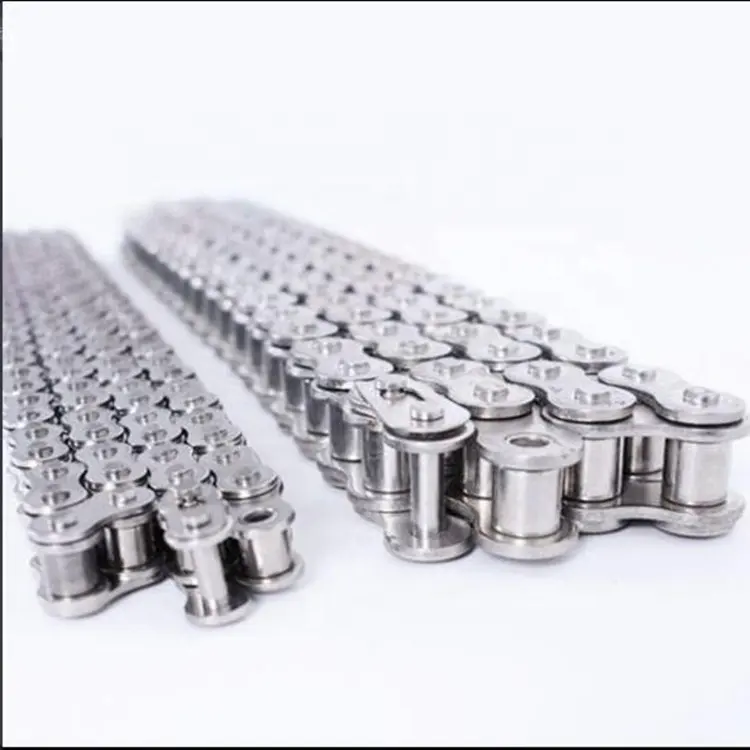
Welke invloed heeft de steekgrootte van een transmissieketting op de prestaties?
De steekgrootte van een transmissieketting speelt een cruciale rol bij het bepalen van de prestaties en de geschiktheid voor specifieke toepassingen. De steekgrootte verwijst naar de afstand tussen aangrenzende schakels van de ketting, meestal gemeten van het midden van de ene pen tot het midden van de volgende pen.
De steekgrootte van een transmissieketting beïnvloedt de prestaties ervan op de volgende manieren:
- Draagvermogen: Kettingen met een grotere steekmaat hebben over het algemeen een hoger draagvermogen. Een grotere steekmaat maakt grotere componenten mogelijk, zoals pinnen en rollen, die hogere krachten kunnen weerstaan en meer vermogen kunnen overbrengen.
- Snelheidscapaciteit: De steekgrootte heeft ook invloed op de snelheidscapaciteit van de ketting. Kettingen met een kleinere steekgrootte zijn doorgaans ontworpen voor hogere snelheden, omdat ze een soepelere aangrijping op de tandwielen bieden en een lagere inertie hebben.
- Slijtage- en vermoeidheidsweerstand: Kleinere steekmaten verdelen de belasting over meer contactpunten, waardoor de spanning op individuele componenten afneemt. Dit kan de slijtvastheid verbeteren en de levensduur van de ketting verlengen.
- Compactheid en ruimtebeperkingen: Bij toepassingen waar de ruimte beperkt is, hebben kettingen met een kleinere steek de voorkeur, omdat deze een compacter ontwerp mogelijk maken.
Het is belangrijk om te weten dat de keuze van de juiste steekgrootte afhangt van de specifieke toepassingseisen, waaronder de verwachte belasting, snelheid en beschikbare ruimte. Er zijn verschillende steekgroottes beschikbaar voor een breed scala aan toepassingen, van lichte tot zware machines.


Bewerkt door CX 2024-04-12