Productbeschrijving
Productencollectie
Productbeschrijving
Onze QLD-serie stille ketting is een krachtoverbrengingsketting. Ontworpen voor toepassingen met hoge snelheid en hoog koppel.Het staat bekend om zijn stille werking, lange levensduur en hoge efficiëntie.
De ketting heeft een zeer sterke constructie waardoor hij zware lasten en hoge snelheden aankan zonder uit te rekken of te breken.
Wanneer u een specifiek ontwerp nodig heeft, kunnen wij maatwerkoplossingen leveren die aansluiten op uw wensen. Of u nu specifieke kenmerken, plannen, materialen of specificaties nodig heeft, ons team kan ervoor zorgen dat u een ketting krijgt die volledig aan uw wensen voldoet.
Zoekt u andere ketens?
Laat hieronder je bericht achter, en Neem gerust contact met ons op.!
Veelgestelde vragen
| Vraag 1: Bent u een fabrikant of een handelsonderneming? |
| Antwoord: Wij zijn een fabrikant van 100%-kettingen met 23 jaar ervaring. |
| Vraag 2: Welke informatie moet ik verstrekken om een offerte te ontvangen? |
| Antwoord: 1. Type ketting (met foto's indien beschikbaar) 2. Steek van de ketting 3. Breedte van de ketting 4. Lengte en hoeveelheid van de ketting 5. Overige specifieke vereisten |
| Vraag 3: Hoe lang is jullie productie- en levertijd? |
| Antwoord: De producten zijn doorgaans binnen 2 weken klaar, afhankelijk van het type en de hoeveelheid. Neem contact met ons op om de levertijd naar uw bestemming te controleren. |
| Vraag 4: Hoe lang is uw gegarandeerde tijd? |
| Antwoord: Wij bieden drie jaar garantie als u kettingen en bijpassende tandwielen samen aanschaft. Als u alleen kettingen nodig heeft, kan er ook een garantie van één jaar worden afgesloten. |
| Vraag 5: Handelsvoorwaarden en betalingsvoorwaarden? |
| Antwoord: Wij accepteren EXW, FOB, DDU en deur-tot-deur levering. Betalingsmethoden zoals T/T, L/C en Western Union zijn mogelijk. We bieden ook online handelsdiensten aan via dit B2B-platform. |
Bedrijfsprofiel
| Standaard of niet-standaard: | Standaard |
|---|---|
| Sollicitatie: | Textielmachines, kledingmachines, transportbanden, verpakkingsmachines, voedselverwerkingsmachines, scheepvaartmachines, mijnbouwmachines, landbouwmachines |
| Structuur: | Tandketting |
| Voorbeelden: |
US$ 100/Meter
1 meter (minimale bestelling) | Bestel een proefmonster |
|---|
| Aanpassing: |
Beschikbaar
| Aanvraag op maat |
|---|
.shipping-cost-tm .tm-status-off{background: none;padding:0;color: #1470cc}
|
Verzendkosten:
Geschatte vrachtkosten per eenheid. |
Informatie over verzendkosten en geschatte levertijd. |
|---|
| Betaalmethode: |
|
|---|---|
|
Aanbetaling Volledige betaling |
| Munteenheid: | US$ |
|---|
| Retourneren en terugbetalingen: | Je kunt tot 30 dagen na ontvangst van de producten een terugbetaling aanvragen. |
|---|

Kunnen transmissiekettingen worden gebruikt in omgevingen met hoge temperaturen?
Ja, transmissiekettingen kunnen in omgevingen met hoge temperaturen worden gebruikt, maar er zijn wel een aantal aandachtspunten. Hier volgt een gedetailleerde uitleg:
1. Materiaalkeuze: Bij gebruik in omgevingen met hoge temperaturen is het cruciaal om transmissiekettingen te kiezen die gemaakt zijn van hittebestendige materialen. Veelgebruikte materialen voor toepassingen bij hoge temperaturen zijn onder andere warmtebehandelde gelegeerde staalsoorten, roestvrij staal en speciale hittebestendige legeringen. Deze materialen bieden een verbeterde weerstand tegen thermische uitzetting, oxidatie en vervorming bij hoge temperaturen.
2. Smering: Een goede smering is essentieel voor de prestaties en levensduur van transmissiekettingen in omgevingen met hoge temperaturen. Er moeten smeermiddelen voor hoge temperaturen met een superieure thermische stabiliteit worden gebruikt om adequate smering te garanderen en de wrijvingswarmteontwikkeling te minimaliseren. Deze smeermiddelen zijn specifiek samengesteld om de verhoogde temperaturen te weerstaan en effectieve smering te bieden, waardoor slijtage wordt verminderd en de levensduur van de ketting wordt verlengd.
3. Kettingontwerp: Het ontwerp van transmissiekettingen voor omgevingen met hoge temperaturen kan eigenschappen bevatten die de hittebestendigheid verbeteren. Deze eigenschappen kunnen bestaan uit hittebestendige coatings, speciale warmtebehandelingsprocessen en verbeterde warmteafvoer. Daarnaast moet zorgvuldig rekening worden gehouden met het draagvermogen, de vermoeiingsweerstand en de dimensionale stabiliteit van de ketting om een betrouwbare werking onder thermische belasting te garanderen.
4. Temperatuurlimieten: Het is belangrijk om op de hoogte te zijn van de temperatuurlimieten die de fabrikant voor een bepaalde transmissieketting heeft opgegeven. Verschillende kettingen hebben verschillende temperatuurbereiken waarbinnen ze veilig kunnen functioneren. Overschrijding van de aanbevolen temperatuurlimieten kan leiden tot kettingbreuk, verminderde sterkte, versnelde slijtage en mogelijke schade aan omliggende onderdelen.
5. Regelmatige inspectie en onderhoud: Regelmatige inspectie en onderhoud zijn cruciaal voor het bewaken van de conditie van transmissiekettingen in omgevingen met hoge temperaturen. Periodieke inspecties kunnen helpen bij het opsporen van slijtage, rek of schade veroorzaakt door thermische spanning. Het tijdig vervangen van versleten of beschadigde kettingen, evenals het correct smeren en afstellen van de spanning, dragen bij aan een betrouwbare werking op de lange termijn.
Het is belangrijk om kettingfabrikanten of experts uit de branche te raadplegen om de juiste transmissieketting te selecteren en de compatibiliteit ervan met de specifieke toepassing bij hoge temperaturen te garanderen. Het volgen van de richtlijnen van de fabrikant, een correcte installatie en regelmatig onderhoud dragen bij aan een veilig en efficiënt gebruik van transmissiekettingen in omgevingen met hoge temperaturen.
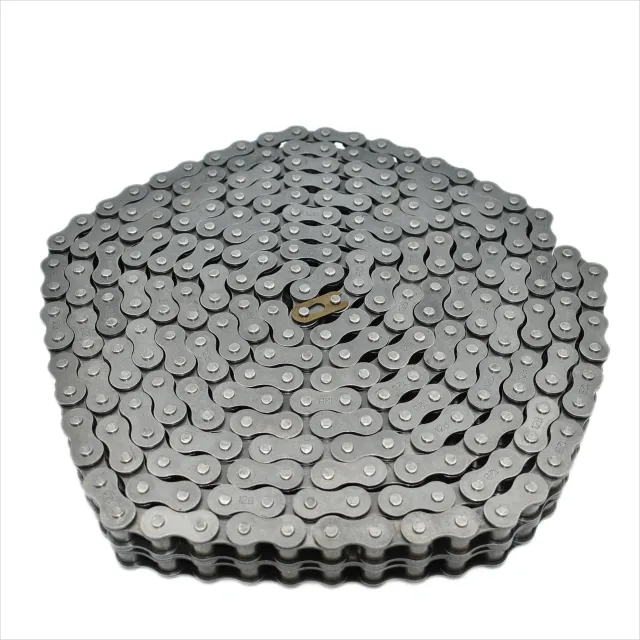
Kunnen transmissiekettingen worden gebruikt in landbouwmachines?
Ja, aandrijfkettingen worden veelvuldig gebruikt in diverse soorten landbouwmachines. Hier volgt een uitgebreid antwoord op de vraag:
Landbouwmachines hebben vaak een betrouwbare en efficiënte krachtoverbrenging nodig om taken zoals oogsten, zaaien, ploegen en transporteren uit te voeren. Transmissiekettingen bieden verschillende voordelen waardoor ze geschikt zijn voor agrarische toepassingen:
1. Hoge sterkte en draagvermogen: Landbouwmachines werken vaak onder zware omstandigheden en moeten zware lasten verwerken. Transmissiekettingen zijn ontworpen met een hoge treksterkte en een groot draagvermogen, waardoor ze bestand zijn tegen de zware eisen van landbouwtaken.
2. Veelzijdigheid: Transmissiekettingen kunnen worden gebruikt in verschillende soorten landbouwmachines, waaronder tractoren, maaidorsers, balenpersen, oogstmachines en sproeiers. Ze zijn aanpasbaar aan een breed scala aan eisen voor krachtoverbrenging, waaronder het overbrengen van koppel, snelheid en beweging.
3. Duurzaamheid: Landbouwomgevingen kunnen zwaar zijn, met blootstelling aan vuil, puin, vocht en wisselende weersomstandigheden. Transmissiekettingen zijn ontworpen om dergelijke omstandigheden te weerstaan, en hun robuuste constructie en materialen garanderen langdurige prestaties in landbouwmachines.
4. Eenvoudig onderhoud: Landbouwactiviteiten brengen vaak lange werkdagen en afgelegen locaties met zich mee. Transmissiekettingen zijn relatief eenvoudig te inspecteren, smeren en onderhouden, waardoor efficiënte onderhoudsschema's in het veld mogelijk zijn.
5. Kosteneffectief: In vergelijking met andere opties voor krachtoverbrenging bieden transmissiekettingen een kosteneffectieve oplossing voor landbouwmachines. Ze zorgen voor een betrouwbare krachtoverbrenging, hebben een lange levensduur bij goed onderhoud en zijn verkrijgbaar tegen concurrerende prijzen.
Bij het gebruik van aandrijfkettingen in landbouwmachines is het essentieel om het juiste type en de juiste maat ketting te kiezen op basis van de specifieke eisen van de machine. Factoren zoals draagvermogen, snelheid, bedrijfsomgeving en onderhoudsoverwegingen moeten in acht worden genomen om optimale prestaties en een lange levensduur van de aandrijfketting te garanderen.
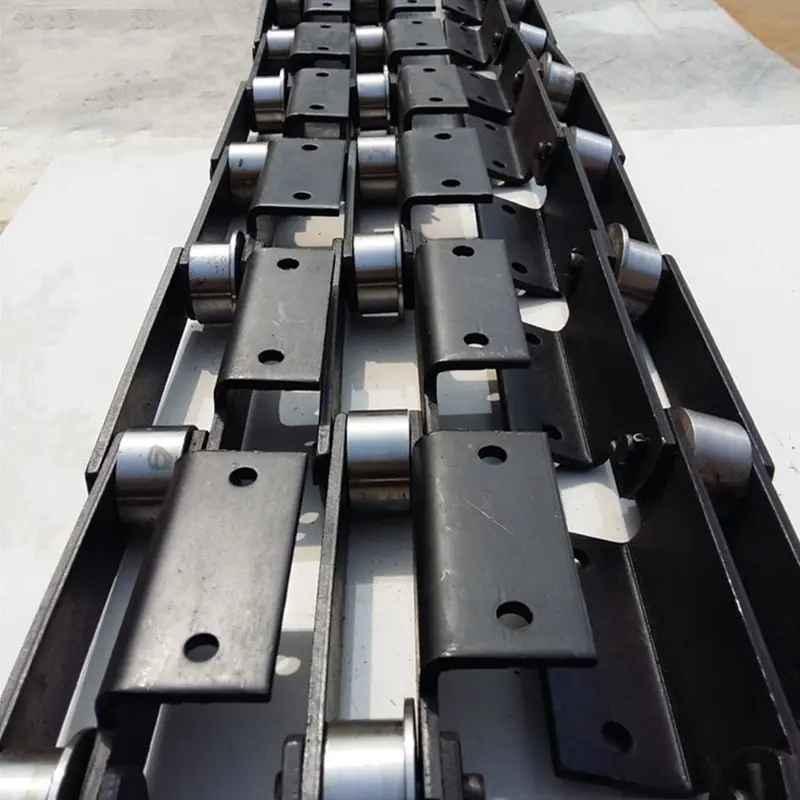
Zijn er specifieke smeervoorschriften voor transmissiekettingen?
Ja, transmissiekettingen vereisen doorgaans een goede smering om een soepele werking te garanderen, slijtage te verminderen en hun levensduur te verlengen. Hieronder vindt u enkele belangrijke punten met betrekking tot de smeervereisten voor transmissiekettingen:
- Schone en adequate smering: Het is belangrijk om de ketting voldoende te smeren om wrijving en slijtage tussen de kettingonderdelen te minimaliseren. Smering helpt warmteontwikkeling te verminderen en voorkomt metaal-op-metaalcontact, wat kan leiden tot voortijdige slijtage en breuk.
- De juiste smeermiddelkeuze: Het kiezen van het juiste smeermiddel is cruciaal voor optimale kettingprestaties. Factoren waarmee rekening moet worden gehouden bij de selectie van een smeermiddel zijn onder andere de toepassingstemperatuur, de belasting, de snelheid en omgevingsfactoren. Smeermiddelen moeten goede hechtende eigenschappen hebben, bestand zijn tegen oxidatie en voldoende filmsterkte bieden om de kettingoppervlakken te beschermen.
- Juiste smeerinterval: Regelmatig smeren met de juiste tussenpozen is noodzakelijk om de prestaties van de ketting te behouden en het risico op overmatige slijtage te verminderen. De smeerfrequentie hangt af van de bedrijfsomstandigheden en het specifieke smeermiddel dat wordt gebruikt. Fabrikanten geven doorgaans aanbevelingen voor smeerintervallen op basis van het type ketting en de toepassing.
- Effectieve smering: Een juiste toepassing van smeermiddel is essentieel voor een gelijkmatige dekking en penetratie in de kettingonderdelen. Het smeermiddel moet worden aangebracht op de binnenste schakelplaten, de roloppervlakken en de pen-busverbindingen. Overtollig smeermiddel moet worden verwijderd om ophoping en vervuiling te voorkomen.
- Omgevingsfactoren: In bepaalde omgevingen, zoals stoffige of vuile omstandigheden, kan het nodig zijn de ketting vaker te smeren om het binnendringen van verontreinigingen te voorkomen en een goede smeerfilm te behouden. Daarnaast kunnen bij toepassingen met hoge temperaturen of hoge snelheden speciale smeermiddelen voor hoge temperaturen of hoge snelheden nodig zijn.
- Regelmatige inspectie en onderhoud: Naast de juiste smering zijn regelmatige inspectie en onderhoud van de transmissieketting essentieel. Dit omvat het controleren op slijtage, degradatie van het smeermiddel en de juiste spanning. Beschadigde of versleten onderdelen moeten onmiddellijk worden vervangen om kettingbreuk te voorkomen.
Door de aanbevelingen van de fabrikant op te volgen en de specifieke smeervoorschriften voor de transmissieketting in acht te nemen, worden optimale prestaties gegarandeerd, slijtage verminderd en de levensduur van de ketting verlengd.


Bewerkt door CX 2023-10-17