製品説明
Aシリーズ 短ピッチ精密シンプレックスローラーチェーン&ブッシュチェーン
| ISO/ANSI/DIN チェーン番号 |
中国 チェーン番号 |
ピッチ P mm |
ローラー直径
d1max |
内側プレート間の幅 b1分 mm |
ピン径
d2max |
ピンの長さ | 内側プレートの深さ h2max mm |
板厚
最高気温 |
抗張力
Qmin |
平均引張強度 Q0 kN |
メートル当たりの重量 q kg/m |
|
| Lmax mm |
Lcmax mm |
|||||||||||
| 15 | *03C | 4.7625 | 2.48 | 2.38 | 1.62 | 6.10 | 6.90 | 4.30 | 0.60 | 1.80/409 | 2.0 | 0.08 |
*ブッシュチェーン:表中のd1はブッシュの外径を示します
ローラーチェーン
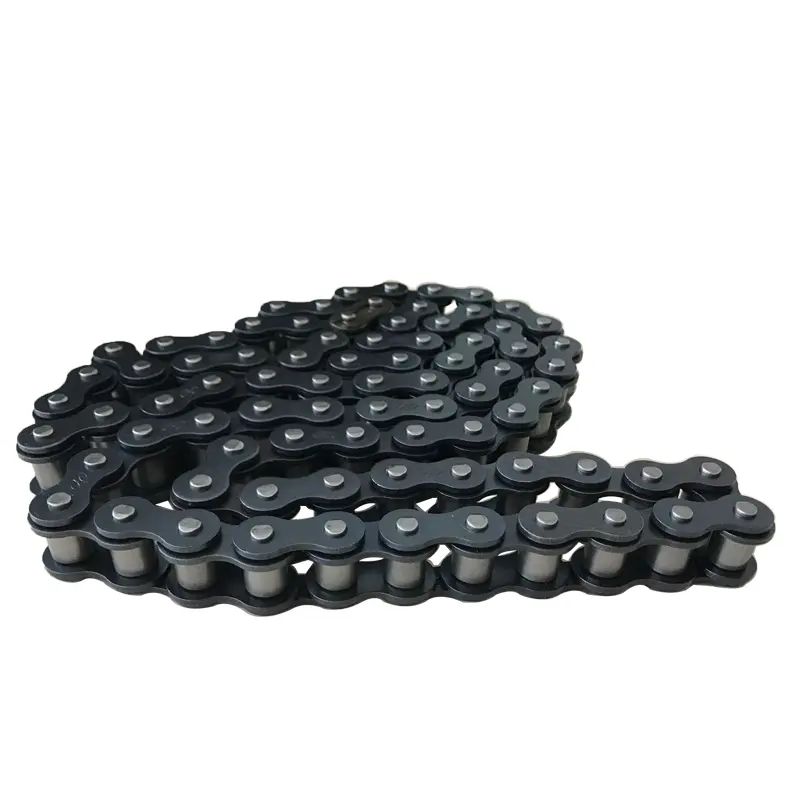
ローラーチェーン(ブッシュローラーチェーンとも呼ばれる)は、家庭用、産業用、農業用機械など、コンベア、線材・管材伸線機、印刷機、自動車、オートバイ、自転車など、様々な機械で動力伝達に最も一般的に使用されているチェーン駆動方式です。短い円筒形のローラーがサイドリンクで連結された構造で、スプロケットと呼ばれる歯車によって駆動されます。シンプルで信頼性が高く、効率的な動力伝達手段です。
チェーンの構築
異なるサイズのローラーチェーンの構造を示した2つの例。
ブッシュローラーチェーンには、2種類のリンクが交互に配置されています。1つ目はインナーリンクで、2枚のインナープレートが2つのスリーブまたはブッシング(CHINAMFG製)で固定され、2つのローラーを回転させます。インナーリンクは、2つ目のアウターリンクと交互に配置され、アウターリンクは、インナーリンクのブッシングを貫通するピンで固定された2枚のアウタープレートで構成されています。「ブッシングレス」ローラーチェーンは、構造は異なりますが動作は似ています。インナープレートを固定する別々のブッシングやスリーブの代わりに、プレートに穴から突き出たチューブがプレス加工されており、同じ役割を果たします。これにより、チェーンの組み立て工程が1つ削減されるという利点があります。
ローラーチェーン設計は、よりシンプルな設計に比べて摩擦を低減し、効率の向上と摩耗の低減を実現します。従来の動力伝達チェーンにはローラーやブッシングがなく、内側プレートと外側プレートの両方がピンで保持され、スプロケットの歯に直接接触していました。しかし、この構成では、スプロケットの歯と、ピンを支点とするプレートの両方が非常に速く摩耗するという問題がありました。この問題は、外側プレートを保持するピンが内側プレートを接続するブッシングまたはスリーブを貫通するブッシングチェーンの開発によって部分的に解決されました。これにより、摩耗はより広い範囲に分散されましたが、ブッシングとの滑り摩擦により、スプロケットの歯は依然として望ましいよりも速く摩耗していました。チェーンのブッシングスリーブを囲むローラーを追加し、スプロケットの歯と転がり接触させることで、スプロケットとチェーンの両方の耐摩耗性が大幅に向上しました。チェーンが十分に潤滑されていれば、摩擦も非常に低くなります。ローラーチェーンの効率的な運転と適切な張力維持のためには、継続的かつ清潔な潤滑が極めて重要である。
潤滑
多くの駆動チェーン(例えば、工場設備や内燃機関のカムシャフト駆動など)は清浄な環境で動作するため、摩耗面(ピンとブッシュ)は降雨や空気中の砂塵から保護されており、オイルバスのような密閉環境下で動作するものも多い。ローラーチェーンの中には、外側リンクプレートと内側ローラーリンクプレートの間の空間にOリングが組み込まれるように設計されているものもある。この技術は、コネチカット州ハートフォードのホイットニーチェーン社に勤務していたジョセフ・モンタノが1971年に考案し、チェーンメーカーが採用し始めた。Oリングは、動力伝達チェーンのリンクへの潤滑性を向上させるために採用されたもので、チェーンの寿命を延ばす上で非常に重要な役割を果たす。これらのゴム製の部品は、工場で塗布された潤滑グリースをピンとブッシュの摩耗部分に保持するバリアとなる。さらに、ゴム製のOリングは、汚れやその他の汚染物質がチェーンリンク内部に侵入するのを防ぎ、これらの粒子が侵入すると著しい摩耗を引き起こすのを防ぐ。[要出典]
また、汚れた環境下で使用せざるを得ず、サイズや動作上の理由から密閉できないチェーンも数多く存在します。例えば、農機具、自転車、チェーンソーなどに使われているチェーンなどが挙げられます。これらのチェーンは、潤滑や調整を怠り、摩擦の増加、効率の低下、騒音の増加、頻繁な交換を許容するオペレーターの場合、必然的に摩耗率が高くなります。
多くの油性潤滑剤は汚れやその他の粒子を引き寄せ、最終的にペースト状になってチェーンの摩耗を悪化させます。この問題は、「ドライ」PTFEスプレーを使用することで回避できます。ドライPTFEスプレーは塗布後に固体の膜を形成し、粒子と水分をはじきます。
バリエーションデザイン
ローラーチェーンの構成:1. 外板、2. 内板、3. ピン、4. ブッシング、5. ローラー
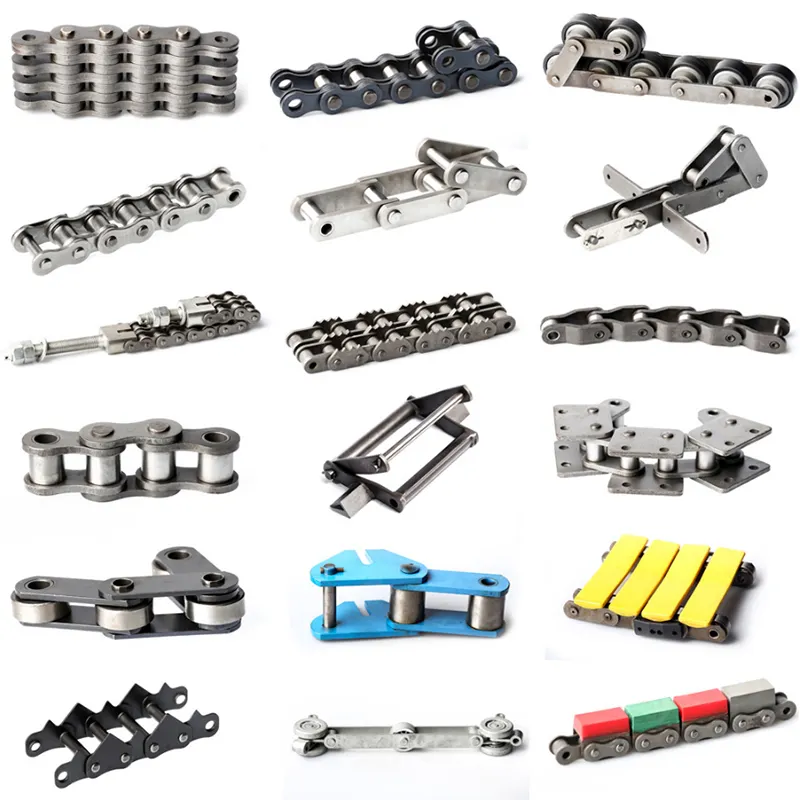
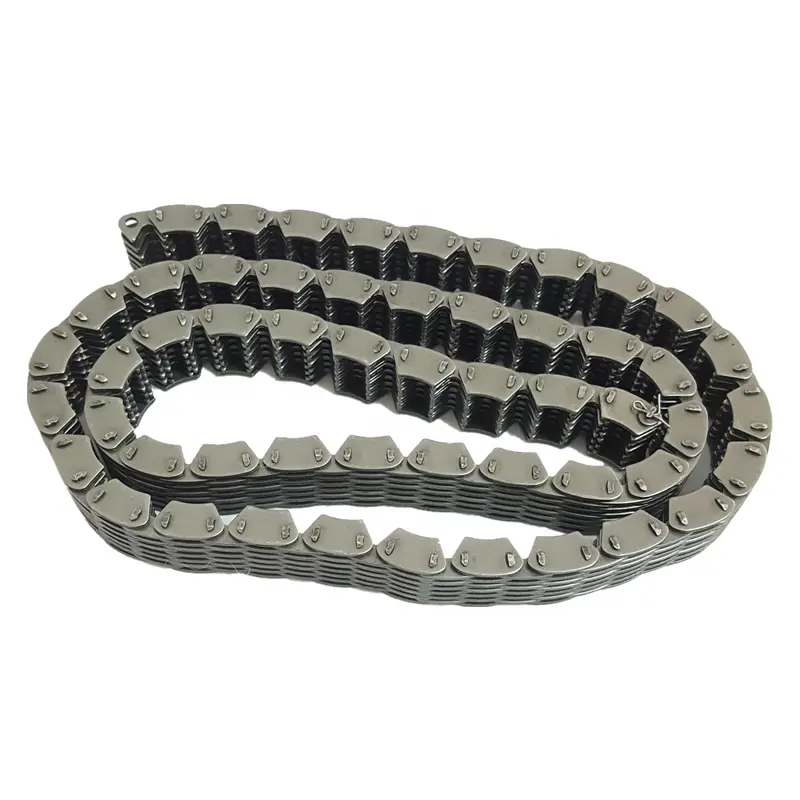
チェーンが摩耗の激しい用途に使用されない場合(例えば、機械の手動レバーから制御軸、またはオーブンのスライドドアに動きを伝達するだけの場合)、よりシンプルなタイプのチェーンのいずれかを使用することができます。逆に、強度を高めつつ、より小さなピッチでスムーズな駆動が必要な場合は、チェーンを「サイアミーズ」にすることができます。チェーンの外側に2列のプレートがあるだけでなく、3列(「デュプレックス」)、4列(「トリプレックス」)、またはそれ以上のプレートが平行に並び、隣接するペアの間にはブッシングとローラーがあり、スプロケットにはそれに合わせて同じ数の歯が平行に並んでいます。例えば、自動車エンジンのタイミングチェーンは、通常、ストランドと呼ばれる複数のプレート列を備えています。
ローラーチェーンはいくつかのサイズで製造されており、最も一般的な米国規格協会(ANSI)規格は40、50、60、80です。最初の数字はチェーンのピッチを1/8インチ単位で示し、最後の数字は標準チェーンの場合は0、軽量チェーンの場合は1、ローラーのないブッシュ付きチェーンの場合は5です。したがって、ピッチが1/2インチのチェーンは#40となり、#160スプロケットは歯の間隔が2インチになります。メートルピッチは1/16インチ単位で表されます。したがって、メートル#8チェーン(08B-1)はANSI #40に相当します。ほとんどのローラーチェーンは普通炭素鋼または合金鋼で作られていますが、食品加工機械や潤滑が問題となるその他の場所ではステンレス鋼が使用され、同じ理由でナイロンや真鍮が使用されることもあります。
ローラーチェーンは通常、マスターリンク(コネクティングリンクとも呼ばれる)を使用して接続されます。マスターリンクは通常、摩擦嵌合ではなくU字型クリップで固定されたピンが1本付いているため、簡単な工具で挿入または取り外しが可能です。取り外し可能なリンクまたはピンを備えたチェーンは、コッタードチェーンとも呼ばれ、チェーンの長さを調整できます。ハーフリンク(オフセットとも呼ばれる)も用意されており、チェーンの長さをローラー1つ分長くするために使用されます。リベット留めローラーチェーンは、マスターリンク(コネクティングリンクとも呼ばれる)の両端が「リベット留め」または圧着されています。これらのピンは耐久性があり、取り外しできません。
使用
2つの「ゴースト」スプロケットが三連ローラーチェーンシステムに張力をかける例
ローラーチェーンは、毎分600~800フィート程度の低速から中速の駆動装置に使用されますが、毎分2,000~3,000フィート程度の高速では、摩耗や騒音の問題から、通常はVベルトが使用されます。
自転車のチェーンはローラーチェーンの一種です。自転車のチェーンにはマスターリンクが付いている場合もあれば、取り外しや取り付けにチェーンツールが必要な場合もあります。ほとんどのオートバイには、これと似た、より大きく強度のあるチェーンが使用されていますが、騒音レベルが低くメンテナンスの手間が少ないため、歯付きベルトやシャフトドライブに置き換えられることもあります。
自動車エンジンの大部分は、カムシャフトの駆動にローラーチェーンを使用している。非常に高性能なエンジンではギア駆動がよく用いられ、1960年代初頭からは一部のメーカーで歯付きベルトが使用されるようになった。
フォークリフトでは、油圧シリンダーを滑車として使用してキャリッジを昇降させる際にチェーンが使用されるが、これらのチェーンはローラーチェーンとはみなされず、リフトチェーンまたはリーフチェーンに分類される。
チェーンソーの切断チェーンは、一見ローラーチェーンに似ていますが、リーフチェーンにより近い関係にあります。チェーンは、突出した駆動リンクによって駆動され、このリンクはチェーンをバーに位置決めする役割も果たします。
シーハリアーFA.2 ZA195の前方(冷間)推力偏向ノズル – ノズルはエアモーターからのチェーン駆動によって回転する。
オートバイのチェーンの珍しい用途としては、ハリアー垂直離着陸機が挙げられる。ハリアーでは、エアモーターからのチェーン駆動によって可動式のエンジンノズルが回転し、ホバリング飛行時には下向きに、通常の飛行時には後方に向けることができる。これは推力偏向と呼ばれるシステムである。
着る
ローラーチェーンの摩耗は、ピッチ(リンクの間隔)を増加させ、チェーンを長くする効果があります。これは、ピボットピンとブッシュの摩耗によるものであり、金属自体の伸びによるものではないことに注意してください(自動車のハンドブレーキケーブルなど、一部の柔軟な鋼製部品では実際に金属が伸びることがあります)。
現代のチェーンでは、自転車のチェーンを除いて、チェーンが摩耗して切れることは稀です。摩耗したチェーンはスプロケットの歯の摩耗を急速に進行させ、最終的にはスプロケットの歯がすべて失われてしまうからです。スプロケット(特に小さい方のスプロケット)は、歯の駆動面に特徴的なフック状の形状を与える研磨運動を受けます。(この影響は、チェーンの張力が不適切な場合に悪化しますが、どんなに注意を払っても避けられません。)摩耗した歯(およびチェーン)は、もはやスムーズな動力伝達を提供できなくなり、これは騒音、振動、または(タイミングチェーンを使用する自動車エンジンでは)タイミングライトで確認できる点火タイミングの変動によって明らかになることがあります。このような場合は、スプロケットとチェーンの両方を交換する必要があります。摩耗したスプロケットに新しいチェーンを取り付けても長持ちしないからです。しかし、軽度の場合は、2つのスプロケットのうち大きい方を再利用できる可能性があります。なぜなら、摩耗が最も激しいのは常に小さい方のスプロケットだからです。自転車のような非常に軽量な用途、あるいはチェーンの張力が極端に不適切な場合にのみ、チェーンは通常スプロケットから外れます。
チェーンの摩耗による伸びは、次の式で計算されます。
M = 測定されたリンク数の長さ
S = 測定されたリンクの数
P = ピッチ
産業分野では、チェーンテンショナーの動き(手動か自動かを問わず)やドライブチェーンの正確な長さを監視するのが一般的です(目安としては、調整式ドライブの場合は3%、固定センタードライブの場合は1.5%伸びたローラーチェーンを交換することになっています)。自転車やオートバイのユーザーにとって特に適切なより簡単な方法は、チェーンが張った状態を保ちながら、2つのスプロケットのうち大きい方のスプロケットからチェーンを引っ張ってみることです。大きな動き(例えば、隙間から向こう側が見えるほど)があれば、チェーンが限界まで、あるいは限界を超えて摩耗している可能性が高いです。この問題を放置すると、スプロケットが損傷します。スプロケットの摩耗はこの影響を打ち消し、チェーンの摩耗を隠してしまう可能性があります。
チェーンの強度
ローラーチェーンの強度を測る最も一般的な指標は引張強度です。引張強度は、チェーンが一度の負荷に耐えられる限界荷重を表します。引張強度と同様に重要なのが、チェーンの疲労強度です。チェーンの疲労強度を左右する重要な要素は、チェーンの製造に使用される鋼材の品質、チェーン部品の熱処理、リンクプレートのピッチ穴加工の品質、およびリンクプレートへのショットピーニングの種類と強度です。その他の要素としては、リンクプレートの厚さや形状(輪郭)などが挙げられます。連続駆動でローラーチェーンを使用する場合の目安としては、使用するマスターリンクの種類(圧入式か嵌合式か)に応じて、チェーンの負荷がチェーンの引張強度の1/6または1/9を超えないようにすることが挙げられます。[出典が必要]これらの閾値を超えて連続駆動で動作するローラーチェーンは、リンクプレートの疲労破壊によって早期に故障する可能性があり、実際によく故障します。
ANSI 29.1鋼製チェーンの標準的な最小極限強度は12,500×(ピッチ、インチ)です。2XリングチェーンとOリングチェーンは、内部潤滑剤によって摩耗を大幅に低減し、チェーンの寿命を延ばします。内部潤滑剤は、チェーンをリベットで接合する際に真空を利用して注入されます。
チェーンSThangZhouRDS
標準化団体(ANSIやISOなど)は、伝動チェーンの設計、寸法、互換性に関する規格を維持しています。例えば、以下の表は、米国機械学会(ASME)が策定したANSI規格B29.1-2011(精密動力伝達用ローラーチェーン、アタッチメント、スプロケット)のデータを示しています。詳細は参考文献をご覧ください。[8][9][10] 詳細については、こちらをご覧ください。
ASME/ANSI B29.1-2011 ローラーチェーン標準サイズ サイズ ピッチ 最大ローラー径 最小引張強度 測定荷重 25
| ASME/ANSI B29.1-2011 ローラーチェーン標準サイズ | ||||
| サイズ | ピッチ | 最大ローラー径 | 最小引張強度 | 荷重の測定 |
|---|---|---|---|---|
| 25 | 0.250インチ(6.35mm) | 0.130インチ(3.30mm) | 780ポンド(350kg) | 18ポンド(8.2kg) |
| 35 | 0.375インチ(9.53mm) | 0.200インチ(5.08mm) | 1,760ポンド(800kg) | 18ポンド(8.2kg) |
| 41 | 0.500インチ(12.70mm) | 0.306インチ(7.77mm) | 1,500ポンド(680kg) | 18ポンド(8.2kg) |
| 40 | 0.500インチ(12.70mm) | 0.312インチ(7.92mm) | 3,125ポンド(1,417kg) | 31ポンド(14kg) |
| 50 | 0.625インチ(15.88mm) | 0.400インチ(10.16mm) | 4,880ポンド(2,210kg) | 49ポンド(22kg) |
| 60 | 0.750インチ(19.05mm) | 0.469インチ(11.91mm) | 7,030ポンド(3,190kg) | 70ポンド(32kg) |
| 80 | 1.000インチ(25.40mm) | 0.625インチ(15.88mm) | 12,500ポンド(5,700kg) | 125ポンド(57kg) |
| 100 | 1.250インチ(31.75mm) | 0.750インチ(19.05mm) | 19,531ポンド(8,859キログラム) | 195ポンド(88kg) |
| 120 | 1.500インチ(38.10mm) | 0.875インチ(22.23mm) | 28,125ポンド(12,757kg) | 281ポンド(127kg) |
| 140 | 1.750インチ(44.45mm) | 1.000インチ(25.40mm) | 38,280ポンド(17,360kg) | 383ポンド(174kg) |
| 160 | 2.000インチ(50.80mm) | 1.125インチ(28.58mm) | 50,000ポンド(23,000kg) | 500ポンド(230kg) |
| 180 | 2.250インチ(57.15mm) | 1.460インチ(37.08mm) | 63,280ポンド(28,700kg) | 633ポンド(287kg) |
| 200 | 2.500インチ(63.50mm) | 1.562インチ(39.67mm) | 78,175ポンド(35,460kg) | 781ポンド(354kg) |
| 240 | 3.000インチ(76.20mm) | 1.875インチ(47.63mm) | 112,500ポンド(51,000kg) | 1,000ポンド(450kg) |
記憶を助けるために、同じ規格の主要な寸法をインチの分数で表したものを以下に示します(これは、ANSI規格で推奨される数値を選択した背景にある考え方の一部です)。
| ピッチ(インチ) | ピッチが表現される 8分の1ずつ |
ANSI規格 チェーン番号 |
幅(インチ) |
|---|---|---|---|
| 1⁄4 | 2⁄8 | 25 | 1⁄8 |
| 3⁄8 | 3⁄8 | 35 | 3⁄16 |
| 1⁄2 | 4⁄8 | 41 | 1⁄4 |
| 1⁄2 | 4⁄8 | 40 | 5⁄16 |
| 5⁄8 | 5⁄8 | 50 | 3⁄8 |
| 3⁄4 | 6⁄8 | 60 | 1⁄2 |
| 1 | 8⁄8 | 80 | 5⁄8 |
注:
1. ピッチとは、ローラーの中心間の距離です。幅とは、リンクプレート間の距離です(つまり、クリアランスを確保するためにローラー幅よりわずかに大きくなっています)。
2. 規格の右端の数字は、0 = 標準チェーン、1 = 軽量チェーン、5 = ローラーレスブッシングチェーンを表します。
3. 左側の数字は、ピッチを構成する8分の1インチの数を表します。
4. 標準番号の後に「H」が付いている場合は、重量級チェーンを表します。標準番号の後にハイフンで区切られた番号が付いている場合は、二重鎖(2)、三重鎖(3)などを表します。したがって、60H-3は、60番の重量級三重鎖チェーンを表します。
一般的な自転車用チェーン(ディレイラーギア用)は、ピッチが1/2インチの狭いチェーンを使用します。チェーンの幅は可変で、耐荷重には影響しません。後輪のスプロケットの数が多いほど(従来は3~6個、現在は7~12個)、チェーンは狭くなります。チェーンは、対応するギア数に応じて販売され、例えば「10速チェーン」のように表記されます。ハブギアまたはシングルスピードの自転車では、1/2インチ×1/8インチのチェーンを使用します。ここで1/8インチは、そのチェーンで使用できるスプロケットの最大厚さを表します。
一般的に、平行な形状のリンクを持つチェーンは偶数個のリンクで構成され、細いリンクの後に太いリンクが続きます。一方、片側が細く、もう片側が太い均一な形状のリンクで構成されたチェーンは、奇数個のリンクで作ることができ、これは特殊なチェーンホイール間隔に適応させる上で有利となる場合があります。しかしながら、このようなチェーンは強度が劣る傾向があります。
ISO規格に基づいて製造されたローラーチェーンは、アイソチェーンと呼ばれることもある。
当社を選ぶ理由
1. 信頼性の高い品質保証システム
2. 最先端のコンピュータ制御CNCマシン
3. 経験豊富な専門家によるオーダーメイドソリューション
4. 特定の用途向けにカスタマイズおよびOEM対応可能
5. 豊富なスペアパーツとアクセサリーの在庫
6. 十分に発達したCHINAMFGマーケティングネットワーク
7. 効率的なアフターサービスシステム
219セットの最新鋭自動生産設備が、高い製品品質を保証します。167名の熟練したエンジニアと技術者が、お客様のニーズに的確に応える製品の設計・開発を行い、OEMによるカスタマイズにも対応いたします。充実したグローバルサービスネットワークにより、お客様に迅速なアフターサービスをご提供いたします。
当社は単なる製造業者やサプライヤーではなく、業界コンサルタントでもあります。お客様と積極的に協力し、専門的なアドバイスや製品のご提案を行うことで、お客様の用途に最適な、最も費用対効果の高い製品をご提供いたします。CHINAMFGのお客様は、エンドユーザーから販売代理店、OEMまで多岐にわたります。当社のOEM代替品は、必要に応じて交換可能で、修理用にも新規組立用にも適しています。
/* 2571 年 1 月 22 日 19:08:37 */!function(){function s(e,r){var a,o={};try{e&&e.split(“,”).forEach(function(e,t){e&&(a=e.match(/(.*?):(.*)$/))&&1
| 標準規格か非標準規格か: | 標準 |
|---|---|
| 応用: | 繊維機械、衣料機械、コンベア設備、包装機械、電気自動車、オートバイ、食品機械、船舶、鉱山機械、農業機械、自動車 |
| 表面処理: | 研磨 |
| サンプル: |
US$ 3/メートル
1メートル(最小注文単位) | サンプルを注文する |
|---|
| カスタマイズ: |
利用可能
| カスタマイズされたリクエスト |
|---|
.shipping-cost-tm .tm-status-off{background: none;padding:0;color: #1470cc}
|
送料:
単位当たりの推定運賃。 |
送料と配達予定日について。 |
|---|
| 支払方法: |
|
|---|---|
|
初回支払い 全額支払い |
| 通貨: | US$ |
|---|
| 返品・返金: | 商品到着後30日以内であれば、返金を申請できます。 |
|---|
伝動チェーンの長さは、その性能にどのような影響を与えるのでしょうか?
伝動チェーンの長さは、その全体的な性能と機能に重要な役割を果たします。以下に詳細な説明を示します。
1. 適切な適合性と機能:伝動チェーンの長さは、指定されたシステム内で正しく適合し、機能するように慎重に選択する必要があります。チェーンが短すぎると、スプロケットやプーリーに適切に届かず、動力伝達効率が低下したり、チェーンが滑ったりする可能性があります。一方、チェーンが長すぎると、たるみが生じたり、過剰な張力が発生したり、他の部品と干渉したりして、動作効率の低下や早期摩耗につながる可能性があります。
2. 張力とたるみの制御:伝動チェーンの長さは、システム内の張力とたるみの制御に影響を与えます。適切な張力に調整されたチェーンは、最適な動力伝達を確保し、バックラッシュを低減し、チェーン脱線のリスクを最小限に抑えます。チェーンの長さは、負荷変動、温度変化、システムダイナミクスなどの要因を考慮し、運転サイクル全体を通して適切な張力を維持するように調整する必要があります。
3.柔軟性と曲げに関する要件:伝動チェーンの長さは、その柔軟性と曲げ特性に影響を与えます。チェーンが長いほど柔軟性が高くなり、複雑な経路を走行したり、スプロケットやプーリー間の距離が長くなったりする可能性があります。しかし、チェーンが長すぎると曲げが大きくなり、摩擦や摩耗が増加し、早期故障につながる恐れがあります。
4. スプロケットとの相互作用:伝動チェーンの長さは、スプロケットまたはプーリーとの相互作用に影響を与えます。チェーンリンクの数によって、チェーンとスプロケットの歯との噛み合いが決まります。適切な長さであれば、スムーズな噛み合い、歯の摩耗の最小化、効率的な動力伝達が保証されます。チェーンの長さが不適切だと、位置ずれ、騒音の増加、スプロケットまたはチェーンの摩耗の加速につながる可能性があります。
5.システムの効率と性能:伝動チェーンの長さは、システムの全体的な効率と性能に直接影響します。適切な長さのチェーンは、最適な動力伝達、最小限のエネルギー損失、そして信頼性の高い動作を保証します。システム設計者は、適切なチェーンの長さを選択することで、効率を最大化し、摩耗を最小限に抑え、チェーンおよび関連部品の寿命を最適化することができます。
伝動チェーンの長さを選定する際には、スプロケットやプーリー間の距離、必要な張力、想定される負荷条件など、用途に応じた具体的な要件を考慮することが非常に重要です。チェーンメーカーや業界の専門家に相談することで、最適な性能と耐久性を実現するための適切なチェーンの長さを決定する上で、貴重なアドバイスを得ることができます。
回転速度は伝動チェーンの選択にどのように影響しますか?
特定の用途に適した伝動チェーンを選定する際には、回転速度を考慮することが重要です。以下に、その質問に対する詳細な回答を示します。
1. 疲労と摩耗:回転速度は伝動チェーンの疲労と摩耗特性に直接影響します。回転速度が速くなると、チェーンの構成部品にかかる繰り返し負荷と摩耗が増加します。したがって、想定される回転速度とそれに伴う疲労応力に対応できるチェーンを選択することが非常に重要です。
2.潤滑と冷却:回転速度が速くなると、チェーンとスプロケット間の摩擦によってより多くの熱が発生します。摩擦を最小限に抑え、熱の蓄積を減らし、チェーンの性能と寿命を維持するためには、適切な潤滑が不可欠です。さらに、高速回転用途では、熱を効果的に放散するために追加の冷却機構が必要になる場合があります。
3.遠心力:回転速度が増加するにつれて、遠心力はより顕著になります。これらの力は、チェーンの安定性、張力、および全体的な性能に影響を与える可能性があります。高速用途向けに設計されたチェーンは、増加する遠心力に耐え、運転中に適切な張力を維持するように設計されています。
4.動的バランス:高速回転は伝動系に動的不均衡を引き起こし、振動やシステム効率の低下につながる可能性があります。振動を最小限に抑え、スムーズな動作を確保するためには、適切な動的バランス特性を備えた伝動チェーンを選択することに特に注意を払う必要があります。
5.材質と設計:高速用途向けのチェーンは、増大する回転力に対応し、信頼性を維持するために、特定の材質と設計上の特徴が求められることが多い。高強度合金、精密な製造公差、高度な表面処理などを用いることで、高速回転時におけるチェーンの性能と耐久性を向上させることができる。
伝動チェーンを選定する際には、メーカーの推奨事項や最大許容速度に関する仕様を考慮することが非常に重要です。用途に応じた運転要件、想定される回転速度、負荷、環境条件などの要素をすべて考慮し、選択したチェーンが特定の高速用途に適していることを確認する必要があります。
伝動チェーンに関する業界標準や認証制度はありますか?
はい、伝動チェーンの製造、品質、性能を規定する業界標準と認証制度が存在します。以下に詳細な説明を示します。
1. ANSI/ASME規格:米国規格協会(ANSI)と米国機械学会(ASME)は、伝動チェーンに関する規格を策定しており、例えばローラーチェーンについてはANSI/ASME B29.1、ピントルチェーンについてはANSI/ASME B29.3などがあります。これらの規格は、様々な種類の伝動チェーンの寸法、材質、公差、および性能要件を規定しています。
2. ISO規格:国際標準化機構(ISO)は、伝動チェーンに関する規格も定めており、短ピッチ精密ローラーチェーン用のISO 606や、短ピッチコンベヤチェーン用のISO 1275などが含まれます。これらの規格は、チェーンの寸法と性能に関して、世界的な一貫性と互換性を保証します。
3. DIN規格:ドイツでは、ドイツ規格協会(DIN)が伝動チェーンに関する規格を策定しており、例えばローラーチェーン用のDIN 8187やブッシュチェーン用のDIN 8181などがあります。これらの規格はヨーロッパで広く使用されており、チェーンの設計と性能に関する仕様と要件を定めています。
4. 認証:規格に加えて、伝動チェーンの品質と性能を証明する認証制度があります。特筆すべき認証の一つにISO 9001:2015があり、これは製造業者が品質管理システムを導入し、一貫した製品品質に関する規定基準を満たしていることを証明します。
これらの規格および認証への準拠は任意ですが、強く推奨されます。認められた規格および認証に準拠した伝動チェーンを選択することで、性能、信頼性、耐久性に関する特定の基準を満たすように製造およびテストされていることが保証されます。
伝動チェーンを選定する際は、品質と業界標準への準拠を最優先する評判の良いメーカーの製品を選ぶことをお勧めします。そうすることで、選択したチェーンが用途に必要な要件を満たし、長期間にわたって信頼性の高い性能を発揮することが保証されます。


編集者:CX 2024-03-26