Start from the symptom, not the replacement part
A chain-drive decision becomes much easier when the machine is reduced to measurable inputs instead of being described only as light, medium, or heavy duty. Noise is a symptom, not a diagnosis. The useful clue is whether it is continuous, once per chain loop, once per sprocket revolution, load-dependent, speed-dependent, or associated with visible contact.
Un modo pratico per utilizzare il Gamma di catene a rulli e di trasmissione is to narrow the product family after the machine has supplied evidence for chain noise and engagement impact. The selected option should then survive this check: correlate the sound with a component location before disassembly when safe to do so. If it does not, return to the duty or geometry rather than adding an arbitrary safety margin.
- Chain Noise
- Trattala come una variabile controllata; annota il suo valore, l'unità di misura, lo stato operativo e la fonte nel record del lavoro.
- Engagement Impact
- Verifica questo elemento confrontandolo con l'unità fisica e con i dati aggiornati del fornitore, anziché stimarlo in base all'aspetto.
- Dry Joint
- Utilizza questo parametro per scartare precocemente le opzioni non idonee, quindi conserva il valore verificato per la specifica finale.
- Misalignment
- Verifica questo punto sulla macchina e documenta qualsiasi incertezza che richieda ancora un disegno o un manuale del fornitore.
- Sprocket Wear
- Documentate questo requisito con sufficienti dettagli affinché un secondo tecnico possa riprodurre la stessa selezione o diagnosi.
Periodicity helps distinguish a local stiff link from general engagement noise or a runout problem. The practical release check is to correlate the sound with a component location before disassembly when safe to do so.
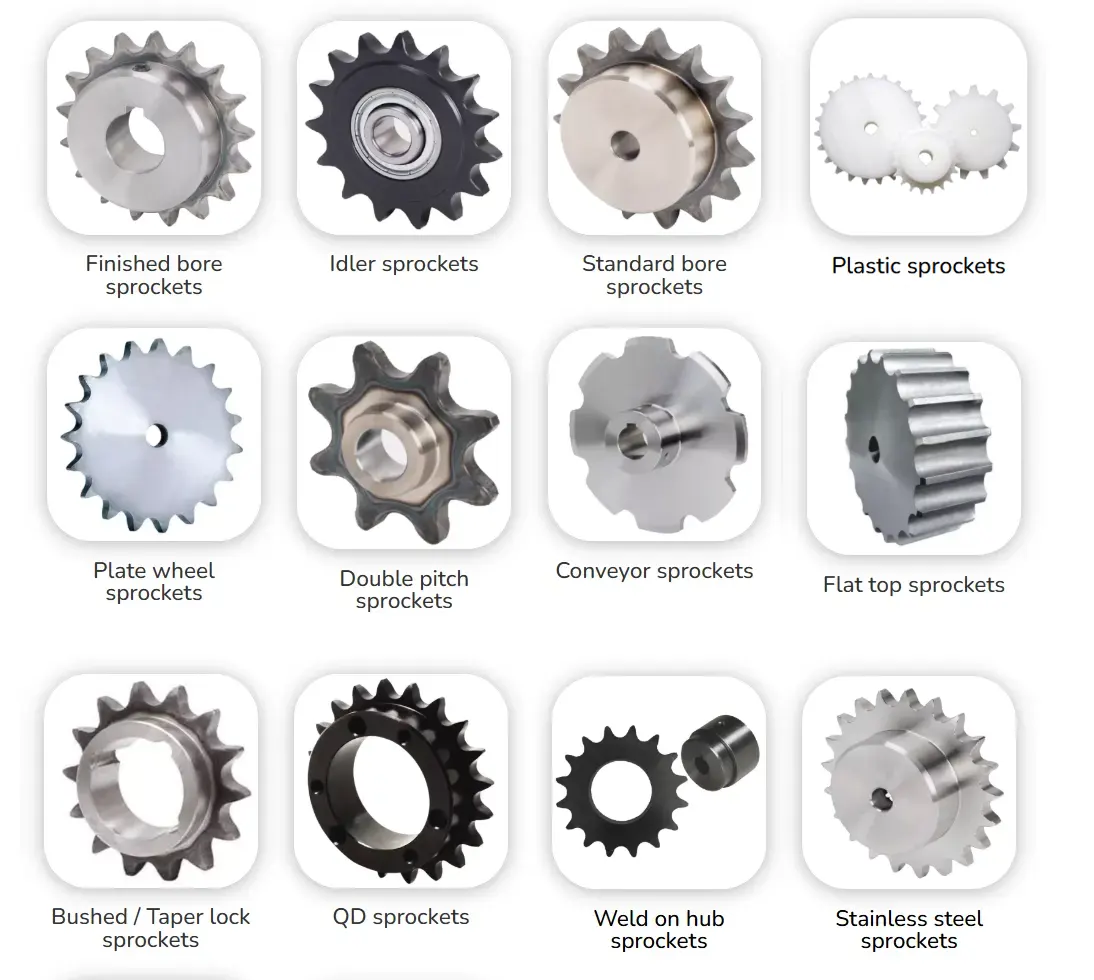
Identify the noise frequency and operating condition
A reliable result starts when you listen for whether the sound repeats with chain circulation, sprocket rotation, shaft speed, or process events and note the load and speed at which it appears. The underlying reason is periodicity helps distinguish a local stiff link from general engagement noise or a runout problem. In service, a once-per-loop click often points to one chain location while a once-per-revolution pulse can indicate sprocket eccentricity. An incorrect input may create changing parts before identifying the frequency can waste time and remove useful evidence.
Use the following field evidence: mark the connecting link and one sprocket tooth, then observe when the noise recurs during a controlled run. Accept the result only if you can correlate the sound with a component location before disassembly when safe to do so. If the check is visual, add a dimension or operating observation whenever practical.
Inspect lubrication at the pin-bushing joints
Establish the condition by choosing to check whether oil actually reaches the articulating joint rather than only wetting the outer plates. It affects the drive because dry articulation raises friction and can increase both squeal-like joint noise and impact-related vibration. A useful constraint is that reddish-brown fretting debris or polished dry pins are strong warning signs. Getting it wrong can produce adding lubricant to the plate exterior without penetration may change appearance but not the noise mechanism.
Confirm the condition this way: stop safely, inspect representative joints or the connecting link, and look for a clean lubricant film between inner and outer plates. The step passes when you can restore correct lubricant type and delivery and then compare noise under the same speed and load. Keep the evidence beside the chain designation and machine location in the maintenance record.
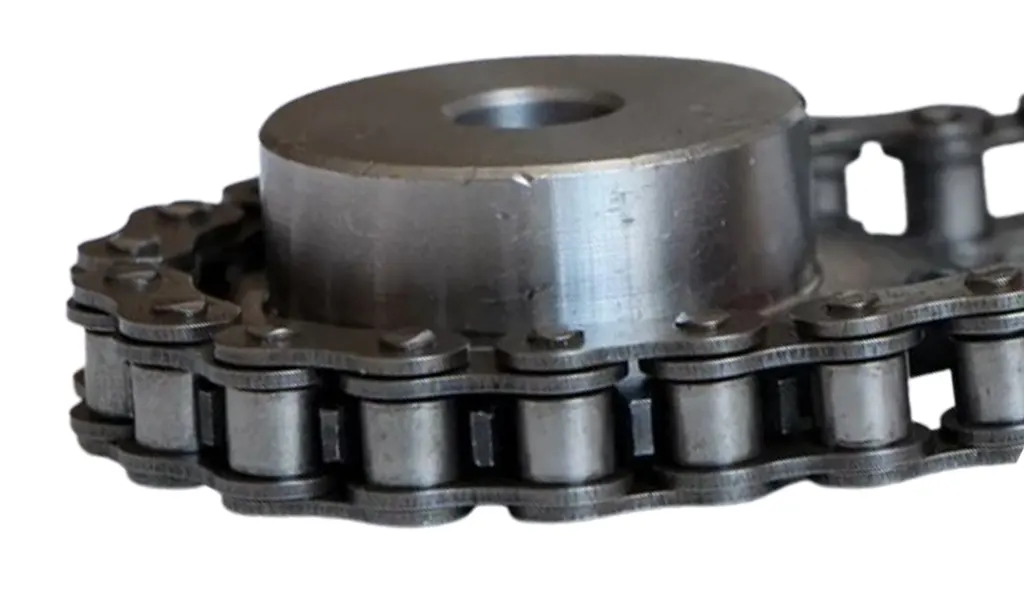
Check shaft and sprocket alignment
Begin with the physical requirement: verify shaft parallelism, tooth-row alignment, and side contact on chain plates and sprocket flanks. It is connected to side loading makes the chain scrub laterally while entering and leaving the sprockets. At site level, misalignment noise may rise with load and can be accompanied by one-sided bright wear. The avoidable outcome is adjusting tension to quiet a misaligned drive can increase bearing load without solving the cause.
Inspect as follows: use a straightedge or laser and inspect contact patterns on both sides of the sprocket teeth. Release the step after you can realign the shafts and sprockets and confirm the chain tracks centrally. Repeat the check after adjustment whenever the adjustment itself can change the measured condition.
Measure slack and span vibration
Compare free-span slack with the chain manufacturer guidance and watch the slack span during acceleration and stopping. Why it matters: too little slack increases joint and bearing load while too much allows whipping, case contact, or chain winding. Field nuance: long centers and fluctuating loads can excite span vibration even when static slack seems reasonable. Failure mode: tightening until the noise stops can trade vibration for overload.
Inspection: measure span length and deflection, then observe the dynamic envelope from a safe position. Release condition: adjust center distance or use an appropriate guide or tensioner without creating high pretension. Record the operating state and the reference points used for this check.
Inspect sprocket tooth wear and runout
Start by look for hooking, uneven seating, damaged teeth, packed debris, radial eccentricity, and face runout. The mechanism is worn or eccentric sprockets create impact as rollers enter at changing positions. In practice, noise that pulses once per sprocket revolution often follows a runout or local tooth problem. If the assumption is wrong, new chain on worn teeth can sound worse because the new pitch no longer conforms to the worn profile.
Field check: clean tooth pockets, rotate the sprocket through a full turn, and measure runout where appropriate. Accept the step when you can replace damaged sprockets or correct mounting before condemning the chain. Save the measured or observed condition so the result can be repeated later.
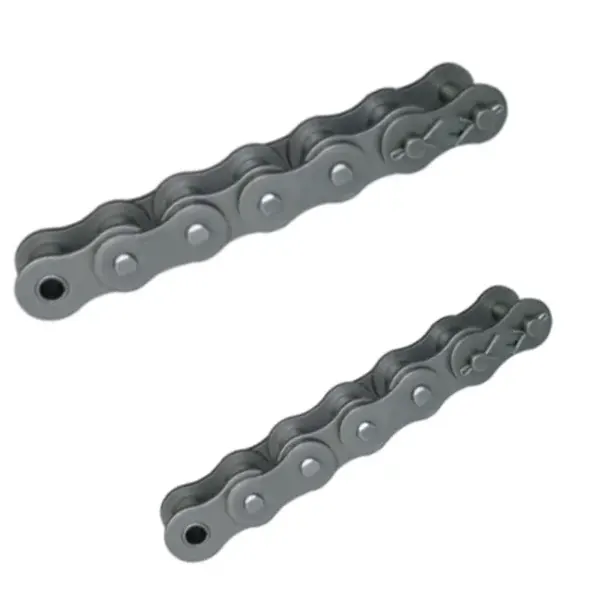
Find stiff links, damaged rollers, and guard contact
Use flex individual joints and inspect rollers for cracks, flat spots, peening, or interference marks while checking the entire guard path. This controls the decision because a single stiff joint or damaged roller creates a local impact each time it wraps a sprocket. On the machine, guard contact can sound similar to engagement noise and may only occur under centrifugal or slack-span motion. The practical risk is leaving one local defect in service can damage neighboring teeth and links.
Confirm it by doing this: rotate the chain slowly and feel articulation link by link while inspecting all nearby stationary surfaces. The evidence is sufficient when you can repair the interference or replace damaged chain components using the chain manufacturer procedure. Note the tool, location, and operating condition with the result.
Diagnostic confirmation table
| Punto decisionale | Ispezione o calcolo | Prova di accettazione |
|---|---|---|
| Identify the noise frequency and operating condition | mark the connecting link and one sprocket tooth, then observe when the noise recurs during a controlled run | correlate the sound with a component location before disassembly when safe to do so |
| Inspect lubrication at the pin-bushing joints | stop safely, inspect representative joints or the connecting link, and look for a clean lubricant film between inner and outer plates | restore correct lubricant type and delivery and then compare noise under the same speed and load |
| Check shaft and sprocket alignment | use a straightedge or laser and inspect contact patterns on both sides of the sprocket teeth | realign the shafts and sprockets and confirm the chain tracks centrally |
| Measure slack and span vibration | measure span length and deflection, then observe the dynamic envelope from a safe position | adjust center distance or use an appropriate guide or tensioner without creating high pretension |
| Inspect sprocket tooth wear and runout | clean tooth pockets, rotate the sprocket through a full turn, and measure runout where appropriate | replace damaged sprockets or correct mounting before condemning the chain |
| Find stiff links, damaged rollers, and guard contact | rotate the chain slowly and feel articulation link by link while inspecting all nearby stationary surfaces | repair the interference or replace damaged chain components using the chain manufacturer procedure |
| For this article, do not close the job until the chain noise evidence and every critical mating interface are recorded together. | ||
Quando la decisione si estende oltre la catena stessa, review tensioner solutions for chain-span vibration is a useful adjacent-hardware reference for noisy roller chain. It is not a substitute for checking tooth geometry, mounting, capacity, and the selected chain standard on the final drawing.
False fixes that hide the root cause
Release check: correlate the sound with a component location before disassembly when safe to do so.
Release check: restore correct lubricant type and delivery and then compare noise under the same speed and load.
Release check: realign the shafts and sprockets and confirm the chain tracks centrally.
Release check: adjust center distance or use an appropriate guide or tensioner without creating high pretension.
Troubleshooting FAQs
Correct the confirmed mechanism and verify the repair
The output should be more useful than a part number. Record chain noise, engagement impact, the condition found during “Find stiff links, damaged rollers, and guard contact,” and the evidence used to accept or reject the change. That makes the decision auditable after the next shutdown. Use the capacità delle catene di trasmissione industriali confrontare altre famiglie di catene di trasmissione solo quando vengono riportati gli stessi dati di funzionamento.
Where the final answer still depends on missing machine data, send the application data to the chain engineering team. Include the duty, speed, geometry and inspection evidence that led to the current conclusion, with dry joint called out separately. The goal is to obtain a drawing-level answer before hardware is ordered or an adjustment becomes the new baseline.
Send the operating condition, chain noise, engagement impact, layout evidence, and the unresolved interface so the next decision is based on machine data rather than assumption.