Descrizione del prodotto
Catena a rulli industriale/motociclistica a passo corto di precisione in acciaio inossidabile, conforme agli standard ISO/ANSI/DIN.
Descrizione del prodotto
1. Materiale: Acciaio inossidabile 304 e 316 / Lega di acciaio al carbonio
2. Trattamento superficiale: Pallinatura / Zincatura / Nichelatura / Dacromet
3. Numero di catena:
35SS-1, 40SS-1, 50SS-1, 60SS-1, 80SS-1, 100SS-1, 120SS-1, 140SS-1;
35SS-2, 40SS-2, 50SS-2, 60SS-2, 80SS-2, 100SS-2, 120SS-2, 140SS-2;
35SS-3, 40SS-3, 50SS-3, 60SS-3, 80SS-3, 100SS-3, 120SS-3, 140SS-3;
4. Applicazione: Le catene in acciaio inossidabile trovano impiego in moltissimi settori, come la produzione di macchinari, l'industria alimentare, ecc. Sono inoltre adatte a condizioni di temperatura sia elevate che basse.
5. Caratteristica:
1. La catena può essere utilizzata su entrambi i lati della trasmissione multiassiale.
2. Installazione e sostituzione semplici.
3. Può ottenere un rapporto di riduzione maggiore.
4. La catena a rulli ha una buona elasticità, un'elevata resistenza e ogni parte della cerniera è dotata di olio lubrificante, quindi può essere riposta facilmente. Pertanto, rispetto al dente di contatto rigido, offre una buona capacità di ammortizzazione e assorbimento delle vibrazioni.
| Nome del prodotto | Catena a rulli in acciaio inossidabile proveniente dalla Cina |
| Materiali disponibili | 1. Acciaio inossidabile: SS304, SS316, ecc. |
| 2. Acciaio legato: 45Mn, 42CrMo, 20CrMo, ecc. | |
| 3. Produzione OEM secondo le vostre richieste | |
| Trattamento superficiale | Pallinatura, annerimento, ossigenazione, lucidatura, zincatura, nichelatura, anodizzazione, ecc. |
| Caratteristica | Resistente al fuoco, resistente all'olio, resistente al calore |
| Criterio di progettazione | ISO DIN ANSI e disegno del cliente |
| Misurare | Disegno del cliente e standard ISO |
| Pacchetto | Cassa/Contenitore in legno e pallet, oppure realizzati su misura. |
| Certificato | ISO9001:2008 |
| Vantaggio | Prima qualità, servizio eccellente, prezzo competitivo, consegna rapida. |
| Tempi di consegna | 20 giorni per i campioni. 45 giorni per l'ordine ufficiale. |
Foto dettagliate
Per visualizzare altri prodotti, clicca qui…
Profilo Aziendale
| Utilizzo: | catena di trasmissione |
|---|---|
| Materiale: | acciaio inossidabile |
| Struttura: | Catena a rulli |
| 80-1: | 1" |
| Misurare: | 50ss-1 |
| Altro: | Resistenza alla corrosione |
| Esempi: |
US$ 0/Metro
1 metro (ordine minimo) | |
|---|
| Personalizzazione: |
Disponibile
| Richiesta personalizzata |
|---|
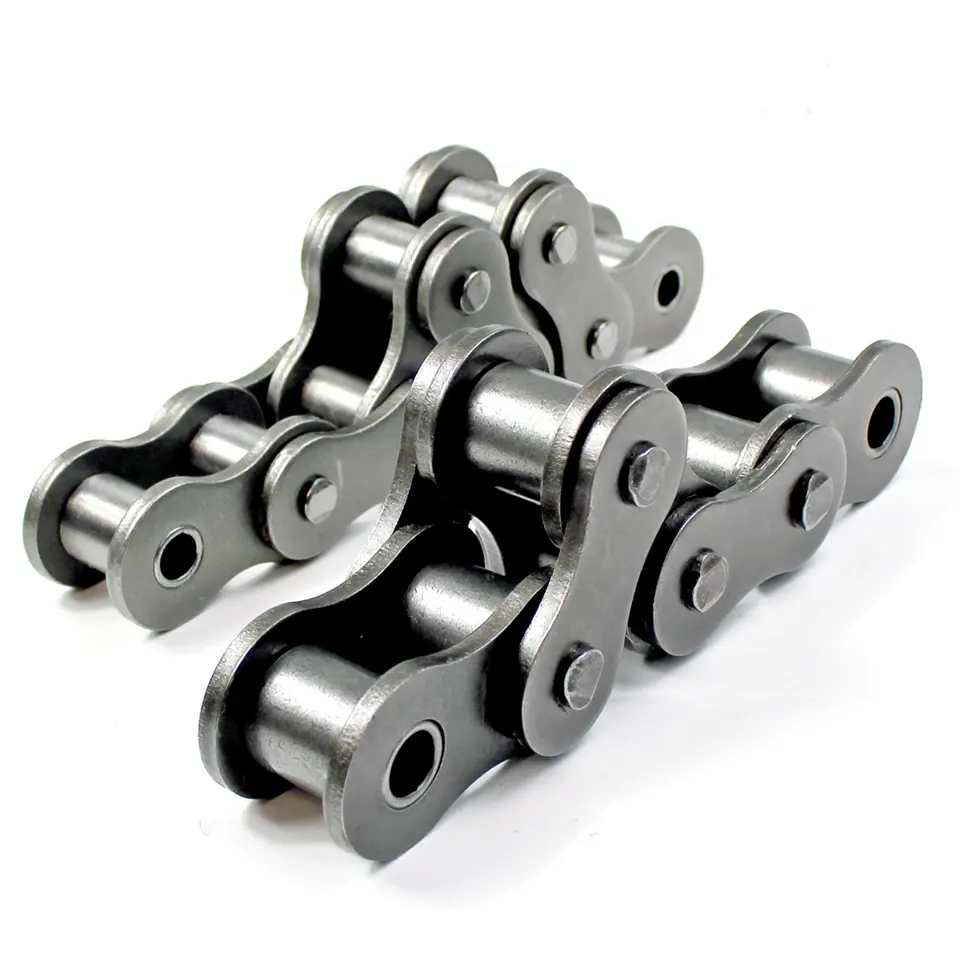
In che modo il peso di una catena di trasmissione influisce sulla sua installazione e sul suo funzionamento?
Il peso di una catena di trasmissione gioca un ruolo significativo nella sua installazione e nel suo funzionamento. Ecco una risposta dettagliata alla domanda:
1. Processo di installazione: Il peso di una catena di trasmissione può influenzare la facilità e la complessità del processo di installazione. Le catene più pesanti possono richiedere manodopera o attrezzature aggiuntive per essere sollevate e posizionate con precisione. Gli installatori devono tenere conto del peso della catena durante la movimentazione e assicurarsi che siano in atto adeguate misure di sicurezza per prevenire infortuni o incidenti.
2. Progettazione del sistema: Il peso della catena è un fattore cruciale nella progettazione complessiva del sistema di trasmissione. Influisce sulla scelta di altri componenti come pignoni, cuscinetti e alberi. Il sistema deve essere progettato per sopportare il peso della catena e trasmettere la potenza in modo efficace senza sollecitazioni o usura eccessive.
3. Efficienza di trasmissione della potenza: Il peso della catena influisce sulla massa complessiva del sistema. Un peso eccessivo può aumentare l'inerzia e comportare un maggiore fabbisogno energetico per l'accelerazione e la decelerazione. Ciò può influire sull'efficienza della trasmissione di potenza e causare un aumento del consumo energetico. È importante trovare un equilibrio tra il peso della catena e le prestazioni del sistema per ottimizzare l'efficienza energetica.
4. Capacità di carico: Il peso della catena è direttamente correlato alla sua capacità di carico. Le catene più pesanti sono generalmente progettate per gestire carichi maggiori e trasmettere una maggiore potenza. È fondamentale scegliere una catena con un peso e una capacità di carico adeguati ai requisiti dell'applicazione per garantire un funzionamento sicuro e affidabile.
5. Usura e affaticamento: Il peso della catena può contribuire all'usura e all'affaticamento nel tempo. Un peso eccessivo o un sovraccarico possono accelerare il processo di usura, portando a una rottura prematura della catena. Una corretta manutenzione, lubrificazione e ispezioni regolari sono necessarie per mitigare gli effetti dell'usura e garantire la longevità della catena.
6. Rumore e vibrazioni: Il peso della catena può influenzare i livelli di rumore e vibrazioni durante il funzionamento. Le catene più pesanti possono generare più rumore e vibrazioni, soprattutto a velocità più elevate. Un corretto tensionamento, allineamento e lubrificazione contribuiscono a minimizzare questi effetti e a mantenere un funzionamento fluido e silenzioso.
Quando si considera il peso di una catena di trasmissione, è fondamentale bilanciare fattori quali i requisiti di installazione, la progettazione del sistema, l'efficienza di trasmissione della potenza, la capacità di carico, l'usura e la fatica, nonché i livelli di rumore e vibrazioni. La scelta del peso corretto della catena per la specifica applicazione garantisce prestazioni ottimali, durata e affidabilità complessiva del sistema.
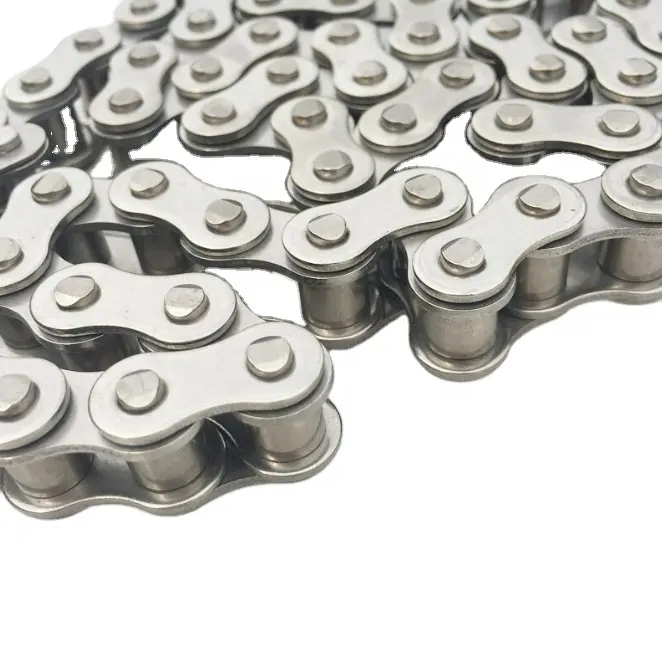
È possibile utilizzare catene di trasmissione nei sistemi di trasmissione di potenza?
Sì, le catene di trasmissione possono essere utilizzate nei sistemi di trasmissione di potenza. Ecco una risposta dettagliata alla domanda:
Le catene di trasmissione sono comunemente impiegate in diverse applicazioni di trasmissione di potenza in cui è necessario trasferire energia meccanica. Queste catene sono progettate per trasmettere il moto rotatorio e la potenza da un albero all'altro.
Le catene di trasmissione sono utilizzate in una vasta gamma di sistemi di trasmissione di potenza, tra cui:
- Macchinari industriali: Le catene di trasmissione vengono utilizzate in macchinari quali sistemi di trasporto, macchine per l'imballaggio, macchine da stampa e macchine utensili per trasferire potenza e movimento tra diversi componenti.
- Attrezzature agricole: Le catene di trasmissione vengono utilizzate nelle macchine agricole come trattori, mietitrebbie e raccoglitrici per trasmettere la potenza dal motore a vari componenti meccanici per operazioni come taglio, trebbiatura e semina.
- Settore automobilistico: le catene di trasmissione si trovano in alcune applicazioni automobilistiche, come le catene di trasmissione per motociclette o le catene di distribuzione che sincronizzano la rotazione dell'albero motore e dell'albero a camme nei motori a combustione interna.
- Generazione di energia: le catene di trasmissione vengono utilizzate nei sistemi di generazione di energia, tra cui turbine eoliche, turbine idroelettriche e turbine a vapore, per trasmettere il moto rotatorio dalla turbina al generatore.
- Macchine edili: Le catene di trasmissione vengono utilizzate nelle macchine edili come escavatori, pale caricatrici e bulldozer per trasferire potenza e movimento dal motore alla trasmissione e ai vari componenti idraulici.
Le catene di trasmissione offrono diversi vantaggi nei sistemi di trasmissione di potenza:
- Elevata efficienza: le catene di trasmissione presentano perdite di potenza minime, consentendo un trasferimento di potenza efficiente.
- Elevata capacità di carico: le catene di trasmissione sono in grado di gestire carichi elevati e trasmettere notevoli quantità di potenza.
- Flessibilità: le catene di trasmissione possono essere facilmente personalizzate per adattarsi a diverse applicazioni, con varie dimensioni, lunghezze e configurazioni disponibili.
- Durata: Le catene di trasmissione sono progettate per resistere ad applicazioni gravose e offrono una lunga durata se sottoposte a una corretta manutenzione.
- Conveniente: le catene di trasmissione sono spesso una soluzione economicamente vantaggiosa rispetto ad altre opzioni di trasmissione di potenza.
È importante selezionare il tipo e le dimensioni appropriate della catena di trasmissione in base alle esigenze specifiche del sistema di trasmissione. Anche la manutenzione e la lubrificazione regolari sono essenziali per garantire prestazioni ottimali e una lunga durata della catena di trasmissione.
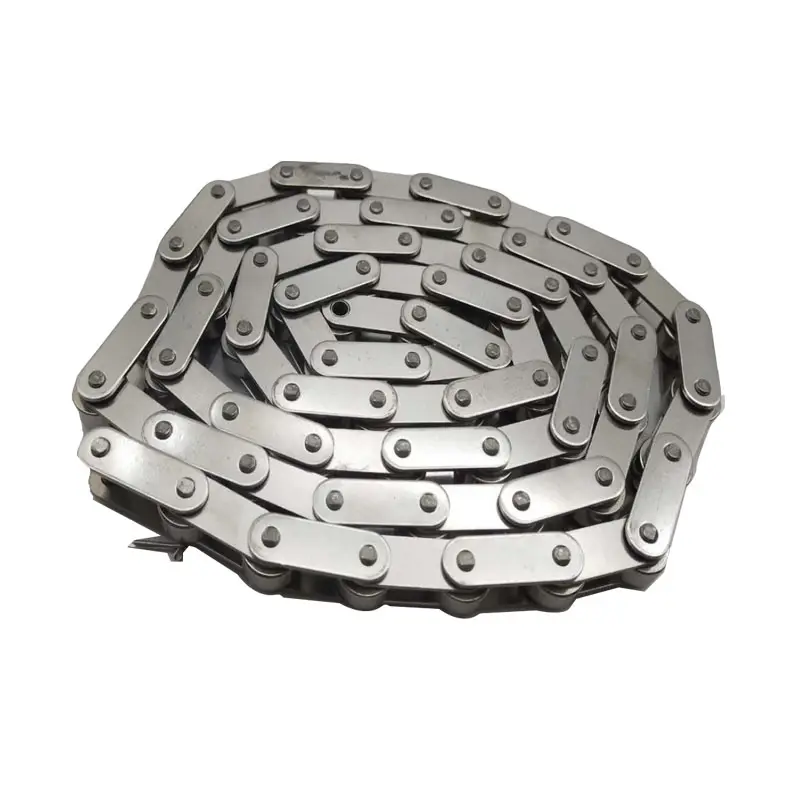
In che cosa si differenziano le catene a rulli dagli altri tipi di catene di trasmissione?
Le catene a rulli, note anche come catene a maglie a rulli, sono un tipo di catena di trasmissione comunemente utilizzata che si distingue dalle altre catene per diversi aspetti:
- Progettazione: Le catene a rulli sono composte da piastre interne ed esterne, perni, boccole e rulli. I rulli, liberi di ruotare, contribuiscono a ridurre l'attrito e l'usura, garantendo una trasmissione di potenza più fluida ed efficiente.
- Ampia applicazione: le catene a rulli sono versatili e ampiamente utilizzate in diversi settori, tra cui quello automobilistico, dei macchinari industriali, delle attrezzature agricole e dei sistemi di trasporto.
- Elevata capacità di carico: le catene a rulli sono progettate per resistere a carichi elevati e offrono un'eccellente resistenza alla trazione, risultando adatte ad applicazioni che richiedono prestazioni gravose.
- Efficienza: Le catene a rulli sono note per la loro elevata efficienza nella trasmissione di potenza. Il design a rulli riduce al minimo l'attrito, con conseguente minore perdita di energia e maggiore efficienza complessiva.
- Convenienza economica: le catene a rulli sono relativamente economiche rispetto ad altre catene di trasmissione specializzate, il che le rende una scelta popolare in molte applicazioni.
Sebbene le catene a rulli presentino dei vantaggi, è importante notare che diversi tipi di catene di trasmissione possono essere più adatti ad applicazioni specifiche. Fattori come la capacità di carico, la velocità, il livello di rumorosità e le condizioni ambientali devono essere presi in considerazione nella scelta della catena di trasmissione più appropriata per una particolare applicazione.


Modificato da CX il 11/08/2023