Description du produit
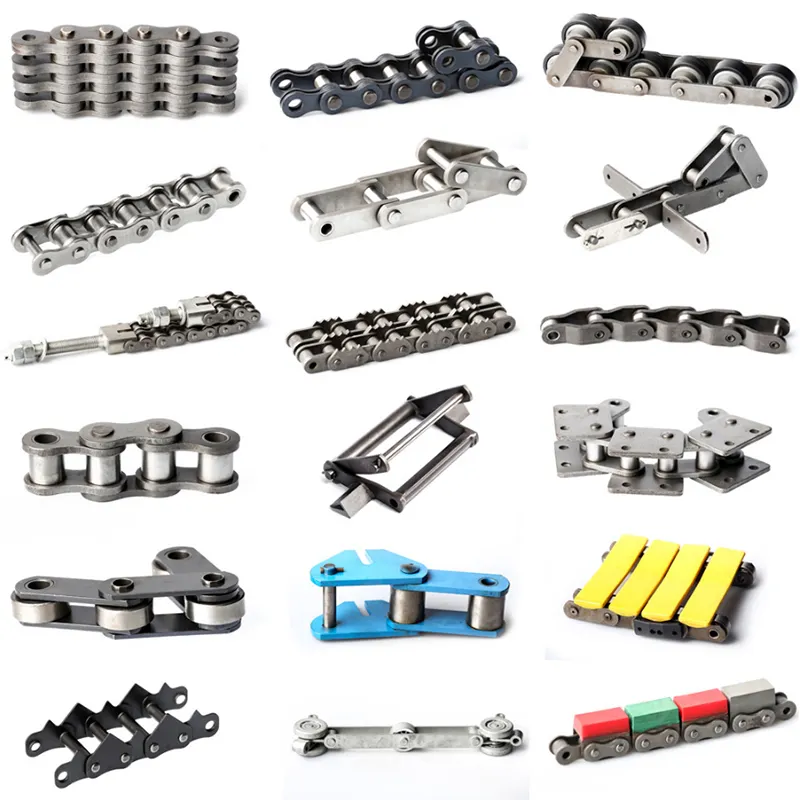
LISTE DE NOS PRODUITS :
Chaînes à rouleaux standard simples/doubles/triples des séries A et B et chaînes à rouleaux non standard
| DIN/ISO | ANSI | Pas | Rouleau | Largeur | Épingle | Épingle | Lnner | Plaque | Ultime | Moyenne | poids | |
| KIN/ISO | ANSL | entre | diamètre | longueur | plaque | épais | traction | traction | par | |||
| Chaîne | Chaîne | plaques intérieures | profondeur | -ness | force | force | mètre | |||||
| Non. | Non. | P | d1 | b1 | d2 | L | Lc | h2 | T | Q | Q0 | q |
| max | min | max | max | max | max | max | min | |||||
| mm | mm | mm | mm | mm | mm | mm | mm | kN/LB | kN | kg/m | ||
| *03C | *15 | 4.7625 | 2.48 | 2.38 | 1.62 | 6.1 | 6.9 | 4.3 | 0.6 | 1.80/409 | 2 | 0.08 |
| *04C-1 | *25 | 6.35 | 3.3 | 3.18 | 2.31 | 7.9 | 8.4 | 6 | 0.8 | 3.50/795 | 4.6 | 0.15 |
| *06C-1 | *35 | 9.525 | 5.08 | 4.77 | 3.58 | 12.4 | 13.17 | 9 | 1.3 | 7.90/1795 | 10.8 | 0.33 |
| 085-1 | 41 | 12.7 | 7.77 | 6.25 | 3.58 | 13.75 | 15 | 9.91 | 1.3 | 6.67/1516 | 12.6 | 0.41 |
| 08A-1 | 40 | 12.7 | 7.95 | 7.85 | 3.96 | 16.6 | 17.8 | 12 | 1.5 | 14.10/3205 | 17.5 | 0.62 |
| 10A-1 | 50 | 15.875 | 10.16 | 9.4 | 5.08 | 20.7 | 22.2 | 15.09 | 2.03 | 22.20/5045 | 29.4 | 1.02 |
| 12A-1 | 60 | 19.05 | 11.91 | 12.57 | 5.94 | 25.9 | 27.7 | 18 | 2.42 | 31.80/7227 | 41.5 | 1.5 |
| 16A-1 | 80 | 25.4 | 15.88 | 15.75 | 7.92 | 32.7 | 35 | 24 | 3.25 | 59.70/12886 | 69.4 | 2.6 |
| 20A-1 | 100 | 31.75 | 19.05 | 18.9 | 9.53 | 40.4 | 44.7 | 30 | 4 | 88.50/20114 | 109.2 | 3.91 |
| 24A-1 | 120 | 38.1 | 22.23 | 25.22 | 11.1 | 50.3 | 54.3 | 35.7 | 4.8 | 127.00/28864 | 156.3 | 5.62 |
| 28A-1 | 140 | 44.45 | 25.4 | 25.22 | 12.7 | 54.4 | 59 | 41 | 5.6 | 172.40/39182 | 212 | 7.5 |
| 32A-1 | 160 | 50.8 | 28.58 | 31.55 | 14.27 | 64.8 | 69.6 | 47.8 | 6.4 | 226.80/51545 | 278.9 | 1.1 |
| 36A-1 | 180 | 57.15 | 35.71 | 35.48 | 17.46 | 72.8 | 78.6 | 53.6 | 7.2 | 280.20/63682 | 341.8 | 13.45 |
| 40A-1 | 200 | 63.5 | 39.68 | 37.85 | 19.85 | 80.3 | 87.2 | 60 | 8 | 353.80/80409 | 431.6 | 16.15 |
| 48A-1 | 240 | 76.2 | 47.63 | 47.35 | 23.81 | 90.5 | 103 | 72.39 | 9.5 | 51.30/115977 | 622.5 | 23.2 |
| DIN/ISO | Pas | Rouleau | Largeur | Épingle | Épingle | Lnner | Plaque | Ultime | Moyenne | poids | |
| KIN/ISO | entre | diamètre | longueur | plaque | épais | traction | traction | par | |||
| Chaîne | plaques intérieures | profondeur | -ness | force | force | mètre | |||||
| Non. | P | d1 | b1 | d2 | L | Lc | h2 | T | Q | Q0 | q |
| max | min | max | max | max | max | max | min | ||||
| mm | mm | mm | mm | mm | mm | mm | mm | kN/LB | kN | kg/m | |
| 04B-1 | 6 | 4 | 2.8 | 1.85 | 6.8 | 7.8 | 5 | 0.6 | 3.2/682 | 3.2 | 0.11 |
| 05B-1 | 8 | 5 | 3 | 2.31 | 8.2 | 8.9 | 7.1 | 0.8 | 5.0/1136 | 5.9 | 0.2 |
| *06B-1 | 9.525 | 6.35 | 5.72 | 3.28 | 13.15 | 14.1 | 8.2 | 1.3 | 9.0/2045 | 10.4 | 0.41 |
| 08B-1 | 12.7 | 8.51 | 7.75 | 4.45 | 16.7 | 18.2 | 11.8 | 1.6 | 18.0/4091 | 19.4 | 0.69 |
| 10B-1 | 15.875 | 10.16 | 9.65 | 5.08 | 19.5 | 20.9 | 14.7 | 1.7 | 22.4/5091 | 27.5 | 0.93 |
| 12B-1 | 19.05 | 12.07 | 11.68 | 5.72 | 22.5 | 24.2 | 16 | 1.85 | 29.0/6591 | 32.2 | 1.15 |
| 16B-1 | 25.4 | 15.88 | 17.02 | 8.28 | 36.1 | 37.4 | 21 | 4.15/3.1 | 60.0/13636 | 72.8 | 2.71 |
| 20B-1 | 31.75 | 19.05 | 19.56 | 10.19 | 41.3 | 45 | 26.4 | 4.5/3.5 | 95.0/21591 | 106.7 | 3.7 |
| 24B-1 | 38.1 | 25.4 | 25.4 | 14.63 | 53.4 | 57.8 | 33.2 | 6.0/4.8 | 160.0/36364 | 178 | 7.1 |
| 28B-1 | 44.45 | 27.94 | 30.99 | 15.9 | 65.1 | 69.5 | 36.7 | 7.5/6.0 | 200.0/45455 | 222 | 8.5 |
| 32B-1 | 50.8 | 29.21 | 30.99 | 17.81 | 66 | 71 | 42 | 7.0/6.0 | 250.0/56818 | 277.5 | 10.25 |
| 40B-1 | 63.5 | 39.37 | 38.1 | 22.89 | 82.2 | 89.2 | 52.96 | 8.5/8.0 | 355.0/80682 | 394 | 16.35 |
| 48B-1 | 76.2 | 48.26 | 45.72 | 29.24 | 99.1 | 107 | 63.8 | 560.0/127272 | 621.6 | 25 | |
Présentation des produits
Notre atelier
Notre équipement de traitement à chaud
FAQ
Q1. Quelles sont vos conditions d'emballage ?
R : Généralement, nous emballons nos produits dans des boîtes d'une seule couleur. Si vous avez des exigences particulières concernant l'emballage, veuillez nous en informer à l'avance ; nous pouvons emballer les produits selon vos instructions.
Q2. Quelles sont vos conditions de paiement ?
A: Paiement par virement bancaire (T/T) : 30% comme acompte et 70% avant la livraison. Nous vous enverrons des photos des produits et des emballages.
Avant de régler le solde. Pour toute autre modalité de paiement, veuillez nous contacter au préalable afin que nous puissions en discuter.
Q3. Quelles sont vos conditions de livraison ?
A: EXW, FOB, CFR, CIF.
Q4. Quel est votre délai de livraison ?
R : Généralement, il faut compter entre 25 et 30 jours après réception de votre acompte. Le délai de livraison précis dépend de plusieurs facteurs.
sur les articles et la quantité de votre commande.
Q5. Pouvez-vous produire conformément aux échantillons ?
R : Oui, nous pouvons produire à partir de vos échantillons ou de vos dessins techniques. Nous pouvons fabriquer les moules et les outillages.
Q6. Quelle est votre politique d'échantillonnage ?
A: Nous pouvons fournir un échantillon si nous avons des pièces en stock, mais les clients doivent payer le coût de l'échantillon et
Les frais de livraison sont à votre charge. Nous acceptons les commandes d'échantillons.
Q7. Testez-vous tous vos produits avant la livraison ?
R : Oui, nous effectuons le test 100% avant la livraison.
Q8 : Comment assurez-vous la pérennité de notre relation commerciale et l'établissement d'une bonne relation ?
1. Nous maintenons une bonne qualité et des prix compétitifs pour garantir le bénéfice de nos clients ;
2. Nous respectons chaque client comme un ami et nous faisons des affaires et nouons des amitiés sincères avec eux.
peu importe d'où ils viennent.
| Matériel: | Alliage |
|---|---|
| Structure: | Chaîne à rouleaux |
| Traitement de surface : | Polissage |
| Taille de la chaîne : | 1/2"*11/128" |
| Fonctionnalité: | Résistant au feu, à l'huile et à la chaleur |
| Colis de transport : | Caisse en bois non fumigée, par avion, par mer |
| Exemples : |
US$ 2/Mètre
1 mètre (commande minimale) | |
|---|
| Personnalisation : |
Disponible
| Demande personnalisée |
|---|
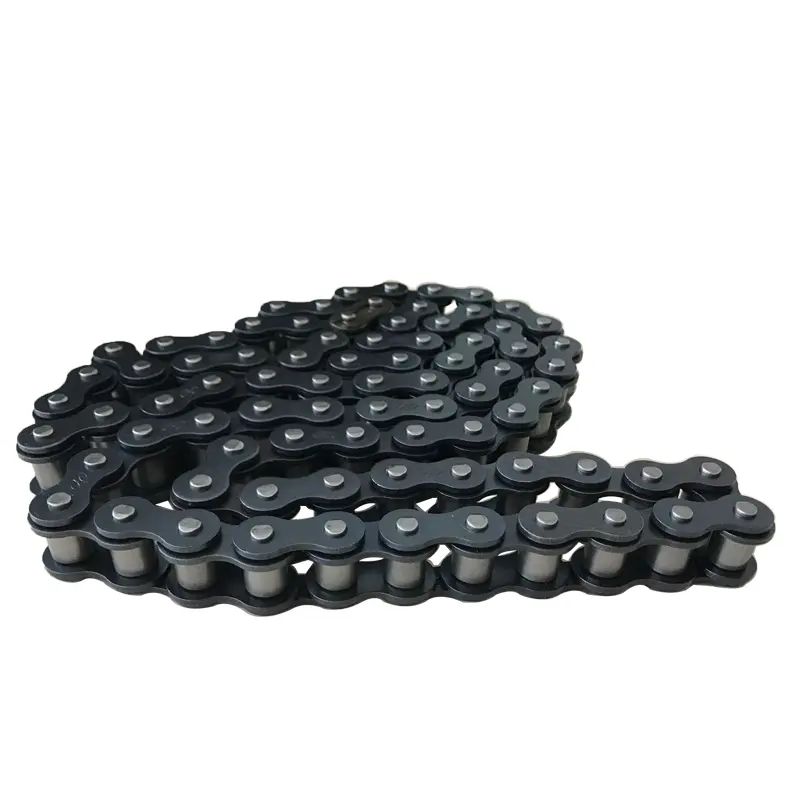
Les chaînes de transmission peuvent-elles être utilisées dans le secteur de la construction ou pour les engins lourds ?
Oui, les chaînes de transmission sont couramment utilisées dans le secteur de la construction et pour les engins lourds en raison de leur durabilité et de leur capacité à supporter des charges élevées. Voici une réponse détaillée à la question :
Les engins de construction et de terrassement, tels que les excavatrices, les bulldozers, les grues et les chargeuses, utilisent souvent des chaînes de transmission pour transmettre la puissance et le mouvement entre leurs différents composants. Ces chaînes sont conçues pour résister aux conditions difficiles et aux charges importantes rencontrées sur les chantiers et lors des travaux de terrassement.
Les principaux avantages de l'utilisation de chaînes de transmission dans la construction et les engins lourds sont les suivants :
1. Capacité de charge : Les chaînes de transmission sont conçues pour supporter des charges importantes et assurer une transmission de puissance fiable dans les équipements nécessitant une force considérable. Elles sont conçues pour résister aux contraintes et aux tensions extrêmes liées au levage, à la traction et à la poussée de matériaux lourds.
2. Durabilité : Les engins de chantier et les équipements lourds fonctionnent dans des environnements difficiles, exposés aux débris, à la poussière, aux vibrations et aux intempéries. Les chaînes de transmission sont conçues pour être robustes et résistantes à l’usure, à la corrosion et à la fatigue, garantissant ainsi un fonctionnement fiable et une longue durée de vie dans ces conditions exigeantes.
3. Polyvalence : Les chaînes de transmission sont disponibles en différentes tailles, configurations et matériaux, ce qui permet de les adapter aux exigences spécifiques de chaque équipement. Cette polyvalence permet aux fabricants de sélectionner la chaîne la plus adaptée à chaque application, garantissant ainsi des performances et une efficacité optimales.
4. Transmission de puissance : Les engins de construction et les équipements lourds nécessitent souvent un couple élevé et une transmission de puissance précise. Les chaînes de transmission excellent dans la transmission de la puissance du moteur aux différentes pièces mobiles, telles que les roues, les chenilles et les mécanismes de levage, permettant ainsi à l’équipement de remplir efficacement ses fonctions.
5. Maintenance aisée : Les chaînes de transmission sont généralement de conception simple, ce qui facilite leur entretien. Une inspection régulière, une lubrification et un réglage de la tension sont essentiels pour garantir leur bon fonctionnement et prolonger leur durée de vie. Un entretien approprié permet de minimiser les temps d’arrêt et de réduire les coûts globaux de maintenance des équipements.
Il est important de noter que, bien que les chaînes de transmission soient largement utilisées dans le secteur de la construction et pour les engins lourds, le choix du type, de la taille et du matériau de la chaîne doit tenir compte de l'application spécifique et des conditions d'utilisation. Il est essentiel de consulter les recommandations du fabricant de l'équipement pour garantir des performances et une sécurité optimales.
Comment la vitesse de rotation influence-t-elle le choix de la chaîne de transmission ?
La vitesse de rotation est un facteur important à prendre en compte lors du choix d'une chaîne de transmission pour une application spécifique. Voici une réponse détaillée à cette question :
1. Fatigue et usure : La vitesse de rotation influe directement sur les caractéristiques de fatigue et d’usure d’une chaîne de transmission. Des vitesses de rotation plus élevées entraînent une augmentation des contraintes cycliques et de l’usure des composants de la chaîne. Il est donc essentiel de choisir une chaîne conçue pour supporter la vitesse prévue et les contraintes de fatigue associées.
2. Lubrification et refroidissement : Une vitesse de rotation plus élevée génère davantage de chaleur en raison du frottement entre la chaîne et les pignons. Une lubrification adéquate est essentielle pour minimiser le frottement, réduire l’accumulation de chaleur et préserver les performances et la durée de vie de la chaîne. De plus, certaines applications à haute vitesse peuvent nécessiter des mécanismes de refroidissement supplémentaires pour dissiper efficacement la chaleur.
3. Forces centrifuges : À mesure que la vitesse de rotation augmente, les forces centrifuges deviennent plus importantes. Ces forces peuvent affecter la stabilité, la tension et les performances générales de la chaîne. Les chaînes conçues pour les applications à grande vitesse sont fabriquées pour résister à ces forces centrifuges accrues et maintenir une tension optimale en fonctionnement.
4. Équilibre dynamique : Une rotation à grande vitesse peut engendrer des déséquilibres dynamiques dans la transmission, provoquant des vibrations et une baisse du rendement. Il convient donc de choisir une chaîne de transmission présentant des caractéristiques d’équilibrage dynamique adéquates afin de minimiser les vibrations et d’assurer un fonctionnement optimal.
5. Matériaux et conception : Les chaînes destinées aux applications à grande vitesse nécessitent souvent des matériaux et une conception spécifiques pour supporter les forces de rotation accrues et garantir leur fiabilité. Des alliages à haute résistance, des tolérances de fabrication précises et des traitements de surface avancés peuvent être utilisés pour améliorer les performances et la durabilité de la chaîne à haute vitesse.
Lors du choix d'une chaîne de transmission, il est essentiel de tenir compte des recommandations et spécifications du fabricant concernant les vitesses maximales admissibles. Les exigences opérationnelles de l'application, la vitesse de rotation prévue, la charge et les conditions environnementales doivent être prises en compte afin de garantir que la chaîne choisie soit adaptée à l'application à haute vitesse spécifique.
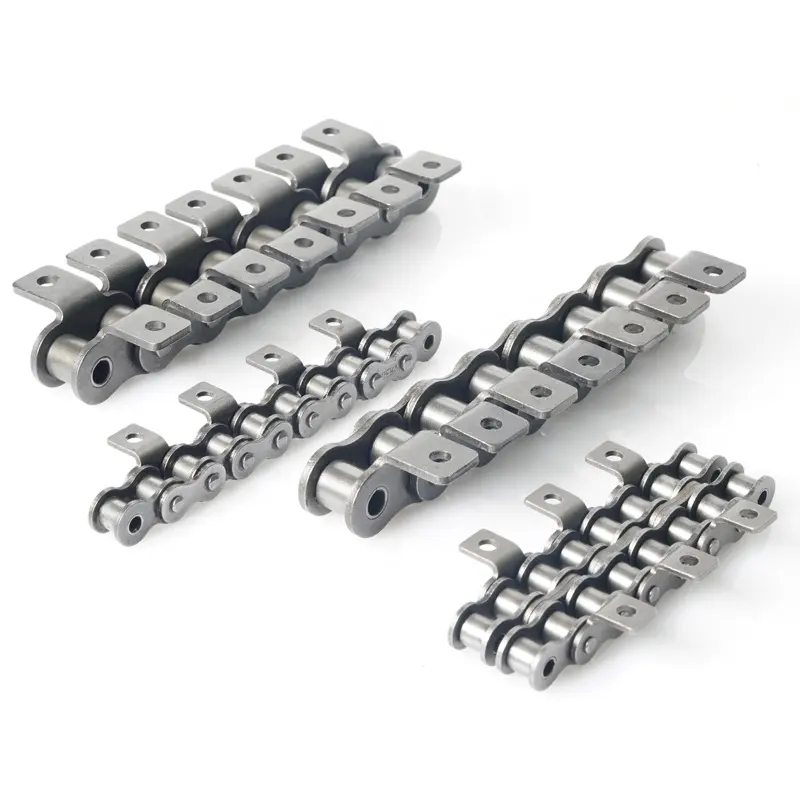
Quelles sont les principales différences entre les chaînes de transmission standard et les chaînes de transmission renforcées ?
Les chaînes de transmission standard et renforcées sont conçues pour répondre à des exigences de charge et de performance différentes. Voici les principales différences entre ces deux types :
- Capacité de charge : Les chaînes de transmission renforcées sont conçues pour supporter des charges plus élevées et offrent une résistance supérieure aux chaînes standard. Elles sont destinées aux applications plus exigeantes et plus lourdes.
- Construction : Les chaînes de transmission renforcées sont généralement construites avec des plaques plus épaisses, des axes plus grands et des composants plus robustes afin d'améliorer leur durabilité et leur capacité de charge.
- Dimension : Les chaînes de transmission renforcées sont souvent de plus grande taille que les chaînes standard afin de répondre aux exigences de charge accrues.
- Poids : De par leur construction robuste, les chaînes de transmission renforcées ont tendance à être plus lourdes que les chaînes standard.
- Durabilité : Les chaînes renforcées sont conçues pour offrir une meilleure résistance à l'usure, à la fatigue et une durabilité globale accrue, afin de résister aux conditions d'utilisation difficiles et à une utilisation prolongée.
- Applications : Les chaînes de transmission standard conviennent aux applications légères soumises à des charges modérées, telles que les machines légères, les convoyeurs et les petits équipements. Les chaînes de transmission renforcées, quant à elles, sont conçues pour les machines lourdes, les équipements industriels, les applications minières et autres environnements exigeants.
Il est important de prendre en compte les exigences spécifiques de votre application, notamment la capacité de charge, les conditions de fonctionnement et la durée de vie prévue, afin de déterminer si une chaîne de transmission standard ou renforcée est le bon choix.


Édité par CX le 11 octobre 2023