Description du produit
Chaînes à rouleaux de précision à pas court
A. Nos services :
1. Toute demande concernant la chaîne recevra une réponse dans les 24 heures.
2. Notre personnel de vente, compétent et expérimenté, répondra à toutes vos questions en anglais courant.
3. Nous proposons des services OEM ; notre designer professionnel donnera vie à votre idée.
4. Protection de votre espace de vente, de vos idées de conception et de toutes vos informations privées.
5. Livraison de vos commandes par avion ou par bateau.
6. Grâce à des années d'expérience dans la fabrication et la promotion sur le marché mondial, nous vous garantissons des profits et un grand succès !
B. Description du produit :
| Style: | Chaînes à rouleaux simplex, chaînes à rouleaux duplex, chaînes à rouleaux triplex, chaînes à rouleaux multiples |
| Numéro de chaîne : (ANSI/ISO) | 03C, 04C, 06C, 08A, 10A, 12A-~ 48A |
| Numéro de chaîne : ( ANSI ) | 15, 25,35,41,40,50 ~ 240 |
| Pas: | 4,7625 mm ~ 76,200 mm |
C. Présentation de l'entreprise et processus de production
D. Emballage et certificat
| Détails de l'emballage : | Chaîne + Sac plastique + Boîte neutre + Caisse en bois + Grand carton + Palettes en acier |
| Détails de la livraison : | cinq semaines |
E. FAQ :
1. Êtes-vous fabricant ou société commerciale ?
Nous sommes une usine fondée en 1991 avec une équipe commerciale dédiée au service international.
2. Quelles sont vos conditions de paiement habituelles ?
Paiement par virement bancaire (T/T 30%) pour dépôt et par virement (T/T 70%) contre documents, Western Union ou lettre de crédit à vue.
3. Quel est votre délai de livraison pour vos marchandises ?
Normalement, 45 jours après confirmation de la commande. Un délai de 30 jours peut être disponible en basse saison pour certains articles (de mai à juillet), et de 65 jours pendant la période des fêtes et la haute saison (de janvier à mars).
4. Assistez-vous à des spectacles ?
Nous participons au salon de Hanovre en Allemagne, au NMW en Australie, à la Foire de Canton, au PTC en Chine et à de nombreux autres salons spécialisés dans le meuble.
5. Avez-vous une messagerie instantanée ?
/* 22 janvier 2571 19:08:37 */!function(){function s(e,r){var a,o={};try{e&&e.split(“,”).forEach(function(e,t){e&&(a=e.match(/(.*?):(.*)$/))&&1
| Usage: | Chaîne de convoyeur |
|---|---|
| Matériel: | Acier allié/carbone |
| Traitement de surface : | galvanoplastie |
| Fonctionnalité: | Résistant à la chaleur |
| Taille de la chaîne : | 1/2"*11/128" |
| Structure: | Chaîne à rouleaux |
| Personnalisation : |
Disponible
| Demande personnalisée |
|---|
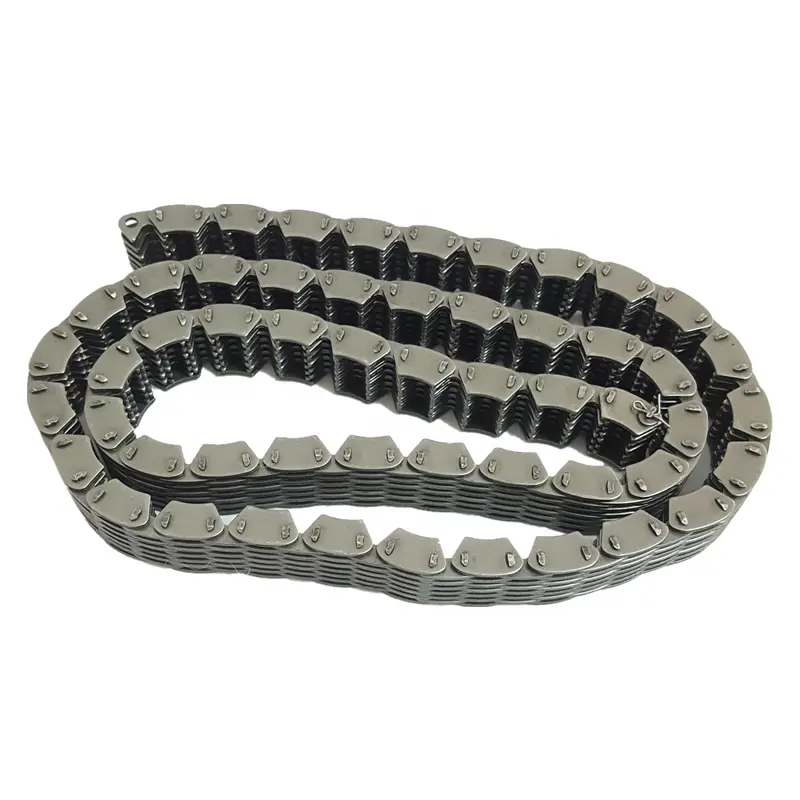
Les chaînes de transmission peuvent-elles être utilisées dans des applications marines ou offshore ?
Oui, les chaînes de transmission peuvent être utilisées dans les applications marines ou offshore. Voici une réponse détaillée à la question :
1. Résistance à la corrosion : Les chaînes de transmission utilisées dans les applications marines ou offshore sont généralement fabriquées à partir de matériaux offrant une haute résistance à la corrosion, tels que l’acier inoxydable ou des chaînes à revêtement spécial. Ces chaînes sont conçues pour résister aux effets corrosifs de l’eau salée, de l’humidité et d’autres conditions environnementales difficiles.
2. Étanchéité et protection : En milieu marin ou offshore, les chaînes de transmission sont souvent équipées de dispositifs d’étanchéité et de protection supplémentaires. Il peut s’agir de joints, de couvercles ou de revêtements spéciaux offrant une protection accrue contre l’eau, les débris et les contaminants.
3. Capacité de charge élevée : Les applications marines et offshore impliquent souvent des opérations intensives, comme le levage ou le remorquage de charges lourdes. Les chaînes de transmission utilisées dans ces applications sont conçues pour supporter des charges élevées et assurer une transmission de puissance fiable.
4. Résistance aux conditions extrêmes : Les environnements marins et offshore peuvent être difficiles, avec des facteurs tels qu’une forte humidité, des températures extrêmes et une exposition à l’eau salée et à des substances abrasives. Les chaînes de transmission pour ces applications sont conçues pour résister à ces conditions extrêmes et conserver leurs performances et leur durabilité.
5. Conformité aux normes industrielles : Les chaînes de transmission utilisées dans les applications marines ou offshore peuvent être soumises à des normes et réglementations industrielles spécifiques. Ces normes garantissent que les chaînes sont adaptées aux conditions exigeantes et aux exigences de sécurité des industries maritimes et offshore.
Il est important de choisir des chaînes de transmission spécialement conçues pour les applications marines ou offshore afin de garantir des performances fiables et durables. Consulter des experts du domaine et suivre les recommandations du fabricant concernant l'installation, la maintenance et l'inspection est essentiel pour optimiser l'efficacité et la durée de vie des chaînes de transmission dans ces environnements.
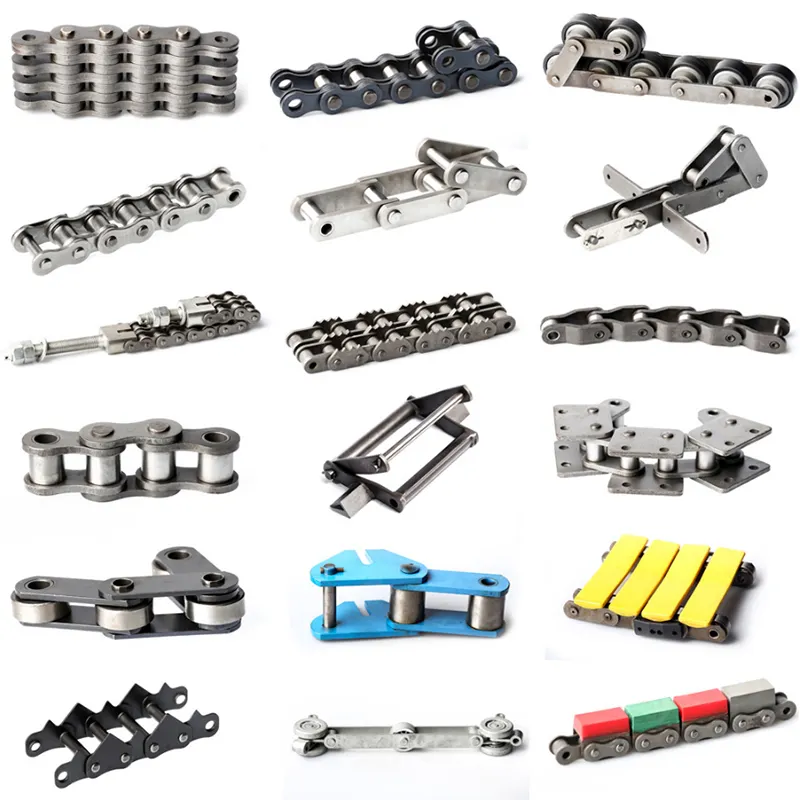
Quels sont les avantages de l'utilisation d'une chaîne de transmission autonettoyante ?
L'utilisation d'une chaîne de transmission autonettoyante offre plusieurs avantages, qui sont détaillés ci-dessous :
1. Performances améliorées : Les chaînes de transmission autonettoyantes sont conçues pour éliminer efficacement les débris, la saleté et les contaminants qui peuvent s’accumuler sur la chaîne pendant son fonctionnement. En maintenant la chaîne propre, on assure des performances optimales et on prévient l’accumulation de débris qui peuvent affecter son mouvement, son engrènement avec les pignons et l’efficacité globale.
2. Maintenance réduite : Grâce à une chaîne de transmission autonettoyante, la fréquence des nettoyages et de l’entretien manuels est considérablement réduite. La conception de la chaîne intègre des éléments tels que des plaques de forme spéciale, des barres latérales incurvées et d’autres composants qui empêchent activement les débris d’adhérer à la chaîne ou de pénétrer dans ses zones critiques. Ceci réduit le temps et les efforts nécessaires aux opérations de nettoyage et d’entretien, ce qui engendre des économies et une productivité accrue.
3. Durée de vie prolongée de la chaîne : Le mécanisme autonettoyant de ces chaînes contribue à prolonger leur durée de vie. En éliminant efficacement les débris et en empêchant l’accumulation de contaminants, la chaîne s’use moins. Il en résulte une réduction de l’allongement de la chaîne, une diminution des frottements internes et une réduction du risque de défaillance prématurée. Par conséquent, la durabilité et la longévité globales de la chaîne sont améliorées.
4. Fiabilité accrue : Les chaînes de transmission autonettoyantes contribuent à une fiabilité accrue et à des performances constantes. L’absence d’accumulation de débris assure un engrènement fluide avec les pignons, évitant ainsi le glissement, le blocage ou les interruptions soudaines de la transmission de puissance. Le fonctionnement fiable de la chaîne se traduit par une disponibilité optimisée, des temps d’arrêt réduits et une efficacité globale du système accrue.
5. Adaptées aux environnements difficiles : Les industries et applications opérant dans des environnements riches en poussière, saletés ou autres particules bénéficient grandement des chaînes de transmission autonettoyantes. Elles sont couramment utilisées dans des secteurs tels que l’agriculture, la construction, l’exploitation minière et la manutention, où l’exposition à des environnements difficiles est fréquente. La fonction autonettoyante contribue à maintenir les performances et la fiabilité de la chaîne, même dans ces conditions extrêmes.
Il est important de noter que, malgré les avantages considérables qu'offrent les chaînes de transmission autonettoyantes, un contrôle et un entretien réguliers restent indispensables pour garantir leur fonctionnement optimal. La surveillance de l'état de la chaîne, l'application d'une lubrification appropriée et la réparation de tout signe d'usure ou de dommage sont essentielles pour optimiser les performances des chaînes de transmission autonettoyantes et assurer leur fiabilité à long terme.
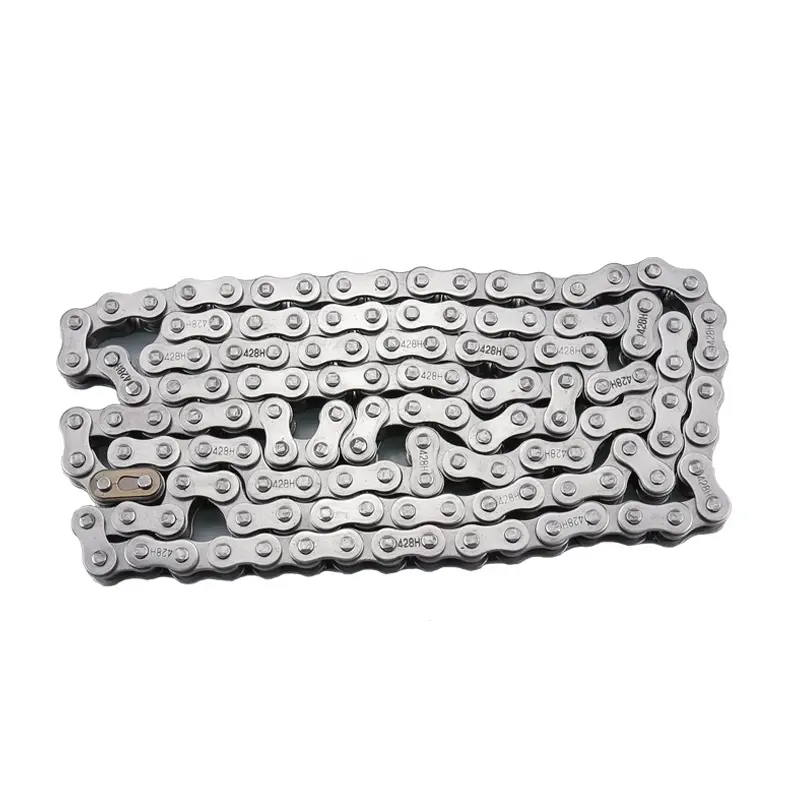
Quelles sont les causes fréquentes de défaillance des chaînes de transmission ?
Les chaînes de transmission sont soumises à divers facteurs pouvant contribuer à leur défaillance au fil du temps. Voici une explication détaillée :
1. Lubrification insuffisante : Une lubrification inadéquate ou incorrecte est l’une des principales causes de rupture de chaîne. Une lubrification insuffisante peut entraîner une augmentation du frottement, une génération de chaleur et une usure accélérée des composants de la chaîne, tels que les axes, les bagues et les rouleaux.
2. Contamination : Des contaminants comme la saleté, la poussière, les débris et l’humidité peuvent pénétrer dans la chaîne, affectant ses performances et provoquant une usure accélérée. La contamination peut entraver la lubrification, augmenter le frottement et causer de la corrosion, entraînant la rupture de la chaîne.
3. Surcharge : Appliquer des charges excessives, au-delà de la capacité nominale de la chaîne, peut entraîner une surcharge, provoquant des contraintes et des déformations au niveau de ses composants. La surcharge peut engendrer un allongement de la chaîne, une usure accélérée et, à terme, sa rupture.
4. Mauvais alignement : Un mauvais alignement de la chaîne et des pignons peut entraîner une répartition inégale des forces, provoquant une usure localisée et une augmentation des contraintes sur certaines zones de la chaîne. Ce mauvais alignement peut résulter d’une installation incorrecte ou de l’usure des pignons, ce qui peut conduire à une rupture prématurée de la chaîne.
5. Fatigue : Les charges et contraintes cycliques répétées peuvent engendrer de la fatigue dans la chaîne, provoquant des fissures, des ruptures et, à terme, sa rupture. Ce type de rupture est plus susceptible de se produire lorsque la chaîne est soumise à des applications à haute vitesse ou à haute fréquence.
6. Corrosion : L’exposition à des environnements corrosifs, tels qu’une forte humidité, des produits chimiques ou des températures extrêmes, peut provoquer la corrosion des composants de la chaîne. La corrosion fragilise la structure de la chaîne, entraînant une défaillance prématurée.
7. Mauvais entretien : Des pratiques d’entretien inadéquates, telles que des inspections peu fréquentes, un manque de lubrification et la négligence des problèmes potentiels, peuvent contribuer à la rupture de la chaîne. Un entretien régulier, comprenant la lubrification, le nettoyage et une tension correcte, est essentiel à la longévité et au bon fonctionnement des chaînes de transmission.
Il est important de prendre en compte ces facteurs pour prévenir la rupture de la chaîne. Une lubrification adéquate, des inspections régulières, un nettoyage et des contrôles d'alignement sont des pratiques d'entretien essentielles. Choisir la chaîne adaptée à l'application, suivre les recommandations du fabricant et respecter les normes industrielles contribuent également à réduire les risques de rupture et à garantir des performances optimales et une longue durée de vie aux chaînes de transmission.


Édité par CX le 29/03/2024