Descripción del Producto
Disponemos de todos los repuestos para camionetas CZPT y japonesas, así como de piezas de serie para diferentes coches.
Productos de alta calidad, originales, fabricados en Zhejiang, China continental, almacén de más de 6000 metros cuadrados en CZPT, muchas piezas en stock.
No dude en ponerse en contacto con nosotros para obtener más información.
Información
| 1. Nombre del artículo: | Cadena de transmisión del eje de salida T/F para TOYOTA |
| 2.N.º DE FABRICANTE: | 36293-35040 36293-35030 36293-35031 HV-117 |
| 3. Adecuado para: |
Toyota Hilux 2kd |
| 4. Plazo de entrega: | Normalmente, entre 1 y 15 días después del depósito o según los requisitos del cliente, dependiendo del stock. |
| 5. Ventajas: | 1. Directamente de fábrica, calidad original y precio más bajo. 2. La mayoría de los artículos están en stock, podemos enviárselos en poco tiempo. 3. Servicio sincero: si tiene algún problema después de recibir la mercancía, póngase en contacto con nosotros sin dudarlo; le ofreceremos la mejor solución. |
Foto detallada
Evaluación de los huéspedes
| Las buenas opiniones de los clientes son el mayor reconocimiento para nuestros productos. Con el auge de la iniciativa "Hecho en China", los proveedores siempre describen sus productos como de la mejor calidad, pero creo que los mejores productos son aquellos que reciben el reconocimiento de los clientes. |
| Una buena evaluación, que trasciende las distancias entre países, fortalece la confianza y los sentimientos mutuos. Una cooperación realmente eficaz se basa en la comprensión y la tolerancia recíprocas, como la amistad entre China y otros países. |
| También espero tener la oportunidad de colaborar con ustedes. Al igual que la evaluación que me han brindado mis clientes, confío en que ustedes también obtendrán buenos resultados y beneficios. |
Productos relacionados
| Para garantizar la demanda de nuestros huéspedes, fabricamos todos los modelos de cadenas. Solo necesita proporcionarnos las cantidades exactas y fotografías. Puedo fabricarle la misma cadena. |
Taller
| Nuestro taller de producción abarca una superficie de más de 6000 metros cuadrados, con más de 200 máquinas y más de 30 tipos de equipos de desarrollo y prueba. Además, contamos con una gestión profesional y un alto nivel de producción en Zhejiang, una auténtica fábrica original en China. |
Control de calidad
| Cada una de nuestras cadenas se somete a rigurosas pruebas manuales y mecánicas según la norma 100%, además de un tratamiento antioxidante. Solo mediante pruebas rigurosas podemos garantizar una mejor calidad y generar mayor confianza en nuestros clientes. |
Testimonios de clientes y exhibición
| Visitantes de diversos países han venido a nuestra fábrica y están muy satisfechos con nuestro nivel de producción y nuestra cadena de suministro. Mantenemos una excelente relación de cooperación desde hace muchos años. También participamos en la Feria de Autopartes de Zhejiang Frankfurt y en la Feria de Hangzhou, entre otras. En cada edición recibimos nuevos visitantes y establecemos nuevas oportunidades de colaboración. |
Embalaje
| En cuanto al embalaje, personalizaremos o utilizaremos embalajes convencionales según los requisitos del cliente. Bolsa de polietileno + papel antioxidante + caja + cartón |
Nuestro certificado
| Nuestros productos han superado las certificaciones ISO 9001 e ISO 14001, así como la certificación de fábrica Made-in-China. |
Preguntas frecuentes
P1: ¿Cuántos años lleva su empresa en la industria de autopartes?
A: La empresa fue fundada hace 20 años.
P2: ¿Cuáles son sus principales productos?
A: Nuestros productos principales son todo tipo de cadenas para cajas de transferencia y cadenas de distribución.
P3: ¿Dónde se encuentra su empresa?
A: Estamos ubicados en la ciudad de Hangzhou, provincia de Zhejiang, China.
P4: ¿Son ustedes una fábrica o una empresa comercial?
R: Somos una fábrica real con licencias de exportación.
P5: ¿Cuál es el MOQ?
R: Normalmente, nuestro pedido mínimo es de 100 unidades, pero cada producto puede tener un pedido mínimo diferente.
P6: ¿Qué tal la calidad de sus sensores?
A: Nuestros productos cuentan con la certificación ISO9001. También se aceptan y se pueden adaptar a las especificaciones OEM.
Cumplimos con lo prometido. Todos los artículos se prueban antes del envío. Le invitamos cordialmente a visitar nuestra fábrica cuando le convenga.
P7: ¿Qué tal la garantía de sus sensores?
R: Todos nuestros sensores tienen una garantía de 1 año; para algunos sensores, la garantía se puede extender a 2 años.
P8: ¿Cuáles son las condiciones de pago?
A: Depósito de 30% antes de la producción, saldo de 70% antes del envío.
P9: ¿Su empresa puede personalizar los sensores?
R: ¡SÍ! Puede personalizar los sensores sin problema, pero se recomienda encarecidamente proporcionar muestras.
| Servicio posventa: | Excelente |
|---|---|
| Garantía: | 1 año |
| Tipo: | Caja de cambios |
| Material: | Acero |
| Proceso de dar un título: | ISO |
| Automático: | Automático |
| Personalización: |
Disponible
| Solicitud personalizada |
|---|

¿Cómo afecta la elección del sistema de fijación de la cadena a la funcionalidad de una cadena de transmisión?
La elección del sistema de fijación de la cadena desempeña un papel fundamental en la funcionalidad y el rendimiento de una cadena de transmisión. A continuación, se ofrece una respuesta detallada a la pregunta:
1. Capacidad de carga: Los distintos accesorios de cadena están diseñados para soportar tipos y cantidades de carga específicos. La selección del accesorio adecuado es crucial para garantizar que la cadena de transmisión pueda transportar la carga prevista de forma segura y eficiente. El tipo de accesorio, como pasadores extendidos, tacos o listones, puede determinar la capacidad de la cadena para soportar cargas pesadas o irregulares.
2. Compatibilidad con la aplicación: La elección del accesorio de cadena debe ajustarse a los requisitos específicos de la aplicación. Diferentes industrias y aplicaciones pueden requerir accesorios especializados diseñados para abordar desafíos particulares o proporcionar funcionalidades específicas. Por ejemplo, los accesorios utilizados en sistemas de transporte pueden incluir rodillos, paletas o pinzas para facilitar la transferencia fluida del material.
3. Alineación y seguimiento: Ciertos accesorios de la cadena, como los rieles guía o los sistemas de rieles, ayudan a garantizar la correcta alineación y el seguimiento de la cadena de transmisión. Estos accesorios minimizan el riesgo de descarrilamiento o desalineación de la cadena, lo que puede ocasionar problemas operativos y una menor eficiencia.
4. Posicionamiento y orientación: Algunas aplicaciones requieren un posicionamiento u orientación precisos de objetos o componentes. Los accesorios de la cadena, como los pasadores o soportes de indexación, están diseñados para facilitar el posicionamiento o la rotación exactos de los objetos a lo largo de la cadena. Estos accesorios contribuyen al funcionamiento fiable y preciso de la cadena de transmisión.
5. Manipulación de materiales: En las aplicaciones de manipulación de materiales, se suelen utilizar cadenas para asegurar o sujetar objetos durante el transporte. Accesorios como ganchos, abrazaderas o soportes permiten fijar los objetos a la cadena de forma segura, evitando que se deslicen o se desplacen durante el movimiento. Esto garantiza operaciones de manipulación de materiales seguras y eficientes.
6. Funciones especializadas: Los accesorios de cadena pueden proporcionar funciones adicionales según los requisitos específicos de cada aplicación. Por ejemplo, se pueden integrar sensores, etiquetas RFID o depósitos de lubricación en el diseño de la cadena para permitir funciones de monitoreo, seguimiento o lubricación. Estos accesorios especializados mejoran la funcionalidad y el rendimiento general de la cadena de transmisión.
Es importante seleccionar el accesorio de cadena adecuado según las necesidades específicas de la aplicación, los requisitos de carga y la funcionalidad deseada. Consultar con expertos del sector o fabricantes de cadenas puede ayudar a determinar las opciones de accesorio más apropiadas para un rendimiento óptimo de la cadena de transmisión.
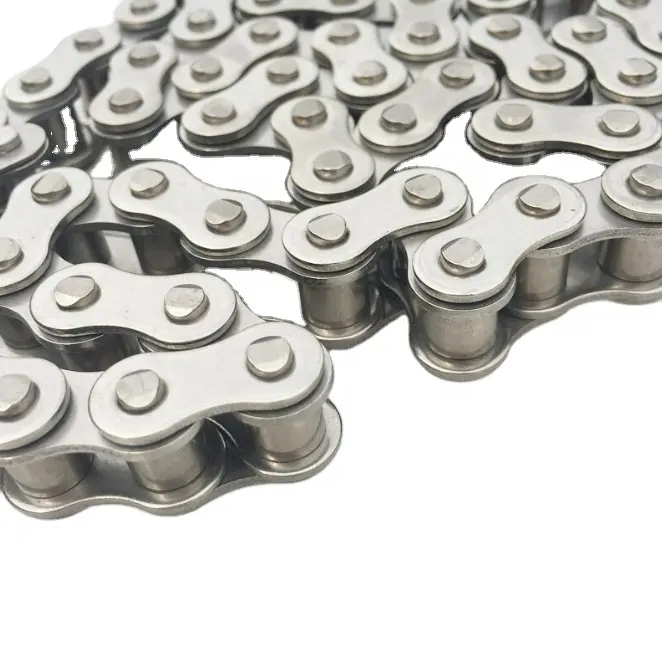
¿Se pueden utilizar cadenas de transmisión en sistemas de transmisión de potencia?
Sí, las cadenas de transmisión se pueden usar en sistemas de transmisión de potencia. Aquí tienes una respuesta detallada a la pregunta:
Las cadenas de transmisión se utilizan habitualmente en diversas aplicaciones de transmisión de potencia donde se requiere la transferencia de energía mecánica. Estas cadenas están diseñadas para transmitir movimiento rotacional y potencia de un eje a otro.
Las cadenas de transmisión se utilizan en una amplia gama de sistemas de transmisión de potencia, entre los que se incluyen:
- Maquinaria industrial: Las cadenas de transmisión se utilizan en maquinaria como sistemas de transporte, equipos de embalaje, imprentas y máquinas herramienta para transferir potencia y movimiento entre diferentes componentes.
- Equipos agrícolas: Las cadenas de transmisión se utilizan en maquinaria agrícola como tractores, cosechadoras y segadoras para transmitir la potencia del motor a diversos componentes mecánicos para tareas como cortar, trillar y sembrar.
- Automoción: Las cadenas de transmisión se pueden encontrar en ciertas aplicaciones automotrices, como las cadenas de transmisión de las motocicletas o las cadenas de distribución que sincronizan la rotación del cigüeñal y el árbol de levas en los motores de combustión interna.
- Generación de energía: Las cadenas de transmisión se utilizan en los sistemas de generación de energía, incluidas las turbinas eólicas, las turbinas hidroeléctricas y las turbinas de vapor, para transmitir el movimiento de rotación desde la turbina al generador.
- Equipos de construcción: Las cadenas de transmisión se utilizan en equipos de construcción como excavadoras, cargadoras y topadoras para transferir potencia y movimiento del motor al sistema de transmisión y a diversos componentes hidráulicos.
Las cadenas de transmisión ofrecen varias ventajas en los sistemas de transmisión de potencia:
- Alta eficiencia: Las cadenas de transmisión presentan pérdidas de potencia mínimas, lo que permite una transferencia de energía eficiente.
- Alta capacidad de carga: Las cadenas de transmisión son capaces de soportar cargas elevadas y transmitir cantidades sustanciales de potencia.
- Flexibilidad: Las cadenas de transmisión se pueden personalizar fácilmente para adaptarse a diferentes aplicaciones, con varios tamaños, longitudes y configuraciones disponibles.
- Durabilidad: Las cadenas de transmisión están diseñadas para soportar aplicaciones de trabajo pesado y ofrecen una larga vida útil cuando se les da el mantenimiento adecuado.
- Rentable: Las cadenas de transmisión suelen ser una solución rentable en comparación con otras opciones de transmisión de potencia.
Es importante seleccionar el tipo y tamaño adecuados de cadena de transmisión según los requisitos específicos del sistema de transmisión de potencia. El mantenimiento y la lubricación regulares también son esenciales para garantizar un rendimiento óptimo y una larga vida útil de la cadena de transmisión.
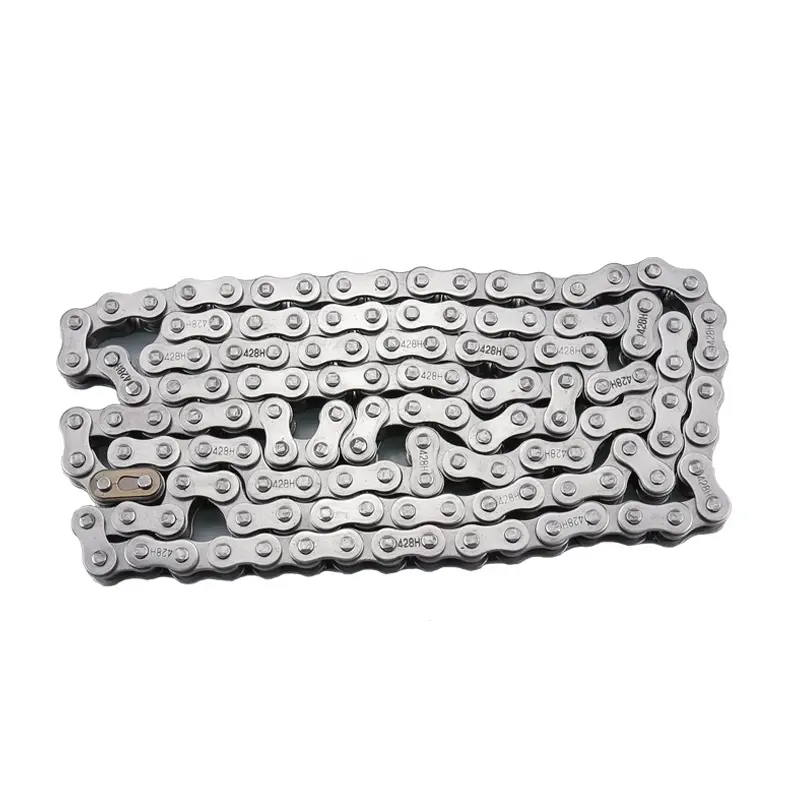
¿Cuáles son las causas comunes de fallo en las cadenas de transmisión?
Las cadenas de transmisión están sujetas a diversos factores que pueden contribuir a su fallo con el tiempo. Aquí tienes una explicación detallada:
1. Lubricación insuficiente: Una lubricación inadecuada o incorrecta es una de las principales causas de fallas en la cadena. La lubricación insuficiente puede provocar mayor fricción, generación de calor y desgaste acelerado entre los componentes de la cadena, como pasadores, bujes y rodillos.
2. Contaminación: Los contaminantes como la suciedad, el polvo, los residuos y la humedad pueden entrar en el sistema de cadena, afectando su rendimiento y provocando un desgaste acelerado. La contaminación puede dificultar la lubricación adecuada, aumentar la fricción y causar corrosión, lo que puede provocar la rotura de la cadena.
3. Sobrecarga: Aplicar cargas excesivas que superen la capacidad nominal de la cadena puede provocar una sobrecarga, lo que causa tensión y deformación en sus componentes. La sobrecarga puede provocar el alargamiento de la cadena, un desgaste acelerado y, en última instancia, su rotura.
4. Desalineación: Una alineación incorrecta de la cadena y los piñones puede provocar una distribución desigual de las fuerzas, lo que conlleva un desgaste localizado y un aumento de la tensión en ciertas zonas de la cadena. La desalineación puede deberse a una instalación incorrecta o al desgaste de los piñones, lo que provoca una rotura prematura de la cadena.
5. Fatiga: Las cargas y tensiones cíclicas repetidas pueden provocar fatiga en la cadena, lo que conlleva grietas, fracturas y, en última instancia, la rotura de la misma. La fatiga es más probable cuando la cadena se somete a aplicaciones de alta velocidad o alta frecuencia.
6. Corrosión: La exposición a ambientes corrosivos, como alta humedad, productos químicos o temperaturas extremas, puede provocar corrosión en los componentes de la cadena. La corrosión debilita la integridad estructural de la cadena, lo que conlleva una falla prematura.
7. Mantenimiento deficiente: Las prácticas de mantenimiento inadecuadas, como las inspecciones poco frecuentes, la falta de lubricación y el descuido de posibles problemas, pueden contribuir a la falla de la cadena. El mantenimiento regular, que incluye lubricación, limpieza y un tensado adecuado, es esencial para la durabilidad y el funcionamiento fiable de las cadenas de transmisión.
Es importante considerar estos factores para prevenir fallas en la cadena. La lubricación adecuada, las inspecciones periódicas, la limpieza y la verificación de la alineación son prácticas de mantenimiento esenciales. Seleccionar la cadena correcta para cada aplicación, seguir las instrucciones del fabricante y cumplir con los estándares de la industria también puede ayudar a mitigar el riesgo de fallas y garantizar el rendimiento óptimo y la durabilidad de las cadenas de transmisión.


Editor por CX 17/08/2023