Produktbeschreibung
Wir haben alle Ersatzteile für CZPT- und japanische Pickups sowie Serienteile für verschiedene Fahrzeuge.
Hochwertige Originalprodukte, hergestellt in Zhejiang, hergestellt auf dem chinesischen Festland, über 6000 Quadratmeter großes CZPT-Lager, viele Teile auf Lager.
Nehmen Sie gerne Kontakt mit uns auf, um mehr zu erfahren.
Informationen
| 1. Artikelbezeichnung: | Antriebskette für die Abtriebswelle (T/F) für TOYOTA |
| 2. OEM-Nr.: | 36293-35040 36293-35030 36293-35031 HV-117 |
| 3. Geeignet für: |
Toyota Hilux 2KD |
| 4. Lieferzeit: | Normalerweise innerhalb von 1-15 Tagen nach Anzahlung oder nach Kundenwunsch, abhängig vom Lagerbestand. |
| 5. Vorteile: | 1. Direkt vom Hersteller, Originalqualität zum günstigeren Preis. 2. Die meisten Artikel sind auf Lager, wir können sie Ihnen innerhalb kurzer Zeit zusenden. 3. Aufrichtiger Service: Sollten nach Erhalt der Ware Probleme auftreten, kontaktieren Sie uns bitte umgehend. Wir werden Ihnen die beste Lösung anbieten. |
Detailfoto
Gästebewertung
| Positives Kundenfeedback ist die höchste Anerkennung für unsere Produkte. Im Zuge des Booms von „Made in China“ preisen Lieferanten ihre Produkte zwar stets als qualitativ hochwertig an, doch ich bin überzeugt, dass die besten Produkte erst durch die Anerkennung der Kunden überzeugen. |
| Eine gute Bewertung über die Distanz zwischen verschiedenen Ländern hinweg stärkt unser gegenseitiges Vertrauen und unsere Verbundenheit. Wahrhaft gute Zusammenarbeit beruht auf gegenseitigem Verständnis und Toleranz, genau wie die Freundschaft zwischen China und anderen Ländern. |
| Ich hoffe auch auf die Gelegenheit zur Zusammenarbeit mit Ihnen. Ich bin überzeugt, dass Sie, genau wie meine Gäste, eine gute Ernte und einen hohen Gewinn erzielen werden. |
Verwandte Produkte
| Um eine ausreichende Nachfrage unserer Gäste zu gewährleisten, fertigen wir alle Kettenmodelle. Sie müssen uns lediglich genaue Zahlen und Bilder zukommen lassen. Ich kann die Kette dann auch für Sie herstellen. |
Werkstatt
| Unsere Produktionsstätte erstreckt sich über eine Fläche von mehr als 6000 Quadratmetern und ist mit über 200 Maschinen sowie mehr als 30 Entwicklungs- und Testgeräten ausgestattet. Wir verfügen über ein professionelles Management und Produktionsniveau in Zhejiang – eine echte Originalfabrik in China. |
Qualitätskontrolle
| Jede unserer Ketten wird einer strengen manuellen Prüfung gemäß 100%, einer maschinellen Prüfung und einer Rostschutzbehandlung unterzogen. Nur durch diese strengen Tests können wir eine optimale Qualitätssicherung gewährleisten und das Vertrauen unserer Kunden in unsere Produkte stärken. |
Kundenempfehlungen & Ausstellung
| Gäste aus verschiedenen Ländern haben mein Werk besucht und sind mit unserem Produktionsniveau und unserer Lieferkette sehr zufrieden. Sie pflegen seit vielen Jahren eine gute Zusammenarbeit. Wir nehmen außerdem an der Zhejiang Frankfurt Auto Parts Exhibition und der Hangzhou Auto Parts Exhibition teil. Jedes Mal gewinnen wir neue Gäste und bauen neue Kooperationen auf. |
Verpackung
| Was die Verpackung betrifft, so werden wir je nach Kundenwunsch entweder kundenspezifische oder konventionelle Verpackungen verwenden. PE-Beutel + Rostschutzpapier + Schachtel + Karton |
Unser Zertifikat
| Unsere Produkte sind nach ISO 9001 und ISO 14001 zertifiziert und tragen das Gütesiegel „Made in China Strength Factory“. |
Häufig gestellte Fragen
Frage 1: Seit wie vielen Jahren ist Ihr Unternehmen in der Autoteilebranche tätig?
A: Das Unternehmen besteht seit 20 Jahren.
Frage 2: Was sind Ihre Hauptprodukte?
A: Unsere Hauptprodukte sind alle Arten von Verteilergetriebeketten und Steuerketten.
Frage 3: Wo befindet sich Ihr Unternehmen?
A: Wir befinden uns in Hangzhou, Provinz Zhejiang, China.
Frage 4: Sind Sie ein Hersteller oder ein Handelsunternehmen?
A: Wir sind ein echter Produktionsbetrieb mit Exportlizenzen.
Frage 5: Wie hoch ist die Mindestbestellmenge?
A: Normalerweise beträgt unsere Mindestbestellmenge 100 Stück, aber je nach Produkt kann die Mindestbestellmenge variieren.
Frage 6: Wie steht es um die Qualität Ihrer Sensoren?
A: Unsere Produkte sind nach ISO 9001 zertifiziert. OEM-Standards sind ebenfalls willkommen und können berücksichtigt werden.
Erfüllt. Jeder Artikel wird vor dem Versand geprüft. Gerne können Sie unsere Fabrik bei Gelegenheit besichtigen.
Frage 7: Wie sieht es mit der Garantie Ihrer Sensoren aus?
A: Alle unsere Sensoren haben eine Garantie von 1 Jahr, bei einigen Sensoren kann die Garantie auf 2 Jahre verlängert werden.
Frage 8: Wie lauten die Zahlungsbedingungen?
A: 30% Anzahlung vor Produktionsbeginn, 70% Restzahlung vor Versand.
Frage 9: Kann Ihr Unternehmen Sensoren individuell anpassen?
A: JA! Sie können die Sensoren sehr gerne individuell anpassen, es wird jedoch dringend empfohlen, Muster zur Verfügung zu stellen.
| Kundendienst: | Großartig |
|---|---|
| Garantie: | 1 Jahr |
| Typ: | Getriebe |
| Material: | Stahl |
| Zertifizierung: | ISO |
| Automatisch: | Automatisch |
| Anpassung: |
Verfügbar
| Kundenspezifische Anfrage |
|---|

Wie beeinflusst die Wahl der Kettenbefestigung die Funktionalität einer Antriebskette?
Die Wahl der Kettenbefestigung spielt eine entscheidende Rolle für die Funktionalität und Leistung einer Antriebskette. Hier ist eine detaillierte Antwort auf die Frage:
1. Tragfähigkeit: Verschiedene Kettenbefestigungen sind für bestimmte Lastarten und -mengen ausgelegt. Die Auswahl der passenden Befestigung ist entscheidend, damit die Antriebskette die vorgesehene Last sicher und effizient tragen kann. Die Art der Befestigung, z. B. verlängerte Bolzen, Stollen oder Lamellen, bestimmt die Fähigkeit der Kette, schwere oder unregelmäßige Lasten zu bewältigen.
2. Anwendungskompatibilität: Die Wahl des Kettenanbauteils sollte den spezifischen Anwendungsanforderungen entsprechen. Unterschiedliche Branchen und Anwendungen erfordern möglicherweise spezielle Anbauteile, die für bestimmte Herausforderungen oder Funktionen ausgelegt sind. Beispielsweise können in Fördersystemen verwendete Anbauteile Rollen, Mitnehmer oder Greifer umfassen, um einen reibungslosen Materialtransport zu gewährleisten.
3. Ausrichtung und Führung: Bestimmte Kettenanbauteile, wie Führungsschienen oder Schienensysteme, tragen zur korrekten Ausrichtung und Führung der Antriebskette bei. Diese Anbauteile minimieren das Risiko eines Entgleisens oder einer Fehlausrichtung der Kette, was zu Betriebsstörungen und Effizienzverlusten führen kann.
4. Positionierung und Ausrichtung: Manche Anwendungen erfordern eine präzise Positionierung oder Ausrichtung von Objekten oder Bauteilen. Kettenbefestigungen wie Indexierbolzen oder Halterungen dienen der genauen Positionierung oder Drehung von Objekten entlang des Kettenlaufs. Diese Befestigungen tragen zum zuverlässigen und präzisen Betrieb der Antriebskette bei.
5. Materialtransport: Im Materialtransport werden Kettenbefestigungen häufig eingesetzt, um Gegenstände während des Transports zu sichern oder zu fixieren. Befestigungen wie Haken, Klemmen oder Halterungen ermöglichen die sichere Anbringung von Objekten an der Kette und verhindern so ein Verrutschen oder Verschieben während der Bewegung. Dies gewährleistet einen sicheren und effizienten Materialtransport.
6. Spezialfunktionen: Kettenanbauteile können je nach Anwendungsanforderungen zusätzliche Funktionen bereitstellen. Beispielsweise lassen sich Sensoren, RFID-Tags oder Schmierstoffbehälter in die Kette integrieren, um Überwachungs-, Verfolgungs- oder Schmierfunktionen zu ermöglichen. Diese Spezialanbauteile verbessern die Gesamtfunktionalität und Leistung der Antriebskette.
Die Auswahl des passenden Kettenanbauteils ist entscheidend und richtet sich nach den spezifischen Anwendungsanforderungen, den Lastvorgaben und der gewünschten Funktionalität. Die Beratung durch Branchenexperten oder Kettenhersteller kann dabei helfen, die optimalen Anbauteile für eine optimale Leistung der Antriebskette zu ermitteln.
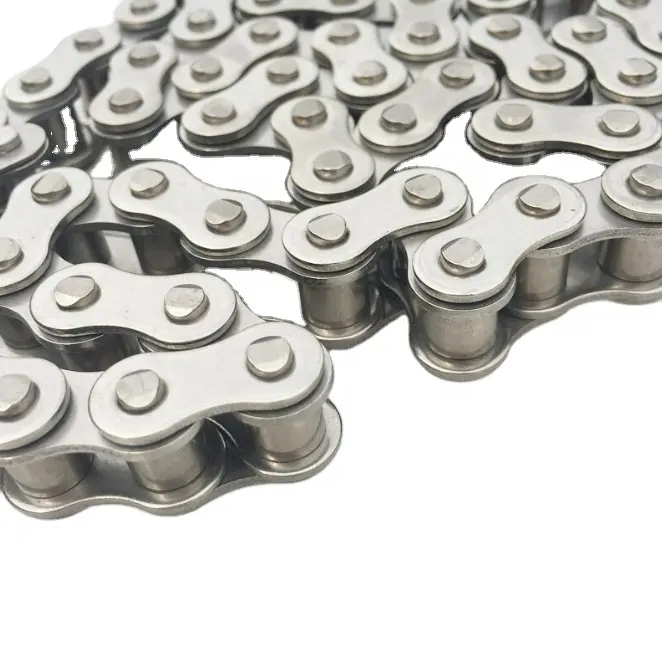
Können Übertragungsketten in Energieübertragungssystemen eingesetzt werden?
Ja, Übertragungsketten können in Kraftübertragungssystemen eingesetzt werden. Hier ist eine ausführliche Antwort auf die Frage:
Antriebsketten werden häufig in verschiedenen Kraftübertragungsanwendungen eingesetzt, bei denen die Übertragung mechanischer Energie erforderlich ist. Diese Ketten sind so konstruiert, dass sie Drehbewegung und Kraft von einer Welle auf eine andere übertragen.
Übertragungsketten werden in einer Vielzahl von Kraftübertragungssystemen eingesetzt, darunter:
- Industriemaschinen: Antriebsketten werden in Maschinen wie Förderanlagen, Verpackungsmaschinen, Druckmaschinen und Werkzeugmaschinen eingesetzt, um Kraft und Bewegung zwischen verschiedenen Komponenten zu übertragen.
- Landwirtschaftliche Geräte: Antriebsketten werden in landwirtschaftlichen Maschinen wie Traktoren, Mähdreschern und Erntemaschinen eingesetzt, um die Kraft vom Motor auf verschiedene mechanische Komponenten für Aufgaben wie Schneiden, Dreschen und Pflanzen zu übertragen.
- Automobilindustrie: Antriebsketten finden sich in bestimmten Anwendungen im Automobilbereich, beispielsweise in Motorradantriebsketten oder Steuerketten, die die Drehung von Kurbelwelle und Nockenwelle in Verbrennungsmotoren synchronisieren.
- Stromerzeugung: In Stromerzeugungssystemen, wie z. B. Windkraftanlagen, Wasserkraftturbinen und Dampfturbinen, werden Übertragungsketten eingesetzt, um die Drehbewegung von der Turbine auf den Generator zu übertragen.
- Baumaschinen: Antriebsketten werden in Baumaschinen wie Baggern, Ladern und Bulldozern verwendet, um Kraft und Bewegung vom Motor auf den Antriebsstrang und verschiedene Hydraulikkomponenten zu übertragen.
Übertragungsketten bieten in Kraftübertragungssystemen mehrere Vorteile:
- Hohe Effizienz: Die Übertragungsketten weisen minimale Leistungsverluste auf und ermöglichen so eine effiziente Energieübertragung.
- Hohe Belastbarkeit: Übertragungsketten sind in der Lage, hohe Lasten zu bewältigen und erhebliche Leistungsmengen zu übertragen.
- Flexibilität: Antriebsketten lassen sich leicht an unterschiedliche Anwendungen anpassen; verschiedene Größen, Längen und Konfigurationen sind erhältlich.
- Langlebigkeit: Antriebsketten sind so konstruiert, dass sie auch unter hoher Belastung standhalten und bei ordnungsgemäßer Wartung eine lange Lebensdauer bieten.
- Kostengünstig: Übertragungsketten sind im Vergleich zu anderen Kraftübertragungsoptionen oft eine kostengünstige Lösung.
Es ist wichtig, die passende Art und Größe der Antriebskette entsprechend den spezifischen Anforderungen des Kraftübertragungssystems auszuwählen. Regelmäßige Wartung und Schmierung sind ebenfalls unerlässlich, um optimale Leistung und Langlebigkeit der Antriebskette zu gewährleisten.
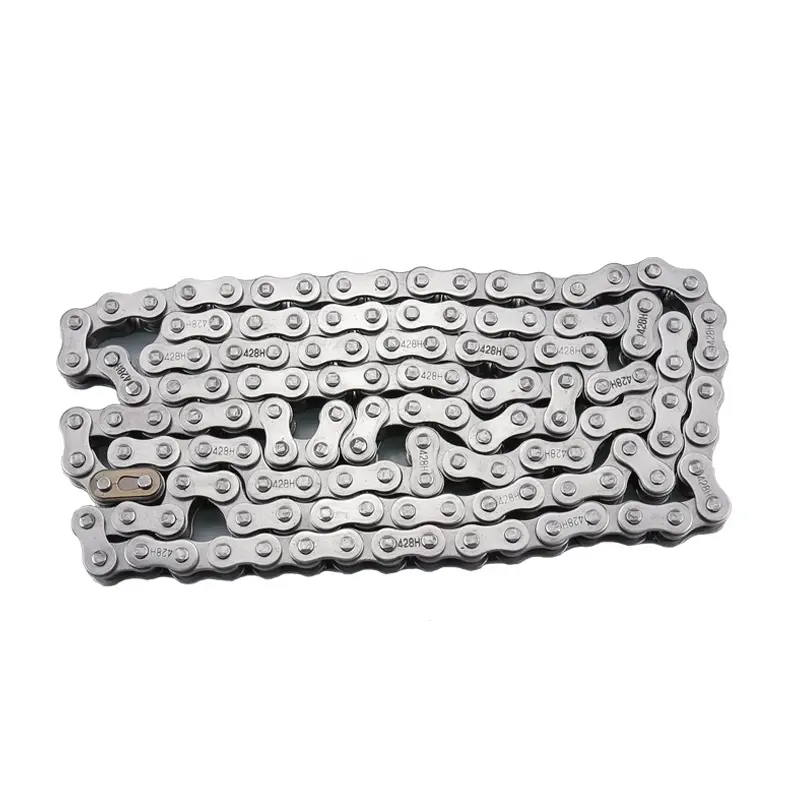
Was sind die häufigsten Ursachen für Ausfälle in Antriebsketten?
Antriebsketten unterliegen verschiedenen Faktoren, die im Laufe der Zeit zu ihrem Ausfall beitragen können. Hier eine detaillierte Erklärung:
1. Unzureichende Schmierung: Unzureichende oder unsachgemäße Schmierung ist eine der Hauptursachen für Kettenausfälle. Sie kann zu erhöhter Reibung, Wärmeentwicklung und beschleunigtem Verschleiß der Kettenkomponenten wie Bolzen, Buchsen und Rollen führen.
2. Verschmutzung: Verunreinigungen wie Schmutz, Staub, Ablagerungen und Feuchtigkeit können in das Kettensystem eindringen, dessen Leistung beeinträchtigen und zu beschleunigtem Verschleiß führen. Verunreinigungen können die Schmierung behindern, die Reibung erhöhen und Korrosion verursachen, was letztendlich zum Kettenbruch führen kann.
3. Überlastung: Eine Überlastung, die die Nennkapazität der Kette überschreitet, führt zu Spannungen und Verformungen der Kettenkomponenten. Dies kann Kettenlängung, beschleunigten Verschleiß und letztendlich Kettenbruch zur Folge haben.
4. Fehlausrichtung: Eine fehlerhafte Ausrichtung von Kette und Kettenrädern kann zu einer ungleichmäßigen Kraftverteilung führen, was lokalen Verschleiß und erhöhte Belastung bestimmter Kettenbereiche zur Folge hat. Fehlausrichtungen können durch unsachgemäße Montage oder Verschleiß der Kettenräder entstehen und vorzeitigen Kettenbruch verursachen.
5. Ermüdung: Wiederholte zyklische Belastungen und Spannungen können zu Ermüdung der Kette führen, was Risse, Brüche und letztendlich den Kettenbruch zur Folge haben kann. Ermüdungsbrüche treten mit höherer Wahrscheinlichkeit auf, wenn die Kette hohen Drehzahlen oder hohen Frequenzen ausgesetzt ist.
6. Korrosion: Die Einwirkung korrosiver Umgebungen wie hoher Luftfeuchtigkeit, Chemikalien oder extremer Temperaturen kann Korrosion an den Kettenkomponenten verursachen. Korrosion schwächt die strukturelle Integrität der Kette und führt zu vorzeitigem Ausfall.
7. Mangelhafte Wartung: Unzureichende Wartungspraktiken, wie seltene Inspektionen, fehlende Schmierung und das Ignorieren potenzieller Probleme, können zu Kettenausfällen führen. Regelmäßige Wartung, einschließlich Schmierung, Reinigung und korrekter Kettenspannung, ist für die Langlebigkeit und zuverlässige Funktion von Antriebsketten unerlässlich.
Um Kettenbrüche zu vermeiden, ist es wichtig, diese Faktoren zu berücksichtigen. Ausreichende Schmierung, regelmäßige Inspektionen, Reinigung und Ausrichtungskontrollen sind unerlässliche Wartungsmaßnahmen. Die Auswahl der richtigen Kette für den jeweiligen Anwendungsfall, die Einhaltung der Herstellervorgaben und die Beachtung von Industriestandards tragen ebenfalls dazu bei, das Ausfallrisiko zu minimieren und die optimale Leistung und Lebensdauer der Antriebskette zu gewährleisten.


Bearbeitet von CX am 17.08.2023