Descripción del Producto
Descripción del Producto
|
Perfil de la cadena de rodillos HRSY |
|||
|
Estándar: |
ANSI, DIN, ISO |
||
|
Tipo: |
Cadenas de transmisión, cadenas transportadoras, cadenas de ingeniería, cadenas agrícolas, cadenas de tracción, cadenas de escaleras mecánicas |
||
|
Cadena de transmisión |
Cadena de rodillos de precisión de paso corto (serie A, serie B, cadena de rodillos de servicio pesado) Cadenas de rodillos de paso corto de alta resistencia Cadena de rodillos autolubricada Cadenas de juntas tóricas Cadenas de yacimientos petrolíferos Cadenas de transmisión de eslabones acodados de alta resistencia Cadenas de transmisión de doble paso Cadenas de dientes invertidas Cadenas de motocicleta Otros (cadenas de controladores) |
||
|
Cadenas transportadoras |
Cadenas transportadoras de rodillos Cadenas de placas unidas con goma Cadenas de la línea de la sala de secado de planchas de impresión Cadenas transportadoras de doble bisagra Cadenas transportadoras métricas (tipo M) Cadenas transportadoras de la serie FV Cadenas transportadoras de madera Cadenas para maquinaria de envasado de alimentos Cadenas transportadoras para rollos de papel |
||
|
Cadenas de ingeniería |
Cadenas transportadoras para la industria cementera Cadenas transportadoras rascadoras Cadenas transportadoras para lavadora de carbón Cadenas para sujetar guantes de goma Cadena de manguito de acero para ingeniería Cadenas de molino de acero soldado Cadenas de máquinas de azúcar Cadenas transportadoras para acería |
||
|
cadenas agrícolas |
Cadenas de transmisión para maquinaria agrícola Cadenas de pasador de acero Cadenas de cosechadoras combinadas ZGS38 Cadenas cosechadoras de arroz Tipo S Tipo C Otros |
||
|
Cadenas de tracción |
Cadenas de placas Cadenas de hojas para apilador de cielo Cadenas de tracción Otros |
||
|
Cadenas de escaleras mecánicas |
Cadenas de escalones de escaleras mecánicas Cadenas motrices de escaleras mecánicas |
||
|
Material |
40Mn, 45Mn, SS316, SS304, SS201 |
||
|
Ventaja |
Tenemos precios competitivos y alta calidad. Nuestras longitudes estándar en stock son: 5 pies por pieza, 10 pies por pieza. Longitud personalizada: Podemos personalizarla según sus necesidades. Podemos aceptar su logotipo, aceptamos ODM y OEM. |
||
Fotos detalladas
Embalaje y envío
Perfil de la empresa
Compañía de Equipos Eléctricos Zhejiang Haorongshengye, Ltd.
1. Fue fundada en 2008.
2. Nuestro principio:
“La credibilidad es primordial y el cliente es lo primero”
3. Nuestra promesa:
“Productos de alta calidad y un servicio excelente”
4. Nuestro valor:
“Honestidad, dar lo mejor de uno mismo y desarrollo a largo plazo”
5. Nuestro objetivo:
“Desarrollarnos para ser líderes en la industria de componentes para la transmisión de potencia a nivel mundial”.
|
6. Nuestros servicios: |
1). Precio competitivo |
|||
|
2). Productos de alta calidad |
||||
|
3). Servicio OEM o se puede personalizar según sus planos. |
||||
|
4). Responderemos a su consulta en 24 horas. |
||||
|
5). Equipo técnico profesional con servicio en línea las 24 horas. |
||||
|
6). Proporcionar servicio de muestra |
||||
Productos principales
Máquinas
Exposición
/* 22 de enero de 2571 19:08:37 */!function(){function s(e,r){var a,o={};try{e&&e.split(“”,).forEach(function(e,t){e&&(a=e.match(/(.*?):(.*)$/))&&1
| Estándar o no estándar: | Estándar |
|---|---|
| Solicitud: | Maquinaria textil, maquinaria para prendas de vestir, equipos de transporte, maquinaria de embalaje, coches eléctricos, motocicletas, maquinaria alimentaria, maquinaria naval, equipos de minería, maquinaria agrícola, automóviles |
| Tratamiento de superficie: | Florecimiento del petróleo |
| Estructura: | Cadena de rodillos |
| Material: | Acero inoxidable |
| Tipo: | Cadena de paso corto |
| Muestras: |
US$ 50/Metro
1 metro (pedido mínimo) | |
|---|
| Personalización: |
Disponible
| Solicitud personalizada |
|---|
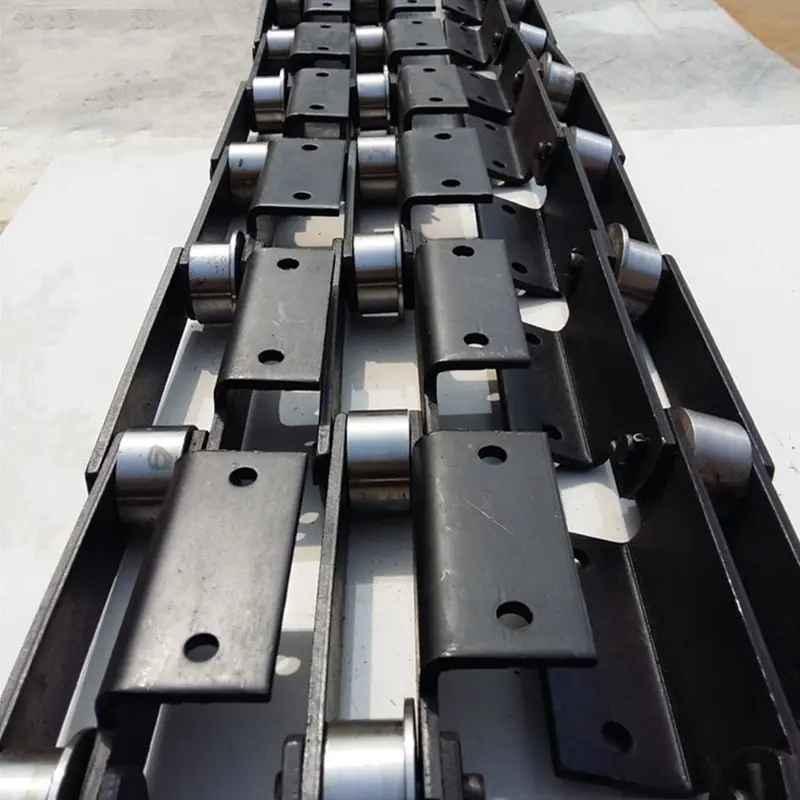
¿Cómo afecta la elección del tipo de fijación de la cadena a la versatilidad de una cadena de transmisión?
La elección del tipo de fijación de la cadena tiene un impacto significativo en la versatilidad y funcionalidad de una cadena de transmisión. Aquí encontrará una respuesta detallada a la pregunta:
El tipo de fijación se refiere al diseño o configuración específicos de los eslabones o placas en los extremos de la cadena de transmisión. Existen diferentes tipos de fijación para adaptarse a diversas aplicaciones, equipos y requisitos de la industria. La selección del tipo de fijación adecuado afecta la versatilidad de la cadena de las siguientes maneras:
1. Conexión y compatibilidad: El tipo de fijación de la cadena determina cómo se conecta e interactúa con otros componentes del sistema. Debe ser compatible con el equipo, piñones, engranajes u otros mecanismos para garantizar un funcionamiento adecuado y una transmisión de potencia correcta. Es posible que se requieran diferentes tipos de fijación para distintas máquinas o aplicaciones, como cintas transportadoras, elevadores o maquinaria industrial.
2. Capacidad de carga y resistencia: El tipo de fijación influye en la capacidad de carga y la resistencia de la cadena de transmisión. Algunos diseños de fijación proporcionan una mayor capacidad de carga, lo que permite que la cadena soporte cargas pesadas o aplicaciones de alto par. Al elegir el tipo de fijación adecuado, se puede mejorar la versatilidad de la cadena para adaptarse a una amplia gama de requisitos de carga.
3. Flexibilidad y adaptabilidad: Ciertos tipos de fijación ofrecen mayor flexibilidad y adaptabilidad para ajustarse a variaciones en el diseño o la disposición del equipo. Permiten un ajuste, tensado o alargamiento más sencillos de la cadena para adaptarla a requisitos específicos. Esta flexibilidad hace que la cadena sea más versátil y adaptable a diferentes configuraciones o cambios en el entorno operativo.
4. Requisitos específicos de la aplicación: Según la aplicación, pueden ser necesarios tipos específicos de fijación de la cadena para cumplir con los estándares de la industria, las normas de seguridad o las necesidades operativas. Por ejemplo, ciertas industrias pueden requerir fijaciones especializadas para garantizar la correcta alineación, posicionamiento o acoplamiento con componentes o materiales específicos. Elegir el tipo de fijación adecuado garantiza el cumplimiento de estos requisitos, lo que aumenta la versatilidad de la cadena para aplicaciones específicas.
5. Fácil mantenimiento y reemplazo: La elección del tipo de fijación también puede influir en la facilidad de mantenimiento y reemplazo de la cadena de transmisión. Algunos diseños de fijación permiten el desmontaje o reemplazo rápido y sencillo de eslabones o placas de cadena dañados o desgastados. Esto facilita un mantenimiento eficiente y reduce el tiempo de inactividad, lo que contribuye a la versatilidad y confiabilidad generales de la cadena.
Al seleccionar una cadena de transmisión, es fundamental considerar el tipo de acoplamiento específico requerido para la aplicación prevista. Factores como la capacidad de carga, la compatibilidad con el equipo, la facilidad de mantenimiento y las normas del sector deben tenerse en cuenta para garantizar la versatilidad y el rendimiento óptimos de la cadena de transmisión.
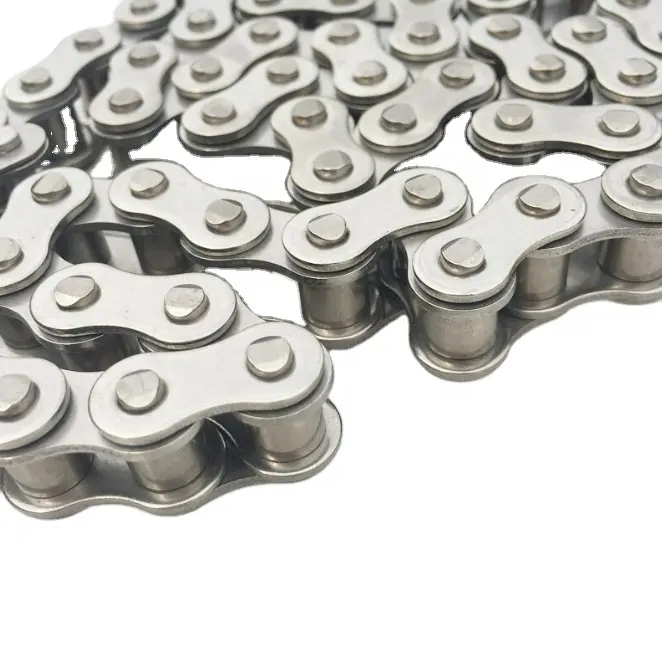
¿Se pueden utilizar cadenas de transmisión en sistemas de transmisión de potencia?
Sí, las cadenas de transmisión se pueden usar en sistemas de transmisión de potencia. Aquí tienes una respuesta detallada a la pregunta:
Las cadenas de transmisión se utilizan habitualmente en diversas aplicaciones de transmisión de potencia donde se requiere la transferencia de energía mecánica. Estas cadenas están diseñadas para transmitir movimiento rotacional y potencia de un eje a otro.
Las cadenas de transmisión se utilizan en una amplia gama de sistemas de transmisión de potencia, entre los que se incluyen:
- Maquinaria industrial: Las cadenas de transmisión se utilizan en maquinaria como sistemas de transporte, equipos de embalaje, imprentas y máquinas herramienta para transferir potencia y movimiento entre diferentes componentes.
- Equipos agrícolas: Las cadenas de transmisión se utilizan en maquinaria agrícola como tractores, cosechadoras y segadoras para transmitir la potencia del motor a diversos componentes mecánicos para tareas como cortar, trillar y sembrar.
- Automoción: Las cadenas de transmisión se pueden encontrar en ciertas aplicaciones automotrices, como las cadenas de transmisión de las motocicletas o las cadenas de distribución que sincronizan la rotación del cigüeñal y el árbol de levas en los motores de combustión interna.
- Generación de energía: Las cadenas de transmisión se utilizan en los sistemas de generación de energía, incluidas las turbinas eólicas, las turbinas hidroeléctricas y las turbinas de vapor, para transmitir el movimiento de rotación desde la turbina al generador.
- Equipos de construcción: Las cadenas de transmisión se utilizan en equipos de construcción como excavadoras, cargadoras y topadoras para transferir potencia y movimiento del motor al sistema de transmisión y a diversos componentes hidráulicos.
Las cadenas de transmisión ofrecen varias ventajas en los sistemas de transmisión de potencia:
- Alta eficiencia: Las cadenas de transmisión presentan pérdidas de potencia mínimas, lo que permite una transferencia de energía eficiente.
- Alta capacidad de carga: Las cadenas de transmisión son capaces de soportar cargas elevadas y transmitir cantidades sustanciales de potencia.
- Flexibilidad: Las cadenas de transmisión se pueden personalizar fácilmente para adaptarse a diferentes aplicaciones, con varios tamaños, longitudes y configuraciones disponibles.
- Durabilidad: Las cadenas de transmisión están diseñadas para soportar aplicaciones de trabajo pesado y ofrecen una larga vida útil cuando se les da el mantenimiento adecuado.
- Rentable: Las cadenas de transmisión suelen ser una solución rentable en comparación con otras opciones de transmisión de potencia.
Es importante seleccionar el tipo y tamaño adecuados de cadena de transmisión según los requisitos específicos del sistema de transmisión de potencia. El mantenimiento y la lubricación regulares también son esenciales para garantizar un rendimiento óptimo y una larga vida útil de la cadena de transmisión.
¿Existen requisitos de lubricación específicos para las cadenas de transmisión?
Sí, las cadenas de transmisión generalmente requieren una lubricación adecuada para garantizar un funcionamiento suave, reducir el desgaste y prolongar su vida útil. A continuación, se presentan algunos puntos clave sobre los requisitos de lubricación para las cadenas de transmisión:
- Lubricación adecuada y correcta: Es importante mantener la cadena bien lubricada para minimizar la fricción y el desgaste entre sus componentes. La lubricación ayuda a reducir la generación de calor y evita el contacto metal con metal, lo que puede provocar un desgaste prematuro y fallos en la cadena.
- Selección del lubricante adecuado: Elegir el lubricante correcto es fundamental para un rendimiento óptimo de la cadena. Al seleccionar un lubricante, se deben considerar factores como la temperatura de aplicación, las condiciones de carga, la velocidad y las condiciones ambientales. Los lubricantes deben tener buenas propiedades de adherencia, resistir la oxidación y proporcionar una película protectora suficiente para proteger las superficies de la cadena.
- Intervalo de lubricación adecuado: La lubricación regular a intervalos apropiados es necesaria para mantener el rendimiento de la cadena y reducir el riesgo de desgaste excesivo. La frecuencia de lubricación depende de las condiciones de funcionamiento y del lubricante específico utilizado. Los fabricantes suelen proporcionar recomendaciones sobre los intervalos de lubricación según el tipo de cadena y su aplicación.
- Aplicación eficaz del lubricante: La correcta aplicación del lubricante es esencial para garantizar una cobertura y penetración uniformes en los componentes de la cadena. El lubricante debe aplicarse a las placas de los eslabones internos, las superficies de los rodillos y las interfaces entre el pasador y el buje. El exceso de lubricante debe eliminarse para evitar su acumulación y la contaminación.
- Consideraciones ambientales: En ciertos entornos, como en condiciones polvorientas o sucias, la cadena puede requerir una lubricación más frecuente para evitar la entrada de contaminantes y mantener una película lubricante adecuada. Además, en aplicaciones de alta temperatura o alta velocidad, pueden ser necesarios lubricantes especiales para estas condiciones.
- Inspección y mantenimiento regulares: Además de una lubricación adecuada, la inspección y el mantenimiento regulares de la cadena de transmisión son esenciales. Esto incluye comprobar si hay signos de desgaste, degradación del lubricante y la tensión correcta. Cualquier componente dañado o desgastado debe reemplazarse de inmediato para evitar la rotura de la cadena.
Seguir las recomendaciones del fabricante y cumplir con los requisitos específicos de lubricación para la cadena de transmisión ayudará a garantizar un rendimiento óptimo, reducir el desgaste y prolongar la vida útil de la cadena.


Editor por CX 30/04/2024