Descripción del Producto
Disponemos de todos los repuestos para camionetas chinas y japonesas, así como de piezas de serie para diferentes coches.
Productos de alta calidad, originales, fabricados en Zhejiang, China continental, almacén de CHINAMFG de más de 6000 metros cuadrados, muchas piezas en stock.
No dude en ponerse en contacto con nosotros para obtener más información.
Información
| 1. Nombre del artículo: | Cadena de transmisión del eje de salida T/F para CHINAMFG L200 MD738550 |
| 2.N.º DE FABRICANTE: | MD738550 SC1857134 HV-113 |
| 3. Adecuado para: | Camioneta Mitsubishi 4x4 L200 Triton L300 L400 |
| 4. Plazo de entrega: | Normalmente, entre 1 y 15 días después del depósito o según los requisitos del cliente, dependiendo del stock. |
| 5. Ventajas: | 1. Directamente de fábrica, calidad original y precio más bajo. 2. La mayoría de los artículos están en stock, podemos enviárselos en poco tiempo. 3. Servicio sincero: si tiene algún problema después de recibir la mercancía, póngase en contacto con nosotros sin dudarlo; le ofreceremos la mejor solución. |
Foto detallada
Evaluación de los huéspedes
| Las buenas opiniones de los clientes son el mayor reconocimiento para nuestros productos. Con el auge de la iniciativa "Hecho en China", los proveedores siempre describen sus productos como de la mejor calidad, pero creo que los mejores productos son aquellos que reciben el reconocimiento de los clientes. |
| Una buena evaluación, que trasciende las distancias entre países, fortalece la confianza y los sentimientos mutuos. Una cooperación realmente eficaz se basa en la comprensión y la tolerancia recíprocas, como la amistad entre China y otros países. |
| También espero tener la oportunidad de colaborar con ustedes. Al igual que la evaluación que me han brindado mis clientes, confío en que ustedes también obtendrán buenos resultados y beneficios. |
Productos relacionados
| Para garantizar la demanda de nuestros huéspedes, fabricamos todos los modelos de cadenas. Solo necesita proporcionarnos las cantidades exactas y fotografías. Puedo fabricarle la misma cadena. |
Taller
| Nuestro taller de producción abarca una superficie de más de 6000 metros cuadrados, con más de 200 máquinas y más de 30 tipos de equipos de desarrollo y prueba. Además, contamos con una gestión profesional y un alto nivel de producción en Zhejiang, una auténtica fábrica original en China. |
Control de calidad
| Cada una de nuestras cadenas se somete a rigurosas pruebas manuales y mecánicas según la norma 100%, además de un tratamiento antioxidante. Solo mediante pruebas rigurosas podemos garantizar una mejor calidad y generar mayor confianza en nuestros clientes. |
Testimonios de clientes y exhibición
| Visitantes de diversos países han venido a nuestra fábrica y están muy satisfechos con nuestro nivel de producción y nuestra cadena de suministro. Mantenemos una excelente relación de cooperación desde hace muchos años. También participamos en la Feria de Autopartes de Zhejiang Frankfurt y en la Feria de Hangzhou, entre otras. En cada edición recibimos nuevos visitantes y establecemos nuevas oportunidades de colaboración. |
Embalaje
| En cuanto al embalaje, personalizaremos o utilizaremos embalajes convencionales según los requisitos del cliente. Bolsa de polietileno + papel antioxidante + caja + cartón |
Nuestro certificado
| Nuestros productos han superado las certificaciones ISO 9001 e ISO 14001, así como la certificación de fábrica Made-in-China. |
Preguntas frecuentes
P1: ¿Cuántos años lleva su empresa en la industria de autopartes?
A: La empresa fue fundada hace 20 años.
P2: ¿Cuáles son sus principales productos?
A: Nuestros productos principales son todo tipo de cadenas para cajas de transferencia y cadenas de distribución.
P3: ¿Dónde se encuentra su empresa?
A: Estamos ubicados en la ciudad de Hangzhou, provincia de Zhejiang, China.
P4: ¿Son ustedes una fábrica o una empresa comercial?
R: Somos una fábrica real con licencias de exportación.
P5: ¿Cuál es el MOQ?
R: Normalmente, nuestro pedido mínimo es de 100 unidades, pero cada producto puede tener un pedido mínimo diferente.
P6: ¿Qué tal la calidad de sus sensores?
A: Nuestros productos cuentan con la certificación ISO9001. También se aceptan y se pueden adaptar a las especificaciones OEM.
Cumplimos con lo prometido. Todos los artículos se prueban antes del envío. Le invitamos cordialmente a visitar nuestra fábrica cuando le convenga.
P7: ¿Qué tal la garantía de sus sensores?
R: Todos nuestros sensores tienen una garantía de 1 año; para algunos sensores, la garantía se puede extender a 2 años.
P8: ¿Cuáles son las condiciones de pago?
A: Depósito de 30% antes de la producción, saldo de 70% antes del envío.
P9: ¿Su empresa puede personalizar los sensores?
R: ¡SÍ! Puede personalizar los sensores sin problema, pero se recomienda encarecidamente proporcionar muestras.
| Servicio posventa: | Excelente |
|---|---|
| Garantía: | 1 año |
| Tipo: | Caja de cambios |
| Material: | Acero |
| Proceso de dar un título: | ISO |
| Automático: | Automático |
| Personalización: |
Disponible
| Solicitud personalizada |
|---|
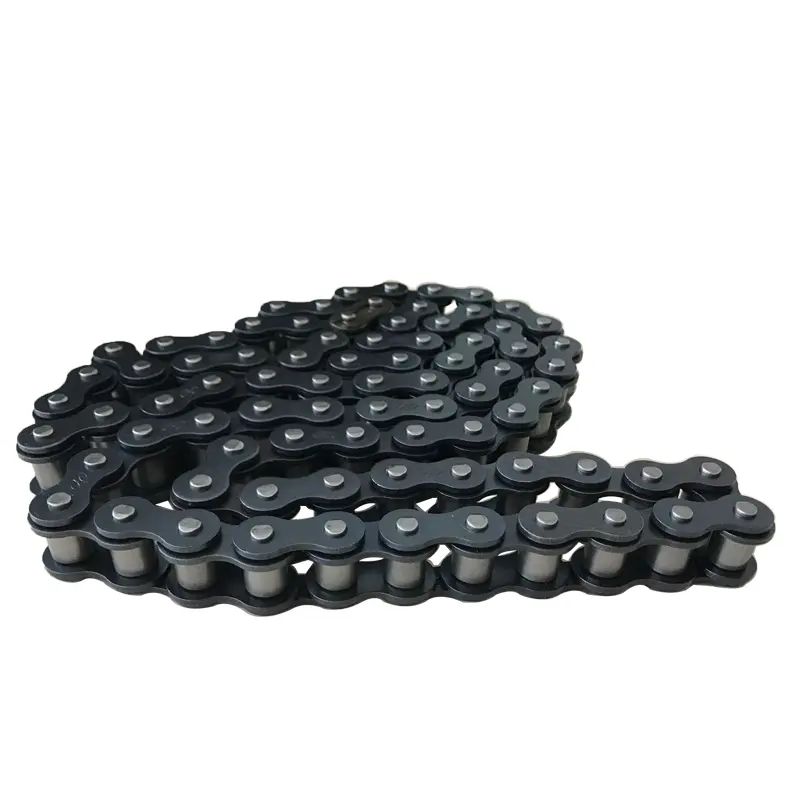
What are the benefits of using a low-noise transmission chain?
Using a low-noise transmission chain in industrial applications offers several advantages. Here’s a detailed answer to the question:
1. Noise Reduction: One of the primary benefits of using a low-noise transmission chain is the reduction in noise levels. These chains are designed with special features and materials to minimize vibrations, impact, and friction-induced noise during operation. This is particularly important in environments where noise reduction is critical, such as in residential areas, offices, or noise-sensitive industries.
2. Improved Workplace Environment: By reducing noise levels, low-noise transmission chains contribute to a more comfortable and productive workplace environment. Excessive noise can lead to employee fatigue, decreased concentration, and increased stress levels. Using low-noise chains helps create a quieter workspace, promoting better working conditions and overall well-being.
3. Compliance with Noise Regulations: In certain industries or regions, there are specific regulations or guidelines regarding acceptable noise levels. Using low-noise transmission chains can help ensure compliance with these regulations, avoiding potential fines or legal issues related to excessive noise emissions.
4. Enhanced Equipment Performance: Low-noise transmission chains are designed to provide smooth and efficient power transmission while minimizing noise generation. The reduction in vibration and impact noise not only improves the comfort of the workplace but also enhances the overall performance of the equipment. It can contribute to better precision, accuracy, and reliability of the machinery, leading to improved product quality and operational efficiency.
5. Extended Equipment Lifespan: Excessive noise and vibration can accelerate wear and tear on machinery components, leading to increased maintenance and premature failure. By using a low-noise transmission chain, the impact on the equipment’s mechanical parts is reduced, resulting in less wear, lower maintenance costs, and extended equipment lifespan.
6. Customer Satisfaction: In industries where noise can affect the end-user experience, such as automotive, consumer electronics, or precision engineering, using low-noise transmission chains can contribute to higher customer satisfaction. Products that operate quietly are often perceived as higher quality and can lead to a positive brand image and customer loy alty.
It’s important to note that the benefits of low-noise transmission chains may vary depending on the specific application and operating conditions. Manufacturers and equipment designers should consider factors such as load capacity, speed, lubrication, and environmental requirements when selecting and implementing low-noise transmission chains.
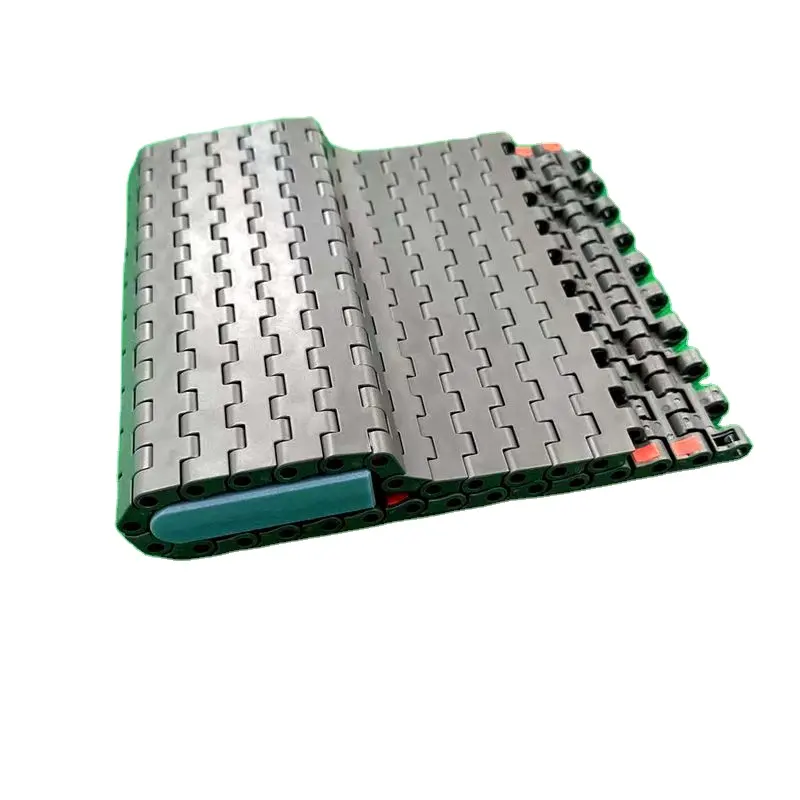
How does the choice of lubricant impact the performance of a transmission chain?
The choice of lubricant plays a critical role in ensuring the optimal performance and longevity of a transmission chain. Here’s a detailed answer to the question:
1. Reduced Friction and Wear: Lubricants create a protective film between the moving parts of the transmission chain, reducing friction and wear. This helps to minimize metal-to-metal contact and prevent surface damage, extending the chain’s lifespan.
2. Enhanced Efficiency: Proper lubrication reduces energy losses due to friction, improving the overall efficiency of the transmission system. By reducing frictional resistance, the lubricant allows for smoother power transmission, reducing power consumption and increasing system efficiency.
3. Heat Dissipation: Lubricants aid in heat dissipation by absorbing and dissipating heat generated during chain operation. This helps to prevent excessive chain temperature rise, which can lead to accelerated wear, lubricant breakdown, and potential chain failure.
4. Corrosion Protection: Lubricants provide a protective barrier against moisture, humidity, and other corrosive elements. This helps to prevent rust and corrosion, which can weaken the chain and reduce its performance. Choosing a lubricant with anti-corrosion properties is essential, especially in harsh or corrosive environments.
5. Contaminant Removal: Lubricants can help remove contaminants such as dirt, dust, and debris from the chain’s contact surfaces. This prevents abrasive particles from causing premature wear and damage to the chain, ensuring smooth operation and reducing the risk of chain failure.
6. Temperature Stability: Different lubricants have varying temperature stability properties. It is crucial to select a lubricant that can maintain its viscosity and lubricating properties within the operating temperature range of the transmission chain. This ensures consistent lubrication and performance under various temperature conditions.
7. Compatibility: It is important to choose a lubricant that is compatible with the materials used in the transmission chain. Some lubricants may react with certain chain materials, leading to degradation or damage. Ensuring compatibility helps maintain the integrity of the chain and avoids any adverse effects.
8. Lubrication Interval: The choice of lubricant can also affect the lubrication interval, i.e., the frequency at which the chain needs to be relubricated. Some lubricants offer longer-lasting lubrication properties, reducing the maintenance requirements and downtime associated with frequent relubrication.
It is crucial to follow the manufacturer’s recommendations and guidelines regarding lubrication for the specific transmission chain. Regular inspection, monitoring, and proper maintenance practices should be implemented to ensure the chain remains adequately lubricated for optimal performance and longevity.
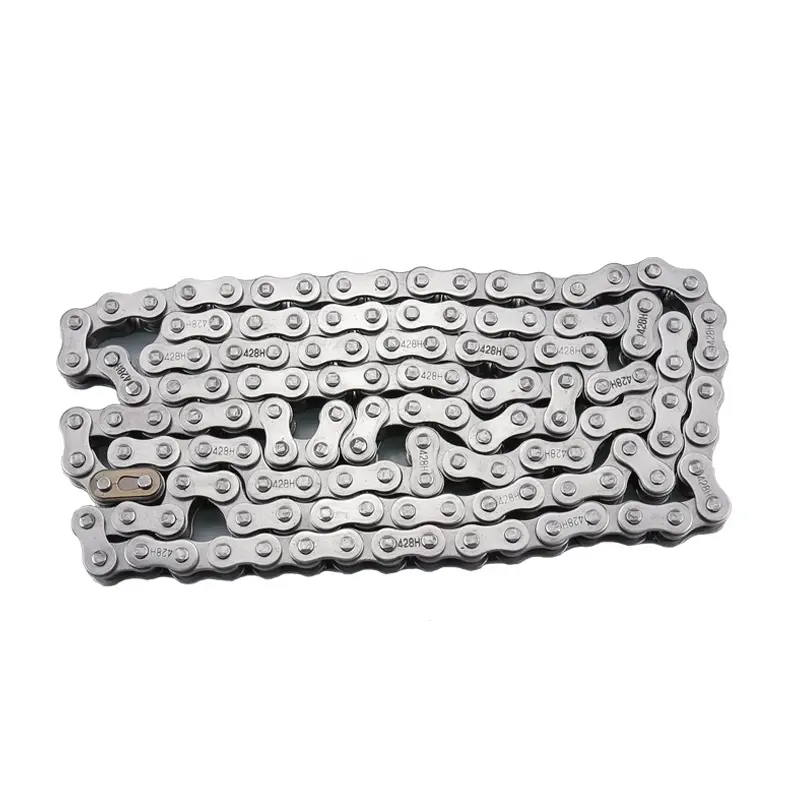
What are the common causes of failure in transmission chains?
Transmission chains are subject to various factors that can contribute to their failure over time. Here’s a detailed explanation:
1. Insufficient Lubrication: Inadequate or improper lubrication is one of the leading causes of chain failure. Insufficient lubrication can lead to increased friction, heat generation, and accelerated wear between the chain’s components, such as pins, bushings, and rollers.
2. Contamination: Contaminants like dirt, dust, debris, and moisture can enter the chain system, affecting its performance and causing accelerated wear. Contamination can hinder proper lubrication, increase friction, and cause corrosion, leading to chain failure.
3. Overloading: Applying excessive loads beyond the chain’s rated capacity can lead to overloading, which causes stress and deformation of the chain’s components. Overloading can result in chain elongation, accelerated wear, and ultimately, chain failure.
4. Misalignment: Improper alignment of the chain and sprockets can cause uneven distribution of forces, leading to localized wear and increased stress on certain areas of the chain. Misalignment can result from incorrect installation or wear and tear of sprockets, leading to premature chain failure.
5. Fatigue: Repeated cyclic loading and stress can cause fatigue in the chain, leading to cracks, fractures, and ultimately, chain failure. Fatigue failure is more likely to occur when the chain is subjected to high-speed or high-frequency applications.
6. Corrosion: Exposure to corrosive environments, such as high humidity, chemicals, or extreme temperatures, can cause corrosion on the chain’s components. Corrosion weakens the chain’s structural integrity, leading to premature failure.
7. Poor Maintenance: Inadequate maintenance practices, such as infrequent inspections, lack of lubrication, and neglecting to address potential issues, can contribute to chain failure. Regular maintenance, including lubrication, cleaning, and proper tensioning, is essential for the longevity and reliable performance of transmission chains.
It is important to address these factors to prevent chain failure. Proper lubrication, regular inspections, cleaning, and alignment checks are essential maintenance practices. Selecting the right chain for the application, following manufacturer guidelines, and adhering to industry standards can also help mitigate the risk of failure and ensure the optimal performance and longevity of transmission chains.


editor by CX 2023-10-12