Product Description
OUR PRODUCTS LIST:
A and B series single/double/triple standard roller chain and no-standard roller chain
| DIN/ISO | ANSI | Pitch | Roller | Width | Pin | Pin | Lnner | Plate | Ultimate | Average | weight | |
| KIN/ISO | ANSL | between | diameter | length | plate | thick | tensile | tensile | per | |||
| Chain | Chain | inner plates | depth | -ness | strength | strength | meter | |||||
| No. | No. | P | d1 | b1 | d2 | L | Lc | h2 | T | Q | Q0 | q |
| max | min | max | max | max | max | max | min | |||||
| mm | mm | mm | mm | mm | mm | mm | mm | kN/LB | kN | kg/m | ||
| *03C | *15 | 4.7625 | 2.48 | 2.38 | 1.62 | 6.1 | 6.9 | 4.3 | 0.6 | 1.80/409 | 2 | 0.08 |
| *04C-1 | *25 | 6.35 | 3.3 | 3.18 | 2.31 | 7.9 | 8.4 | 6 | 0.8 | 3.50/795 | 4.6 | 0.15 |
| *06C-1 | *35 | 9.525 | 5.08 | 4.77 | 3.58 | 12.4 | 13.17 | 9 | 1.3 | 7.90/1795 | 10.8 | 0.33 |
| 085-1 | 41 | 12.7 | 7.77 | 6.25 | 3.58 | 13.75 | 15 | 9.91 | 1.3 | 6.67/1516 | 12.6 | 0.41 |
| 08A-1 | 40 | 12.7 | 7.95 | 7.85 | 3.96 | 16.6 | 17.8 | 12 | 1.5 | 14.10/3205 | 17.5 | 0.62 |
| 10A-1 | 50 | 15.875 | 10.16 | 9.4 | 5.08 | 20.7 | 22.2 | 15.09 | 2.03 | 22.20/5045 | 29.4 | 1.02 |
| 12A-1 | 60 | 19.05 | 11.91 | 12.57 | 5.94 | 25.9 | 27.7 | 18 | 2.42 | 31.80/7227 | 41.5 | 1.5 |
| 16A-1 | 80 | 25.4 | 15.88 | 15.75 | 7.92 | 32.7 | 35 | 24 | 3.25 | 59.70/12886 | 69.4 | 2.6 |
| 20A-1 | 100 | 31.75 | 19.05 | 18.9 | 9.53 | 40.4 | 44.7 | 30 | 4 | 88.50/20114 | 109.2 | 3.91 |
| 24A-1 | 120 | 38.1 | 22.23 | 25.22 | 11.1 | 50.3 | 54.3 | 35.7 | 4.8 | 127.00/28864 | 156.3 | 5.62 |
| 28A-1 | 140 | 44.45 | 25.4 | 25.22 | 12.7 | 54.4 | 59 | 41 | 5.6 | 172.40/39182 | 212 | 7.5 |
| 32A-1 | 160 | 50.8 | 28.58 | 31.55 | 14.27 | 64.8 | 69.6 | 47.8 | 6.4 | 226.80/51545 | 278.9 | 1.1 |
| 36A-1 | 180 | 57.15 | 35.71 | 35.48 | 17.46 | 72.8 | 78.6 | 53.6 | 7.2 | 280.20/63682 | 341.8 | 13.45 |
| 40A-1 | 200 | 63.5 | 39.68 | 37.85 | 19.85 | 80.3 | 87.2 | 60 | 8 | 353.80/80409 | 431.6 | 16.15 |
| 48A-1 | 240 | 76.2 | 47.63 | 47.35 | 23.81 | 90.5 | 103 | 72.39 | 9.5 | 51.30/115977 | 622.5 | 23.2 |
| DIN/ISO | Pitch | Roller | Width | Pin | Pin | Lnner | Plate | Ultimate | Average | weight | |
| KIN/ISO | between | diameter | length | plate | thick | tensile | tensile | per | |||
| Chain | inner plates | depth | -ness | strength | strength | meter | |||||
| No. | P | d1 | b1 | d2 | L | Lc | h2 | T | Q | Q0 | q |
| max | min | max | max | max | max | max | min | ||||
| mm | mm | mm | mm | mm | mm | mm | mm | kN/LB | kN | kg/m | |
| 04B-1 | 6 | 4 | 2.8 | 1.85 | 6.8 | 7.8 | 5 | 0.6 | 3.2/682 | 3.2 | 0.11 |
| 05B-1 | 8 | 5 | 3 | 2.31 | 8.2 | 8.9 | 7.1 | 0.8 | 5.0/1136 | 5.9 | 0.2 |
| *06B-1 | 9.525 | 6.35 | 5.72 | 3.28 | 13.15 | 14.1 | 8.2 | 1.3 | 9.0/2045 | 10.4 | 0.41 |
| 08B-1 | 12.7 | 8.51 | 7.75 | 4.45 | 16.7 | 18.2 | 11.8 | 1.6 | 18.0/4091 | 19.4 | 0.69 |
| 10B-1 | 15.875 | 10.16 | 9.65 | 5.08 | 19.5 | 20.9 | 14.7 | 1.7 | 22.4/5091 | 27.5 | 0.93 |
| 12B-1 | 19.05 | 12.07 | 11.68 | 5.72 | 22.5 | 24.2 | 16 | 1.85 | 29.0/6591 | 32.2 | 1.15 |
| 16B-1 | 25.4 | 15.88 | 17.02 | 8.28 | 36.1 | 37.4 | 21 | 4.15/3.1 | 60.0/13636 | 72.8 | 2.71 |
| 20B-1 | 31.75 | 19.05 | 19.56 | 10.19 | 41.3 | 45 | 26.4 | 4.5/3.5 | 95.0/21591 | 106.7 | 3.7 |
| 24B-1 | 38.1 | 25.4 | 25.4 | 14.63 | 53.4 | 57.8 | 33.2 | 6.0/4.8 | 160.0/36364 | 178 | 7.1 |
| 28B-1 | 44.45 | 27.94 | 30.99 | 15.9 | 65.1 | 69.5 | 36.7 | 7.5/6.0 | 200.0/45455 | 222 | 8.5 |
| 32B-1 | 50.8 | 29.21 | 30.99 | 17.81 | 66 | 71 | 42 | 7.0/6.0 | 250.0/56818 | 277.5 | 10.25 |
| 40B-1 | 63.5 | 39.37 | 38.1 | 22.89 | 82.2 | 89.2 | 52.96 | 8.5/8.0 | 355.0/80682 | 394 | 16.35 |
| 48B-1 | 76.2 | 48.26 | 45.72 | 29.24 | 99.1 | 107 | 63.8 | 560.0/127272 | 621.6 | 25 | |
Products show
Our workshop
Our hot treatment equipment
FAQ
Q1. What is your terms of packing?
A: Generally, we pack our goods in single color box. If you have special request about packing, pls negotiate with us in advance, we can pack the goods as your request.
Q2. What is your terms of payment?
A: T/T 30% as deposit, and 70% before delivery. We’ll show you the photos of the products and packages
before you pay the balance. Other payments terms, pls negotiate with us in advance, we can discuss.
Q3. What is your terms of delivery?
A: EXW, FOB, CFR, CIF.
Q4. How about your delivery time?
A: Generally, it will take 25 to 30 days after receiving your advance payment. The specific delivery time depends
on the items and the quantity of your order.
Q5. Can you produce according to the samples?
A: Yes, we can produce by your samples or technical drawings. We can build the molds and fixtures.
Q6. What is your sample policy?
A: We can supply the sample if we have ready parts in stock, but the customers have to pay the sample cost and
the courier cost.We welcome sample order.
Q7. Do you test all your goods before delivery?
A: Yes, we have 100% test before delivery
Q8: How do you make our business long-term and good relationship?
1. We keep good quality and competitive price to ensure our customers benefit ;
2. We respect every customer as our friend and we sincerely do business and make friends with them,
no matter where they come from.
| Material: | Alloy |
|---|---|
| Structure: | Roller Chain |
| Surface Treatment: | Polishing |
| Chain Size: | 1/2"*11/128" |
| Feature: | Fire Resistant, Oil Resistant, Heat Resistant |
| Transport Package: | Non-Fumigation Wooden Box, by Air, by Ocean |
| Samples: |
US$ 2/Meter
1 Meter(Min.Order) | |
|---|
| Customization: |
Available
| Customized Request |
|---|
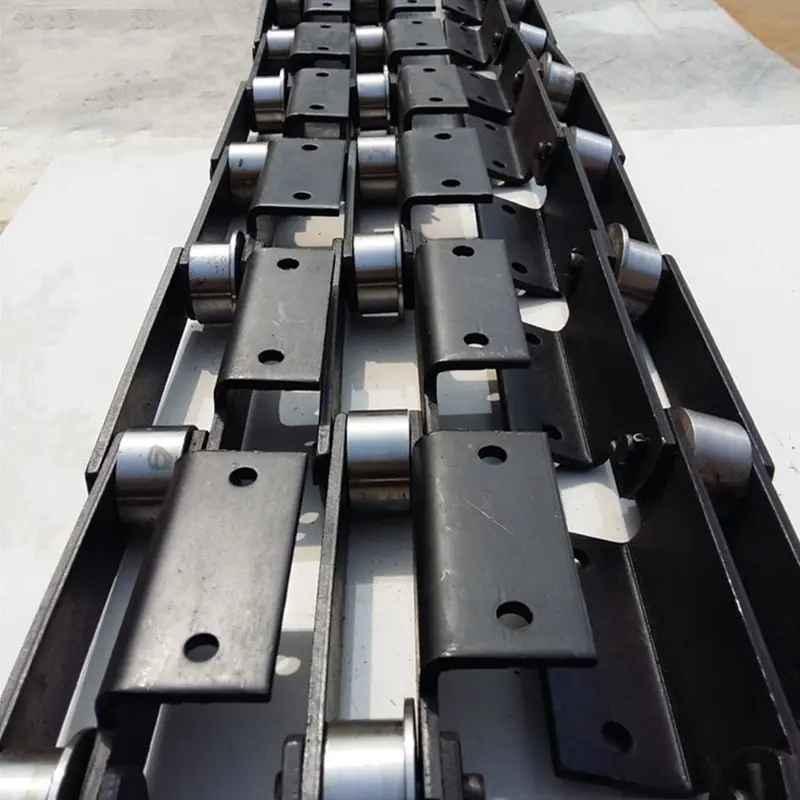
How does the choice of chain attachment type affect the versatility of a transmission chain?
The choice of chain attachment type has a significant impact on the versatility and functionality of a transmission chain. Here’s a detailed answer to the question:
The attachment type refers to the specific design or configuration of the links or plates at the ends of the transmission chain. Different attachment types are available to accommodate various applications, equipment, and industry requirements. The selection of the right attachment type affects the chain’s versatility in the following ways:
1. Connection and Compatibility: The chain attachment type determines how the chain connects and interacts with other components in the system. It should be compatible with the equipment, sprockets, gears, or other mechanisms to ensure proper functioning and power transmission. Different attachment types may be required for different machinery or applications, such as conveyors, elevators, or industrial machinery.
2. Load Capacity and Strength: The attachment type influences the load capacity and strength of the transmission chain. Some attachment designs provide increased load-bearing capacity, allowing the chain to handle heavy loads or withstand high-torque applications. By choosing the appropriate attachment type, the chain’s versatility can be enhanced to suit a wide range of load requirements.
3. Flexibility and Adaptability: Certain attachment types offer greater flexibility and adaptability in terms of accommodating variations in equipment design or layout. They may allow for easier adjustment, tensioning, or lengthening of the chain to fit specific requirements. This flexibility enables the chain to be more versatile and adaptable to different configurations or changes in the operating environment.
4. Specific Application Requirements: Depending on the application, specific chain attachment types may be necessary to meet industry standards, safety regulations, or operational needs. For example, certain industries may require specialized attachments to ensure proper alignment, positioning, or engagement with specific components or materials. Choosing the appropriate attachment type ensures compliance with these requirements, enhancing the chain’s versatility for specific applications.
5. Easy Maintenance and Replacement: The choice of attachment type can also impact the ease of maintenance and replacement of the transmission chain. Some attachment designs allow for quick and convenient disassembly or replacement of damaged or worn-out chain links or plates. This facilitates efficient maintenance and reduces downtime, contributing to the overall versatility and reliability of the chain.
When selecting a transmission chain, it’s crucial to consider the specific attachment type required for the intended application. Factors such as load capacity, compatibility with equipment, ease of maintenance, and industry standards should be considered to ensure optimal versatility and performance of the transmission chain.
Can transmission chains be used in high-torque applications?
Yes, transmission chains are commonly used in high-torque applications due to their ability to transmit power efficiently. Here’s a detailed answer to the question:
1. Robust Power Transmission: Transmission chains are designed to handle significant amounts of power transmission, including high-torque applications. They are capable of transferring torque from the driving source to the driven components effectively.
2. Load Capacity: Transmission chains are engineered to withstand heavy loads and high levels of torque. They are designed with appropriate material strength, chain pitch, and components to handle the specific torque requirements of the application.
3. Diverse Applications: Transmission chains are utilized in various high-torque applications across industries such as automotive, construction, mining, agriculture, and manufacturing. They are commonly used in power transmission systems, machinery, equipment, conveyors, and other mechanisms that require efficient torque transfer.
4. Compatibility with Sprockets: Transmission chains work in conjunction with sprockets, which are designed to engage with the chain links and transfer torque. The design and selection of appropriate sprockets ensure smooth and reliable torque transmission in high-torque applications.
5. Strength and Durability: Transmission chains are manufactured using high-strength materials such as alloy steel, stainless steel, or heat-treated steels to provide the necessary strength and durability required for high-torque operations. These materials can withstand the forces generated by high levels of torque without premature wear or failure.
6. Proper Lubrication and Maintenance: To ensure optimal performance in high-torque applications, it is essential to maintain proper lubrication and perform regular maintenance on the transmission chain. Adequate lubrication reduces friction, heat generation, and wear, thereby prolonging the chain’s lifespan and preserving its torque transmission capabilities.
It’s important to consult with industry experts or manufacturers to select the appropriate transmission chain and ensure it meets the specific torque requirements of the application. Additionally, following recommended installation and maintenance practices will help maximize the performance and longevity of the transmission chain in high-torque applications.
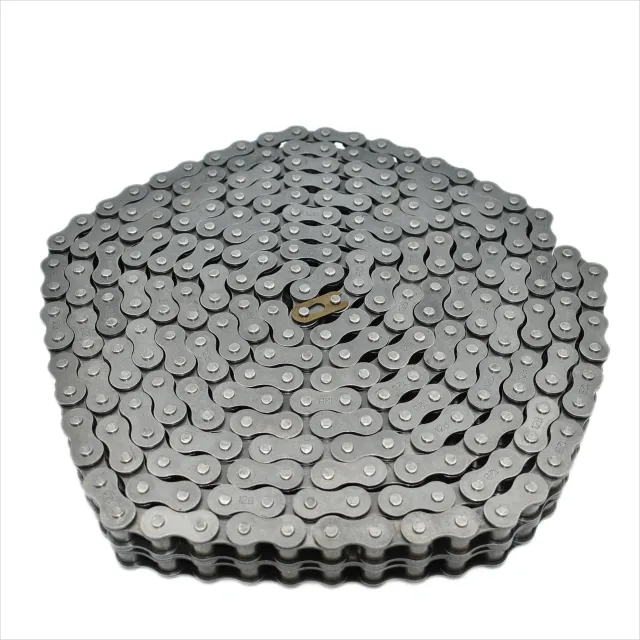
What are the different types of transmission chains available?
There are several types of transmission chains available, each designed to suit specific applications and operating conditions. Here are some common types:
- Roller Chains: Roller chains are the most widely used type of transmission chains. They consist of inner and outer plates, pins, bushings, and rollers. The rollers help reduce friction and facilitate smooth motion.
- Silent Chains: Silent chains, also known as inverted-tooth chains or toothed chains, feature special tooth profiles that engage with corresponding sprockets. They are designed to minimize noise and vibration, making them suitable for applications requiring quiet operation.
- Leaf Chains: Leaf chains are constructed with interlocking links made of flat steel plates. They are known for their high tensile strength and resistance to fatigue, making them suitable for heavy-duty and high-load applications.
- Timing Chains: Timing chains are used in engines to synchronize the rotation of the camshaft and crankshaft. They have precise tooth profiles that engage with timing sprockets, ensuring accurate timing and efficient engine performance.
- Engineered Steel Chains: Engineered steel chains are highly specialized chains designed for specific industries and applications. They are often used in demanding environments such as mining, forestry, and material handling.
- Plastic Chains: Plastic chains are made of high-strength plastic materials, such as acetal or nylon. They offer benefits like corrosion resistance, lightweight design, and low noise operation. They are commonly used in food processing, packaging, and other industries with strict hygiene requirements.
These are just a few examples of transmission chain types. Depending on the specific application, there may be other specialized chains available to meet the unique requirements of different industries and machinery.
How do roller chains differ from other types of transmission chains?
Roller chains, also known as roller link chains, are a commonly used type of transmission chain that distinguishes itself from other chains in several ways:
- Design: Roller chains consist of inner and outer plates, pins, bushings, and rollers. The rollers, which are free to rotate, help reduce friction and wear, resulting in smoother and more efficient power transmission.
- Wide Application: Roller chains are versatile and widely used in various industries, including automotive, industrial machinery, agricultural equipment, and conveyor systems.
- High Load Capacity: Roller chains are designed to withstand high loads and offer excellent tensile strength, making them suitable for applications that require heavy-duty performance.
- Efficiency: Roller chains are known for their high efficiency in transmitting power. The roller design minimizes friction, resulting in less energy loss and improved overall efficiency.
- Cost-Effectiveness: Roller chains are relatively cost-effective compared to some other specialized transmission chains, making them a popular choice in many applications.
While roller chains have their advantages, it’s important to note that different types of transmission chains may be more suitable for specific applications. Factors such as load capacity, speed, noise level, and environmental conditions should be considered when selecting the appropriate transmission chain for a particular application.


editor by CX 2023-11-03