Define the decision criteria before comparing
Treat this task as an engineering verification sequence. Each step should either produce a number, a physical observation, or a documented acceptance condition. Pitch changes almost every geometric and dynamic feature of a chain drive. A smaller pitch may need more strands but can improve smoothness and packaging, while a larger pitch can raise capacity at the cost of larger sprockets and greater articulation.
طريقة عملية لاستخدام مجموعة بكرات وسلاسل نقل الحركة is to narrow the product family after the machine has supplied evidence for small pitch chain and large pitch chain. The selected option should then survive this check: retain only candidates explicitly rated for the duty. If it does not, return to the duty or geometry rather than adding an arbitrary safety margin.
Capacity depends on chain construction, speed, tooth count, and lubrication, not pitch alone. The practical release check is to retain only candidates explicitly rated for the duty.
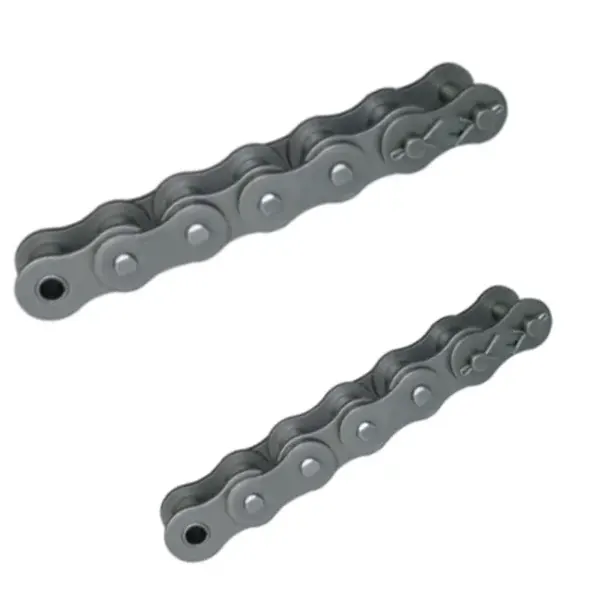
- Small Pitch Chain
- تحقق من هذه النقطة في الآلة وقم بتوثيق أي غموض لا يزال يتطلب رسمًا أو دليلًا من المورد.
- Large Pitch Chain
- قم بتسجيل هذا المطلب مع سياق كافٍ بحيث يتمكن مهندس ثانٍ من إعادة إنتاج نفس الاختيار أو التشخيص.
- Articulation Angle
- قم بتسجيل هذه البيانات من رسم أو قياس أو حساب أو سجل تشغيل قبل اتخاذ القرار.
- Sprocket Diameter
- تعامل مع هذا كمتغير خاضع للتحكم؛ دوّن قيمته ووحدته وحالة تشغيله ومصدره في سجل المهمة.
- Chain Mass
- تحقق من هذا العنصر مقابل محرك الأقراص الفعلي وبيانات المورد الحالية بدلاً من تقديره من المظهر.
Compare rated capacity at the same duty
Use the manufacturer rating table at the actual rpm and design power for candidate pitches. Why it matters: capacity depends on chain construction, speed, tooth count, and lubrication, not pitch alone. Field nuance: a larger pitch that appears stronger in a static table may have a less attractive rating at a given high speed. Failure mode: choosing from pitch size alone can move the design away from the best operating region.
Inspection: plot multiple pitch options on the same rating basis and include simplex or multi-strand alternatives. Release condition: retain only candidates explicitly rated for the duty. Record the operating state and the reference points used for this check.
Calculate sprocket diameters for realistic tooth counts
Start by compare pitch diameters and outside envelopes using tooth counts that the supplier rating method supports. The mechanism is larger pitch increases sprocket size for the same tooth count while reducing teeth to save diameter increases articulation. In practice, space-limited machines often benefit from a smaller pitch with more strands instead of a very small large-pitch sprocket. If the assumption is wrong, forcing a large pitch into a small envelope can increase polygonal action and engagement impact.
Field check: obtain sprocket drawings for each candidate tooth count and overlay them on the machine. Accept the step when you can choose a pitch-tooth combination that fits without relying on an aggressively small sprocket. Save the measured or observed condition so the result can be repeated later.
Compare articulation and smoothness
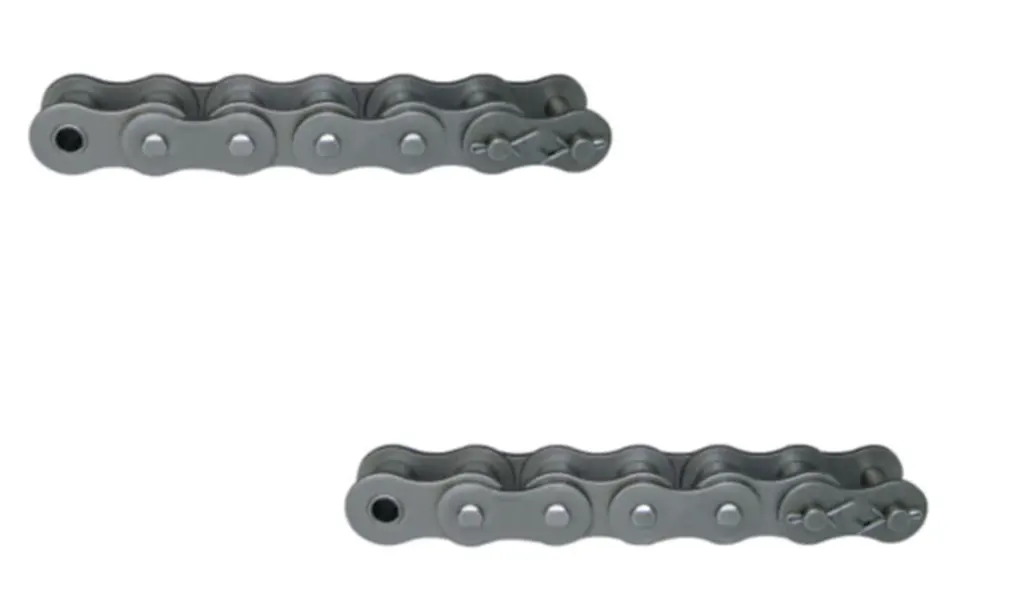
Use review the angle each joint articulates as it enters the small sprocket and the resulting polygonal speed variation. This controls the decision because more sprocket teeth generally reduce articulation per pitch and smooth the chain path. On the machine, small pitch often makes it easier to use more teeth within a given diameter. The practical risk is a coarse pitch on few teeth can create vibration and noise even if capacity is adequate.
Confirm it by doing this: observe predicted or measured chordal motion, chain-span vibration, and engagement noise. The evidence is sufficient when you can favor the geometry that meets the process smoothness requirement while remaining rated. Note the tool, location, and operating condition with the result.
Include chain mass and dynamic loading
Work from compare mass per unit length and circulating chain mass for each candidate. The engineering link is heavier chain increases inertia and can raise impact energy during engagement and starts. One useful detail is that long-center drives amplify the difference because much more chain is in motion. Otherwise, ignoring chain mass can make a capacity upgrade noisier and harder on supporting components.
Verify at the drive: calculate total moving chain mass from catalog data and installed length. Close this check only after you can review start-stop duty and sprocket dynamics when moving to a larger pitch or heavier strand. Keep photographs or dimensions when they help preserve the interface condition.
Check lubrication and maintenance access
Base the decision on compare the required lubrication method, joint size, guard design, and ease of applying lubricant to the pin-bushing interfaces. It matters because a larger chain can be more difficult to lubricate uniformly in a cramped enclosure. During service, multi-strand small-pitch chains also require oil to reach inner rows. A poor assumption can cause either option can fail early if the chosen geometry blocks service access.
Use this confirmation: trace the oil path and maintenance access for each candidate layout. Proceed when you can select the option whose lubrication requirement can be sustained in production. If readings vary around the chain or sprocket, retain the spread instead of hiding it in one average.
Decide on the whole system cost
The controlling action is to compare chain, sprockets, shafts, guards, tensioning, inventory, and replacement labor for each pitch strategy. Its significance comes from larger pitch may reduce strand count while smaller pitch may reduce sprocket diameter and improve commonality. In the field, component price alone does not capture redesign or maintenance cost. The failure consequence is the cheapest chain can produce the most expensive overall drive if it forces large sprockets or difficult access.
Check the hardware directly: build a simple bill of materials and maintenance comparison for the viable alternatives. Approval requires that you can choose the lowest-complexity system that meets capacity, dynamics, and service constraints. Write down any uncertainty that still needs a drawing, manual, or supplier response.
Side-by-side engineering checks
| نقطة القرار | الفحص أو الحساب | أدلة القبول |
|---|---|---|
| Compare rated capacity at the same duty | plot multiple pitch options on the same rating basis and include simplex or multi-strand alternatives | retain only candidates explicitly rated for the duty |
| Calculate sprocket diameters for realistic tooth counts | obtain sprocket drawings for each candidate tooth count and overlay them on the machine | choose a pitch-tooth combination that fits without relying on an aggressively small sprocket |
| Compare articulation and smoothness | observe predicted or measured chordal motion, chain-span vibration, and engagement noise | favor the geometry that meets the process smoothness requirement while remaining rated |
| Include chain mass and dynamic loading | calculate total moving chain mass from catalog data and installed length | review start-stop duty and sprocket dynamics when moving to a larger pitch or heavier strand |
| Check lubrication and maintenance access | trace the oil path and maintenance access for each candidate layout | select the option whose lubrication requirement can be sustained in production |
| Decide on the whole system cost | build a simple bill of materials and maintenance comparison for the viable alternatives | choose the lowest-complexity system that meets capacity, dynamics, and service constraints |
| For this article, do not close the job until the small pitch chain evidence and every critical mating interface are recorded together. | ||
عندما يتجاوز القرار نطاق السلسلة نفسها، compare duplex sprockets used with smaller-pitch multi-strand chain is a useful adjacent-hardware reference for small-pitch versus large-pitch roller chain. It is not a substitute for checking tooth geometry, mounting, capacity, and the selected chain standard on the final drawing.
Tradeoffs that should stop a substitution
Release check: retain only candidates explicitly rated for the duty.
Release check: choose a pitch-tooth combination that fits without relying on an aggressively small sprocket.
Release check: favor the geometry that meets the process smoothness requirement while remaining rated.
Release check: review start-stop duty and sprocket dynamics when moving to a larger pitch or heavier strand.
Comparison FAQs
Choose the architecture that fits the duty
The output should be more useful than a part number. Record small pitch chain, large pitch chain, the condition found during “Decide on the whole system cost,” and the evidence used to accept or reject the change. That makes the decision auditable after the next shutdown. Use the قدرات سلسلة القيادة الصناعية مقارنة عائلات سلاسل النقل الأخرى فقط عندما يتم نقل بيانات الخدمة نفسها.
Where the final answer still depends on missing machine data, send the application data to the chain engineering team. Include the duty, speed, geometry and inspection evidence that led to the current conclusion, with articulation angle called out separately. The goal is to obtain a drawing-level answer before hardware is ordered or an adjustment becomes the new baseline.
Send the operating condition, small pitch chain, large pitch chain, layout evidence, and the unresolved interface so the next decision is based on machine data rather than assumption.