Product Description
Stainless Steel Transmission Conveyor Roller Chain
Product Description
|
Item Name |
Standard transmission Roller Chains |
Model |
Series A, Series B |
|
Row |
Simplex/Duplex/Triplex |
Application |
Machinery Parts |
|
Surface Treatment |
Self-color/sand-blasted/shot-peening |
Certification |
ISO, ANSI, DIN, BS |
|
Packing |
Packaged in boxes and wooden cases, or packaged in reels and then on pallets. |
Port |
Any sea port or airport in China |
A Series: 25, 35, 41, 40, 50, 60, 80, 100, 120, 140, 160
B Series:03B,04B,05B,06B,08B,10B,12B,16B,20B,24B,28B,32B.
|
Chain |
Pitch |
Roller |
Width |
Pin |
Pin |
Inner |
Plate |
Breaking |
|
|
|
P |
d1 |
b1 |
d2 |
L |
Lc |
h2 |
t/T |
Q |
|
mm |
mm |
mm |
mm |
mm |
mm |
mm |
mm |
kN |
|
|
*25SS |
6.350 |
3.30 |
3.18 |
2.31 |
7.9 |
8.4 |
6.00 |
0.8 |
2.5/568 |
|
*35SS |
9.525 |
5.08 |
4.77 |
3.58 |
12.4 |
13.17 |
9.00 |
1.30 |
5.5/1250 |
|
40SS |
12.700 |
7.95 |
7.85 |
3.96 |
16.6 |
17.8 |
12.00 |
1.50 |
9.6/2182 |
|
41SS |
12.700 |
7.77 |
6.25 |
3.58 |
13.75 |
15.0 |
9.91 |
1.30 |
6.0/1360 |
|
50SS |
15.875 |
10.16 |
9.40 |
5.08 |
20.7 |
22.2 |
15.09 |
2.03 |
15.2/3455 |
|
60SS |
19.050 |
11.91 |
12.57 |
5.94 |
25.9 |
27.7 |
18.00 |
2.42 |
21.7/4932 |
|
80SS |
25.400 |
15.88 |
15.75 |
7.92 |
32.7 |
35.0 |
24.00 |
3.25 |
38.9/8841 |
|
100SS |
31.750 |
19.05 |
18.90 |
9.53 |
40.4 |
44.7 |
30.00 |
4.00 |
60.0/13636 |
|
120SS |
38.100 |
22.23 |
25.22 |
11.10 |
50.3 |
54.3 |
35.70 |
4.80 |
72.5/16477 |
|
140SS |
44.450 |
25.40 |
25.22 |
12.70 |
54.4 |
59.0 |
41.0 |
5.60 |
94.0/21363 |
|
04BSS |
6.000 |
4.00 |
2.80 |
1.85 |
6.80 |
7.8 |
5.00 |
0.60 |
2.0/455 |
|
05BSS |
8.000 |
5.00 |
3.00 |
2.31 |
8.20 |
8.9 |
7.10 |
0.80 |
3.5/795 |
|
#06BSS |
9.525 |
6.35 |
5.72 |
3.28 |
13.15 |
14.1 |
8.20 |
1.30 |
6.2/1409 |
|
08BSS |
12.700 |
8.51 |
7.75 |
4.45 |
16.7 |
18.2 |
11.80 |
1.0 |
12.0/2727 |
|
10BSS |
15.875 |
10.16 |
9.65 |
5.08 |
19.5 |
20.9 |
14.70 |
1.70 |
14.5/3295 |
|
12BSS |
19.050 |
12.07 |
11.68 |
5.72 |
22.5 |
24.2 |
16.00 |
1.85 |
18.5/4205 |
|
16BSS |
25.400 |
15.88 |
17.02 |
8.28 |
36.1 |
37.4 |
21.00 |
4.15/3.1 |
40.0/9091 |
|
20BSS |
31.750 |
19.05 |
19.56 |
10.19 |
41.3 |
45.0 |
26.40 |
4.5/3..5 |
59.0/13409 |
|
24BSS |
38.100 |
25.40 |
25.40 |
14.63 |
53.4 |
57.8 |
33.20 |
6.0/4.8 |
104.0/25454 |
|
32BSS |
50.800 |
29.21 |
30.99 |
17.81 |
66.0 |
71.0 |
42.00 |
7.0/6.0 |
150.0/34090 |
/* January 22, 2571 19:08:37 */!function(){function s(e,r){var a,o={};try{e&&e.split(“,”).forEach(function(e,t){e&&(a=e.match(/(.*?):(.*)$/))&&1
| Usage: | Transmission Chain, Conveyor Chain |
|---|---|
| Material: | Stainless steel |
| Surface Treatment: | Polishing |
| Feature: | Heat Resistant |
| Chain Size: | 1/2"*11/128" |
| Structure: | Roller Chain |
| Customization: |
Available
| Customized Request |
|---|
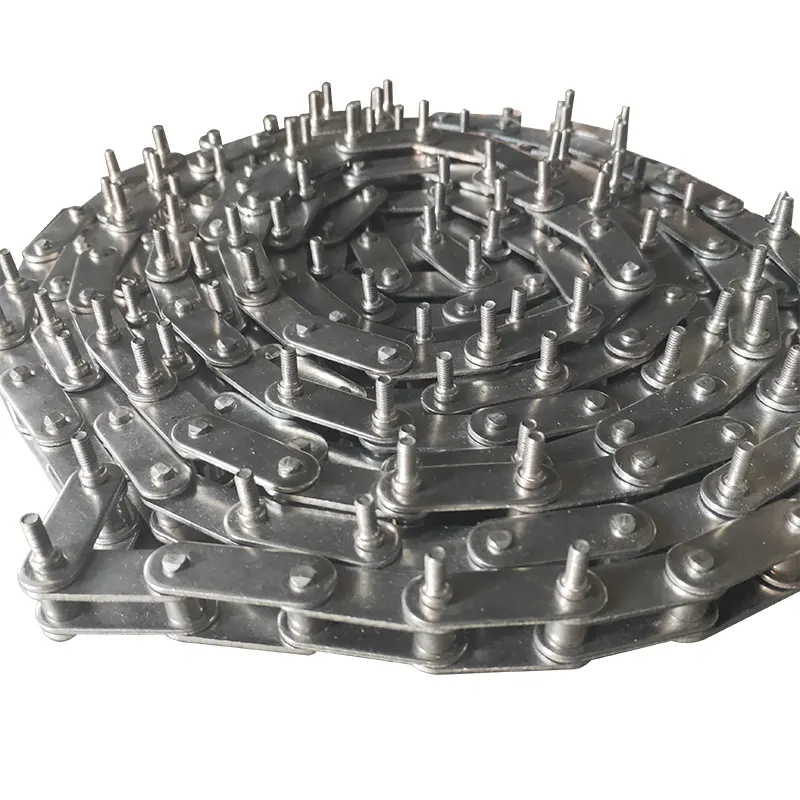
What are the benefits of using a corrosion-resistant material for a transmission chain?
Using a corrosion-resistant material for a transmission chain offers several advantages. Here’s a detailed answer to the question:
Corrosion-resistant materials, such as stainless steel or specialized coatings, provide the following benefits for transmission chains:
1. Enhanced Durability: Corrosion can significantly reduce the lifespan of a transmission chain by causing surface degradation, pitting, or rusting. By using a corrosion-resistant material, the chain’s durability is improved, allowing it to withstand exposure to harsh environments, chemicals, moisture, and temperature variations.
2. Extended Service Life: Corrosion-resistant materials help prevent or minimize the formation of rust or corrosion on the chain’s surface. This extends the chain’s service life, reducing the frequency of replacements and associated downtime and maintenance costs.
3. Reliable Performance: Corrosion can negatively impact the performance of a transmission chain by increasing friction, decreasing flexibility, and impairing the smooth engagement with sprockets or other components. Using a corrosion-resistant material ensures consistent and reliable performance, allowing the chain to operate smoothly and efficiently.
4. Reduced Maintenance: Corrosion-resistant transmission chains require less maintenance compared to chains made from non-corrosion-resistant materials. They are less prone to surface damage, require fewer lubrication intervals, and generally demand less attention to prevent deterioration. This results in reduced maintenance efforts and costs.
5. Suitable for Challenging Environments: Many industries and applications expose transmission chains to corrosive substances, moisture, humidity, or high temperatures. Using a corrosion-resistant material ensures that the chain can perform reliably in these challenging environments, such as marine, chemical processing, food processing, or outdoor applications.
6. Improved Safety: Corrosion can compromise the integrity and strength of a transmission chain, potentially leading to chain failure or unexpected equipment downtime. Utilizing a corrosion-resistant material helps maintain the chain’s structural integrity, reducing the risk of accidents, equipment failures, and associated safety hazards.
It’s important to consider the specific requirements of the application and the level of corrosion resistance needed when selecting a transmission chain material. Factors such as environmental conditions, temperature, exposure to chemicals, and industry standards should be taken into account to ensure optimal performance and longevity of the chain.
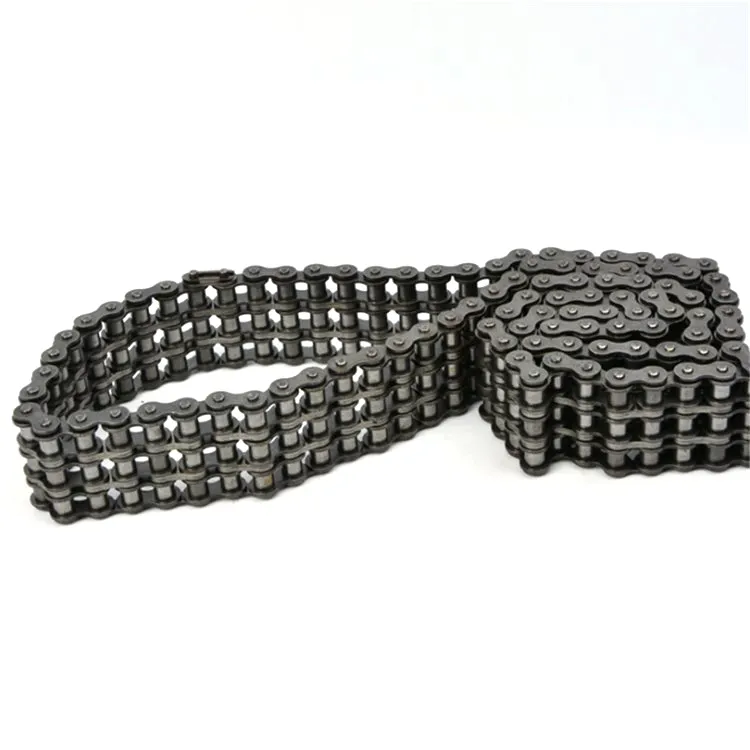
What are the advantages of using a flame-retardant transmission chain?
Flame-retardant transmission chains offer specific benefits in certain applications where fire safety is a concern. Here’s a detailed answer to the question:
1. Fire Protection: The primary advantage of using a flame-retardant transmission chain is enhanced fire protection. These chains are designed with materials and coatings that have high resistance to ignition and flame spread. In the event of a fire, they help to minimize the risk of the chain contributing to the spread of flames.
2. Safety: Flame-retardant transmission chains contribute to overall safety in environments where fire hazards are present. By reducing the flammability of the chain, they help prevent the chain from igniting or sustaining a fire, protecting personnel and property.
3. Compliance with Fire Regulations: In industries or applications where fire safety regulations are stringent, using flame-retardant transmission chains ensures compliance with these requirements. It helps to meet the necessary standards and regulations for fire prevention and protection.
4. Extended Escape Time: In situations where personnel may need to evacuate quickly during a fire, flame-retardant transmission chains can provide valuable additional time for safe evacuation. By resisting ignition and flame propagation, they help maintain structural integrity and delay the spread of fire.
5. Property Protection: Flame-retardant transmission chains help protect valuable equipment, machinery, and assets from fire damage. By reducing the risk of the chain catching fire, they minimize the potential for equipment failure and subsequent loss or damage.
It’s important to note that flame-retardant transmission chains may have specific design considerations and limitations. They are typically used in applications where fire safety is critical, such as in transportation systems, aerospace, mining, and other industries where the risk of fire is high. Selecting the appropriate flame-retardant chain requires considering the specific requirements of the application and ensuring compliance with relevant fire safety standards and regulations.
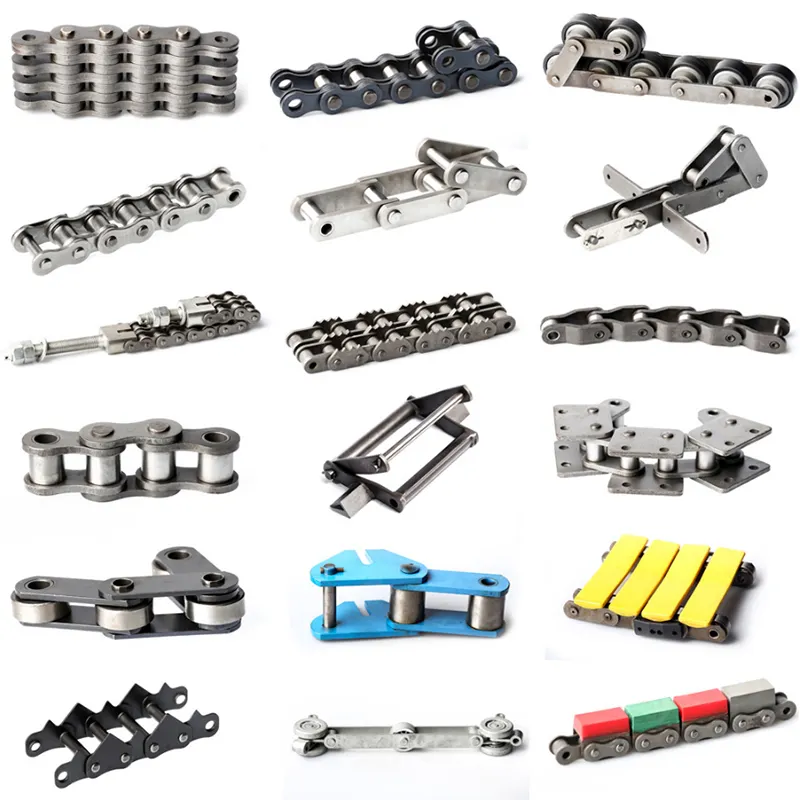
What materials are commonly used in manufacturing transmission chains?
Transmission chains are manufactured using various materials, each offering different properties and advantages. The choice of material depends on the specific application requirements, including load capacity, wear resistance, and environmental conditions. Here are some commonly used materials in the manufacturing of transmission chains:
- Carbon Steel: Carbon steel is a popular choice for transmission chains due to its excellent strength, durability, and affordability. It provides good wear resistance and can handle moderate loads.
- Stainless Steel: Stainless steel chains are highly resistant to corrosion and offer superior durability in challenging environments. They are commonly used in industries where cleanliness and hygiene are critical, such as food processing and pharmaceuticals.
- Alloy Steel: Alloy steel chains are alloyed with various elements to enhance their mechanical properties. They offer higher strength, increased wear resistance, and improved fatigue resistance compared to carbon steel chains.
- Plastic: Plastic chains are lightweight, corrosion-resistant, and offer excellent chemical resistance. They are often used in applications where noise reduction, low friction, or non-magnetic properties are required.
- Non-metallic Composites: Non-metallic composite chains are made from materials such as fiberglass, carbon fiber, or Kevlar. These chains offer high strength-to-weight ratios, exceptional chemical resistance, and low friction characteristics.
It’s important to select the appropriate chain material based on the specific operating conditions and requirements of the application. Factors such as load capacity, speed, environmental conditions, and maintenance considerations should be taken into account when choosing the material for a transmission chain.


editor by CX 2024-04-22