在进行比较之前,先明确决策标准。
For an industrial drive, the useful question is not whether a chain looks strong enough; it is whether the selected chain, sprockets, lubrication, and layout work together under the real duty. Adding strands can raise transmission capability without increasing pitch, but multi-strand capacity is not a perfectly linear multiple. Width, alignment, sprocket construction, and lubrication become more demanding as rows are added.
先从机器开始,然后使用 工业传动链选项 to identify candidates consistent with simplex chain and duplex chain. Before a candidate is accepted, keep simplex if it meets capacity, geometry, and service requirements with reasonable margin. This is deliberately different from choosing a familiar chain number first and trying to make the surrounding drive fit it later.
- Simplex Chain
- 使用此参数可尽早拒绝不合适的选项,然后将已验证的值保留为最终规范。
- Duplex Chain
- 检查机器上的这一点,并记录任何仍需供应商图纸或手册才能确定的问题。
- Triplex Chain
- 记录此需求时,请提供足够的上下文信息,以便另一位工程师能够重现相同的选择或诊断结果。
- Multi-Strand Factor
- 在做出决定之前,从图纸、测量、计算或运行记录中获取此输入信息。
- 横距
- 将其视为受控变量;在作业记录中记录其值、单位、运行状态和来源。
Load sharing across rows and dynamic behavior prevent ideal linear scaling. Therefore, confirm the resulting design rating at the actual RPM and tooth count.
Assuming perfect load sharing can oversize the claimed capability of a multiple-strand drive.
Start from a rated single-strand operating point
A reliable result starts when you use design power, high-speed shaft RPM, and a provisional small sprocket to see whether a simplex chain meets the selected manufacturer rating. The underlying reason is the comparison should begin from an actual rated combination rather than from tensile strength. In service, a well-sized simplex drive is usually simpler to align, lubricate, and stock. An incorrect input may create jumping to multiple strands can add cost and width without solving the real constraint.
Use the following field evidence: plot the duty on the rating table and record the first practical simplex option. Accept the result only if you can keep simplex if it meets capacity, geometry, and service requirements with reasonable margin. If the check is visual, add a dimension or operating observation whenever practical.
Use the manufacturer multi-strand factor
Establish the condition by choosing to apply the supplier factor for duplex or triplex capacity instead of multiplying the simplex rating by two or three. It affects the drive because load sharing across rows and dynamic behavior prevent ideal linear scaling. A useful constraint is that the factor can vary by chain family and manufacturer. Getting it wrong can produce assuming perfect load sharing can oversize the claimed capability of a multiple-strand drive.
Confirm the condition this way: use the exact factor associated with the selected chain series and operating method. The step passes when you can confirm the resulting design rating at the actual RPM and tooth count. Keep the evidence beside the chain designation and machine location in the maintenance record.
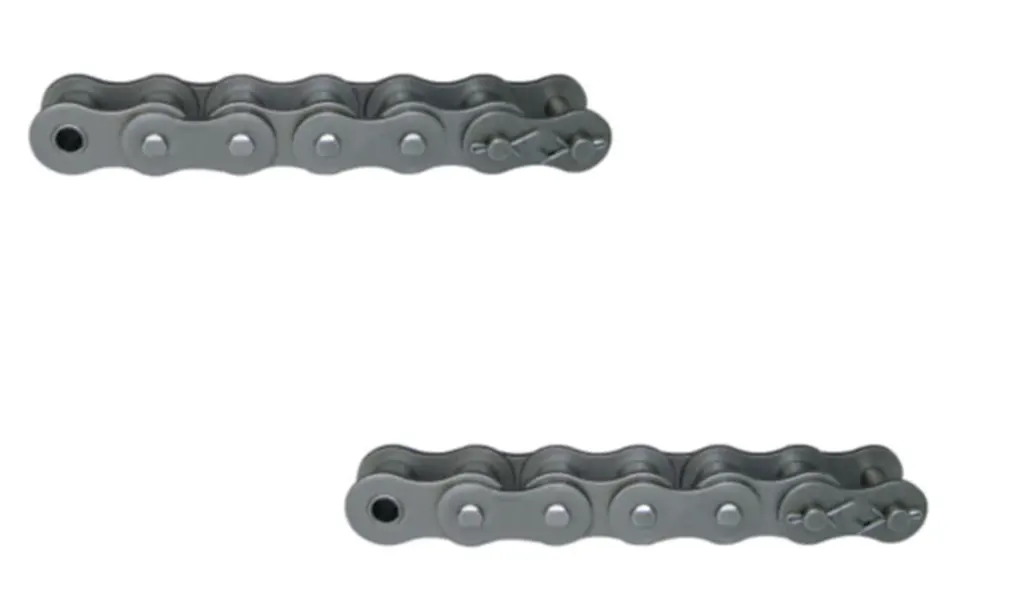
Compare pitch and sprocket diameter tradeoffs
Begin with the physical requirement: test whether a smaller-pitch duplex or triplex arrangement can fit where a larger-pitch simplex sprocket cannot. It is connected to more strands can increase capacity while retaining a smaller pitch and smoother engagement geometry. At site level, the wider sprocket may still conflict with shaft shoulders, bearings, guards, or adjacent equipment. The avoidable outcome is solving radial clearance can create an axial packaging problem.
Inspect as follows: model or measure both outside diameter and total sprocket face width for each option. Release the step after you can choose the configuration that passes both radial and axial envelope checks. Repeat the check after adjustment whenever the adjustment itself can change the measured condition.
Check shaft, hub, and bearing consequences
Verify shaft diameter, hub length, key or locking element capacity, and bearing arrangement for the wider sprocket. Why it matters: a wider multi-row sprocket changes packaging and can alter overhung load or hub stiffness. Field nuance: thin or split hubs may need a different sprocket construction when width increases. Failure mode: ignoring the shaft interface can move the weak point from the chain to the hub or bearing.
Inspection: review the sprocket drawing on the actual shaft and note bearing distances and available key length. Release condition: confirm the shaft and hub arrangement is acceptable for the resulting chain pull and geometry. Record the operating state and the reference points used for this check.
Plan alignment and lubrication across all rows
Start by provide a method to align the sprocket faces and deliver lubricant to every chain row. The mechanism is multiple strands depend on even engagement and joint lubrication across the full width. In practice, outer rows can look wet while inner joints remain poorly lubricated. If the assumption is wrong, uneven lubrication or misalignment can concentrate load in one row and accelerate wear.
Field check: inspect wear and lubricant condition across each row rather than only the visible outer plates. Accept the step when you can verify all rows articulate freely and show comparable contact patterns after trial operation. Save the measured or observed condition so the result can be repeated later.
Choose on life-cycle complexity as well as capacity
Use compare chain cost, sprocket cost, spare strategy, installation time, lubrication access, and replacement labor. This controls the decision because the mechanically smallest solution is not always the easiest system to maintain. On the machine, triplex may be justified by a hard diameter limit but unattractive where access is poor. The practical risk is ignoring maintenance access can increase downtime even when the drive is adequately rated.
Confirm it by doing this: walk through chain removal, connecting-link access, alignment, and lubrication tasks before release. The evidence is sufficient when you can select the fewest strands that satisfy capacity and machine constraints without creating service problems. Note the tool, location, and operating condition with the result.
并排工程检查
| 决策点 | 检查或计算 | 接受证据 |
|---|---|---|
| Start from a rated single-strand operating point | plot the duty on the rating table and record the first practical simplex option | keep simplex if it meets capacity, geometry, and service requirements with reasonable margin |
| Use the manufacturer multi-strand factor | use the exact factor associated with the selected chain series and operating method | confirm the resulting design rating at the actual RPM and tooth count |
| Compare pitch and sprocket diameter tradeoffs | model or measure both outside diameter and total sprocket face width for each option | choose the configuration that passes both radial and axial envelope checks |
| Check shaft, hub, and bearing consequences | review the sprocket drawing on the actual shaft and note bearing distances and available key length | confirm the shaft and hub arrangement is acceptable for the resulting chain pull and geometry |
| Plan alignment and lubrication across all rows | inspect wear and lubricant condition across each row rather than only the visible outer plates | verify all rows articulate freely and show comparable contact patterns after trial operation |
| Choose on life-cycle complexity as well as capacity | walk through chain removal, connecting-link access, alignment, and lubrication tasks before release | select the fewest strands that satisfy capacity and machine constraints without creating service problems |
| For this article, do not close the job until the simplex chain evidence and every critical mating interface are recorded together. | ||
有些看似连锁问题的故障实际上是由相邻硬件控制的。 inspect duplex roller-chain sprocket configurations helps illustrate that broader simplex versus duplex or triplex chain context, while the acceptance criteria still come from the actual chain, sprocket, tensioning arrangement, and OEM documentation.
应该阻止替换的权衡取舍
Release check: keep simplex if it meets capacity, geometry, and service requirements with reasonable margin.
Release check: confirm the resulting design rating at the actual RPM and tooth count.
Release check: choose the configuration that passes both radial and axial envelope checks.
Release check: confirm the shaft and hub arrangement is acceptable for the resulting chain pull and geometry.
对比常见问题解答
选择适合该任务的架构
Release the work only when the record connects simplex chain and duplex chain to the physical condition verified in “Choose on life-cycle complexity as well as capacity.” Include photos or measurements where they clarify the interface, and reference the document that owns any exact limit. The 工业链传动解决方案 然后可以利用它在不失去原有工程基础的情况下探索替代方案。
Do not hide a remaining assumption inside the purchase description. send the application data to the chain engineering team with the machine duty, measured interfaces, photographs, and the unresolved question around triplex chain. A clear uncertainty is actionable; an undocumented guess becomes a future troubleshooting problem.
Send the operating condition, simplex chain, duplex chain, layout evidence, and the unresolved interface so the next decision is based on machine data rather than assumption.