定义必须匹配的接口
Most costly chain-drive mistakes begin when one visible symptom or one catalog dimension is treated as the whole problem. ANSI/ASME and ISO roller chains can look similar while using different dimensional families. The safe purchasing method is to identify the governing standard and confirm every controlling interface, not convert only the pitch.
这 可用的传动链系列 is most useful once the problem statement includes ASME B29.1 and ISO 606. In this article the controlling verification is to state the standard family explicitly on the purchase specification. Keeping those facts together gives purchasing and maintenance the same technical basis for the next action.
- Asme B29.1
- 请根据物理驱动器和当前供应商数据核实此项目,而不是仅凭外观进行估计。
- Iso 606
- 使用此参数可尽早拒绝不合适的选项,然后将已验证的值保留为最终规范。
- Pitch Series
- 检查机器上的这一点,并记录任何仍需供应商图纸或手册才能确定的问题。
- Roller Width
- 记录此需求时,请提供足够的上下文信息,以便另一位工程师能够重现相同的选择或诊断结果。
- Sprocket Compatibility
- 在做出决定之前,从图纸、测量、计算或运行记录中获取此输入信息。
Identify the governing dimensional family
First, use the existing chain marking, OEM drawing, machine manual, or measured dimensions to determine whether the drive follows an ASME/ANSI or ISO/BS family. That step is tied to standards organize chain dimensions as coordinated systems rather than isolated pitch values. A practical observation is that some nominal pitches exist in both families but roller width and other geometry can differ. Missing it can lead to a pitch-only substitution can bind on the sprocket or create excessive lateral clearance.
For evidence, compare pitch, roller diameter, inner width, pin dimensions, and strand spacing with the standard table or supplier drawing. Finish when you can state the standard family explicitly on the purchase specification. Retain enough context to distinguish a new-chain dimension from a wear-affected measurement.
Treat sprocket compatibility as a separate check
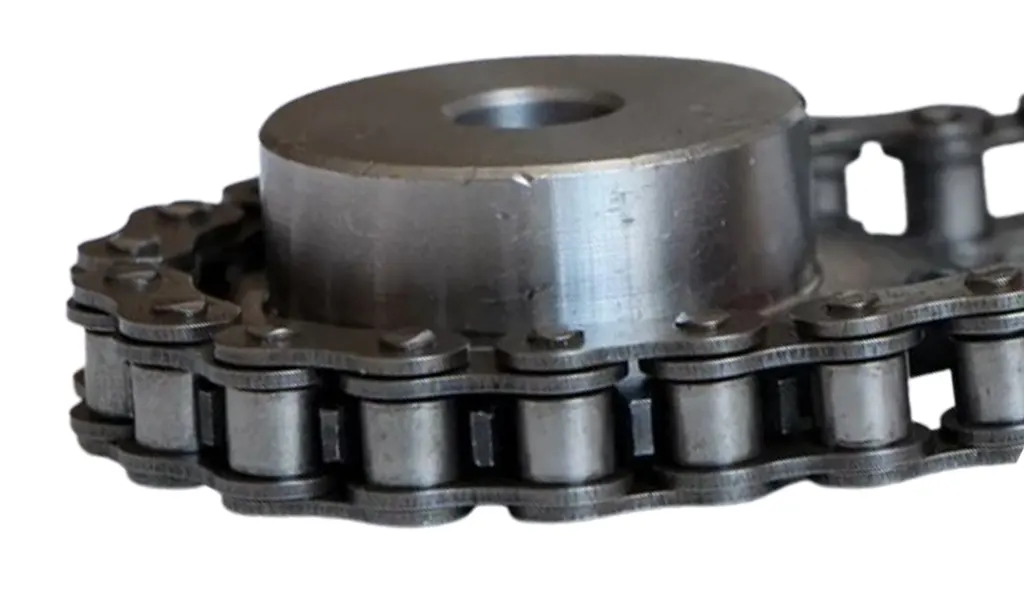
Treat verify tooth section, sprocket thickness, number of strands, bore, hub, and runout requirements for the chain family as the control point. The reason is the chain and sprocket are a mating geometry and standards include sprocket characteristics for that reason. Real installations also show that a sprocket may physically accept a chain at rest yet contact the roller incorrectly under load. The likely consequence of error is mixed families can create noise, accelerated tooth wear, or poor seating.
Make the check at the machine: inspect the existing sprocket and compare its tooth and thickness data with the chain drawing. The release criterion is to approve the replacement only when the selected chain and sprocket are documented as compatible. Record whether the drive was stopped, loaded, warm, cold, clean, or contaminated as relevant.
Check interchangeable-link assumptions carefully
Do not choose the hardware until you confirm connecting links, offset links, attachment dimensions, and pin widths for the exact series. This matters because standardization improves interchangeability only within defined dimensional limits. Remember that special heavy, corrosion-resistant, or attachment chains may preserve some base dimensions while changing others. If ignored, assuming every link marked with the same pitch is interchangeable can create assembly or strength problems.
Validate with a repeatable observation: compare the replacement link part drawing with the base chain and the installed side clearance. Move on after you can use connecting components specified for the exact chain series. Preserve the source of any numerical limit that belongs to a specific chain series.
Separate tensile values from operating ratings
A reliable result starts when you use manufacturer power-rating or allowable-load data for operating selection rather than comparing minimum tensile strength alone. The underlying reason is standards define strength tests, but drive life is also controlled by fatigue, wear, lubrication, and speed. In service, two chains can meet a dimensional standard while having different manufacturer performance ratings. An incorrect input may create buying only on a larger break-load number can leave the actual duty or lubrication unchecked.
Use the following field evidence: compare the intended operating point with the supplier rating table for the selected series. Accept the result only if you can document both dimensional standard and operating rating basis in the order. If the check is visual, add a dimension or operating observation whenever practical.
Preserve the standard through the whole drive
Establish the condition by choosing to specify chain, sprockets, connecting links, and attachments from the same compatible system unless an engineering review approves a mix. It affects the drive because compatibility failures often enter through a replacement sprocket or link rather than the chain strand itself. A useful constraint is that a maintenance stockroom may contain visually similar parts from different standards. Getting it wrong can produce mixed spares can cause intermittent assembly problems and difficult-to-diagnose wear.
Confirm the condition this way: label stored chain and sprockets with the standard family and exact series. The step passes when you can make the bill of materials identify the standard and chain designation consistently. Keep the evidence beside the chain designation and machine location in the maintenance record.
Build a buyer verification sheet
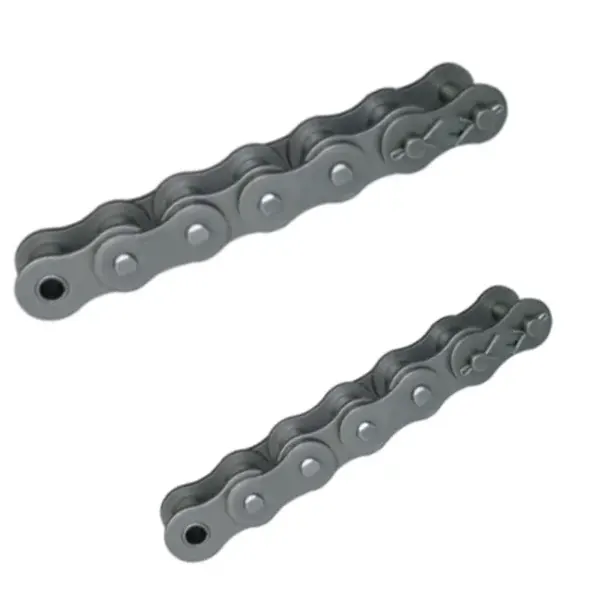
Begin with the physical requirement: list standard, chain designation, strand count, pitch, roller diameter, inner width, length, connecting-link style, and sprocket interfaces. It is connected to a structured purchase record prevents a supplier from filling gaps with assumptions. At site level, photos and old part numbers are useful evidence but do not replace controlling dimensions. The avoidable outcome is an incomplete request increases the chance of a near-match instead of a true replacement.
Inspect as follows: attach drawings or measured values and flag any dimension affected by wear. Release the step after you can receive and compare the supplier confirmation drawing before release. Repeat the check after adjustment whenever the adjustment itself can change the measured condition.
兼容性验证表
| 决策点 | 检查或计算 | 接受证据 |
|---|---|---|
| Identify the governing dimensional family | compare pitch, roller diameter, inner width, pin dimensions, and strand spacing with the standard table or supplier drawing | state the standard family explicitly on the purchase specification |
| Treat sprocket compatibility as a separate check | inspect the existing sprocket and compare its tooth and thickness data with the chain drawing | approve the replacement only when the selected chain and sprocket are documented as compatible |
| Check interchangeable-link assumptions carefully | compare the replacement link part drawing with the base chain and the installed side clearance | use connecting components specified for the exact chain series |
| Separate tensile values from operating ratings | compare the intended operating point with the supplier rating table for the selected series | document both dimensional standard and operating rating basis in the order |
| Preserve the standard through the whole drive | label stored chain and sprockets with the standard family and exact series | make the bill of materials identify the standard and chain designation consistently |
| Build a buyer verification sheet | attach drawings or measured values and flag any dimension affected by wear | receive and compare the supplier confirmation drawing before release |
| For this article, do not close the job until the ASME B29.1 evidence and every critical mating interface are recorded together. | ||
要更全面地了解与此问题相关的硬件,请参阅 review industrial sprocket geometry options. Use that page only as context for ANSI and ISO roller-chain interchangeability; approve the real drive from measured interfaces, current ratings, and the machine duty described in this article.
消除不匹配风险
Release check: state the standard family explicitly on the purchase specification.
Release check: approve the replacement only when the selected chain and sprocket are documented as compatible.
Release check: use connecting components specified for the exact chain series.
Release check: document both dimensional standard and operating rating basis in the order.
兼容性常见问题解答
只有在所有接口都匹配之后才批准互换性
A finished compatibility decision should let another engineer reproduce it without relying on memory. Keep ASME B29.1, ISO 606, the final check for “Build a buyer verification sheet,” and the governing catalog or drawing revision together. If another chain architecture becomes relevant, the 链传动工程解决方案 这是一个起点,而不是对已录制输入内容的替代。
For an application-specific review, send the application data to the chain engineering team and identify what is known versus what remains uncertain. Include the values for ASME B29.1 and ISO 606, plus the current condition of pitch series. A supplier can then evaluate a bounded engineering question instead of trying to infer the machine from a chain designation alone.
Send the operating condition, ASME B29.1, ISO 606, layout evidence, and the unresolved interface so the next decision is based on machine data rather than assumption.