Build the selection envelope
The quickest way to make this decision reliable is to define the operating condition first and postpone the chain number until the interfaces are known. Lubrication is part of chain selection because rating and wear life depend on the oil film at the articulating joint. The visible outer plates are not the target; lubricant must enter the gap between inner and outer plates and reach the pin-bushing contact.
Начните с машины, затем воспользуйтесь варианты цепочек передачи в промышленности to identify candidates consistent with pin-bushing joint and manual lubrication. Before a candidate is accepted, choose a delivery method explicitly supported for the chain size, speed, and load. This is deliberately different from choosing a familiar chain number first and trying to make the surrounding drive fit it later.
Pin and bushing relative motion is the primary source of wear elongation in roller chain. Therefore, adjust nozzle position, viscosity, or application method until oil penetrates the joint.
Surface-only application wastes lubricant and allows hidden wear to continue.
- Pin-Bushing Joint
- Перед принятием решения необходимо получить эти данные из чертежа, измерения, расчета или протокола эксплуатации.
- Manual Lubrication
- Рассматривайте это как управляемую переменную; укажите ее значение, единицу измерения, рабочее состояние и источник в записи задания.
- Drip Lubrication
- Проверяйте этот элемент по физическому диску и текущим данным поставщика, а не по внешнему виду.
- Oil Bath
- Используйте этот параметр, чтобы отклонить неподходящие варианты на раннем этапе, а затем сохранить проверенное значение для окончательной спецификации.
- Forced Lubrication
- Проверьте этот момент непосредственно на станке и задокументируйте любые неясности, для решения которых по-прежнему требуется чертеж или инструкция от поставщика.
Start with chain speed and supplier guidance
First, calculate chain speed and use the lubrication chart for the selected chain size and operating point. That step is tied to the joint articulates more frequently as chain speed rises and faster drives need more reliable lubricant delivery. A practical observation is that a method acceptable at low intermittent speed may not maintain a film at continuous high speed. Missing it can lead to under-lubrication produces heat, noise, fretting, wear elongation, and stiff joints.
For evidence, calculate speed from pitch, teeth, and RPM and identify the manufacturer lubrication region. Finish when you can choose a delivery method explicitly supported for the chain size, speed, and load. Retain enough context to distinguish a new-chain dimension from a wear-affected measurement.
Aim the lubricant at the articulating joint
Treat apply oil at the gap between inner and outer plates and, where appropriate, the roller-bushing interface as the control point. The reason is pin and bushing relative motion is the primary source of wear elongation in roller chain. Real installations also show that coating the outside plate can look well maintained while the joint remains dry. The likely consequence of error is surface-only application wastes lubricant and allows hidden wear to continue.
Make the check at the machine: inspect a connecting link or representative joint for a clean lubricant film on the pin and bushing surfaces. The release criterion is to adjust nozzle position, viscosity, or application method until oil penetrates the joint. Record whether the drive was stopped, loaded, warm, cold, clean, or contaminated as relevant.
Choose viscosity for temperature and penetration
Do not choose the hardware until you select lubricant viscosity that can enter the joint at operating temperature while maintaining an adequate film. This matters because oil that is too viscous may not penetrate and oil that is too light may drain or evaporate too quickly. Remember that ambient temperature, chain temperature, speed, and contamination all affect the useful viscosity range. If ignored, using grease or very heavy oil as a general substitute can block penetration and trap debris.
Validate with a repeatable observation: measure or estimate operating temperature and follow the chain or lubricant supplier viscosity guidance. Move on after you can verify the applied lubricant remains mobile enough to reach the joint during operation. Preserve the source of any numerical limit that belongs to a specific chain series.
Control contamination before adding more oil
A reliable result starts when you remove loose abrasive material and design guards so the lubricant does not simply capture dust or grit. The underlying reason is abrasives carried into the pin-bushing interface accelerate wear even when lubricant quantity is high. In service, dirty environments may need controlled low-volume application, shielding, or purging rather than occasional flooding. An incorrect input may create adding oil to a dirty chain can create an abrasive paste and worsen wear.
Use the following field evidence: inspect lubricant for grit, color change, and deposits around rollers and tooth pockets. Accept the result only if you can clean appropriately and correct guarding before increasing lubricant quantity. If the check is visual, add a dimension or operating observation whenever practical.
Match the delivery system to orientation and access
Establish the condition by choosing to choose manual, drip, bath, disc, or forced circulation based on chain path, enclosure, speed, and maintenance access. It affects the drive because gravity and centrifugal effects influence whether oil reaches the intended side of the chain. A useful constraint is that vertical or enclosed drives can be difficult to service by hand and high-speed drives may throw oil away from the joint. Getting it wrong can produce a theoretically adequate method can fail because technicians cannot reach the correct application point.
Confirm the condition this way: trace the lubricant from reservoir or applicator to the joint through the full chain path. The step passes when you can confirm the method is maintainable during normal plant service without removing safety guards unnecessarily. Keep the evidence beside the chain designation and machine location in the maintenance record.
Verify lubrication from wear evidence
Begin with the physical requirement: monitor noise, pin color, joint freedom, elongation trend, and sprocket condition after implementing the method. It is connected to lubrication quality should be judged by joint condition and wear rate rather than by oil consumption alone. At site level, reddish-brown fretting debris, stiff links, or rapid elongation can indicate inadequate film. The avoidable outcome is continuing the same schedule despite poor evidence allows wear to compound.
Inspect as follows: inspect representative joints and trend measured chain elongation over time. Release the step after you can adjust method, interval, viscosity, or delivery location when condition data shows inadequate lubrication. Repeat the check after adjustment whenever the adjustment itself can change the measured condition.
Candidate verification table
| Точка принятия решения | Проверка или расчет | Подтверждение приемки |
|---|---|---|
| Start with chain speed and supplier guidance | calculate speed from pitch, teeth, and RPM and identify the manufacturer lubrication region | choose a delivery method explicitly supported for the chain size, speed, and load |
| Aim the lubricant at the articulating joint | inspect a connecting link or representative joint for a clean lubricant film on the pin and bushing surfaces | adjust nozzle position, viscosity, or application method until oil penetrates the joint |
| Choose viscosity for temperature and penetration | measure or estimate operating temperature and follow the chain or lubricant supplier viscosity guidance | verify the applied lubricant remains mobile enough to reach the joint during operation |
| Control contamination before adding more oil | inspect lubricant for grit, color change, and deposits around rollers and tooth pockets | clean appropriately and correct guarding before increasing lubricant quantity |
| Match the delivery system to orientation and access | trace the lubricant from reservoir or applicator to the joint through the full chain path | confirm the method is maintainable during normal plant service without removing safety guards unnecessarily |
| Verify lubrication from wear evidence | inspect representative joints and trend measured chain elongation over time | adjust method, interval, viscosity, or delivery location when condition data shows inadequate lubrication |
| For this article, do not close the job until the pin-bushing joint evidence and every critical mating interface are recorded together. | ||
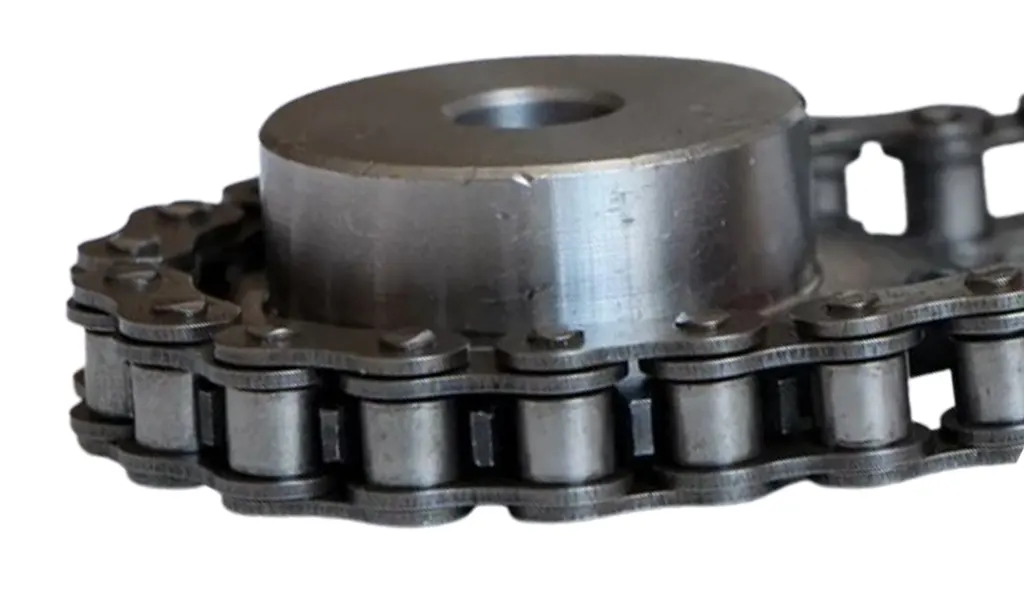
Некоторые сбои, которые выглядят как проблемы в цепочке, контролируются соседним оборудованием. review neighboring chain-drive service hardware helps illustrate that broader roller-chain lubrication method context, while the acceptance criteria still come from the actual chain, sprocket, tensioning arrangement, and OEM documentation.
What disqualifies a chain choice
Release check: choose a delivery method explicitly supported for the chain size, speed, and load.
Release check: adjust nozzle position, viscosity, or application method until oil penetrates the joint.
Release check: verify the applied lubricant remains mobile enough to reach the joint during operation.
Release check: clean appropriately and correct guarding before increasing lubricant quantity.
Selection questions engineers ask
Issue the final chain specification
Release the work only when the record connects pin-bushing joint and manual lubrication to the physical condition verified in “Verify lubrication from wear evidence.” Include photos or measurements where they clarify the interface, and reference the document that owns any exact limit. The решения для промышленных цепных приводов Затем это можно использовать для изучения альтернативных вариантов, не теряя при этом первоначальной инженерной основы.
Do not hide a remaining assumption inside the purchase description. send the application data to the chain engineering team with the machine duty, measured interfaces, photographs, and the unresolved question around drip lubrication. A clear uncertainty is actionable; an undocumented guess becomes a future troubleshooting problem.
Send the operating condition, pin-bushing joint, manual lubrication, layout evidence, and the unresolved interface so the next decision is based on machine data rather than assumption.