Defina os critérios de decisão antes de comparar.
Treat this task as an engineering verification sequence. Each step should either produce a number, a physical observation, or a documented acceptance condition. Heavy-duty chain is useful when the duty truly demands more shock or fatigue capability, but it is not an automatic cure for poor lubrication, contamination, worn sprockets, or misalignment.
Analisando o gama de seleção de produtos de cadeia can save time, but only when the search is constrained by verified heavy-duty roller chain and shock load. The engineering gate for this topic is to state the specific failure mode the heavy-duty chain is intended to solve; anything that fails that gate remains a hypothesis, not a released specification.
Define why the standard chain is inadequate: heavy-duty construction addresses some strength mechanisms but not every cause of short life.
Check dimensional interchangeability: many heavy-duty chains retain base pitch but can differ in envelope or component proportions.
- Heavy-Duty Roller Chain
- Verifique este ponto na máquina e documente qualquer dúvida que ainda exija um desenho ou manual do fornecedor.
- Carga de choque
- Registre esse requisito com contexto suficiente para que um segundo engenheiro possa reproduzir a mesma seleção ou diagnóstico.
- Fatigue Strength
- Capture essa informação a partir de um desenho, medição, cálculo ou registro operacional antes que a decisão seja tomada.
- Espessura da placa
- Considere isso como uma variável controlada; anote seu valor, unidade, estado operacional e origem no registro da tarefa.
- Carga admissível
- Verifique este item comparando-o com a unidade física e os dados atuais do fornecedor, em vez de estimá-lo pela aparência.
Define why the standard chain is inadequate
Identify whether the limiting mechanism is fatigue, shock load, overload, wear elongation, corrosion, or a geometry problem. Why it matters: heavy-duty construction addresses some strength mechanisms but not every cause of short life. Field nuance: failure evidence from plates, pins, rollers, and sprockets should guide the upgrade. Failure mode: installing stronger chain without fixing lubrication or alignment can reproduce the same failure.
Inspection: review the failed parts, operating history, load transients, and maintenance record before changing series. Release condition: state the specific failure mode the heavy-duty chain is intended to solve. Record the operating state and the reference points used for this check.
Compare rated operating capacity, not appearance
Start by use supplier allowable-load or power-rating tables for the standard and heavy-duty series at the actual speed. The mechanism is thicker plates and strengthened components do not translate into one universal capacity multiplier. In practice, some heavy-duty designs also change pin length, plate contour, or overall width. If the assumption is wrong, choosing by plate thickness alone can create a drive that still misses the rated operating condition.
Field check: compare both series on the same design power, RPM, sprocket tooth count, and lubrication basis. Accept the step when you can select only a series that is explicitly rated for the duty. Save the measured or observed condition so the result can be repeated later.
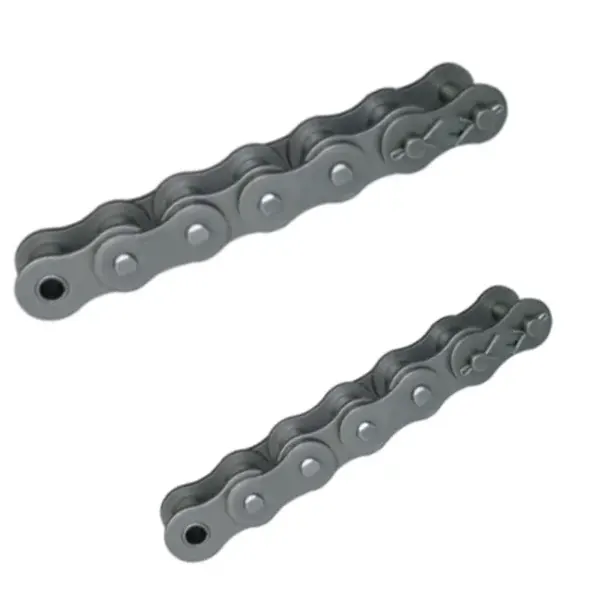
Check dimensional interchangeability
Use verify pitch, roller diameter, inner width, plate height, pin projection, transverse pitch, and sprocket compatibility. This controls the decision because many heavy-duty chains retain base pitch but can differ in envelope or component proportions. On the machine, existing guards, guides, take-up, and connecting-link clearance may be tight. The practical risk is an upgraded chain can rub a guard or fail to clear a shaft shoulder even if it meshes with the sprocket.
Confirm it by doing this: overlay the standard and heavy-duty drawings or measure the installed clearances. The evidence is sufficient when you can confirm the complete chain envelope and sprocket compatibility before purchase. Note the tool, location, and operating condition with the result.
Evaluate speed and articulation effects
Work from check the selected heavy-duty series at actual chain speed and small-sprocket tooth count. The engineering link is greater mass and articulation demand can matter in faster drives and small sprockets. One useful detail is that a strength upgrade may increase dynamic impact if the geometry is already aggressive. Otherwise, noise, vibration, and roller impact can worsen when chain mass rises without revisiting the sprocket.
Verify at the drive: calculate chain speed and inspect the small-sprocket geometry and wrap. Close this check only after you can verify the heavy-duty option is inside the manufacturer speed and lubrication limits. Keep photographs or dimensions when they help preserve the interface condition.
Fix lubrication and contamination first
Base the decision on determine whether lubricant reaches the pin-bushing joint and whether abrasive material is being carried into it. It matters because wear elongation occurs at the articulating joint and stronger plates do not prevent dry or abrasive wear. During service, dirty lubricant can turn a robust chain into a rapidly wearing chain. A poor assumption can cause the drive can show longer fatigue life but still be replaced early for elongation.
Use this confirmation: open a connecting link or inspect representative joints and assess lubricant penetration and contamination. Proceed when you can correct lubrication delivery and guarding as part of any heavy-duty upgrade. If readings vary around the chain or sprocket, retain the spread instead of hiding it in one average.
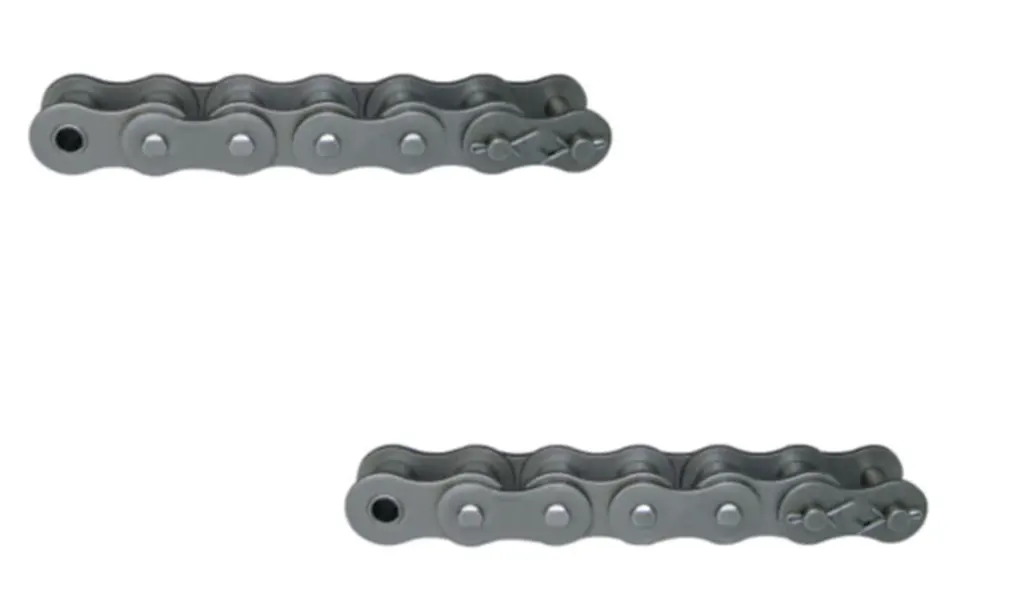
Compare life-cycle value
The controlling action is to include sprocket changes, wider components, spares, installation labor, downtime risk, and expected failure mechanism in the decision. Its significance comes from a heavier chain costs more and may require different sprockets or guarding. In the field, the lowest purchase price and the highest nominal strength can both be poor economic choices. The failure consequence is over-specification can add cost without extending life if the real limit is environmental.
Check the hardware directly: document the current failure cost and the specific improvement expected from the heavy-duty design. Approval requires that you can approve the upgrade when its construction directly addresses the verified duty limit. Write down any uncertainty that still needs a drawing, manual, or supplier response.
Verificações de engenharia lado a lado
| Ponto de decisão | Inspeção ou cálculo | Evidências de aceitação |
|---|---|---|
| Define why the standard chain is inadequate | review the failed parts, operating history, load transients, and maintenance record before changing series | state the specific failure mode the heavy-duty chain is intended to solve |
| Compare rated operating capacity, not appearance | compare both series on the same design power, RPM, sprocket tooth count, and lubrication basis | select only a series that is explicitly rated for the duty |
| Check dimensional interchangeability | overlay the standard and heavy-duty drawings or measure the installed clearances | confirm the complete chain envelope and sprocket compatibility before purchase |
| Evaluate speed and articulation effects | calculate chain speed and inspect the small-sprocket geometry and wrap | verify the heavy-duty option is inside the manufacturer speed and lubrication limits |
| Fix lubrication and contamination first | open a connecting link or inspect representative joints and assess lubricant penetration and contamination | correct lubrication delivery and guarding as part of any heavy-duty upgrade |
| Compare life-cycle value | document the current failure cost and the specific improvement expected from the heavy-duty design | approve the upgrade when its construction directly addresses the verified duty limit |
| For this article, do not close the job until the heavy-duty roller chain evidence and every critical mating interface are recorded together. | ||
A seleção de componentes é mais eficaz quando a cadeia não é analisada isoladamente. review sprocket options for heavy industrial drives offers related standard versus heavy-duty roller chain context; keep the final engineering check tied to the exact standard family, manufacturer table, and measured installation.
Trocas que devem impedir uma substituição
Release check: state the specific failure mode the heavy-duty chain is intended to solve.
Release check: select only a series that is explicitly rated for the duty.
Release check: confirm the complete chain envelope and sprocket compatibility before purchase.
Release check: verify the heavy-duty option is inside the manufacturer speed and lubrication limits.
Perguntas frequentes sobre comparação
Escolha a arquitetura que melhor se adequa à tarefa.
The strongest handoff for this comparison topic is a short evidence package: verified heavy-duty roller chain, verified shock load, the result of “Compare life-cycle value,” and the exact source of any chain-series-specific limit. Broader alternatives on the soluções para cadeias de transmissão de energia deve ser comparado com o mesmo pacote em si, e não com descrições genéricas de catálogo.
For standard versus heavy-duty roller chain, if fatigue strength has not been verified, send the application data to the chain engineering team with the evidence collected in the preceding checks. State the operating condition, measured dimensions, current sprocket condition, and intended maintenance or design action so the remaining check can be closed before the machine returns to service.
Send the operating condition, heavy-duty roller chain, shock load, layout evidence, and the unresolved interface so the next decision is based on machine data rather than assumption.