Description du produit
Rouleau d'entraînement, convoyeur à chaîne à maillons creux, chaîne industrielle, ascenseur, levage silencieux, pivot, acier inoxydable moulé duplex, maillon de renvoi, escalier mécanique agricole
Description du produit
Cliquez sur l'image pour obtenir le dernier devis
| chaîne de transmission (chaîne d'entraînement) | Chaîne à rouleaux de précision à pas court (série A) (1, 2, 3) | 04C-1 06C-1-2-3 085-1-2-3 08A-1-2-3 10A-1-2-3 12A-1-2-3 16A-1-2-3 20A-1-2-3 24A-1-2-3 28A-1-2-3 32A-1-2-3 40A-1-2-3 48A-1-2-3 |
| 25 35 35-2 35-3 -2 40-3 50 50-2-50-3 60 60-2 60-3 80 80-2 80-3 100 100-2 100-3 120 120-2 120-3 140 140-2 160 160-2 -2 240 | ||
| Chaîne à rouleaux de précision à pas court (série B) (1, 2, 3) | 06B-1-2-3 06B-1-2-3 08B-1-2-3 10B-1-2-3 12B-1-2-3 16B-1-2-3 20B-1-2-3 24B-1-2-3 28B-1-2-3 32B-1-2-3 40B-1-2-3 48B-1-2-3 56B-1-2-3 64B-1-2-3 72B-1-2-3 | |
| Chaîne à rouleaux série renforcée (1,2) | 08AH-1 10AH-1 12AH-1-2-3 16AH-1-2-3 20AH-1-2-3 24AH-1-2-3 28AH-1-2-3 32AH-1-2-3 40AH-1-2-3 | |
| Chaîne de nœud latéral | 40SB 43SB 50SB 60SB 63SB 80SB 08BSB 08BSBY1 10BSB 12BSB C2050SB | |
| Chaîne de moto | 410 415 415H 420 420H 428 428H 520 520H 525 525H 530 530H 630 630H | |
| Chaîne de distribution du moteur | CL04 | |
| Chaîne à rouleaux autolubrifiante | 08BSLR 10BSLR 12BSLR 16BSLR 40SLR 50SLR 60SLR 80SLR | |
| Chaîne de transmission à double pas | 208A 208B 210A 210B 212A 212B 216A 216B 220A 220B | |
| 2040 2050 2060 2080 2100 | ||
| Chaîne de broussailles | P15F-B P20-B P25-B P25F1-B P30F2-B P36-B P40-B P45-B P50-B P55-B P60-B P70-B P80-B | |
| Chaîne de convoyeur | Chaînes à rouleaux avec plaques latérales droites (série A) | C08A-1-2-3 C10A-1-2-3 C12-1-2-3 C24A-1-2-3 C32A-1-2-3 |
| C35 C40-1-2-3 C50-1-2-3 C80-1-2-3 C100-1-2-3 C120-1-2-3 C140-1-2-3 C160-1-2-3 | ||
| Chaînes à rouleaux avec plaques latérales droites (série B) | C08B-1-2-3 C10B-1-2-3 C12B-1-2-3 C16-1-2-3 C20B-1-2-3 C24B-1-2-3 C28B-1-2-3 C32B-1-2-3 | |
| Chaîne de convoyeur à double pas | C208A C208AH C208B C208BL C210A C210AL C212A C212AH C212AHL C216A C216AL C216AH C216AHL C220A C220AL C220AH C220AHL C224A C224AL C224AH C224AHL C232A C232AL C232AH C232AHL | |
| C2050 C2052 C2060 C2062 C2060H C2080 C2080H C2082 C2082H C2100 C2100H C2102 C2102H C2120 C2120H C2122 C2122H C2160 C2160H C2162 C2162H | ||
| Chaîne de vitesse Double Pius | BS25-C206B BS25-C208A BS25-C210A BS25-C212A BS30-C206B BS30-C208B BS30-C210B BS30-C212B | |
| Chaîne de convoyeur (série M) | M20 M28 M40 M56 M80 | |
| Chaîne de convoyeur à axes creux (série MC) | MC28 MC56 MC112 MC224 | |
| Chaîne de convoyeur (série FV) | FV40 FV63 FV90 FV112 FV140 | |
| Chaîne de convoyeur (série FVT) | FVT40 FVT63 FVT90 FVT112 FVT140 FVT180 FVT250 FVT315 | |
| Chaîne de convoyeur à axes creux (série FVC) | FVC63 FVC90 FVC112 FVC140 FVC180 FVC250 FVC315 | |
| Chaîne de convoyeur (série Z) | Z40 Z100 Z160 Z300 | |
| Chaîne de convoyeur (série ZE) | ZE40 ZE100 ZE160 ZE300 | |
| Chaîne de convoyeur à axes creux (série ZC) | ZC21 ZC40 ZC60 ZC150 ZC300 | |
| Chaînes à goupilles creuses | 08BHPF 08BHPF5 08BHP9 10BHPF3 10BHPF4 12BHPF2 12BHPF3 16BHPF3 16BHPF4 40 CV 08BHPF7 08BHP 50 CV 50HPF4 50H-CV 60 CV 60HPF1 80 CV 80HPF1 80HPF2 80H-CV 80HPF3 80HPF4 HB41.75F5 A2080CV | |
| Chaînes à maillons coudés de type soudé | WR78 WH78 WR82 WH82 WR106 WH106 WR110 WH110 WR111 WH111 WR124 WH124 WR132 WH132 WR150 WH150 WR155 WH155 WR157 WH157 WR78F5 WH78F4 WH124F1 WH111F1 | |
| Chaînes d'huile de palme | P101.6F2 P152F14 P152F17 P152F29 90R-S P101.6F64 P76.7 P152F31 | |
| chaînes de sucreries | DH9063 DH2198 P152F93K2 P152F78K2 DH 0571 0 DH1796 P152F77-AS2 P203.2F9 | |
| chaînes porte-gants en caoutchouc | P100F155 P100F13 P100F139 P150/90 | |
| Chaînes de convoyeurs à bois | 81X 81XH 81XHE 81XHH 81XHS 500R 441,100R | |
| Chaînes supérieures pointues | 08AF34 08BF21 10AF8 41F6 06BF1 06BF37 08AF41 08BF44 08AF8… | |
| Chaîne en acier inoxydable | Chaîne à rouleaux de précision à pas court en acier inoxydable (série A) | 25SS-1 35SS-1 41SS-1 40SS-1 50SS-1 60SS-1 80SS-1 100SS-1 120SS-1 |
| Chaîne à rouleaux de précision à pas court en acier inoxydable (série B) | 05BSS-1 06BSS-1 08BSS-1 10BSS-1 12BSS-1 16BSS-1 20BSS-1 24BSS-1 | |
| Chaîne à rouleaux en acier inoxydable avec plaques latérales droites | C40SS-1 C50SS-1 C60SS-1 C80SS-1 C100SS-1 C120SS-1 C08BSS-1 C10BSS-1 C12BSS-1 C16BSS-1 C20BSS-1 C24BSS-1 | |
| Chaîne de transmission à double pas en acier inoxydable | 2040SS 2050SS 2060SS 2080SS 2100SS 2120SS 208BSS 210BSS 212BSS 216BSS 220BSS 224BSS | |
| Chaîne de convoyeur à double pas en acier inoxydable | C2040SS C2040HSS C208BSS C2050SS C2060SS C2060HSS C2080SS C2080HSS C2100SS C2100HSS C2120SS C2120HSS | |
| Chaîne à maillons creux en acier inoxydable | 08BHFSS 40HPSS 50HPSS 60HPSS 12BHPSS 80HPSS C2040HPSS C2050HPSS C2060HPSS C2080HPSS HB50.8SS | |
| Chaîne à maillons creux à double pas en acier inoxydable | C2042HPSS C2052HPSS C2062HPSS C2082HPSS C2042H-HPSS C2052H-HPSS C2062H-HPSS C2082H-HPSS | |
| Chaîne de levage | Chaîne de stationnement pour voitures | 12AT-1 16AT-1-2 20AT-1-2-3 24AT-1-2 |
| Chaîne de feuilles | LH0822 LH0823 LH571 LH0844 LH0846 LH0571 LH1571 LH1571 LH1034 LH1044 LH1046 LH1066 LH1088 LH1222 LH1223 LH1234 LH1244 LH1246 LH1266 LH1288 | |
| BL422 BL423 BL434 BL444 BL446 BL466 BL488 BL522 BL523 BL534 BL544 BL546 BL566 BL588 BL622 BL623 BL634 BL644 BL646 BL666 BL688 | ||
| Chaîne à goupilles à roulements à plaques multiples | LF30 MP50F2 MP50.8 MP70F1 MP70F2 MP70F3 MP80F1 MP90F1 MP90F2 MP110F1 | |
| Chaîne de levage sans rouleaux | 45-1 55-1 65-1 85-1 105-1 125-1 145-1 165-1 | |
| Chaîne agricole | Chaînes et accessoires agricoles en acier de type S | S32 S42 S45 S52 S55 S62 S77 S88 A550 A620 |
| Chaîne agricole en acier de type C avec accessoires | CA550 CA550/S55 CA555 CA550HD CA550V CA557 CA620 CA2801 38,1R 38,4R 38,4V 38,4VB | |
| Chaîne de récolteuse de riz | S3558T-48001 S3558T-48002 | |
| Série de chaînes forgées à chaud | Chaîne forgée sans rivets | Système impérial : 80H X348 X458 468H X658 X678 678 698 998 9118 S348 S458 S678 S698 S9118 ; Système métrique : XT100 XT160 |
| Chaîne détachable moulée | 55 57 62 74 78 | |
| Chaîne détachable en acier | 25 32 32W 51 52 55 62 | |
| Chaîne en fonte | Chaîne en fonte (série C) | C55 C55L C77 C188 C188L C102B C111 C131 C132 |
| Chaîne en fonte (série H) | H60 H78 H82 H110 | |
| Chaîne en fonte (série 4) | 462 477 488 4103 720 720S 730 | |
| Chaîne en fonte BRH188 | BRH188 C188CP C102B-K2 C55A C55B C55D CC600 H78A H78B H130 H138 MC33 103 4103F29 907-E51 | |
| Chaînes soudées | WR78 WH78 WR82 WH82 WR124 WH124 | |
| Chaîne suspendue forgée | X228 X348 X458 X678 698 |
Nos avantages
1. Le matériau doit être un acier allié à teneur en chrome 40 ou supérieure.
2. Toutes les matières premières sont sélectionnées sur mesure par de grandes aciéries nationales. Avant leur entrée dans l'usine, des tests secondaires sont effectués afin de garantir la stabilité et la conformité des matériaux produits.
3. La production de base des pièces de la chaîne a été réalisée par mouvement blanc et commande numérique (CNC).
4. Des fours à bande transporteuse, l'infiltration, le traitement haute fréquence, etc., sont utilisés pour le traitement thermique afin de rendre la plaque de chaîne et le manchon d'arbre opérationnels. Le milieu de trempe est composé d'huile de base Dragon coréenne.
5. Du personnel d'inspection qualifié est affecté à chaque étape du processus afin de garantir la qualité du produit.
6. Forts de plus de 20 ans d'expérience, nous avons acquis un savoir-faire considérable, notamment dans cette ville leader du commerce de détail non standard, qui jouit d'une excellente réputation dans le secteur.
Produits associés
Profil de l'entreprise
L'entreprise produit principalement une variété de chaînes à rouleaux de précision à pas court des séries A et B pour la transmission, des chaînes de transmission à double pas, des accessoires pour rouleaux de convoyage à double pas, des accessoires pour chaînes à rouleaux de convoyage à pas court, des chaînes pour garages stéréo, des chaînes à broches, des chaînes à double vitesse, des chaînes de racleur, des chaînes pour unités de pompage, des chaînes spécifiques pour machines sucrières, des chaînes à rouleaux à broches creuses et des chaînes à manchon, des chaînes et accessoires pour grands rouleaux de convoyage, des chaînes et accessoires pour moissonneuses-batteuses ZGS38, des chaînes et accessoires pour machines agricoles en acier de type S et C, des chaînes de convoyeur, des chaînes de convoyeur pour machines à bière et à boissons, des chaînes de convoyeur à sommet plat à coude latéral, des chaînes de convoyeur pour presses à huile brune, etc.
Notre entreprise dispose de machines d'emboutissage de précision Ward, Yangli et autres. Elle possède également une machine de découpe laser CHINAMFG, une machine de soudage automatique à l'arc submergé et d'autres équipements de découpe. Son parc machines comprend une rectifieuse de précision XH, une scie circulaire à grande vitesse DM, un tour CNC, une fraiseuse carrée double-bout de grande capacité et d'autres équipements d'usinage. Nous disposons en outre d'une ligne de trempe à bande transporteuse entièrement automatisée, d'un four de cémentation gazeuse à puits, d'un four à moule sous vide, d'un four haute fréquence et d'autres équipements de traitement thermique, ainsi que d'une machine de grenaillage à tambour suspendu et à levage, et d'autres équipements de traitement de surface.
Notre entreprise bénéficie de l'expertise technique de CHINAMFG, d'une technologie de pointe, d'un cycle de développement court pour les nouveaux produits et de tests complets et rigoureux. Nos produits sont vendus dans le monde entier.
| Usage: | Chaîne de transmission, chaîne de traînée, chaîne de convoyeur, chaîne spéciale dédiée |
|---|---|
| Matériel: | Fer |
| Traitement de surface : | Éclosion d'huile |
| Fonctionnalité: | Résistant à l'huile |
| Taille de la chaîne : | 1/2"*3/32" |
| Structure: | Chaîne à rouleaux |
| Exemples : |
US$ 9999/Pièce
1 pièce (commande minimale) | |
|---|
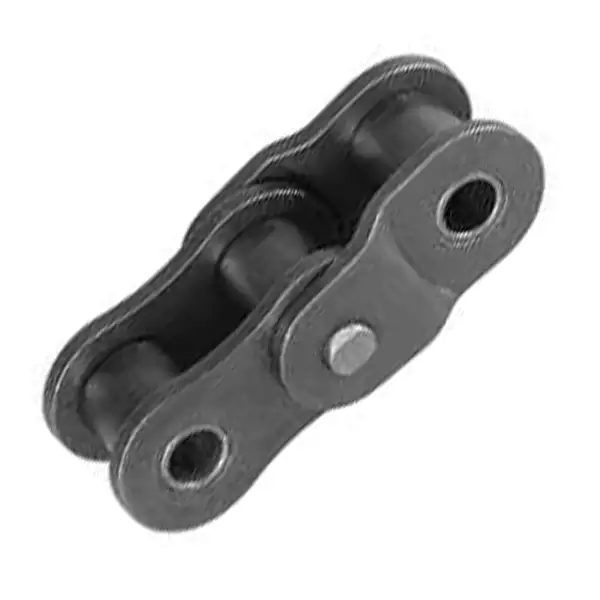
Comment l'alignement des pignons influence-t-il les performances d'une chaîne de transmission ?
L'alignement des pignons est essentiel pour garantir des performances optimales et une longue durée de vie à la chaîne de transmission. Voici une explication détaillée :
L'alignement des pignons influe directement sur les aspects suivants des performances d'une chaîne de transmission :
- Transmission de puissance fluide : Un bon alignement des pignons assure un engrènement et un désengagement fluides de la chaîne. Lorsque les pignons sont correctement alignés, la chaîne se déplace sans à-coups, minimisant ainsi les frottements, l'usure et le bruit. Ceci favorise une transmission de puissance efficace et prévient les ruptures prématurées de la chaîne.
- Réduction de l'usure et de l'allongement : Un mauvais alignement des pignons peut entraîner une répartition inégale de la charge sur la chaîne, ce qui accélère son usure et son allongement. Lorsque les pignons sont alignés, la chaîne subit des forces égales sur tous ses maillons, ce qui assure une répartition plus uniforme de l'usure et réduit le risque d'allongement. Un bon alignement permet de maintenir le pas et la longueur totale de la chaîne, garantissant ainsi une transmission de puissance constante et prolongeant sa durée de vie.
- Charges latérales minimisées : Un mauvais alignement des pignons peut engendrer des contraintes latérales sur la chaîne, provoquant un fonctionnement oblique ou un contact excessif avec les maillons latéraux. Il en résulte une augmentation du frottement, de l'usure et des contraintes sur les composants de la chaîne. Un alignement correct réduit ces contraintes latérales, assurant un fonctionnement fluide de la chaîne et minimisant l'usure et les contraintes inutiles sur ses composants.
- Prévention du saut de chaîne : Un mauvais alignement des pignons peut provoquer des sauts de chaîne, entraînant une perte de puissance, un fonctionnement irrégulier et des dommages potentiels à la chaîne et aux pignons. Un alignement correct garantit un engagement optimal de la chaîne avec les dents des pignons, évitant ainsi tout saut et assurant une transmission de puissance fiable.
- Répartition optimale de la tension : Un bon alignement des pignons assure une répartition uniforme de la tension de la chaîne. Lorsque les pignons sont alignés, la tension est répartie uniformément le long de la chaîne, réduisant ainsi le risque de points de contrainte localisés et d'allongement de celle-ci. Ceci contribue à maintenir une tension constante, à améliorer l'efficacité de la transmission de puissance et à prolonger la durée de vie de la chaîne et des pignons.
Pour un alignement correct des pignons, il est essentiel de s'assurer qu'ils sont solidement fixés, parallèles entre eux et positionnés à la distance appropriée. De plus, le profil des dents et le diamètre primitif des pignons doivent correspondre aux spécifications de la chaîne.
Un contrôle et un entretien réguliers sont essentiels pour vérifier et maintenir l'alignement du pignon. Cela comprend la vérification des signes d'usure, de dommages ou de désalignement, ainsi que le réglage périodique de la tension et la lubrification de la chaîne selon les besoins.
En assurant un alignement correct des pignons, les opérateurs obtiennent une transmission de puissance fluide, une usure réduite, des charges latérales minimisées, la prévention du déraillement de la chaîne et une répartition optimale de la tension. Ceci améliore en définitive les performances, l'efficacité et la fiabilité du système de transmission par chaîne.
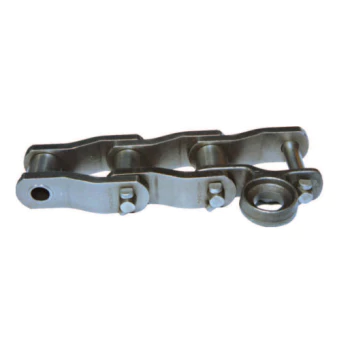
Comment le coût d'une chaîne de transmission se compare-t-il à celui d'autres systèmes de transmission de puissance ?
Le coût d'une chaîne de transmission peut varier en fonction de plusieurs facteurs, tels que le type de chaîne, le matériau, la taille et la qualité. Voici une explication détaillée comparant le coût d'une chaîne de transmission à celui d'autres systèmes de transmission de puissance :
- Coût initial : En général, les chaînes de transmission présentent un coût initial inférieur à celui d'autres systèmes de transmission de puissance comme les transmissions par engrenages ou par courroies. Cela est particulièrement vrai pour les chaînes à rouleaux standard, largement disponibles et couramment utilisées.
- Coût d'installation et de maintenance : Le coût d'installation et d'entretien d'une chaîne de transmission est généralement raisonnable. Les chaînes sont relativement faciles à installer et à entretenir ; elles nécessitent des inspections régulières, une lubrification et des réglages occasionnels. Cette simplicité contribue à leur rentabilité globale.
- Longévité et durabilité : Les chaînes de transmission sont réputées pour leur durabilité et leur longue durée de vie lorsqu'elles sont correctement entretenues. Bien qu'elles puissent nécessiter un remplacement périodique en raison de l'usure, leur longue durée de vie permet de réaliser des économies à long terme par rapport aux systèmes qui requièrent des remplacements ou des réparations plus fréquents.
- Coûts spécifiques à l'application : Dans certaines applications spécialisées, comme les applications hautes performances ou intensives, le coût des chaînes de transmission peut être plus élevé. Cela est souvent dû à l'utilisation de chaînes spécifiques dotées de caractéristiques, de matériaux ou de revêtements particuliers qui améliorent les performances et la durabilité dans des environnements exigeants.
- Rapport coût-efficacité global : Compte tenu du coût initial, de la maintenance et de la durée de vie, les chaînes de transmission sont généralement considérées comme économiques par rapport aux autres systèmes de transmission de puissance. Leur fiabilité, leur rendement et leur adaptabilité à une large gamme d'applications constituent des atouts majeurs.
Il est important de noter que le coût des chaînes de transmission par rapport aux autres systèmes de transmission de puissance peut varier en fonction des exigences spécifiques de l'application, des facteurs environnementaux et des performances recherchées. Il est recommandé d'analyser les besoins spécifiques de l'application et de consulter des experts ou des fournisseurs afin de déterminer la solution la plus rentable.
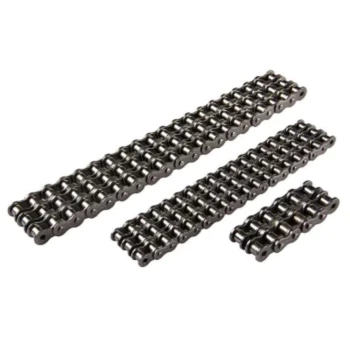
Quels sont les niveaux de bruit et de vibration associés à une chaîne de transmission ?
Les niveaux de bruit et de vibrations associés à une chaîne de transmission peuvent varier en fonction de plusieurs facteurs, notamment le type de chaîne, les conditions d'utilisation et les pratiques d'entretien. Voici une explication :
Niveaux sonores :
- Les chaînes de transmission, notamment les chaînes à rouleaux, peuvent générer du bruit en fonctionnement. Le niveau sonore dépend de divers facteurs, tels que la conception de la chaîne, sa vitesse, sa tension, sa lubrification et l'état des pignons.
- Une lubrification adéquate contribue à réduire la friction et le bruit, tandis qu'une lubrification insuffisante ou à sec peut augmenter le niveau de bruit.
- D'autres facteurs, comme un mauvais alignement, des composants usés ou des fixations desserrées, peuvent contribuer à l'augmentation du niveau sonore. Des inspections et un entretien réguliers permettent d'identifier et de corriger les sources de bruit excessif.
Niveaux de vibration :
- Les chaînes de transmission peuvent produire des vibrations pendant leur fonctionnement, notamment en cas de problèmes tels qu'un mauvais alignement, une tension incorrecte ou des composants usés.
- Un réglage, un alignement et un entretien appropriés contribuent à minimiser les vibrations et à assurer un fonctionnement optimal.
- Des vibrations excessives peuvent entraîner une usure accélérée, une durée de vie réduite de la chaîne et des dommages potentiels à d'autres composants.
Il convient de noter que les progrès réalisés dans la conception et la fabrication des chaînes ont permis d'obtenir des chaînes plus silencieuses et plus fluides. Les fabricants peuvent également proposer des chaînes spécialisées à faible bruit ou à faibles vibrations pour les applications où la réduction du bruit ou des vibrations est primordiale.
Pour maintenir des niveaux de bruit et de vibrations acceptables au niveau de la chaîne de transmission, il est important de suivre les bonnes pratiques d'entretien, notamment la lubrification régulière, le réglage de la tension et la vérification de l'alignement. De plus, le traitement rapide de toute source de bruit ou de vibrations excessives contribue à garantir le bon fonctionnement de la chaîne de transmission.


Édité par CX le 08/10/2023