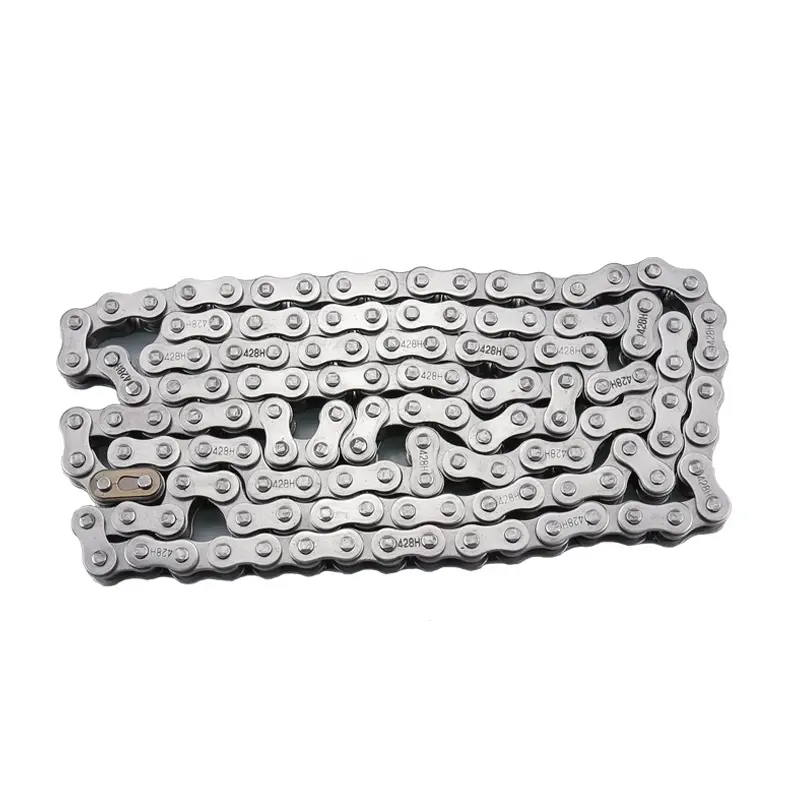
Description du produit
| Numéro de chaîne DIN | Numéro de chaîne ISO/ANSI | P/mm | d1/mm | L/mm | b1/mm | T/mm | |||||||||||||||||||||||||||
| 08A-1 | 40 | 12.70 | 7.92 | 16.70 | 7.85 | 1.50 | |||||||||||||||||||||||||||
| 10A-1 | 50 | 15.875 | 10.16 | 20.70 | 9.40 | 2. Abréviation : CHOHO Industry. √ HangZhou CHOHO Industrial Co., Ltd. a été fondée en 1999. Elle est devenue leader dans le domaine des technologies de systèmes de chaînes, figure parmi les premiers centres technologiques d'entreprises reconnus au niveau national, entreprise de démonstration de l'innovation technologique nationale et première société cotée en actions A dans le secteur des entraînements par chaîne en Chine. Son code boursier est 003033.
Nous sommes très proches du port de Hangzhou, ce qui permet de réaliser d'importantes économies sur les coûts logistiques et les délais de transport ! Nous disposons de notre propre société de logistique et de notre propre service de transport. Si vous avez besoin que nous livrions des marchandises à votre entrepôt ou à d'autres ports en Chine, comme le port de Zhejiang, nous pouvons également nous en charger !
√ CHOHO bénéficie d'une notoriété naturelle. En janvier 2017, la marque « CHOHO » était déposée dans plus de 60 pays, dont les États-Unis, le Japon, le Royaume-Uni, la France, l'Allemagne, la Russie, l'Espagne, l'Autriche, la Belgique, la Bulgarie, la Croatie, la République tchèque, le Danemark, la Finlande, la Grèce, la Hongrie, l'Irlande, l'Italie, les Pays-Bas, la Pologne, le Portugal, la Roumanie, l'Ukraine, la Suède, l'Australie, l'Algérie, l'Égypte, le Kenya, le Maroc, la Corée du Sud, le Kazakhstan, la Mongolie, la Syrie, la Thaïlande, le Pakistan, l'Inde, le Brésil, le Mexique et la Colombie. CHOHO a été invitée à participer à de nombreuses expositions internationales à travers le monde, notamment des salons industriels, agricoles, de la moto et des moteurs. comme la Foire de Hanovre, la Foire de Bologne, la Foire de Canton, VIV ASIA et d'autres expositions de renommée mondiale ! CLIENT COOPÉRATIF Le marché des canaux de distribution à large spectre continue de se développer ! Choho fournit des solutions de système de chaîne aux 500 premières entreprises mondiales et aux 10 premières entreprises de divers secteurs ! FAQ
1. Êtes-vous un fabricant ou une société commerciale ? AUTRES PRODUITS PHARES
Merci d'avoir lu !
.shipping-cost-tm .tm-status-off{background: none;padding:0;color: #1470cc}
Les chaînes de transmission peuvent-elles être utilisées dans des environnements à haute température ?Oui, les chaînes de transmission peuvent être utilisées dans des environnements à haute température, mais il convient de tenir compte de certains points. Voici une explication détaillée : 1. Choix des matériaux : En environnement à haute température, il est essentiel de choisir des chaînes de transmission fabriquées à partir de matériaux résistants à la chaleur. Parmi les matériaux couramment utilisés pour les applications à haute température, on trouve les aciers alliés traités thermiquement, les aciers inoxydables et les alliages spéciaux résistants à la chaleur. Ces matériaux offrent une meilleure résistance à la dilatation thermique, à l’oxydation et à la déformation à haute température. 2. Lubrification : Une lubrification adéquate est essentielle au bon fonctionnement et à la longévité des chaînes de transmission en environnement à haute température. Il convient d’utiliser des lubrifiants haute température à stabilité thermique supérieure afin de garantir une lubrification optimale et de minimiser la génération de chaleur par frottement. Ces lubrifiants sont spécialement formulés pour résister aux températures élevées et assurer une lubrification efficace, réduisant ainsi l’usure et prolongeant la durée de vie de la chaîne. 3. Conception de la chaîne : La conception des chaînes de transmission pour environnements à haute température peut intégrer des caractéristiques visant à améliorer leur résistance à la chaleur. Il peut s’agir de revêtements résistants à la chaleur, de traitements thermiques spécifiques et de propriétés de dissipation thermique optimisées. De plus, la capacité de charge, la résistance à la fatigue et la stabilité dimensionnelle de la chaîne doivent être soigneusement étudiées afin de garantir un fonctionnement fiable sous contraintes thermiques. 4. Limites de température : Il est important de connaître les limites de température spécifiées par le fabricant pour une chaîne de transmission donnée. Chaque chaîne possède sa propre plage de températures de fonctionnement optimale. Le dépassement des limites de température recommandées peut entraîner la rupture de la chaîne, une diminution de sa résistance, une usure accélérée et des dommages potentiels aux composants environnants. 5. Inspection et entretien réguliers : L’inspection et l’entretien réguliers sont essentiels pour surveiller l’état des chaînes de transmission dans les environnements à haute température. Des inspections périodiques permettent de détecter les signes d’usure, d’allongement ou de dommages causés par les contraintes thermiques. Le remplacement rapide des chaînes usées ou endommagées, ainsi qu’une lubrification et un réglage de tension appropriés, contribuent à garantir un fonctionnement fiable et continu. Il est important de consulter les fabricants de chaînes ou des experts du secteur pour choisir la chaîne de transmission appropriée et s'assurer de sa compatibilité avec l'application haute température prévue. Le respect des recommandations du fabricant, une installation correcte et un entretien régulier contribueront à une utilisation sûre et efficace des chaînes de transmission en environnements à haute température.
Comment l'alignement des pignons influe-t-il sur la durée de vie d'une chaîne de transmission ?L'alignement des pignons joue un rôle crucial dans la durée de vie et les performances d'une chaîne de transmission. Voici une réponse détaillée à cette question : 1. Répartition optimale de la charge : Lorsque les pignons sont correctement alignés, la chaîne de transmission répartit uniformément la charge sur toute sa longueur. Ceci garantit une contrainte uniforme sur la chaîne et minimise la concentration des forces sur certains maillons. Un mauvais alignement peut entraîner une répartition inégale de la charge, provoquant une usure et une fatigue accélérées de la chaîne. 2. Réduction des frottements et de l'usure : Un bon alignement assure un engrènement optimal entre la chaîne et les pignons. Lorsque la chaîne s'engrène correctement, les frottements et l'usure sont minimisés. À l'inverse, des pignons mal alignés peuvent entraîner un frottement de la chaîne contre les dents ou les flancs des pignons, ce qui augmente les frottements, l'usure et peut provoquer une rupture de la chaîne. 3. Tension de la chaîne : L’alignement des pignons influe également sur la tension de la chaîne de transmission. Un alignement correct garantit une tension optimale de la chaîne pendant toute sa durée de fonctionnement. Une tension excessive due à un mauvais alignement peut engendrer des contraintes accrues sur la chaîne, provoquant une usure accélérée, de la fatigue et un risque de rupture. Une tension insuffisante peut entraîner le saut de la chaîne ou son déraillement. 4. Fonctionnement fluide et efficace : Un alignement correct des pignons assure un fonctionnement fluide et efficace de la chaîne de transmission. Il en résulte une transmission de puissance optimale, une réduction des vibrations et du bruit, ainsi qu’une amélioration des performances globales du système. Un mauvais alignement des pignons peut entraîner le blocage, le saut ou un bruit excessif de la chaîne, ce qui diminue son efficacité et risque d’endommager la chaîne et les pignons. 5. Durée de vie prolongée de la chaîne : Un alignement correct des pignons contribue à prolonger la durée de vie de la chaîne de transmission. En garantissant un fonctionnement optimal de la chaîne, avec un minimum de contraintes et d’usure, on réduit le risque de défaillance prématurée. Il en résulte une durée de vie accrue, des besoins de maintenance réduits et des coûts d’exploitation globaux inférieurs. Il est important de contrôler et d'entretenir régulièrement l'alignement des pignons d'une chaîne de transmission. Une installation correcte, des vérifications périodiques de l'alignement et un réglage si nécessaire sont essentiels pour optimiser la durée de vie et les performances de la chaîne.
Quelles sont les causes fréquentes de défaillance des chaînes de transmission ?Les chaînes de transmission sont soumises à divers facteurs pouvant contribuer à leur défaillance au fil du temps. Voici une explication détaillée : 1. Lubrification insuffisante : Une lubrification inadéquate ou incorrecte est l’une des principales causes de rupture de chaîne. Une lubrification insuffisante peut entraîner une augmentation du frottement, une génération de chaleur et une usure accélérée des composants de la chaîne, tels que les axes, les bagues et les rouleaux. 2. Contamination : Des contaminants comme la saleté, la poussière, les débris et l’humidité peuvent pénétrer dans la chaîne, affectant ses performances et provoquant une usure accélérée. La contamination peut entraver la lubrification, augmenter le frottement et causer de la corrosion, entraînant la rupture de la chaîne. 3. Surcharge : Appliquer des charges excessives, au-delà de la capacité nominale de la chaîne, peut entraîner une surcharge, provoquant des contraintes et des déformations au niveau de ses composants. La surcharge peut engendrer un allongement de la chaîne, une usure accélérée et, à terme, sa rupture. 4. Mauvais alignement : Un mauvais alignement de la chaîne et des pignons peut entraîner une répartition inégale des forces, provoquant une usure localisée et une augmentation des contraintes sur certaines zones de la chaîne. Ce mauvais alignement peut résulter d’une installation incorrecte ou de l’usure des pignons, ce qui peut conduire à une rupture prématurée de la chaîne. 5. Fatigue : Les charges et contraintes cycliques répétées peuvent engendrer de la fatigue dans la chaîne, provoquant des fissures, des ruptures et, à terme, sa rupture. Ce type de rupture est plus susceptible de se produire lorsque la chaîne est soumise à des applications à haute vitesse ou à haute fréquence. 6. Corrosion : L’exposition à des environnements corrosifs, tels qu’une forte humidité, des produits chimiques ou des températures extrêmes, peut provoquer la corrosion des composants de la chaîne. La corrosion fragilise la structure de la chaîne, entraînant une défaillance prématurée. 7. Mauvais entretien : Des pratiques d’entretien inadéquates, telles que des inspections peu fréquentes, un manque de lubrification et la négligence des problèmes potentiels, peuvent contribuer à la rupture de la chaîne. Un entretien régulier, comprenant la lubrification, le nettoyage et une tension correcte, est essentiel à la longévité et au bon fonctionnement des chaînes de transmission. Il est important de prendre en compte ces facteurs pour prévenir la rupture de la chaîne. Une lubrification adéquate, des inspections régulières, un nettoyage et des contrôles d'alignement sont des pratiques d'entretien essentielles. Choisir la chaîne adaptée à l'application, suivre les recommandations du fabricant et respecter les normes industrielles contribuent également à réduire les risques de rupture et à garantir des performances optimales et une longue durée de vie aux chaînes de transmission.
Mots-clés :chaîne agricole | maillon de chaîne agricole | pignon de chaîne agricole | chaîne de convoyeur agricole | moto agricole | rouleau agricole | chaîne à rouleaux agricole | scie agricole | chaîne | convoyeur à chaîne | chaîne de convoyeur | Convoyeur à chaîne | chaîne d'entraînement du convoyeur | rouleau convoyeur à chaîne | pignon de convoyeur à chaîne | transmission par chaîne | convoyeur à entraînement par chaîne | rouleau convoyeur à entraînement par chaîne | convoyeur à rouleaux à entraînement par chaîne | rouleau de convoyeur à entraînement par chaîne | pignon d'entraînement par chaîne | transmission par chaîne | convoyeur à maillons de chaîne | rouleau à maillons de chaîne | rouleau de chaîne | chaîne à rouleaux | convoyeur à rouleaux à chaîne | pignon à galet de chaîne | pignon d'entraînement de tronçonneuse | pignon de tronçonneuse | pignon de chaîne | convoyeur à pignon à chaîne | galet de pignon de chaîne | transmission par chaîne | chaîne chinoise | convoyeur à chaîne chinois | Convoyeur à rouleaux à chaîne chinois | Chaîne de convoyeur chinoise | Chaîne à rouleaux de convoyeur chinoise | Chaîne à rouleaux industrielle chinoise | Chaîne à rouleaux pour moto chinoise | Chaîne à rouleaux chinoise | Convoyeur à chaîne à rouleaux chinois | transmission par chaîne à rouleaux chinoise | Chaîne de convoyeur à rouleaux chinoise | pignon chinois | chaîne de convoyeur | entraînement par chaîne de convoyeur | maillon de chaîne de convoyeur | rouleau de chaîne de convoyeur | pignon de chaîne de convoyeur | chaîne d'entraînement du convoyeur | chaîne de maillons de convoyeur | chaîne à rouleaux de convoyeur | pignon de chaîne à rouleaux de convoyeur | pignon de convoyeur | chaîne de transmission | maillon de chaîne d'entraînement | chaîne de transmission moto | chaîne de convoyeur d'entraînement | chaîne à rouleaux d'entraînement | pignon d'entraînement | chaîne à rouleaux d'entraînement | pignon moteur | chaîne industrielle | convoyeur à chaîne industrielle | entraînement par chaîne industrielle | rouleau de chaîne industriel | pignon de chaîne industriel | chaîne de convoyeur industriel | chaîne de transmission industrielle | chaîne à rouleaux pour moto industrielle | chaîne à rouleaux industrielle | pignon industriel | Chaîne à rouleaux de convoyeur de transmission industrielle | chaîne à maillons | convoyeur à chaîne à maillons | chaîne de convoyeur à maillons | chaîne de moto | galet de chaîne de moto | pignon de chaîne de moto | chaîne de transmission de moto | chaîne à rouleaux de moto | pignon de moto | chaîne de pignon de moto | chaîne à rouleaux | chaîne à rouleaux | convoyeur à chaîne à rouleaux | chaîne de convoyeur à rouleaux | entraînement du convoyeur à chaîne à rouleaux | transmission par chaîne à rouleaux | maillon de chaîne à rouleaux | tronçonneuse à rouleau | pignon de chaîne à rouleaux | transmission par chaîne à rouleaux | chaîne de convoyeur à rouleaux | entraînement par chaîne du convoyeur à rouleaux | chaîne à maillons à rouleaux | chaîne de moto à rouleaux | pignon à rouleaux | chaîne à pignon à rouleaux | transmission par chaîne à rouleaux | pignon | chaîne de pignon de moto | chaîne de convoyeur à pignon | moteur à pignon | pignon de moto | chaîne à rouleaux de pignon | chaîne de transmission | transmission par chaîne | chaîne à rouleaux de transmission | chaîne à rouleaux de transmission | pignon de transmission
|