Description du produit
| 1)Type | chaîne à rouleaux |
| 2) Matériaux | Acier de qualité A |
| 3)N° de chaîne | 428 |
| 4) Garantie | 30 000 km |
| 5) Processus | Sablage, traitement thermique, Impact à grande vitesse, rivetage sur les quatre côtés, Étirements préalables et course, Lubrifiez avec de la graisse. |
| 6) Quantité minimale de commande | 500 pièces |
| 7) Capacité d'approvisionnement | 100 000 mètres par an |
| 8) Résistance à la traction/Dureté | standard ou supérieur |
| 9) Délai de livraison | dans les 30 jours suivant la réception de vos dépôts 30% |
| 10) Conditions de paiement | 30%deposit and balanced by L/C,T/T |
| 11) Emballage | Les chaînes sont emballées dans un sachet plastique et une boîte couleur, ou peuvent être emballées selon vos besoins. |
Nos services
Préventes :
1. Service OEM et ODM
2. Toute demande de renseignements recevra une réponse dans les 24 heures.
3. Des informations complètes sur le produit seront fournies.
4. Un échantillon gratuit vous sera envoyé si vous en avez besoin.
5. Toute autre exigence raisonnable, conformément à la demande
Lors de la production, nous fournissons :
1. Calendrier de production
2. Une image de production en série sera proposée
3. Toute autre exigence raisonnable, conformément à la demande
Finir la production :
1. Numéro de suivi du colis
2. Documents nécessaires
3. Protection de votre espace de vente, de vos idées de conception et de toutes vos informations privées.
FAQ :
Q1 : Inspectez-vous les produits finis ?
R : Oui, chaque étape de la production et les produits finis seront inspectés par le service de contrôle qualité avant l'expédition.
Q2 : Quelle est la garantie de vos produits ?
R: Habituellement, nous garantissons une garantie d'un an après la date de livraison, mais cela dépend du produit spécifié.
Q3 : Êtes-vous fabricant ou société commerciale ?
A : Nous le sommes tous les deux. Nous sommes dans le secteur des pièces détachées pour motos depuis près de 20 ans.
Q4 : Comment visiter l'usine ?
A: Laissez-nous un message et nous viendrons vous chercher gratuitement en voiture.
Q5 : Pouvez-vous apposer un logo personnalisé sur la chaîne ?
R : Oui, nous pouvons réaliser des logos personnalisés par moulage. Nous avons besoin de votre lettre d'autorisation.
| Taper: | Chaîne |
|---|---|
| Matériel: | Acier |
| Certification : | ISO9001:2001 |
| Nombre de lignes : | rangée simple |
| Traitement de surface : | Sablage, huilage |
| Colis de transport : | Sachet plastique + Boîte couleur + Carton |
| Exemples : |
US$ 0/Pièce
1 pièce (commande minimale) | |
|---|
| Personnalisation : |
Disponible
| Demande personnalisée |
|---|
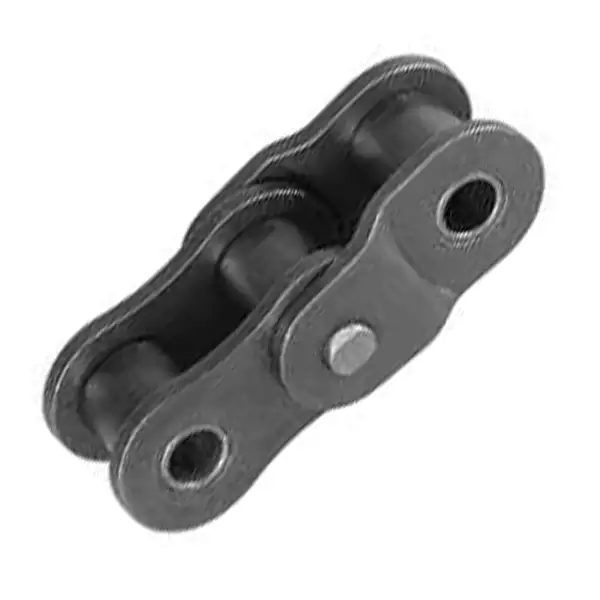
Comment l'alignement des pignons influence-t-il les performances d'une chaîne de transmission ?
L'alignement des pignons est essentiel pour garantir des performances optimales et une longue durée de vie à la chaîne de transmission. Voici une explication détaillée :
L'alignement des pignons influe directement sur les aspects suivants des performances d'une chaîne de transmission :
- Transmission de puissance fluide : Un bon alignement des pignons assure un engrènement et un désengagement fluides de la chaîne. Lorsque les pignons sont correctement alignés, la chaîne se déplace sans à-coups, minimisant ainsi les frottements, l'usure et le bruit. Ceci favorise une transmission de puissance efficace et prévient les ruptures prématurées de la chaîne.
- Réduction de l'usure et de l'allongement : Un mauvais alignement des pignons peut entraîner une répartition inégale de la charge sur la chaîne, ce qui accélère son usure et son allongement. Lorsque les pignons sont alignés, la chaîne subit des forces égales sur tous ses maillons, ce qui assure une répartition plus uniforme de l'usure et réduit le risque d'allongement. Un bon alignement permet de maintenir le pas et la longueur totale de la chaîne, garantissant ainsi une transmission de puissance constante et prolongeant sa durée de vie.
- Charges latérales minimisées : Un mauvais alignement des pignons peut engendrer des contraintes latérales sur la chaîne, provoquant un fonctionnement oblique ou un contact excessif avec les maillons latéraux. Il en résulte une augmentation du frottement, de l'usure et des contraintes sur les composants de la chaîne. Un alignement correct réduit ces contraintes latérales, assurant un fonctionnement fluide de la chaîne et minimisant l'usure et les contraintes inutiles sur ses composants.
- Prévention du saut de chaîne : Un mauvais alignement des pignons peut provoquer des sauts de chaîne, entraînant une perte de puissance, un fonctionnement irrégulier et des dommages potentiels à la chaîne et aux pignons. Un alignement correct garantit un engagement optimal de la chaîne avec les dents des pignons, évitant ainsi tout saut et assurant une transmission de puissance fiable.
- Répartition optimale de la tension : Un bon alignement des pignons assure une répartition uniforme de la tension de la chaîne. Lorsque les pignons sont alignés, la tension est répartie uniformément le long de la chaîne, réduisant ainsi le risque de points de contrainte localisés et d'allongement de celle-ci. Ceci contribue à maintenir une tension constante, à améliorer l'efficacité de la transmission de puissance et à prolonger la durée de vie de la chaîne et des pignons.
Pour un alignement correct des pignons, il est essentiel de s'assurer qu'ils sont solidement fixés, parallèles entre eux et positionnés à la distance appropriée. De plus, le profil des dents et le diamètre primitif des pignons doivent correspondre aux spécifications de la chaîne.
Un contrôle et un entretien réguliers sont essentiels pour vérifier et maintenir l'alignement du pignon. Cela comprend la vérification des signes d'usure, de dommages ou de désalignement, ainsi que le réglage périodique de la tension et la lubrification de la chaîne selon les besoins.
En assurant un alignement correct des pignons, les opérateurs obtiennent une transmission de puissance fluide, une usure réduite, des charges latérales minimisées, la prévention du déraillement de la chaîne et une répartition optimale de la tension. Ceci améliore en définitive les performances, l'efficacité et la fiabilité du système de transmission par chaîne.
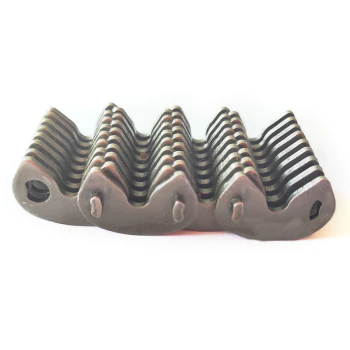
Comment l'allongement d'une chaîne de transmission affecte-t-il ses performances ?
L'allongement d'une chaîne de transmission peut avoir un impact significatif sur ses performances et son fonctionnement général. Voici une explication détaillée :
Les chaînes de transmission subissent une usure et un allongement au fil du temps en raison de facteurs tels que la charge, la vitesse, la tension, la lubrification et l'entretien. L'allongement correspond à l'augmentation du pas de la chaîne, ce qui peut entraîner plusieurs problèmes de performance.
- Perte de tension : Lorsqu'une chaîne s'allonge, elle se détend. Il en résulte une perte d'efficacité de la transmission de puissance et un risque de sauts ou de dérapages de la chaîne sur les pignons. Une chaîne détendue peut également entraîner une perte de précision et de synchronisation dans les systèmes entraînés.
- Mauvaises performances : L'allongement peut affecter les performances globales du système de transmission. Il peut entraîner une augmentation du jeu, une diminution de la précision et un risque de déraillement ou de désengagement de la chaîne des pignons. Ces problèmes peuvent engendrer une baisse d'efficacité, un fonctionnement peu fiable et un risque accru d'endommagement de la chaîne ou d'autres composants.
- Usure accrue : L'allongement de la chaîne entraîne une usure accrue entre les maillons, les axes et les bagues. Cette usure peut accélérer le processus d'allongement et réduire davantage les performances et la durée de vie de la chaîne. Elle peut également engendrer une augmentation du frottement, une production de chaleur et un risque de rupture de la chaîne si elle n'est pas prise en charge rapidement.
- Capacité de charge réduite : L'allongement réduit le pas effectif de la chaîne, ce qui diminue sa capacité de charge. Cela peut limiter sa capacité à supporter des charges importantes, pouvant entraîner une défaillance prématurée ou des performances insuffisantes dans les applications soumises à des charges élevées.
- Augmentation du bruit et des vibrations : L'allongement de la chaîne peut entraîner une augmentation du bruit et des vibrations lors de son fonctionnement. Une chaîne détendue peut produire des cliquetis ou des claquements, et les vibrations peuvent nuire aux performances globales du système et au confort de l'opérateur.
Un contrôle et un entretien réguliers sont essentiels pour surveiller l'allongement de la chaîne et y remédier rapidement. Mesurer cet allongement à l'aide d'outils spécifiques et respecter les limites recommandées par le fabricant permet de déterminer quand une chaîne doit être remplacée ou ajustée.
Une tension de chaîne adéquate, une lubrification appropriée et un entretien régulier, incluant un réglage périodique de la tension et un appoint de lubrifiant, contribuent à minimiser l'allongement et à garantir des performances optimales. Il est important de suivre les recommandations du fabricant et de consulter des experts ou des techniciens afin d'établir les programmes et procédures d'entretien adaptés à la chaîne de transmission et à l'application concernées.
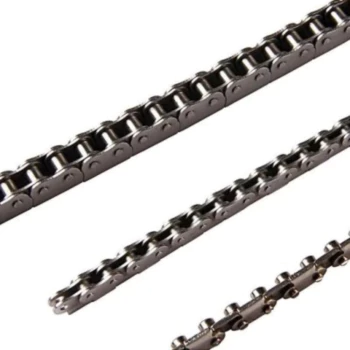
Une chaîne de transmission peut-elle être utilisée en extérieur ou dans des environnements corrosifs ?
Oui, une chaîne de transmission peut être utilisée en extérieur ou dans des environnements corrosifs. Toutefois, il est important de tenir compte de certains facteurs et de prendre les mesures appropriées pour garantir les performances et la longévité de la chaîne dans ces environnements.
Les environnements extérieurs et corrosifs peuvent exposer la chaîne de transmission à divers éléments susceptibles d'accélérer son usure et sa corrosion. L'humidité, l'eau salée, les produits chimiques, la saleté et les débris peuvent tous contribuer à la détérioration de la chaîne s'ils ne sont pas correctement traités.
Pour atténuer les effets des environnements extérieurs ou corrosifs sur une chaîne de transmission, les mesures suivantes peuvent être prises :
- Sélection des matériaux : Choisissez une chaîne de transmission spécialement conçue pour les environnements extérieurs ou corrosifs. Les chaînes en acier inoxydable ou avec revêtement anticorrosion sont recommandées.
- Nettoyage régulier : Nettoyez régulièrement la chaîne de transmission pour éliminer la saleté, les débris et les substances corrosives. Utilisez des produits et des brosses de nettoyage appropriés pour un nettoyage en profondeur.
- Lubrification: Appliquez un lubrifiant adapté sur la chaîne de transmission afin de minimiser la friction, de réduire l'usure et de créer une barrière protectrice contre la corrosion. Il est conseillé d'utiliser des lubrifiants spécialement conçus pour les environnements extérieurs ou corrosifs.
- Mesures de protection : Mettez en œuvre des mesures de protection supplémentaires, telles que l'utilisation de protège-chaînes ou de housses pour protéger la chaîne du contact direct avec les agents corrosifs. Envisagez l'application de revêtements ou de produits d'étanchéité pour une protection accrue.
- Inspection et entretien : Inspectez régulièrement la chaîne de transmission afin de détecter tout signe d'usure, de dommage ou de corrosion. Réglez rapidement tout problème en remplaçant les composants endommagés ou corrodés.
En suivant ces étapes, une chaîne de transmission peut être utilisée efficacement en extérieur ou dans des environnements corrosifs, tout en minimisant l'impact de la corrosion et en maintenant ses performances et sa longévité.


Édité par CX le 17 octobre 2023