Description du produit
Chaîne de transmission à rouleaux de convoyeur de précision à pas court duplex (DIN764)
CHAÎNES À ROULEAUX DE PRÉCISION À PAS COURT (SÉRIE B)
Matériau : Acier allié
Traitement de surface : grenaillage / noircissement / bleuissement
Application principale : Machines industrielles
N° DE CHAÎNE ANSI : 05B-2 06B-2 10B-2 12B-2 16B-2 20B-2 24B-2 28B-2 32B-2 40B-2 48B-2 56B-2 72B-2
Hauteur : 8 9,525 12,7 15,875 19,05 25,4 31,75 38,1 44,45 50,8 63,5 76,2 88,9 101,6 114,3
| Nom du produit | Chaîne à rouleaux de précision duplex à pas court (série B) (DIN764) |
| Matériaux disponibles | 1. Acier inoxydable : SS201, SS303, SS304, SS316, SS416, SS420 |
| 2. Acier : C45 (K1045), C46 (K1046), C20 | |
| 3. Laiton : C36000 (C26800), C37700 (HPb59), C38500 (HPb58), C27200 (CuZn37), C28000 (CuZn40) | |
| 4. Bronze : C51000, C52100, C54400, etc. | |
| 5. Fer : 1213, 12L14, 1215 | |
| 6. Aluminium : Al6061, Al6063 | |
| 7. Fabrication sur mesure selon votre demande | |
| Traitement de surface | Recuit, anodisation naturelle, traitement thermique, polissage, nickelage, chromage, zingage, passivation jaune, passivation or, satinage, peinture noire, etc. |
| Produits disponibles | chaînes à pignons, poulies, arbres (essieux, arbres cannelés, arbres à dents), engrenages (pignons, roues, crémaillères), roulements, sièges de roulements, bagues, accouplements, ensembles de verrouillage, etc. |
| Méthode de traitement | Usinage CNC, poinçonnage, tournage, fraisage, perçage, rectification, brochage, soudage et assemblage |
| QC : | Les techniciens effectuent un autocontrôle en production, et un contrôle final avant emballage est réalisé par un inspecteur qualité professionnel. |
| Taille | Dessins |
| Emballer | Caisse/conteneur en bois et palette, ou selon les spécifications personnalisées |
| Certificat | ISO 9001:2008, ISO 14001:2001, ISO/TS 16949:2009 |
| Avantage | Qualité avant tout, service supérieur, équipements de pointe, personnel expérimenté, matériel de test parfait |
| Délai de mise en œuvre | Échantillons : 15 à 25 jours. Commande officielle : 30 à 45 jours. |
1. Êtes-vous fabricant ou société commerciale ?
Nous sommes une usine fondée en 1991 avec une équipe commerciale dédiée au service international.
2. Quelles sont vos conditions de paiement habituelles ?
Paiement par virement bancaire (T/T 30%) pour dépôt et par virement (T/T 70%) contre documents, Western Union ou lettre de crédit à vue.
3. Quel est votre délai de livraison pour vos marchandises ?
Normalement, 45 jours après confirmation de la commande. Un délai de 30 jours peut être disponible en basse saison pour certains articles (de mai à juillet), et de 65 jours pendant la période des fêtes et la haute saison (de janvier à mars).
4. Assistez-vous à des spectacles ?
Nous participons au salon de Hanovre en Allemagne, au NMW en Australie, à la Foire de Canton, au PTC en Chine et à de nombreux autres salons spécialisés dans le meuble.
| Usage: | Chaîne de transmission |
|---|---|
| Matériel: | Acier allié/carbone |
| Traitement de surface : | Polissage |
| Fonctionnalité: | Résistant à la chaleur |
| Taille de la chaîne : | 1/2"*3/32" |
| Structure: | Chaîne à rouleaux |
| Personnalisation : |
Disponible
| Demande personnalisée |
|---|
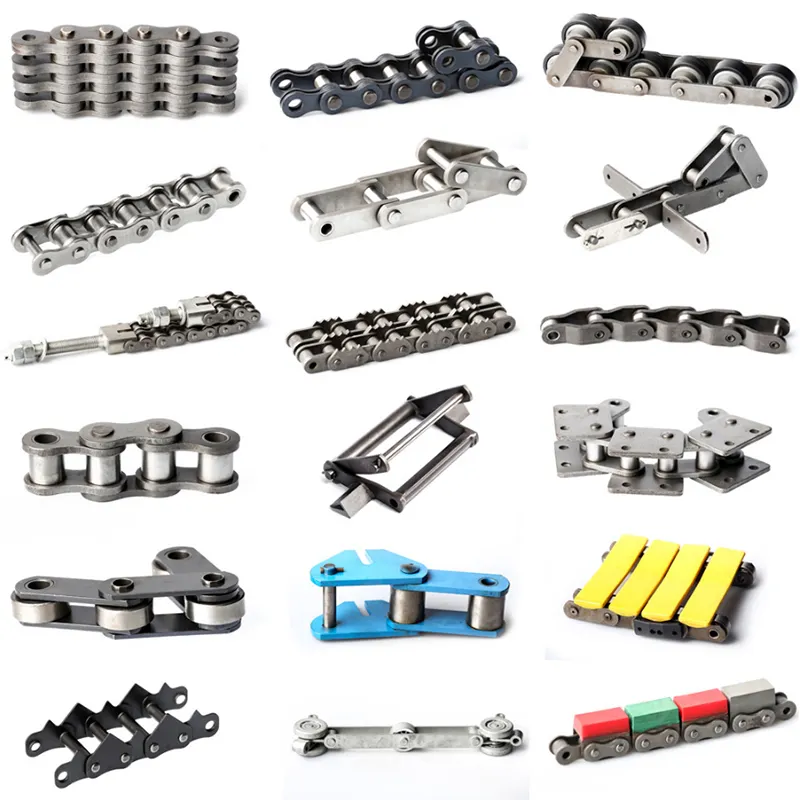
Quel est l'impact de la longueur d'une chaîne de transmission sur ses performances ?
La longueur d'une chaîne de transmission influe considérablement sur ses performances et son fonctionnement. Voici une explication détaillée :
1. Ajustement et fonctionnement optimaux : La longueur d'une chaîne de transmission doit être soigneusement choisie pour garantir son bon fonctionnement au sein du système prévu. Si la chaîne est trop courte, elle risque de ne pas atteindre correctement les pignons ou les poulies, ce qui peut entraîner une transmission de puissance inefficace et un risque de glissement. À l'inverse, si la chaîne est trop longue, elle peut s'affaisser, créer une tension excessive ou interférer avec d'autres composants, ce qui peut engendrer un fonctionnement inefficace ou une usure prématurée.
2. Contrôle de la tension et du jeu : La longueur d’une chaîne de transmission influe sur la tension et le jeu au sein du système. Une chaîne correctement tendue garantit une transmission de puissance optimale, réduit le jeu et minimise le risque de déraillement. La longueur de la chaîne doit être ajustée afin de maintenir une tension appropriée tout au long du cycle de fonctionnement, en tenant compte de facteurs tels que les variations de charge, les changements de température et la dynamique du système.
3. Flexibilité et exigences de flexion : La longueur d’une chaîne de transmission influe sur sa flexibilité et ses caractéristiques de flexion. Les chaînes plus longues peuvent présenter une plus grande flexibilité, leur permettant de suivre des trajectoires complexes ou de compenser des écarts plus importants entre les pignons ou les poulies. Cependant, une longueur excessive peut entraîner une flexion excessive, ce qui augmente le frottement, l’usure et risque de provoquer une défaillance prématurée.
4. Interactions avec les pignons : La longueur de la chaîne de transmission influe sur son interaction avec les pignons ou les poulies. Le nombre de maillons détermine l’engrènement entre la chaîne et les dents des pignons. Une longueur appropriée garantit un engrènement fluide, une usure minimale des dents et une transmission de puissance efficace. Une longueur de chaîne incorrecte peut entraîner un désalignement, une augmentation du bruit et une usure prématurée des pignons ou de la chaîne.
5. Efficacité et performance du système : La longueur de la chaîne de transmission influe directement sur l’efficacité et la performance globales du système. Une chaîne correctement dimensionnée garantit une transmission de puissance optimale, des pertes d’énergie minimales et un fonctionnement fiable. En choisissant la longueur de chaîne appropriée, les concepteurs du système peuvent maximiser l’efficacité, minimiser l’usure et optimiser la durée de vie de la chaîne et des composants associés.
Lors du choix de la longueur d'une chaîne de transmission, il est essentiel de tenir compte des exigences spécifiques de l'application, notamment la distance entre les pignons ou les poulies, la tension souhaitée et les conditions de charge prévues. Consulter des fabricants de chaînes ou des experts du secteur peut s'avérer très utile pour déterminer la longueur de chaîne appropriée afin d'optimiser les performances et la durée de vie.
Quels sont les avantages de l'utilisation d'une chaîne de transmission autonettoyante ?
L'utilisation d'une chaîne de transmission autonettoyante offre plusieurs avantages, qui sont détaillés ci-dessous :
1. Performances améliorées : Les chaînes de transmission autonettoyantes sont conçues pour éliminer efficacement les débris, la saleté et les contaminants qui peuvent s’accumuler sur la chaîne pendant son fonctionnement. En maintenant la chaîne propre, on assure des performances optimales et on prévient l’accumulation de débris qui peuvent affecter son mouvement, son engrènement avec les pignons et l’efficacité globale.
2. Maintenance réduite : Grâce à une chaîne de transmission autonettoyante, la fréquence des nettoyages et de l’entretien manuels est considérablement réduite. La conception de la chaîne intègre des éléments tels que des plaques de forme spéciale, des barres latérales incurvées et d’autres composants qui empêchent activement les débris d’adhérer à la chaîne ou de pénétrer dans ses zones critiques. Ceci réduit le temps et les efforts nécessaires aux opérations de nettoyage et d’entretien, ce qui engendre des économies et une productivité accrue.
3. Durée de vie prolongée de la chaîne : Le mécanisme autonettoyant de ces chaînes contribue à prolonger leur durée de vie. En éliminant efficacement les débris et en empêchant l’accumulation de contaminants, la chaîne s’use moins. Il en résulte une réduction de l’allongement de la chaîne, une diminution des frottements internes et une réduction du risque de défaillance prématurée. Par conséquent, la durabilité et la longévité globales de la chaîne sont améliorées.
4. Fiabilité accrue : Les chaînes de transmission autonettoyantes contribuent à une fiabilité accrue et à des performances constantes. L’absence d’accumulation de débris assure un engrènement fluide avec les pignons, évitant ainsi le glissement, le blocage ou les interruptions soudaines de la transmission de puissance. Le fonctionnement fiable de la chaîne se traduit par une disponibilité optimisée, des temps d’arrêt réduits et une efficacité globale du système accrue.
5. Adaptées aux environnements difficiles : Les industries et applications opérant dans des environnements riches en poussière, saletés ou autres particules bénéficient grandement des chaînes de transmission autonettoyantes. Elles sont couramment utilisées dans des secteurs tels que l’agriculture, la construction, l’exploitation minière et la manutention, où l’exposition à des environnements difficiles est fréquente. La fonction autonettoyante contribue à maintenir les performances et la fiabilité de la chaîne, même dans ces conditions extrêmes.
Il est important de noter que, malgré les avantages considérables qu'offrent les chaînes de transmission autonettoyantes, un contrôle et un entretien réguliers restent indispensables pour garantir leur fonctionnement optimal. La surveillance de l'état de la chaîne, l'application d'une lubrification appropriée et la réparation de tout signe d'usure ou de dommage sont essentielles pour optimiser les performances des chaînes de transmission autonettoyantes et assurer leur fiabilité à long terme.

Quels sont les secteurs ou applications courants qui utilisent des chaînes de transmission ?
Les chaînes de transmission sont largement utilisées dans divers secteurs industriels et applications nécessitant un transfert efficace de puissance et de mouvement. Voici quelques exemples courants d'industries et d'applications qui font appel aux chaînes de transmission :
- Automobile : Les chaînes de transmission sont utilisées dans les moteurs et les transmissions automobiles pour transférer la puissance du moteur aux roues.
- Agriculture : Les chaînes de transmission sont utilisées dans les machines agricoles telles que les tracteurs, les moissonneuses-batteuses et les récolteuses pour la transmission de puissance dans diverses applications comme les systèmes de convoyage et les équipements agricoles.
- Fabrication industrielle : Les chaînes de transmission se retrouvent dans une vaste gamme de machines industrielles, notamment les convoyeurs, les systèmes de manutention, les équipements d’emballage, les presses d’imprimerie et les machines-outils.
- Exploitation minière et construction : Les chaînes de transmission sont utilisées dans les engins lourds, tels que les excavatrices, les bulldozers et les équipements miniers, pour transmettre la puissance nécessaire aux opérations de creusement, de levage et autres.
- Industrie agroalimentaire : Les chaînes de transmission sont utilisées dans les équipements de transformation alimentaire, les usines d’embouteillage et les systèmes de convoyage pour déplacer les produits le long des lignes de production.
- Textile : Les chaînes de transmission sont utilisées dans les machines de fabrication textile, telles que les métiers à tisser et les machines à filer, pour la transmission de puissance lors des processus de tissage et de filage.
- Énergie et services publics : Les chaînes de transmission sont utilisées dans les centrales électriques, les éoliennes et autres systèmes d’énergie renouvelable pour transporter l’électricité de la source au réseau électrique.
- Manutention : Les chaînes de transmission sont couramment utilisées dans les équipements de manutention, notamment les chariots élévateurs, les palettiseurs et les systèmes de stockage automatisés, pour transporter et manipuler les marchandises dans les entrepôts et les centres de distribution.
- Utilité marine : Les chaînes de transmission trouvent des applications dans les navires, notamment dans les systèmes de propulsion, les équipements de manutention d’ancres et les treuils de manutention de cargaisons.
Ce ne sont là que quelques exemples ; les chaînes de transmission sont également utilisées dans de nombreux autres secteurs et applications où une transmission de puissance fiable est essentielle. La conception et les caractéristiques spécifiques des chaînes de transmission peuvent varier en fonction des exigences de chaque secteur et application.


Édité par CX le 31 octobre 2023