Description du produit
|
Produit |
Chaîne à rouleaux à double pas standard |
||
|
Matériel |
Acier 40Mn, acier inoxydable 304, acier inoxydable 316 et acier inoxydable 201. |
||
|
Types |
Chaînes standard et chaînes spéciales, telles que les chaînes des séries A ou B, les chaînes à rouleaux, les chaînes d'entraînement, les chaînes de convoyeur, les chaînes de levage, les chaînes agricoles, les pignons, les engrenages, les roues, etc. |
||
|
Série |
Série A (pas de 12,7 à 50,8 mm), série B (pas de 9,525 à 50,8 mm) et la série lourde. |
||
|
chaîne à rouleaux de précision à pas court |
Chaînes à rouleaux simplex et chaînes à douilles : 04C-1, 06C-1, 085-1, 08A-1, 10A-1, 12A-1, 16A-1, 20A-1, 24A-1, 28A-1, 32A-1, 36A-1, 40A-1, 48A-1 04C-2, 06C-2, 085-2, 08A-2, 10A-2, 12A-2, 16A-2, 20A-2, 24A-2, 28A-2, 32A-2, 36A-2, 40A-2, 48A-2 04C-3, 06C-2, 085-3, 08A-3, 10A-3, 12A-3, 16A-3, 20A-3, 24A-3, 28A-3, 32A-3, 36A-3, 40A-3, 48A-3 |
||
|
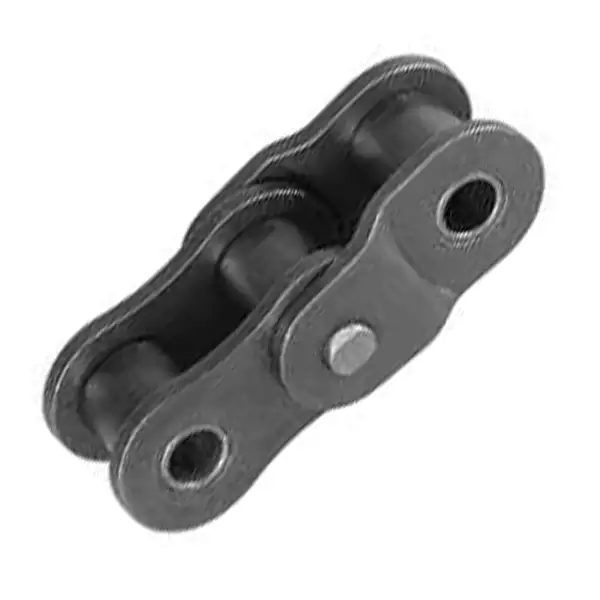
Type à maillons de chaîne |
Liens standard (sans pièce jointe) et liens non standard (avec pièce jointe).
A1 : Fixations coudées à un côté et un trou. |
||
|
Nos produits avant tout |
1. Chaque étape, de la commande de production au processus d'emballage, fait l'objet d'un contrôle qualité rigoureux. |
||
1. Livraison rapide : Les produits standard peuvent être livrés en seulement 20 jours.
2. Bon service : réponse rapide, devis rapide, responsable du produit
3. Rapport qualité-prix élevé : permet de maintenir la stabilité des prix pendant une certaine période, générant ainsi des profits plus importants pour les clients.
4. Excellente qualité : la production et les tests font l'objet d'un contrôle rigoureux afin de garantir la qualité du produit et d'obtenir les éloges des clients.
5. Service OEM : les produits peuvent être personnalisés selon les plans et les exigences.
Nous sommes responsables des produits commandés. Nous avons une grande confiance en la qualité de nos produits. Bien entendu, si vous rencontrez le moindre problème après réception de votre commande, n'hésitez pas à nous contacter directement. Nous examinerons votre demande et trouverons rapidement une solution adaptée.
| Standard ou non standard : | Standard |
|---|---|
| Application: | Textile Machinery, Garment Machinery, Conveyer Equipment, Packaging Machinery, Electric Cars, Motorcycle, Food Machinery, Mining Equipment, Agricultural Machinery, Car |
| Traitement de surface : | Éclosion d'huile |
| Structure: | Chaîne combinée |
| Matériel: | Acier au carbone |
| Taper: | Silent Chain |
| Exemples : |
US$ 35/kg
1 kg (commande minimum) | |
|---|
| Personnalisation : |
Disponible
| Demande personnalisée |
|---|
How does the alignment of sprockets affect the performance of a drive chain?
The alignment of sprockets is critical for ensuring the optimal performance and longevity of a drive chain. Here is a detailed explanation:
The alignment of sprockets directly affects the following aspects of a drive chain’s performance:
- Smooth Power Transmission: Proper alignment of sprockets ensures the smooth engagement and disengagement of the chain with the sprocket teeth. When the sprockets are aligned correctly, the chain articulates smoothly, minimizing friction, wear, and noise. This promotes efficient power transmission and prevents premature chain failure.
- Reduced Wear and Elongation: Misaligned sprockets can cause uneven loading on the chain, leading to accelerated wear and elongation. When the sprockets are aligned, the chain experiences equal forces on all links, resulting in more uniform wear distribution and reducing the risk of chain elongation. Proper alignment helps maintain the chain’s pitch and overall length, ensuring consistent power transmission and extending the chain’s service life.
- Minimized Side Loads: Misaligned sprockets can create side loads on the chain, causing it to run at an angle or contact the side plates excessively. This leads to increased friction, wear, and stress on the chain components. Proper alignment reduces these side loads, allowing the chain to run smoothly and minimizing unnecessary wear and stress on the chain’s components.
- Prevention of Chain Skipping or Jumping: Misaligned sprockets can cause the chain to skip or jump teeth, resulting in loss of power transmission, erratic operation, and potential damage to the chain and sprockets. Proper alignment ensures that the chain remains engaged with the sprocket teeth, preventing any skipping or jumping and ensuring reliable power transmission.
- Optimal Tension Distribution: Properly aligned sprockets contribute to the even distribution of chain tension. When the sprockets are aligned, the tension is evenly distributed along the chain, reducing the risk of localized stress points and chain elongation. This helps maintain consistent tension, improves power transmission efficiency, and extends the life of the chain and sprockets.
To achieve proper sprocket alignment, it is important to ensure that the sprockets are mounted securely, aligned parallel to each other, and positioned at the correct distance apart. Additionally, the sprockets should have the appropriate tooth profile and pitch diameter to match the chain’s specifications.
Regular inspection and maintenance are essential to verify and maintain sprocket alignment. This includes checking for signs of wear, damage, or misalignment, as well as periodically adjusting the tension and lubricating the chain as needed.
By ensuring the proper alignment of sprockets, operators can achieve smooth power transmission, reduced wear, minimized side loads, prevention of chain skipping, and optimal tension distribution. This ultimately improves the performance, efficiency, and reliability of the drive chain system.
Quels sont les avantages de l'utilisation d'une chaîne de transmission autolubrifiante ?
Une chaîne de transmission autolubrifiante, également appelée chaîne sans entretien ou sans lubrification, offre plusieurs avantages par rapport aux chaînes traditionnelles qui nécessitent une lubrification manuelle. Voici une explication détaillée de ces avantages :
- Aucune lubrification externe : Le principal avantage d'une chaîne de transmission autolubrifiante est qu'elle élimine le besoin de lubrification externe. Ces chaînes sont prélubrifiées lors de leur fabrication avec un lubrifiant spécial conçu pour durer toute leur durée de vie.
- Fonctionnement sans entretien : Les chaînes autolubrifiantes réduisent considérablement les besoins en maintenance. Nul besoin de lubrification régulière : elles minimisent les temps d’arrêt liés aux opérations de lubrification, comme le graissage ou l’huile et le nettoyage des excédents de lubrifiant.
- Environnement d'exploitation plus propre : Les chaînes autolubrifiantes contribuent à maintenir un environnement de travail plus propre, car elles ne nécessitent pas de lubrifiants supplémentaires susceptibles d'attirer la saleté, la poussière ou d'autres contaminants. Ceci peut s'avérer avantageux dans les applications où la propreté est primordiale, comme l'agroalimentaire, l'industrie pharmaceutique ou les salles blanches.
- Lubrification constante : Les chaînes autolubrifiantes sont conçues pour assurer une lubrification constante et contrôlée tout au long de leur durée de vie. Le lubrifiant est réparti uniformément dans la chaîne, garantissant un fonctionnement fluide, réduisant les frottements et minimisant l'usure.
- Durée de vie de la chaîne prolongée : La lubrification constante et optimale assurée par les chaînes autolubrifiantes contribue à prolonger leur durée de vie. En réduisant l'usure, le frottement et l'accumulation de contaminants, ces chaînes peuvent fonctionner à leur niveau de performance optimal pendant une période plus longue.
- Réduction des temps d'arrêt et des coûts : Les chaînes autolubrifiantes contribuent à réduire les temps d'arrêt et les coûts liés à la maintenance de la lubrification. L'élimination des opérations de lubrification manuelle permet un fonctionnement plus efficace et réduit la consommation et les dépenses associées aux lubrifiants.
- Avantages environnementaux : L'utilisation de chaînes autolubrifiantes peut présenter des avantages environnementaux. En réduisant la dépendance aux lubrifiants externes, on diminue la production de déchets et les risques de contamination de l'environnement.
Il est important de noter que les chaînes autolubrifiantes ont des exigences de lubrification et des conditions de fonctionnement spécifiques. Il est essentiel de suivre les recommandations du fabricant concernant la vitesse de la chaîne, les limites de température et les facteurs environnementaux afin de garantir des performances optimales.
Globalement, les avantages d'une chaîne de transmission autolubrifiante sont multiples : fonctionnement sans entretien, environnement plus propre, durée de vie prolongée, réduction des temps d'arrêt et des coûts, et bénéfices environnementaux. Ces atouts font des chaînes autolubrifiantes un choix privilégié dans diverses applications exigeant une transmission de puissance fiable et nécessitant peu d'entretien.
What are the signs of a worn-out drive chain?
A worn-out drive chain can significantly impact the performance and safety of a machine or system. It is important to recognize the signs of a worn-out drive chain to address the issue promptly. Here are some common signs to look out for:
- 1. Chain Elongation: Excessive chain elongation is a clear indication of wear. You can measure chain elongation by comparing the current chain length to its original length. If the chain has elongated beyond the manufacturer’s recommended limit, it is a sign of wear and requires replacement.
- 2. Visible Signs of Wear: Inspect the drive chain for visible signs of wear, such as worn-out or distorted chain links, rollers, or plates. Look for signs of corrosion, pitting, or discoloration, indicating the chain’s deterioration.
- 3. Chain Slack: Excessive chain slack, where the chain visibly sags or has too much play, is an indicator of wear. A properly tensioned chain should have a minimal amount of slack, and excessive slack suggests elongation and a need for replacement.
- 4. Noise and Vibration: A worn-out drive chain often produces increased noise and vibration during operation. If you notice unusual rattling, clanking, or grinding sounds, or if you feel excessive vibrations, it may be a sign of a worn chain.
- 5. Poor Power Transmission: A worn-out chain may struggle to efficiently transfer power, resulting in reduced performance and power loss. You may experience a decrease in acceleration, sluggishness, or difficulty maintaining consistent speed.
- 6. Poor Gear Shifting: In applications where the drive chain is connected to gears, a worn chain can cause difficulties in gear shifting, resulting in jerky or unreliable gear changes.
- 7. Increased Chain Tension: As a chain wears, it may require frequent tension adjustments to maintain proper alignment and operation. If you find yourself frequently adjusting the chain tension, it may be a sign of wear.
If you observe any of these signs, it is recommended to replace the worn-out drive chain promptly to avoid further damage and ensure the safe and efficient operation of the machinery.


editor by CX 2023-08-14