Description du produit
Chaîne à rouleaux industrielle de précision en acier inoxydable à pas court, conforme aux normes ISO/ANSI/DIN, pour transmission de motos.
Description du produit
1. Matériau : Acier inoxydable 304 et 316 / Acier au carbone allié
2. Traitement de surface : Grenaillage / Zingage / Nickelage / Revêtement Dacromet
3. Numéro de chaîne :
35SS-1, 40SS-1, 50SS-1, 60SS-1, 80SS-1, 100SS-1, 120SS-1, 140SS-1;
35SS-2, 40SS-2, 50SS-2, 60SS-2, 80SS-2, 100SS-2, 120SS-2, 140SS-2;
35SS-3, 40SS-3, 50SS-3, 60SS-3, 80SS-3, 100SS-3, 120SS-3, 140SS-3;
4. Application : Les chaînes en acier inoxydable sont utilisées dans de nombreux secteurs industriels, tels que la fabrication de machines, les machines alimentaires, etc. Elles conviennent également aux conditions de températures élevées et basses.
5. Caractéristique :
1. La chaîne peut être utilisée des deux côtés d'une transmission multi-essieux.
2. Installation et remplacement faciles.
3. Il permet d'obtenir un taux de réduction plus important.
4. La chaîne à rouleaux présente une bonne élasticité et une grande résistance. Chaque articulation est lubrifiée à l'huile, ce qui facilite son stockage. Ainsi, comparée à une chaîne à dents rigides, elle offre un bon amortissement et une excellente capacité d'absorption des vibrations.
| Nom du produit | Chaîne à rouleaux en acier inoxydable provenant de Chine |
| Matériaux disponibles | 1. Acier inoxydable : SS304, SS316, etc. |
| 2. Acier allié : 45Mn, 42CrMo, 20CrMo, etc. | |
| 3. Fabrication sur mesure selon votre demande | |
| Traitement de surface | Grenaillage, noircissement, oxygénation, polissage, zingage, nickelage, anodisation, etc. |
| Caractéristiques | Résistant au feu, à l'huile et à la chaleur |
| Critère de conception | ISO DIN ANSI et dessin du client |
| Taille | Dessin du client et norme ISO |
| Emballer | Caisse en bois / conteneur et palette, ou sur mesure |
| Certificat | ISO9001: 2008 |
| Avantage | Qualité supérieure, service optimal, prix compétitifs, livraison rapide |
| Délai de livraison | 20 jours pour les échantillons. 45 jours pour les commandes officielles. |
Photos détaillées
Pour voir plus de produits, veuillez cliquer ici…
Profil de l'entreprise
| Usage: | Chaîne de transmission |
|---|---|
| Matériel: | Acier inoxydable |
| Structure: | Chaîne à rouleaux |
| 80-1: | 1" |
| Taille: | 50ss-1 |
| Autre: | résistance à la corrosion |
| Exemples : |
US$ 0/Mètre
1 mètre (commande minimale) | |
|---|
| Personnalisation : |
Disponible
| Demande personnalisée |
|---|
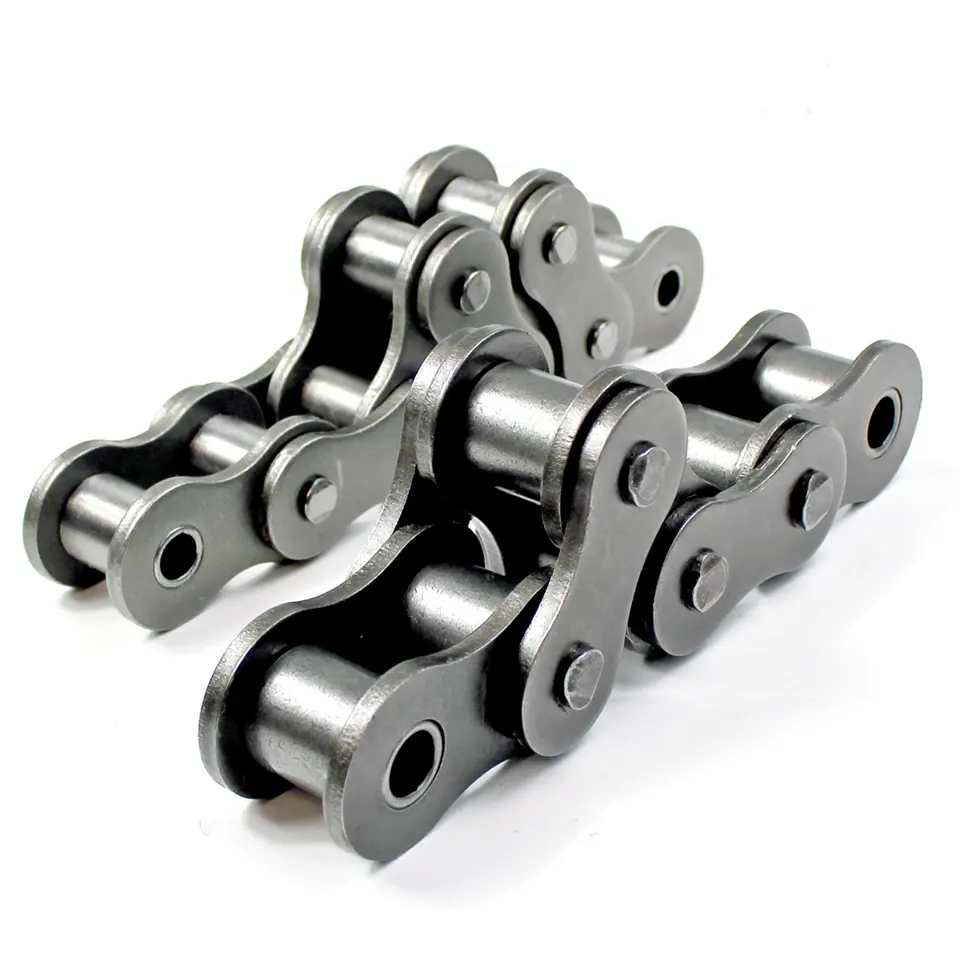
Quel est l'impact du poids d'une chaîne de transmission sur son installation et son fonctionnement ?
Le poids d'une chaîne de transmission joue un rôle important dans son installation et son fonctionnement. Voici une réponse détaillée à cette question :
1. Processus d'installation : Le poids d'une chaîne de transmission peut influencer la facilité et la complexité de son installation. Les chaînes plus lourdes peuvent nécessiter davantage de main-d'œuvre ou d'équipement pour être soulevées et positionnées avec précision. Les installateurs doivent tenir compte du poids de la chaîne lors de sa manipulation et veiller à ce que les mesures de sécurité appropriées soient mises en place afin de prévenir les blessures ou les accidents.
2. Conception du système : Le poids de la chaîne est un facteur crucial dans la conception globale du système de transmission. Il influence le choix des autres composants tels que les pignons, les roulements et les arbres. Le système doit être conçu pour supporter le poids de la chaîne et transmettre efficacement la puissance sans contrainte ni usure excessives.
3. Rendement de la transmission de puissance : Le poids de la chaîne influe sur la masse totale du système. Un poids excessif peut accroître l’inertie et engendrer des besoins énergétiques plus importants pour l’accélération et la décélération. Ceci peut impacter le rendement de la transmission de puissance et entraîner une augmentation de la consommation d’énergie. Il est donc essentiel de trouver un compromis entre le poids de la chaîne et les performances du système afin d’optimiser le rendement énergétique.
4. Capacité de charge : Le poids de la chaîne est directement lié à sa capacité de charge. Les chaînes plus lourdes sont généralement conçues pour supporter des charges plus importantes et transmettre une puissance supérieure. Il est essentiel de choisir une chaîne dont le poids et la capacité de charge correspondent aux exigences de l’application afin de garantir un fonctionnement sûr et fiable.
5. Usure et fatigue : Le poids de la chaîne peut contribuer à son usure et à sa fatigue au fil du temps. Un poids excessif ou une surcharge peuvent accélérer le processus d’usure et entraîner une rupture prématurée de la chaîne. Un entretien approprié, une lubrification adéquate et des inspections régulières sont nécessaires pour limiter les effets de l’usure et garantir la longévité de la chaîne.
6. Bruit et vibrations : Le poids de la chaîne influe sur les niveaux de bruit et de vibrations en fonctionnement. Les chaînes plus lourdes peuvent générer davantage de bruit et de vibrations, surtout à haute vitesse. Un réglage correct de la tension, de l’alignement et de la lubrification contribue à minimiser ces effets et à assurer un fonctionnement fluide et silencieux.
Lorsqu'on choisit le poids d'une chaîne de transmission, il est essentiel de prendre en compte des facteurs tels que les exigences d'installation, la conception du système, le rendement de la transmission de puissance, la capacité de charge, l'usure et la fatigue, ainsi que les niveaux de bruit et de vibrations. Sélectionner le poids de chaîne adapté à l'application garantit des performances optimales, une longue durée de vie et une fiabilité globale du système.
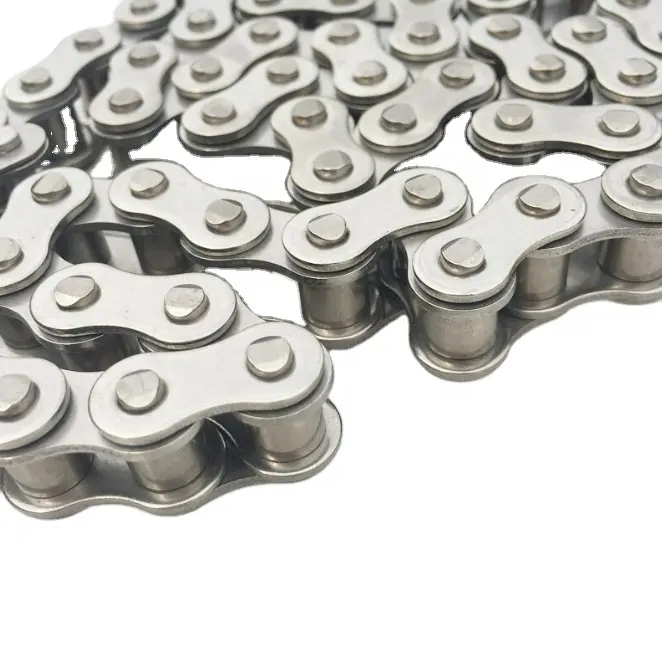
Les chaînes de transmission peuvent-elles être utilisées dans les systèmes de transport d'énergie ?
Oui, les chaînes de transmission peuvent être utilisées dans les systèmes de transport d'énergie. Voici une réponse détaillée à la question :
Les chaînes de transmission sont couramment utilisées dans diverses applications de transmission de puissance nécessitant le transfert de puissance mécanique. Ces chaînes sont conçues pour transmettre le mouvement de rotation et la puissance d'un arbre à un autre.
Les chaînes de transmission sont utilisées dans une vaste gamme de systèmes de transmission de puissance, notamment :
- Machines industrielles : Les chaînes de transmission sont utilisées dans des machines telles que les systèmes de convoyage, les équipements d’emballage, les presses d’imprimerie et les machines-outils pour transférer la puissance et le mouvement entre différents composants.
- Matériel agricole : Les chaînes de transmission sont utilisées dans les machines agricoles comme les tracteurs, les moissonneuses-batteuses et les récolteuses pour transmettre la puissance du moteur à divers composants mécaniques pour des tâches comme la coupe, le battage et la plantation.
- Automobile : On trouve des chaînes de transmission dans certaines applications automobiles, comme les chaînes de transmission de motos ou les chaînes de distribution qui synchronisent la rotation du vilebrequin et de l’arbre à cames dans les moteurs à combustion interne.
- Production d'énergie : Les chaînes de transmission sont utilisées dans les systèmes de production d'énergie, notamment les éoliennes, les turbines hydroélectriques et les turbines à vapeur, pour transmettre le mouvement de rotation de la turbine au générateur.
- Matériel de construction : Les chaînes de transmission sont utilisées dans les engins de construction tels que les excavatrices, les chargeuses et les bulldozers pour transmettre la puissance et le mouvement du moteur à la transmission et à divers composants hydrauliques.
Les chaînes de transmission offrent plusieurs avantages dans les systèmes de transmission de puissance :
- Haute efficacité : Les chaînes de transmission présentent des pertes de puissance minimales, permettant un transfert d'énergie efficace.
- Capacité de charge élevée : les chaînes de transmission sont capables de supporter des charges élevées et de transmettre des quantités importantes de puissance.
- Flexibilité : Les chaînes de transmission peuvent être facilement personnalisées pour s'adapter à différentes applications, avec des tailles, des longueurs et des configurations variées disponibles.
- Durabilité : Les chaînes de transmission sont conçues pour résister aux applications intensives et offrent une longue durée de vie lorsqu'elles sont correctement entretenues.
- Rentabilité : Les chaînes de transmission constituent souvent une solution rentable par rapport à d'autres options de transmission de puissance.
Il est important de choisir le type et la taille de chaîne de transmission adaptés aux exigences spécifiques du système de transmission de puissance. Un entretien et une lubrification réguliers sont également essentiels pour garantir des performances optimales et une longue durée de vie à la chaîne de transmission.
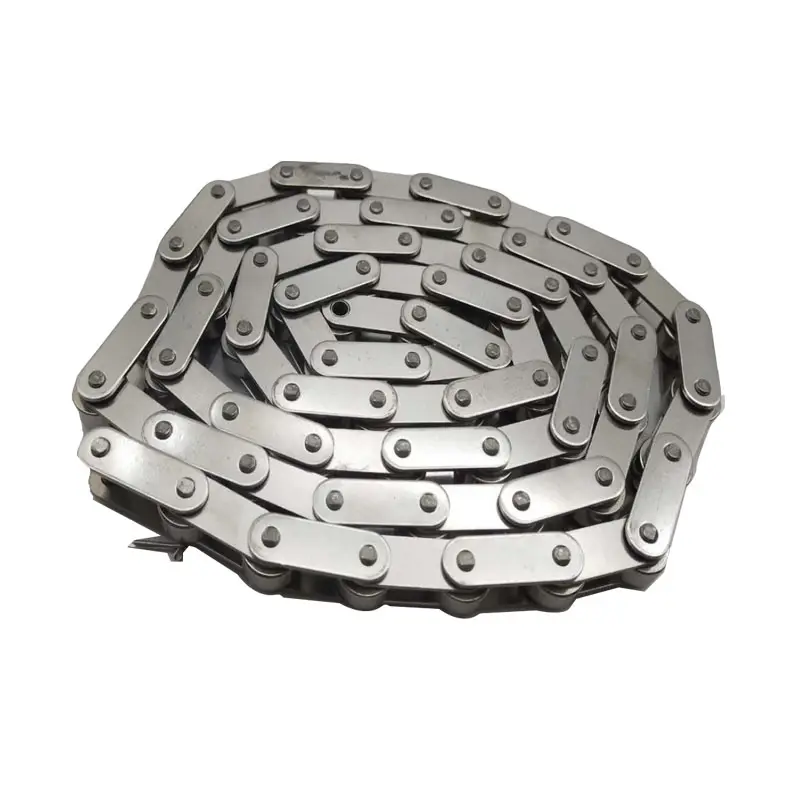
En quoi les chaînes à rouleaux diffèrent-elles des autres types de chaînes de transmission ?
Les chaînes à rouleaux, également appelées chaînes à maillons à rouleaux, sont un type de chaîne de transmission couramment utilisé qui se distingue des autres chaînes de plusieurs manières :
- Conception : Les chaînes à rouleaux sont composées de plaques intérieure et extérieure, d’axes, de bagues et de rouleaux. La rotation libre des rouleaux contribue à réduire la friction et l’usure, assurant ainsi une transmission de puissance plus fluide et plus efficace.
- Large champ d'application : Les chaînes à rouleaux sont polyvalentes et largement utilisées dans diverses industries, notamment l'automobile, les machines industrielles, les équipements agricoles et les systèmes de convoyage.
- Capacité de charge élevée : les chaînes à rouleaux sont conçues pour supporter des charges élevées et offrent une excellente résistance à la traction, ce qui les rend adaptées aux applications exigeant des performances robustes.
- Efficacité : Les chaînes à rouleaux sont reconnues pour leur haute efficacité de transmission de puissance. La conception des rouleaux minimise les frottements, ce qui réduit les pertes d’énergie et améliore l’efficacité globale.
- Rapport coût-efficacité : Les chaînes à rouleaux sont relativement économiques par rapport à certaines autres chaînes de transmission spécialisées, ce qui en fait un choix populaire dans de nombreuses applications.
Bien que les chaînes à rouleaux présentent des avantages, il est important de noter que différents types de chaînes de transmission peuvent être plus adaptés à des applications spécifiques. Des facteurs tels que la capacité de charge, la vitesse, le niveau sonore et les conditions environnementales doivent être pris en compte lors du choix de la chaîne de transmission appropriée à une application particulière.


Édité par CX le 11/08/2023