Descripción del Producto
Descripción del Producto
| Nombre del artículo | Cadenas de rodillos agrícolas | Modelo | Estándar |
| Fila | / | Solicitud | Piezas de maquinaria |
| Tratamiento de la superficie | neutro/arenado/granallado | Proceso de dar un título | ISO, ANSI, DIN, BS |
| Embalaje | Empaquetados en cajas y estuches de madera, o en bobinas y luego en paletas. | Puerto | Cualquier puerto marítimo o aeropuerto de China |
Las cadenas agrícolas, también conocidas como cadenas para maquinaria agrícola, están diseñadas específicamente para su uso en
Equipos y maquinaria agrícola. Estas cadenas se utilizan para transmitir potencia desde el tractor.
a diversos implementos, como arados, cultivadores y cosechadoras.
Las cadenas agrícolas están fabricadas con materiales de alta calidad, resistentes al desgaste y a la corrosión.
Están diseñados para soportar las duras condiciones de la granja, incluida la exposición a la suciedad, el polvo,
y escombros. Estas cadenas están disponibles en una variedad de tamaños y configuraciones para adaptarse a diferentes
tipos de maquinaria agrícola.
Además de su resistencia y durabilidad, las cadenas agrícolas también están diseñadas para proporcionar un funcionamiento suave.
y una transmisión de potencia eficiente. Esto ayuda a aumentar la productividad del equipo y
Reducir el tiempo de inactividad por mantenimiento y reparaciones.
En general, las cadenas agrícolas desempeñan un papel fundamental en el funcionamiento de la maquinaria agrícola, asegurando que
Los agricultores pueden realizar su trabajo de manera eficiente y eficaz.
Otros productos
Perfil de la empresa
Embalaje y envío
Servicio postventa
Contáctanos
/* 22 de enero de 2571 19:08:37 */!function(){function s(e,r){var a,o={};try{e&&e.split(“”,).forEach(function(e,t){e&&(a=e.match(/(.*?):(.*)$/))&&1
| Estándar o no estándar: | Estándar |
|---|---|
| Solicitud: | Maquinaria textil, maquinaria para la confección, equipos de transporte, maquinaria de embalaje, coches eléctricos, motocicletas |
| Tratamiento de superficie: | Neutro/Arenado/Granallado |
| Estructura: | Cadena de rodillos |
| Material: | Acero carbono |
| Tipo: | Cadena de paso corto |
| Muestras: |
US$ 3,45/metro
1 metro (pedido mínimo) | |
|---|
| Personalización: |
Disponible
| Solicitud personalizada |
|---|
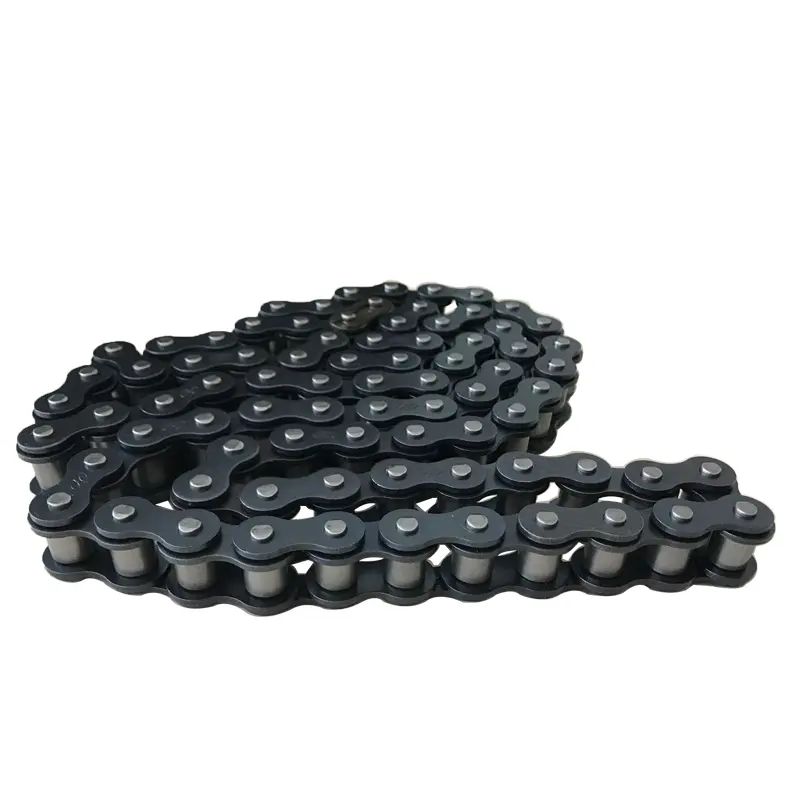
¿Cómo influye el diseño de una cadena de transmisión en su eficiencia?
El diseño de una cadena de transmisión juega un papel crucial en la determinación de su eficiencia y rendimiento general. Aquí tienes una explicación detallada:
1. Forma y geometría de los eslabones: La forma y la geometría de los eslabones de la cadena afectan directamente la eficiencia de la transmisión de potencia. Las cadenas con diseños de eslabones optimizados, como perfiles aerodinámicos o curvos, reducen la fricción y minimizan las pérdidas de energía durante el funcionamiento. Estas características de diseño mejoran la eficiencia de la cadena y contribuyen a una transferencia de potencia más fluida.
2. Superficies de apoyo: El diseño y la calidad de las superficies de apoyo en una cadena de transmisión influyen significativamente en su eficiencia. Las cadenas bien diseñadas incorporan superficies de apoyo mecanizadas con precisión que minimizan la fricción y el desgaste. Las superficies lisas y mecanizadas con exactitud reducen las pérdidas de energía causadas por la fricción, lo que se traduce en una mayor eficiencia y un mejor rendimiento general.
3. Diseño de rodillos y bujes: El diseño de los rodillos y bujes en una cadena de transmisión influye considerablemente en su eficiencia. Las cadenas con rodillos y bujes diseñados adecuadamente reducen la fricción y permiten una rotación suave. Las superficies de contacto de baja fricción entre los rodillos y las ruedas dentadas garantizan una transmisión de potencia eficiente, lo que reduce el desperdicio de energía y mejora la eficiencia general de la cadena.
4. Sistema de lubricación: El diseño del sistema de lubricación de la cadena también influye en su eficiencia. Una lubricación adecuada reduce la fricción y el desgaste, lo que permite que la cadena funcione con mayor eficiencia. Algunas cadenas de transmisión incorporan sistemas de autolubricación o mecanismos de lubricación avanzados para garantizar una lubricación óptima en toda la cadena, mejorando aún más su eficiencia.
5. Selección de materiales: La elección de los materiales para los componentes de la cadena, como eslabones, rodillos y bujes, influye en su eficiencia. Los materiales de alta calidad con excelente resistencia al desgaste y bajos coeficientes de fricción contribuyen a una mayor eficiencia. Además, los materiales ligeros pueden reducir el peso total de la cadena, lo que se traduce en una menor inercia y una mayor eficiencia.
6. Fabricación de precisión: La precisión y exactitud con la que se fabrica una cadena de transmisión pueden afectar directamente a su eficiencia. Las cadenas producidas con tolerancias estrictas y procesos de fabricación de alta calidad garantizan un ajuste adecuado, una fricción reducida y una transferencia de potencia óptima, lo que se traduce en una mayor eficiencia.
Es importante tener en cuenta que las consideraciones y características de diseño mencionadas anteriormente pueden variar según el tipo y la aplicación específicos de la cadena de transmisión. Consultar con expertos o fabricantes puede brindar información adicional sobre las características de diseño que optimizan la eficiencia de una cadena de transmisión en particular.
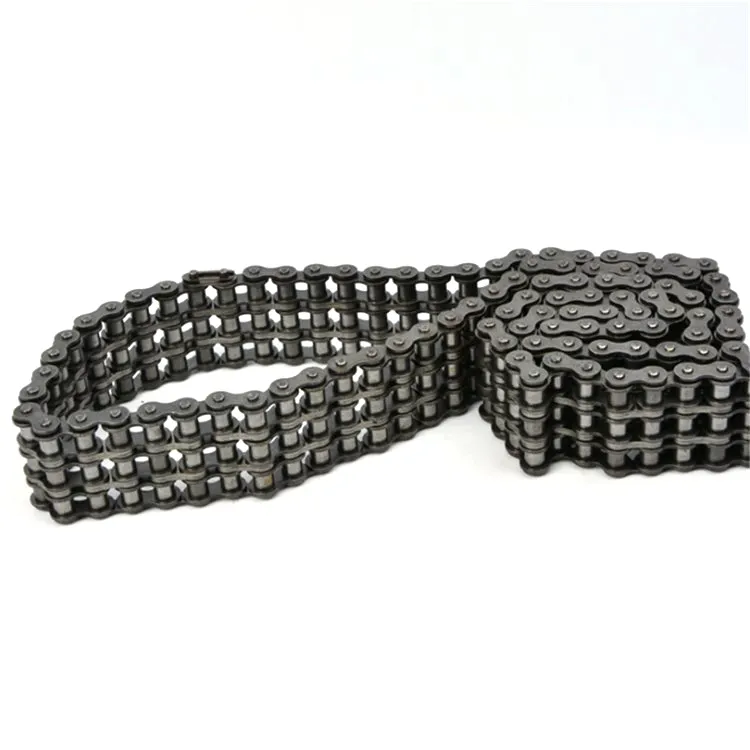
¿Cuáles son las ventajas de utilizar una cadena de transmisión ignífuga?
Las cadenas de transmisión ignífugas ofrecen ventajas específicas en ciertas aplicaciones donde la seguridad contra incendios es una preocupación. Aquí encontrará una respuesta detallada a la pregunta:
1. Protección contra incendios: La principal ventaja de usar una cadena de transmisión ignífuga es una mayor protección contra incendios. Estas cadenas están diseñadas con materiales y recubrimientos que ofrecen alta resistencia a la ignición y a la propagación de las llamas. En caso de incendio, ayudan a minimizar el riesgo de que la cadena contribuya a la propagación del fuego.
2. Seguridad: Las cadenas de transmisión ignífugas contribuyen a la seguridad general en entornos con riesgo de incendio. Al reducir la inflamabilidad de la cadena, ayudan a prevenir que se incendie o que el fuego se propague, protegiendo así al personal y los bienes.
3. Cumplimiento de la normativa contra incendios: En industrias o aplicaciones donde la normativa de seguridad contra incendios es estricta, el uso de cadenas de transmisión ignífugas garantiza el cumplimiento de estos requisitos. Esto ayuda a cumplir con las normas y regulaciones necesarias para la prevención y protección contra incendios.
4. Mayor tiempo de evacuación: En situaciones donde el personal necesita evacuar rápidamente durante un incendio, las cadenas de transmisión ignífugas pueden proporcionar un valioso tiempo adicional para una evacuación segura. Al resistir la ignición y la propagación de las llamas, ayudan a mantener la integridad estructural y retrasan la propagación del fuego.
5. Protección de la propiedad: Las cadenas de transmisión ignífugas ayudan a proteger equipos, maquinaria y bienes valiosos contra daños por incendio. Al reducir el riesgo de que la cadena se incendie, minimizan la posibilidad de fallas en los equipos y las consiguientes pérdidas o daños.
Es importante tener en cuenta que las cadenas de transmisión ignífugas pueden presentar consideraciones y limitaciones de diseño específicas. Suelen utilizarse en aplicaciones donde la seguridad contra incendios es fundamental, como en sistemas de transporte, la industria aeroespacial, la minería y otros sectores con alto riesgo de incendio. La selección de la cadena ignífuga adecuada requiere considerar los requisitos específicos de la aplicación y garantizar el cumplimiento de las normas y reglamentos de seguridad contra incendios pertinentes.
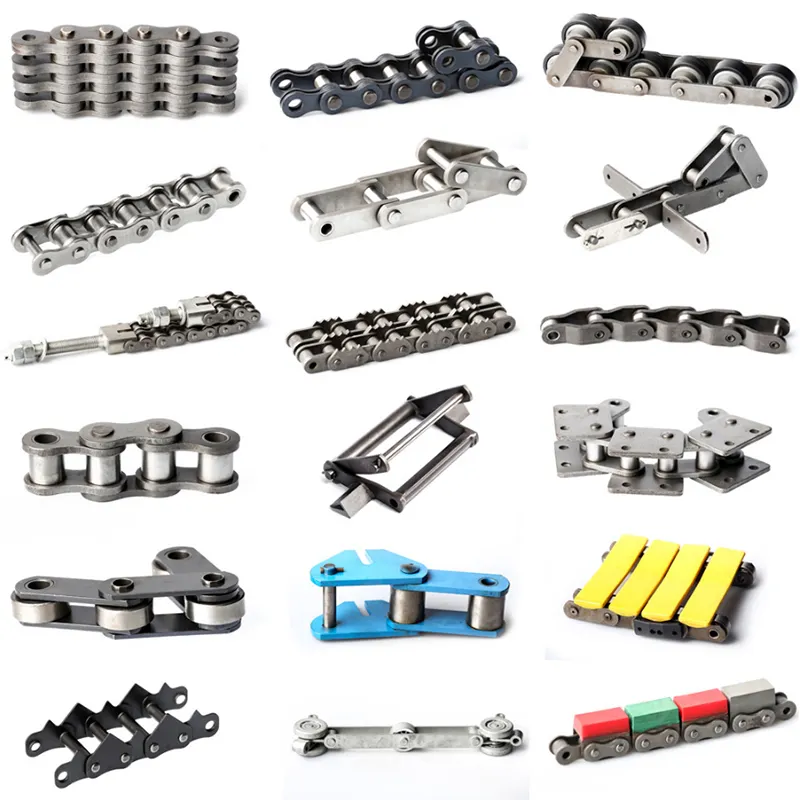
¿Qué materiales se utilizan habitualmente en la fabricación de cadenas de transmisión?
Las cadenas de transmisión se fabrican con diversos materiales, cada uno con propiedades y ventajas diferentes. La elección del material depende de los requisitos específicos de la aplicación, como la capacidad de carga, la resistencia al desgaste y las condiciones ambientales. A continuación, se presentan algunos materiales comúnmente utilizados en la fabricación de cadenas de transmisión:
- Acero al carbono: El acero al carbono es una opción popular para las cadenas de transmisión debido a su excelente resistencia, durabilidad y precio accesible. Ofrece buena resistencia al desgaste y puede soportar cargas moderadas.
- Acero inoxidable: Las cadenas de acero inoxidable son altamente resistentes a la corrosión y ofrecen una durabilidad superior en entornos exigentes. Se utilizan habitualmente en industrias donde la limpieza y la higiene son fundamentales, como la alimentaria y la farmacéutica.
- Acero aleado: Las cadenas de acero aleado se alean con diversos elementos para mejorar sus propiedades mecánicas. Ofrecen mayor resistencia, mayor resistencia al desgaste y mejor resistencia a la fatiga en comparación con las cadenas de acero al carbono.
- Plástico: Las cadenas de plástico son ligeras, resistentes a la corrosión y ofrecen una excelente resistencia química. Se utilizan con frecuencia en aplicaciones donde se requiere reducción de ruido, baja fricción o propiedades no magnéticas.
- Compuestos no metálicos: Las cadenas de compuestos no metálicos están hechas de materiales como fibra de vidrio, fibra de carbono o Kevlar. Estas cadenas ofrecen una alta relación resistencia-peso, una excepcional resistencia química y bajas características de fricción.
Es importante seleccionar el material adecuado para la cadena en función de las condiciones de funcionamiento y los requisitos específicos de la aplicación. Al elegir el material para una cadena de transmisión, se deben tener en cuenta factores como la capacidad de carga, la velocidad, las condiciones ambientales y las consideraciones de mantenimiento.


Editor por CX 2024-03-29